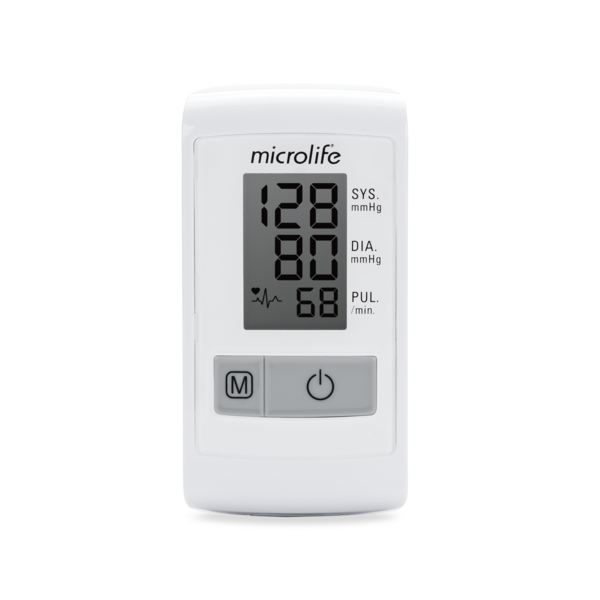
Photo 1 of 2
Microlife BP N1 Basic · Photo source
Microlife · BP
BP N1 Basic
A pocket-sized semi-automatic upper-arm monitor with a hand pump, 30-reading memory and pulse-arrhythmia indication.
- Type
- Upper arm
- Users
- 1
- App
- No
- Validated
- –
Product links
Specifications
Report a wrong or missing specMeasuring
- Type
- Upper arm
- Irregular heartbeat detection
- Yes
- AFib detection or ECG
- No
- Method
- Semi-automatic oscillometric upper-arm measurement. User inflates cuff with pump ball; electronic measurement follows during deflation. Quick-acting valve releases remaining air. No MAM automatic triple mode. First retail date unresolved
- Accuracy
- Current April 2024 exact guide gives systolic 60–255 and diastolic 40–200 mmHg, pulse 40–199 bpm; global support pulse upper limit is 200. Older MD-V4 English guide gives blood pressure 20–280 mmHg and pulse 40–200. Static pressure accuracy ±3 mmHg and pulse accuracy ±5%; cuff-pressure display 0–299 mmHg is separate
- Clinical validation
- Current guide claims shared BP 3BTO-A/BIHS technology, while older exact English guide names BP 3BTO-H/ESH. Ukrainian product page claims ISO validation. Medaval reports no peer-reviewed exact N1 Basic validation evidence and bounded STRIDE search recovered none; independent exact validation unresolved, headline validation omitted
- Features
- Generic PAD pulse-arrhythmia indication, not AFib-specific screening or ECG. Hypertension warning, pump-up/air-discharge and low-battery indicators. No date/time controls. Regional page advertises cuff-fit and movement checks; exact guide's labelled display has no separate cuff-fit icon, so feature conflict remains qualified
Cuff
- Cuff fits
- 22–32 cm
- Cuff
- Current exact guide explicitly supplies M 22–32 cm cuff, agreeing with Ukrainian maker page's straight M cuff. Optional M-L 22–42 and L 32–42 cm in current guide; L requires black deflation valve. Pump and cuff can use either pneumatic pin; not dual-arm electronic measurement
Connections and memory
- Users
- 1
- Readings stored
- 30
- Bluetooth and app
- No
- Memory
- One 30-reading history, oldest overwritten when full. Dedicated memory button recalls older results. Removing batteries clears all saved readings; no timestamps, user selector or automatic averaging. Latest displayed reading can be excluded before storage
- App
- No Bluetooth, USB or PC-transfer function in exact controls
- Power
- Two 1.5 V AAA alkaline cells, approximately 780 measurements with new batteries. Older exact English guide permits externally charged NiMH. April 2024 guide's technical table additionally lists optional DC 6 V, 600 mA adaptor, but its labelled controls and operating instructions show no mains socket or procedure; this conflict does not establish usable mains support
Design
- Display details
- LCD showing systolic, diastolic, pulse, PAD, memory number, battery and inflation/deflation indications. ON/OFF and memory buttons, two pneumatic pins. IP20
- Size
- 115 × 59 × 30 mm; 106 g including batteries in current guide and global support
- In the box
- Current guide establishes monitor, pump ball and supplied M 22–32 cm cuff; complete current regional accessory list not recovered
Pros and cons
Pros
- Stores 30 readings
- Runs on two AAA cells
- Digital pressure and pulse display
Cons
- Cuff must be inflated by hand
- No timestamps or separate user histories
- No Bluetooth or PC transfer
Closest rivals
Model | Type | Users | App | Validated | Released |
|---|---|---|---|---|---|
| Upper arm | – | No | – | – | |
| Upper arm | – | No | – | – | |
| Upper arm | – | No | – | – |


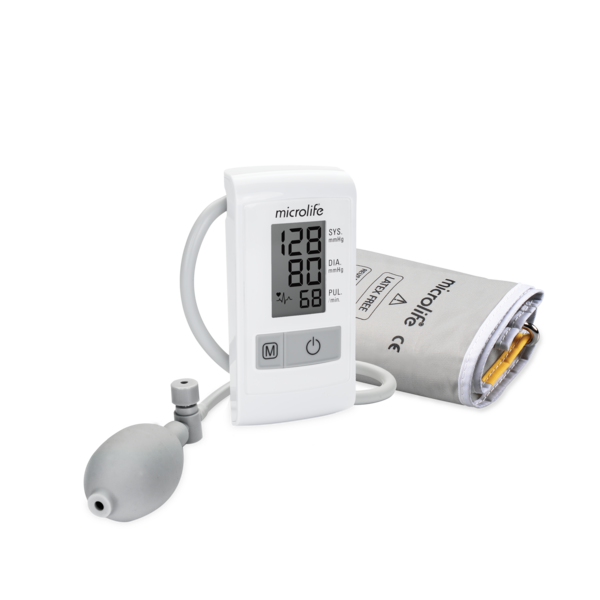
Sources
- microlife.ua/consumer-products/blood-pressure/upper-arm-semi-automatic/bp-n1-ba…
- microlife.com/support/blood-pressure/bp-n1-basic
- microlife.ua/media/5471/download/IB%20BP%20N1%20Basic%20UA-V3%201324.pdf
- microlife.com/media/1697/download/IB%20BP%20N1%20Basic%20MD-V4%200715.pdf
- medaval.ie/resources/EN/devices/Microlife-BP-N1-Basic.html
Photo: microlife.ua
- BP N1 Basic front view showing ON/OFF and memory buttons: microlife.ua/uploads/media/600x/02/1692-BP%20N1%20Basic_front.png