AMD Ryzen Threadripper 1950X vs AMD Ryzen Threadripper PRO 9975WX
Better figure, where one is clearly better
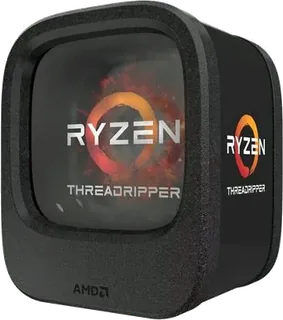
| AMDRyzen Threadripper 1950X | AMDRyzen Threadripper PRO 9975WX | |
|---|---|---|
| Overview | ||
| Released | August 2017 | July 2025 |
| Cores and clocks | ||
| Cores | 16 | 32 (better) |
| Threads | 32 | 64 (better) |
| Base clock | 3.4 GHz | 4 GHz |
| Boost clock | 4 GHz | 5.4 GHz (better) |
| L3 cache | 32 MB | 128 MB (better) |
| Cores | Zen architecture; boxed product ID YD195XA8AEWOF. AMD's support page lists 31 July 2017, when pre-orders began; its press release confirms on-shelf availability on 10 August 2017, used here. | Shimada Peak; Zen 5 architecture. Boxed 100-100000723WOF; tray 100-000000723. AMD’s 17 July 2025 blog names this model and says PRO 9000 systems are available starting 23 July; announcement and on-sale dates are distinct. |
| Clocks | Precision Boost and XFR supported; AMD states up to 4.2 GHz with XFR under suitable cooling, separate from the published 4.0 GHz maximum boost | Precision Boost 2; Precision Boost Overdrive and Curve Optimizer voltage offsets supported |
| Cache | L1 1536 KB; L2 8 MB | L1 2560 KB; L2 32 MB |
| Graphics and AI | ||
| Built-in graphics | No | No |
| Graphics | A separate graphics card is required | A separate graphics card is required |
| Platform | ||
| Socket | sTR4 | sTR5 |
| Base power | 180 W | 350 W |
| Unlocked | Yes | Yes |
| Cooler in the box | No | No |
| Memory support | DDR4; four channels; up to 2667 MT/s | DDR5 RDIMM; eight channels; up to 6400 MT/s. ECC enabled by default; AMD EXPO supported. WRX90 supports up to 2 TB; TRX50 reduces this to four channels and up to 1 TB. |
| PCIe | PCIe 3.0; 64 lanes | PCIe 5.0; 148 native/platform lanes, 144 usable, including 128 PCIe 5.0 lanes with WRX90. TRX50 limits expansion to 92 total/88 usable lanes, including 80 PCIe 5.0. Four native USB 3.2 Gen 2 ports and four SATA ports; NVMe boot and RAID 0, 1, 5 and 10 supported. |
| Chipsets | – | WRX90, TRX50 and AMD PRO 695; AMD PRO technologies, DASH management and AMD Memory Guard supported. Platform capabilities depend on the motherboard; AMD’s platform guide says OEM systems do not support overclocking. |
| Process | 14 nm | CPU cores: TSMC 4 nm FinFET; I/O die: TSMC 6 nm FinFET. 5 package dies. |
| Cooler | No cooler included; maximum operating temperature 68°C | Cooler not included; maximum operating temperature 95°C |

More comparisons
- AMD Ryzen Threadripper 9970X vs AMD Ryzen Threadripper PRO 9975WX
- AMD Ryzen Threadripper 9960X vs AMD Ryzen Threadripper PRO 9975WX
- AMD Ryzen Threadripper 9980X vs AMD Ryzen Threadripper PRO 9975WX
- AMD Ryzen Threadripper 1950X vs AMD Ryzen Threadripper 9960X
- AMD Ryzen Threadripper 1950X vs AMD Ryzen Threadripper 9970X
- AMD Ryzen Threadripper 1950X vs AMD Ryzen Threadripper 9980X
- AMD Ryzen Threadripper PRO 9965WX vs AMD Ryzen Threadripper PRO 9975WX
- AMD Ryzen Threadripper PRO 7975WX vs AMD Ryzen Threadripper PRO 9975WX
- AMD Ryzen Threadripper PRO 9975WX vs AMD Ryzen Threadripper PRO 9985WX
- AMD Ryzen Threadripper 7970X vs AMD Ryzen Threadripper PRO 9975WX
- AMD Ryzen 9 9950X vs AMD Ryzen Threadripper PRO 9975WX
- AMD Ryzen Threadripper PRO 9955WX vs AMD Ryzen Threadripper PRO 9975WX
- AMD Ryzen Threadripper PRO 9975WX vs AMD Ryzen Threadripper PRO 9995WX
- AMD Ryzen Threadripper PRO 9945WX vs AMD Ryzen Threadripper PRO 9975WX
- AMD Ryzen Threadripper 7960X vs AMD Ryzen Threadripper PRO 9975WX
- AMD Ryzen Threadripper 7980X vs AMD Ryzen Threadripper PRO 9975WX