Apple iMac 24″ (M4) vs Apple iMac G5 (20-inch, Ambient Light Sensor)
Better figure, where one is clearly better
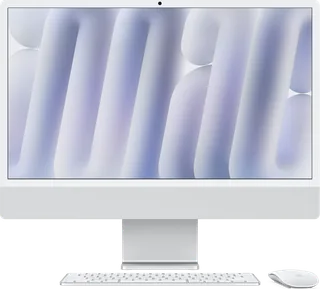
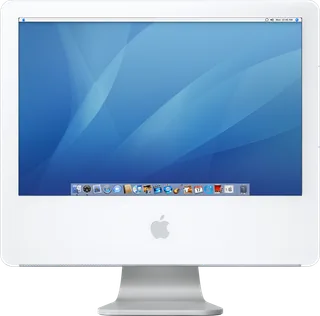
| AppleiMac 24″ (M4) | AppleiMac G5 (20-inch, Ambient Light Sensor) | |
|---|---|---|
| Overview | ||
| Released | November 2024 | May 2005 |
| Performance | ||
| Processor | Apple M4 | IBM PowerPC G5 2 GHz (iMac Ambient Light Sensor) |
| CPU cores | 8 or 10 | 1 |
| Graphics | 8-core GPU or 10-core GPU | ATI Radeon 9600 (128 MB) |
| AI engine (NPU) | 38 TOPS | – |
| Memory | 16 GB, 24 GB or 32 GB (better) | 512 MB or 2 GB |
| Storage | 256 GB to 2 TB (better) | 250 GB to 400 GB |
| CPU | 8-core CPU with 4 performance cores and 4 efficiency cores (two-port model), or 10-core CPU with 4 performance cores and 6 efficiency cores (four-port models) | 2.0 GHz PowerPC G5 with 667 MHz frontside bus, 512 KB L2 cache and SuperDrive. Generic maker-clock chip records retain the single-core identity cross-checked with exact EveryMac sources; uncertain 970/970FX silicon revision is not inferred. |
| GPU | Hardware-accelerated ray tracing | ATI Radeon 9600 with 128 MB dedicated video memory; AGP 8x support. |
| Memory type | – | 400 MHz DDR SDRAM (PC3200), two 184-pin DIMM slots; 512 MB standard and 2 GB supported maximum. Configurations conservatively list the published base and maximum; no intermediate factory pairing is inferred. |
| AI engine | 16-core Neural Engine | – |
| Memory bandwidth | 120GB/s | – |
| Storage type | SSD | 250 GB 7200 rpm Serial ATA hard drive, configurable to 400 GB; 8x SuperDrive with 2.4x double-layer DVD writing. |
| Media engine | Hardware-accelerated H.264, HEVC, ProRes and ProRes RAW; video decode engine; video encode engine; ProRes encode and decode engine; AV1 decode | – |
| Display | ||
| Screen size | 24″ | 20″ |
| Resolution | 4480 × 2520 (better) | 1680 × 1050 |
| Panel | IPS LCD | – |
| Refresh rate | 60 Hz | – |
| Brightness | 500 nits | – |
| Display type | 4.5K Retina display; actual diagonal 23.5 inches | Widescreen LCD with millions of colours; panel technology, refresh rate and brightness not published in the retained exact maker specification. |
| Pixel density | 218 ppi | – |
| Display features | 1 billion colours; wide colour (P3); True Tone; nano-texture glass option on four-port models | – |
| Connections | ||
| Ports | 2 × Thunderbolt 4, headphone jack | 3 × USB-A, Ethernet, headphone jack |
| Ethernet | – | 1 Gb/s |
| External displays | Up to 1 | – |
| Wi-Fi | Wi-Fi 6E | 802.11g |
| Bluetooth | 5.3 | 2.0 + EDR |
| Camera | 12MP Center Stage | – |
| Back ports | 2 × Thunderbolt / USB 4 (two-port model) or 4 × Thunderbolt 4 (four-port models), each with Thunderbolt 4 and USB 4 (up to 40Gb/s), USB 3.1 Gen 2 (up to 10Gb/s) and DisplayPort; Gigabit Ethernet on the power adapter, standard on four-port models and optional on the two-port model | Three USB 2.0 ports on the computer, plus two USB 1.1 ports on the keyboard; two FireWire 400 ports, Mini-VGA output, Gigabit Ethernet, headphone/optical output and audio line-in. Built-in 56K V.92 modem is confirmed by launch press and exact manual; retained USB-HSP wording describes its internal transport, rather than an extra external USB device. |
| External displays | Two-port model: one at up to 6K 60Hz; four-port models: two at up to 6K 60Hz, or one at up to 8K 60Hz | Optional Mini-VGA adapters provide VGA, S-video or composite output; no DVI connector is listed. |
| Camera | 12MP Center Stage camera with Desk View; 1080p HD video recording; advanced image signal processor with computational video | – |
| Speakers | High-fidelity six-speaker system with force-cancelling woofers; wide stereo sound; Spatial Audio with Dolby Atmos | Built-in stereo speakers and microphone. |
| Microphones | Studio-quality three-mic array with high signal-to-noise ratio and directional beamforming | – |
| Keyboard and mouse | Magic Keyboard (two-port model) or Magic Keyboard with Touch ID (four-port models), and Magic Mouse; Magic Trackpad or Magic Keyboard with Touch ID and Numeric Keypad available instead | Apple Keyboard and Apple Mouse; the later Mighty Mouse and iSight-generation remote are not substituted for the launch accessories. |
| Design and power | ||
| Type | All-in-one | All-in-one |
| Weight | 4.42 kg (better) | 11.4 kg |
| Width × depth × height | 547 × 147 × 461 mm | 493 × 189 × 472 mm |
| Operating system | macOS | macOS |
| Power supply | 143W external power adapter; power lead (2 m) | – |
| Materials | 100% recycled aluminium in the stand; more than 15% recycled content overall | – |
| Colours | Blue, Purple, Pink, Orange, Yellow, Green, Silver | – |
| In the box | iMac, Magic Keyboard (with Touch ID on four-port models), Magic Mouse, 143W power adapter, power lead (2 m), USB-C Charge Cable, polishing cloth (nano-texture glass only) | iMac G5, keyboard, mouse, power cord, install/restore DVDs and documentation; Mac OS X Tiger, iLife ’05 and AppleWorks. Classic support is available but not preinstalled and cannot boot Mac OS 9. |
More comparisons
- Apple iMac 24″ (M1) vs Apple iMac 24″ (M4)
- Apple iMac 24″ (M4) vs Apple iMac (Retina 4K, 21.5-inch, Late 2015)
- Apple iMac 24″ (M4) vs Apple iMac (Retina 4K, 21.5-inch, 2017)
- Apple iMac 24″ (M4) vs Apple iMac (Retina 4K, 21.5-inch, 2019)
- Apple iMac 24″ (M4) vs Apple iMac (Retina 5K, 27-inch, Late 2015)
- Apple iMac 24″ (M4) vs Apple iMac (Retina 5K, 27-inch, 2017)
- Apple iMac 24″ (M4) vs Apple iMac (Retina 5K, 27-inch, 2019)
- Apple iMac 24″ (M4) vs Apple iMac (Retina 5K, 27-inch, 2020)
- Apple iMac 24″ (M4) vs Apple iMac Pro (2017)
- Apple iMac (21.5-inch, Late 2012) vs Apple iMac 24″ (M4)
- Apple iMac (21.5-inch, Late 2013) vs Apple iMac 24″ (M4)
- Apple iMac (21.5-inch, Mid 2014) vs Apple iMac 24″ (M4)
- Apple iMac (21.5-inch, Late 2015) vs Apple iMac 24″ (M4)
- Apple iMac (21.5-inch, 2017) vs Apple iMac 24″ (M4)
- Apple iMac 24″ (M4) vs Apple iMac (27-inch, Late 2012)
- Apple iMac 24″ (M4) vs Apple iMac (27-inch, Late 2013)