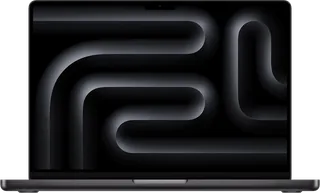
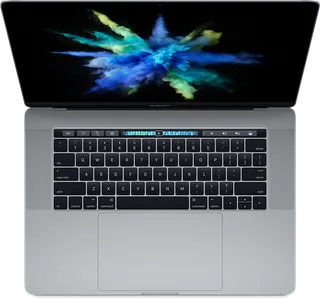
Apple MacBook Pro 14″ (M3 Pro / M3 Max) vs Apple MacBook Pro (15-inch, 2016)
Better figure, where one is clearly better
| AppleMacBook Pro 14″ (M3 Pro / M3 Max) | AppleMacBook Pro (15-inch, 2016) | |
|---|---|---|
| Overview | ||
| Released | November 2023 | November 2016 |
| Display | ||
| Screen size | 14.2″ | 15.4″ |
| Resolution | 3024 × 1964 (better) | 2880 × 1800 |
| Panel | Mini-LED | IPS LCD |
| Refresh rate | 120 Hz | – |
| Brightness | 600 nits (better) | 500 nits |
| HDR peak brightness | 1,600 nits | – |
| Touchscreen | No | No |
| Display type | Liquid Retina XDR display with mini-LED backlighting | Retina display; LED-backlit IPS; millions of colours |
| Pixel density | 254 ppi | 220 ppi |
| Colour range | Wide colour (P3); 1 billion colours | Wide colour (P3) |
| Display features | 1,000,000:1 contrast; 1,000 nits sustained full-screen HDR brightness; ProMotion adaptive refresh up to 120 Hz; fixed 47.95, 48, 50, 59.94 and 60 Hz rates; True Tone | Scaled resolutions of 1920 × 1200, 1680 × 1050, 1280 × 800 or 1024 × 640 |
| Performance | ||
| Processor | Apple M3 Pro or Apple M3 Max | Intel Core i7-6700HQ, Intel Core i7-6820HQ or Intel Core i7-6920HQ |
| CPU cores | 11, 12, 14 or 16 | 4 |
| CPU threads | – | 8 |
| Graphics | 14-core GPU, 18-core GPU, 30-core GPU or 40-core GPU | AMD Radeon Pro 450, AMD Radeon Pro 460 or AMD Radeon Pro 455 |
| Memory | 18 GB, 36 GB, 48 GB, 64 GB, 96 GB or 128 GB (better) | 16 GB |
| Storage | 512 GB to 8 TB (better) | 256 GB to 2 TB |
| CPU | M3 Pro: 11-core CPU (5 performance, 6 efficiency) or 12-core CPU (6 performance, 6 efficiency); M3 Max: 14-core CPU (10 performance, 4 efficiency) or 16-core CPU (12 performance, 4 efficiency) | Quad-core Intel Core i7 at 2.6 GHz with Turbo Boost up to 3.5 GHz and 6 MB shared L3 cache, or at 2.7 GHz with up to 3.6 GHz and 8 MB cache; both configurable to 2.9 GHz with up to 3.8 GHz and 8 MB cache. Ars confirms the i7-6700HQ, i7-6820HQ and i7-6920HQ identifiers. |
| GPU | M3 Pro: 14-core or 18-core GPU; M3 Max: 30-core or 40-core GPU; hardware-accelerated ray tracing; H.264, HEVC, ProRes and ProRes RAW media engine with AV1 decode; M3 Max has two video encode and two ProRes encode/decode engines | Intel HD Graphics 530 with automatic switching to discrete Radeon graphics. The 2.6 GHz base has Radeon Pro 450 with 2 GB GDDR5; the 2.7 GHz base has Radeon Pro 455 with 2 GB GDDR5; each is configurable to Radeon Pro 460 with 4 GB GDDR5. |
| AI engine | 16-core Neural Engine | – |
| Memory type | Unified memory; M3 Pro supports 18 GB or 36 GB; 14-core M3 Max supports 36 GB or 96 GB; 16-core M3 Max supports 48 GB, 64 GB or 128 GB | 16 GB of 2133 MHz LPDDR3 onboard memory. Apple publishes this system speed; Intel lists LPDDR3-1866 in its generic processor specifications. |
| Memory bandwidth | 150 GB/s (M3 Pro); 300 GB/s (14-core M3 Max) or 400 GB/s (16-core M3 Max) | – |
| Storage type | SSD; M3 Pro starts at 512 GB and supports up to 4 TB; M3 Max starts at 1 TB and supports up to 8 TB | PCIe-based onboard SSD; 256 GB base with 2.6 GHz processor configurable to 512 GB, 1 TB or 2 TB; 512 GB base with 2.7 GHz processor configurable to 1 TB or 2 TB. The optional 2.9 GHz processor retains its base configuration's graphics and storage choices. |
| Battery and size | ||
| Battery life (maker's claim) | Up to 18 hours | Up to 10 hours |
| Battery capacity | – | 76 Wh |
| Weight | 1.61 kg (better) | 1.83 kg |
| Thickness | 15.5 mm | 15.5 mm |
| Width × depth | 312.6 × 221.2 mm | 349.3 × 240.7 mm |
| Battery life detail | Up to 12 hours wireless web; Apple’s main specification states 72.4 Wh, but the generic footnote gives 69.6 Wh for the 14-inch model; capacity omitted from the main comparison because these figures conflict | Lithium-polymer battery; up to 10 hours wireless web or iTunes movie playback and 30 days standby. Apple's October 2016 tests used the 2.6 GHz Core i7, 16 GB memory and 256 GB SSD. Weight varies by configuration and manufacturing process. |
| Charger | 70 W USB-C adapter with 11-core M3 Pro; 96 W adapter with 12-core M3 Pro or M3 Max, optional on the entry configuration | 87 W USB-C Power Adapter |
| Fast charging | With 96 W USB-C Power Adapter | – |
| Materials | 100% recycled aluminium enclosure | Aluminium enclosure |
| Colours | Silver, Space Black | Silver; Space Grey |
| Connections | ||
| Ports | 3 × Thunderbolt 4, HDMI, SD card slot, MagSafe 3, headphone jack | 4 × Thunderbolt 3, headphone jack |
| Wi-Fi | Wi-Fi 6E | Wi-Fi 5 |
| Bluetooth | 5.3 | 4.2 |
| Webcam | 1080p FaceTime HD | 720p FaceTime HD |
| Operating system | macOS | macOS |
| Port detail | Three Thunderbolt 4 ports with charging, DisplayPort and USB 4 up to 40 Gb/s; HDMI; SDXC slot; MagSafe 3; 3.5 mm jack with high-impedance headphone support | Four Thunderbolt 3 USB-C ports support charging, DisplayPort, Thunderbolt up to 40 Gb/s and USB 3.1 Gen 2 up to 10 Gb/s; 3.5 mm headphone jack. VGA, HDMI and Thunderbolt 2 output require separate adaptors. |
| External displays | M3 Pro supports two at 6K 60 Hz over Thunderbolt or one at 6K 60 Hz plus one at 4K 144 Hz over HDMI; M3 Max supports three at 6K 60 Hz plus one at 4K 144 Hz, or two at 6K 60 Hz plus one at 8K 60 Hz or 4K 240 Hz; HDMI alone supports 8K 60 Hz or 4K 240 Hz | Built-in screen plus two 5120 × 2880 displays at 60 Hz with over a billion colours, or four 4096 × 2304 displays at 60 Hz with over a billion colours |
| Keyboard | Backlit Magic Keyboard with 78 US or 79 ISO keys, including 12 full-height function keys | Full-size backlit keyboard with 64 US or 65 ISO keys, four arrow keys, Touch Bar and ambient light sensor; second-generation butterfly mechanism |
| Trackpad | Force Touch trackpad | Force Touch trackpad with pressure sensing, Force clicks and Multi-Touch gestures |
| Speakers | Six-speaker system with force-cancelling woofers; wide stereo; spatial audio with Dolby Atmos | Stereo speakers with high dynamic range |
| Microphones | Studio-quality three-mic array with directional beamforming | Three microphones |
| Biometrics | Touch ID | Touch ID fingerprint sensor; Apple T1 chip |
| In the box | 14-inch MacBook Pro, 70 W or 96 W USB-C Power Adapter, USB-C to MagSafe 3 cable (2 m) | 15-inch MacBook Pro; 87 W USB-C Power Adapter; 2 m USB-C Charge Cable |
More comparisons
- Apple MacBook Pro 14″ (M3 Pro / M3 Max) vs Apple MacBook Pro 14″ (M5 Pro or M5 Max)
- Apple MacBook Pro (15-inch, 2016) vs Apple MacBook Pro 16″ (M5 Pro or M5 Max)
- Apple MacBook Pro 14″ (M3 Pro / M3 Max) vs Apple MacBook Pro 16″ (M5 Pro or M5 Max)
- Apple MacBook Pro 14″ (M5 Pro or M5 Max) vs Apple MacBook Pro (15-inch, 2016)
- Apple MacBook Pro 14″ (M3 Pro / M3 Max) vs Apple MacBook Pro 14″ (M5)
- Apple MacBook Pro 14″ (M5) vs Apple MacBook Pro (15-inch, 2016)
- Apple MacBook Pro 14″ (M3 Pro / M3 Max) vs Apple MacBook Pro 14″ (M4 Pro or M4 Max)
- Apple MacBook Pro 14″ (M3 Pro / M3 Max) vs Apple MacBook Pro 14″ (M4)
- Apple MacBook Pro 14″ (M3 Pro / M3 Max) vs Apple MacBook Pro 16″ (M4 Pro or M4 Max)
- Apple MacBook Pro 14″ (M4 Pro or M4 Max) vs Apple MacBook Pro (15-inch, 2016)
- Apple MacBook Pro 14″ (M4) vs Apple MacBook Pro (15-inch, 2016)
- Apple MacBook Pro (15-inch, 2016) vs Apple MacBook Pro 16″ (M4 Pro or M4 Max)
- Apple MacBook Pro 14″ (M3) vs Apple MacBook Pro 14″ (M3 Pro / M3 Max)
- Apple MacBook Pro 14″ (M1 Pro / M1 Max) vs Apple MacBook Pro 14″ (M3 Pro / M3 Max)
- Apple MacBook Pro 14″ (M2 Pro / M2 Max) vs Apple MacBook Pro 14″ (M3 Pro / M3 Max)
- Apple MacBook Pro 14″ (M3 Pro / M3 Max) vs Apple MacBook Pro 16″ (M3 Pro / M3 Max)