Apple Macintosh LC 630 vs Apple Macintosh Performa 6400/200
Better figure, where one is clearly better
| AppleMacintosh LC 630 | AppleMacintosh Performa 6400/200 | |
|---|---|---|
| Overview | ||
| Released | 1994 | 1996 |
| Performance | ||
| Processor | Motorola 68LC040 33 MHz (Macintosh LC 575) | PowerPC 603e 200 MHz (Macintosh Performa 6400/200) |
| CPU cores | 1 | 1 |
| Memory | 4 MB or 8 MB | 16 MB or 32 MB (better) |
| Storage | 250 MB | 2.4 GB (better) |
| CPU | Motorola MC68LC040 without an integrated floating-point unit; paged memory management and 8 KB cache. Nominal 33 MHz bus clock and 66 MHz internal clock, as Apple explains in its exact Japanese specifications and developer note. Optional PowerPC processor upgrade is separate from this original model | 200 MHz PowerPC 603e with integrated floating-point unit, 32 KB L1 cache, 256 KB L2 cache and 64-bit data path at 40 MHz |
| GPU | Built-in video with 1 MB dedicated DRAM, 16-bit colour at 640 × 480 or 512 × 384 and 8-bit at 800 × 600 or 832 × 624; video capture not supported at 832 × 624 | Built-in video with 1 MB DRAM supports 640 × 480 at 16-bit colour and 1024 × 768 at 8-bit colour |
| Memory type | Original model has 4 MB soldered RAM and one 72-pin SIMM slot, expandable to 36 MB; 4 MB and 8 MB configurations in the October 1994 catalogue. Japanese configurations have 8 MB. 80 ns or faster SIMMs and 1 MB ROM. Later shared service-manual boards and DOS Compatible variants have different memory arrangements | 8 MB on the logic board, two 168-pin DIMM slots and 16–136 MB total supported by Apple |
| Storage type | 250 MB internal IDE hard disk in the original configurations, plus 1.44 MB SuperDrive floppy. Japanese maker lists 8 MB/250 MB versions with or without the double-speed AppleCD 300i Plus internal SCSI CD-ROM. April 1995 catalogue adds 350 MB disks without establishing exact RAM/CD pairings, so those configurations are not inferred. LC 630 DOS Compatible is a different dual-processor model | 2.4 GB internal IDE hard drive, 1.44 MB floppy drive and 8× CD-ROM drive |
| Expansion slots | LC-compatible processor-direct slot, communications slot for either Ethernet or modem, video-input slot and optional TV tuner. Apple Video and TV/Video kits add capture and television features; they are not built into the base configuration. Optional PowerPC processor upgrade | Two PCI slots plus Communications Slot II, TV and video input positions; the Video Editing Edition's Avid Cinema card uses one PCI slot |
| Display | ||
| Screen | None built in | None built in |
| Connections | ||
| Ports | 2 × headphone jack | Headphone jack |
| Back ports | DB-15 video, DB-25 external SCSI, one ADB, two serial ports with LocalTalk, sound input and rear sound output. Front headphone jack and infrared receiver; no USB. Ethernet uses an optional communications card | DB-15 monitor output, Apple Desktop Bus, external DB-25 SCSI, two GeoPort serial connectors, PlainTalk microphone input and speaker output; front headphone jack |
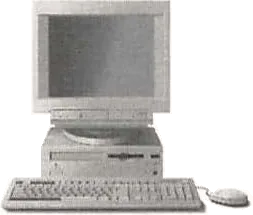
| External displays | Requires a separate monitor; Apple lists Color Plus 14-inch, Macintosh Color Display, AudioVision 14 and Multiple Scan 15 plus compatible VGA/SVGA displays. The maker catalogue photo includes an external monitor, keyboard and mouse | – |
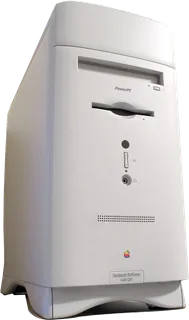
| Speakers | Single internal speaker; 8-bit stereo sound output and monophonic recording, with 16-bit stereo CD playback. Front and rear headphone outputs cannot be used simultaneously. The Japanese specifications and shared service manual distinguish CD playback from ordinary sound output | Built-in subwoofer in the tower enclosure, as described by Apple Directions |
| Design and power | ||
| Type | Compact | Tower |
| Weight | 7.7 kg | – |
| Width × depth × height | 320 × 419.5 × 109.5 mm | – |
| Operating system | macOS | macOS |
| Size and weight detail | Original Japanese Apple specifications give 109.5 mm high, 320 mm wide and 419.5 mm deep; these exact metric values retained. October 1994 catalogue rounds these to 109/320/419 mm. Shared Service Source reverses width and depth, an unresolved documentation error. Shared maker service table gives 7.7 kg without CD-ROM and 8.6 kg with CD-ROM; weight varies with installed devices | Apple lists 16 × 7.8 × 16.9 inches (height × width × depth) and 44.5 lb |
| Power supply | 100–240 V AC, 50–60 Hz; 45 W maximum excluding monitor, according to Service Source. 4.5 V alkaline clock battery | Apple lists a 220 W maximum, 100–125 or 200–240 V AC at 47–63 Hz |
| In the box | System 7.1.2 with the dedicated System Enabler; Japanese versions use KanjiTalk 7.1.2 and include an ADB Mouse II, with keyboard sold separately. Education and regional monitor/software bundles vary. Announced July 1994, with 2 August shipping planned in contemporary TidBITS; October 1994 maker buying catalogue lists the LC 630, so release uses supported year precision. Exact first retail delivery remains unconfirmed | Apple Directions lists a standard 16 MB configuration and a 32 MB Video Editing Edition with Avid Cinema hardware, both with 2.4 GB storage. Original System Software 7.5.3. Apple lists 5 August 1996 as introduction; a distinct maker first-sale date was not established. |
More comparisons
- Apple Mac mini (M4 or M4 Pro) vs Apple Macintosh Performa 6400/200
- Apple Macintosh Performa 5400/160 vs Apple Macintosh Performa 6400/200
- Apple Macintosh Performa 6360 vs Apple Macintosh Performa 6400/200
- Apple Macintosh Performa 6400/180 vs Apple Macintosh Performa 6400/200
- Apple Macintosh Performa 6400/200 vs Apple Power Macintosh 8500/180
- Apple Macintosh Performa 6400/200 vs Apple Power Macintosh 9500/150
- Apple Macintosh Performa 6400/200 vs Apple Power Macintosh 9500/180MP
- Apple Macintosh LC 580 vs Apple Macintosh Performa 6400/200
- Apple Macintosh Performa 5200CD vs Apple Macintosh Performa 6400/200
- Apple Macintosh Performa 5300CD vs Apple Macintosh Performa 6400/200
- Apple Macintosh Performa 6300CD vs Apple Macintosh Performa 6400/200
- Apple Macintosh Performa 6400/200 vs Apple Power Macintosh 6200/75
- Apple Macintosh Performa 6400/200 vs Apple Power Macintosh 9500/200
- Apple Macintosh Performa 6400/200 vs Apple Power Macintosh 9500/132
- Apple Macintosh Performa 6400/200 vs Apple Macintosh Quadra 610 DOS Compatible
- Apple Macintosh LC 550 vs Apple Macintosh Performa 6400/200