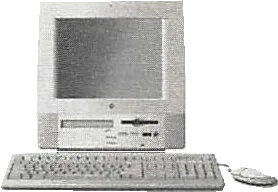
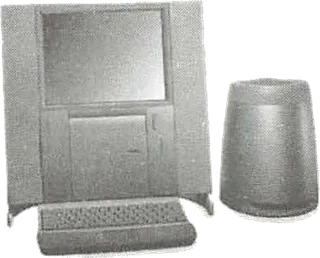
Apple Macintosh Performa 5400/160 vs Apple Twentieth Anniversary Macintosh
Better figure, where one is clearly better
| AppleMacintosh Performa 5400/160 | AppleTwentieth Anniversary Macintosh | |
|---|---|---|
| Overview | ||
| Released | 1996 | – |
| Performance | ||
| Processor | PowerPC 603e (160 MHz, Macintosh Performa 5400/160) | PowerPC 603e 250 MHz (Power Macintosh 6500/250) |
| CPU cores | 1 | 1 |
| Graphics | – | ATI 3D RAGE II (2 MB SGRAM) |
| Memory | 16 MB | 32 MB (better) |
| Storage | 1.6 GB | 2 GB (better) |
| CPU | 160 MHz PowerPC 603e with integrated floating-point and memory management units, 32 KB L1 cache and 64-bit memory bus. Optional High Performance Module adds 256 KB L2 cache; it is not standard. Current Apple support gives a 40 MHz data path clock. | 250 MHz PowerPC 603e with integrated floating-point unit, 50 MHz system bus, 32 KB L1 cache split into 16 KB data/instruction caches, and a 256 KB L2 High Performance Cache Module operating at 50 MHz. No processor supplier is assigned without exact maker evidence. |
| GPU | 1 MB DRAM framebuffer independent of system RAM. Shared Service Source explicitly supports 640 × 480 at 60 or 67 Hz and 800 × 600 at 60 or 72 Hz with 16-bit colour; 832 × 624 at 75 Hz uses 8-bit colour and does not support video input. Current support additionally lists 1024 × 768, but the exact technical specification and shared service manual restrict the built-in CRT to 832 × 624; the higher database row is not adopted as the built-in display resolution. | ATI 3D RAGE II with 2 MB SGRAM, with QuickDraw 2D/3D and video acceleration. The maker specifies thousands of colours at 800 × 600; application-window restrictions apply to accelerated 3D at that mode. |
| Memory type | 16 MB standard, comprising 8 MB soldered RAM and one 8 MB DIMM. Two 168-pin 64-bit DIMM slots allow expansion to 136 MB with two 64 MB modules. Use 70 ns or faster fast-paged-mode DIMMs with 1K or 2K refresh. Modules can be installed individually. 4 MB ROM. | 32 MB EDO RAM supplied as one 32 MB DIMM or two 16 MB DIMMs; two 168-pin slots support up to 128 MB. Exact Apple TIL specifies 5 V EDO or fast-paged DIMMs, 60 ns or faster, with 2K refresh; 3.3 V or 4K-refresh DIMMs are incompatible. 4 MB ROM. |
| Storage type | Exact 160 MHz maker specification, ordering description and Service Source configuration agree on a 1.6 GB IDE hard drive, Apple SuperDrive 1.44 MB floppy drive and internal 8× AppleCD CD-ROM drive. November 1996 Apple Facts gives a 1.2 GB drive for the broader 160/180 Performa family; that unqualified family figure is not transferred to the exact configuration. | 2 GB ATA/IDE hard disk, vertically mounted 4× CD-ROM and manual-insert 1.44 MB Apple SuperDrive floppy. Optical-drive output and the TV/FM tuner are controlled by the supplied infrared remote. |
| Expansion slots | One PCI slot for a 6.88-inch, 15 W card; communications slot occupied by the supplied modem; optional video-input card and TV/FM tuner bay. Optional Apple External Video Connector enables mirroring; optional Apple Presentation System provides NTSC/PAL output. NuBus cards cannot be used in the PCI slot. | One PCI 2.0 slot for a 6.88-inch card drawing up to 15 W, plus a Comm Slot II for a modem or Ethernet card. A separate video-input slot and TV/FM tuner card are fitted. Macintosh-specific PCI drivers are required; NuBus cards are incompatible. |
| Display | ||
| Screen size | 12.8″ | 12.1″ |
| Resolution | 832 × 624 (better) | 800 × 600 |
| Panel | CRT | – |
| Refresh rate | 75 Hz (better) | 60 Hz |
| Display type | 15-inch nominal RGB CRT with 12.8-inch viewable diagonal and 0.28 mm dot pitch. Noninterlaced flat square tube. Base tilts from −5° to +15° and swivels 360°. Resolution can be changed without restarting. | 12.1-inch backlit active-matrix colour LCD, 800 × 600 at 60 Hz; 6 bits per red/green/blue channel. Maker does not name the LCD subtype, so IPS or TN is not guessed. |
| Connections | ||
| Ports | 2 × headphone jack | 2 × headphone jack |
| Front ports | Headphone output and volume controls; built-in infrared remote capability. Remote-control inclusion varies with regional configuration. | – |
| Back ports | One ADB port; two GeoPort-compatible RS-232/422 serial ports, including LocalTalk support; DB-25 SCSI; stereo sound input and rear stereo sound output. Optional DB-15 external-video connector, not a standard fitted port. Built-in 28.8 Kbit/s V.34 data/fax/voice modem supports MNP4, V.42, MNP5 and V.42bis; optional Ethernet replaces the communications-slot modem. No USB or FireWire. | One ADB, external DB-25 SCSI for up to six devices, two GeoPort-compatible serial ports, rear stereo output, two separate stereo audio inputs, S-video input with a supplied composite-video adapter, TV aerial/cable connector and FM aerial connector. One front headphone output plus one rear headphone-compatible line output are counted. No built-in USB, FireWire or Ethernet. |
| External displays | Optional external-video connector provides mirroring of the built-in screen. Connector kit, suitable cable and external display required; external video does not establish an independent second desktop. | No external monitor output specified |
| Speakers | Built-in stereo speakers and 16-bit stereo sound with SRS 3D surround enhancement. Shared service manual identifies separate front and rear stereo output jacks. Headline jack count excludes the sound-input port. | Custom Bose Acoustimass system with integrated stereo speakers and a separate floor-standing bass unit. The power-supply ratings are not acoustic output ratings. |
| Microphones | Built-in microphone and stereo sound-input port; the input also supports an external Apple PlainTalk microphone. Shared manual explicitly excludes the earlier Apple Omni microphone from this input. | Built-in omnidirectional electret microphone |
| Keyboard and mouse | Exact maker ordering description includes keyboard, mouse and necessary cables; the CRT, microphone, speakers, modem, CD-ROM, floppy drive and hard drive are built into the computer. Optional TV/FM and video hardware varies by regional bundle. | Custom keyboard with Italian leather palm rests, removable/repositionable ADB trackpad, infrared remote, Bose bass unit and composite-to-S-video adapter. January1998 Apple catalogue lists a 33.6 Kbps GeoPort modem/Internet Connection Kit; older power-test conditions separately describe a 28.8 Kbps modem. |
| Design and power | ||
| Type | All-in-one | All-in-one |
| Weight | 21 kg | 6.8 kg (better) |
| Width × depth × height | 383 × 406 × 445 mm | 419 × 254 × 438 mm |
| Operating system | macOS | macOS |
| Size and weight detail | Exact maker specification gives 445 × 383 × 406 mm (height × width × depth) and 21 kg. Its 17.5 × 15.1 × 16 inches and 47 lb are retained as maker-rounded equivalents. Apple Facts notes weight varies with installed internal devices; no shipping-package mass is used. | Headline size and 6.8 kg weight describe the main unit only. Separate bass unit weighs 4.8 kg and measures 270 × 211 × 298 mm (height × width × depth); keyboard is 0.84 kg and 25 × 292 × 207 mm. Main-unit metric dimensions follow the original maker table rather than converting its rounded inch values. |
| Power supply | 220 W maximum continuous input, nominal 110–240 V AC at 50–60 Hz, single phase. Low-power sleep mode supported. Current maker table gives a 4.5 V alkaline clock battery; maximum input is not normal operating consumption. | Bass-unit voltage selector covers 90–130 or 180–264 V AC, 47–63 Hz, single phase; manually configured and factory preset |
| Power use | – | Maximum continuous AC input 140 W; maximum continuous DC output 70 W. Typical AC input 47 W is qualified to the maker test with 250 MHz 603e, 2 GB disk, 28.8 Kbps modem, L2 module and CD-ROM; sleep is below 30 W without PCI cards. |
| In the box | System 7.5.3 with System Enabler 410, Apple Guide, QuickTime, Macintosh PC Exchange and QuickDraw 3D. Exact October 1996 ordering description and November Apple Facts dealer catalogue establish retail offering in 1996; precise first-sale month or day remains unestablished. Apple's recorded introduction is 5 August 1996. Service Source identifies sale in Japan, Australia and Europe; not sold in the US. This 160 MHz configuration is distinct from the existing Power Macintosh 5400/120, 5400/180 and 5400/200. No unsupported official predecessor link assigned. | Mac OS 7.6.1 with System Enabler 704 originally. Apple support labels introduction as 1 June 1997; widely copied March dates describe announcements, and the accessible May order notice does not establish actual first delivery. Released is omitted pending exact first-sale evidence. Earlier preview articles describe a proposed 604e machine and are not used for this production 603e model. The primary picture is a grayscale original Apple catalogue image, retained without colour reconstruction; higher-quality original colour press imagery remains unavailable. |
More comparisons
- Apple Power Macintosh 5400/200 vs Apple Twentieth Anniversary Macintosh
- Apple Power Macintosh 5500/225 vs Apple Twentieth Anniversary Macintosh
- Apple Macintosh Performa 5400/160 vs Apple Power Macintosh 5260/100
- Apple Macintosh Performa 5400/160 vs Apple Power Macintosh 5260/120
- Apple Macintosh Performa 5400/160 vs Apple Power Macintosh 5400/120
- Apple Macintosh Performa 5400/160 vs Apple Macintosh Performa 6360
- Apple Macintosh Performa 5400/160 vs Apple Macintosh Performa 6400/180
- Apple Macintosh Performa 5400/160 vs Apple Macintosh Performa 6400/200
- Apple Macintosh LC 580 vs Apple Macintosh Performa 5400/160
- Apple Macintosh Performa 5200CD vs Apple Macintosh Performa 5400/160
- Apple Macintosh Performa 5300CD vs Apple Macintosh Performa 5400/160
- Apple Macintosh Performa 5400/160 vs Apple Macintosh Performa 6300CD
- Apple Macintosh Performa 5400/160 vs Apple Power Macintosh 6200/75
- Apple Macintosh Performa 5400/160 vs Apple Power Macintosh 5400/180
- Apple Macintosh Performa 5400/160 vs Apple Macintosh Quadra 610 DOS Compatible
- Apple Macintosh LC 550 vs Apple Macintosh Performa 5400/160