Apple Macintosh Performa 6360 vs Apple Power Macintosh 7300/166
Better figure, where one is clearly better
| AppleMacintosh Performa 6360 | ApplePower Macintosh 7300/166 | |
|---|---|---|
| Overview | ||
| Released | 1996 | 1997 |
| Performance | ||
| Processor | PowerPC 603e 160 MHz (Macintosh Performa 6360) | PowerPC 604e 166 MHz (Power Macintosh 7300/166) |
| CPU cores | 1 | 1 |
| Memory | 16 MB | 16 MB |
| Storage | 1.2 GB | 2 GB (better) |
| CPU | 160 MHz PowerPC 603e with integrated floating-point unit, 32 KB L1 cache, optional L2 cache and 64-bit data path at 40 MHz | One 166 MHz PowerPC 604e with integrated floating-point unit, 64 KB level-one cache, 50 MHz processor bus and 256 KB level-two cache; processor is on a removable card |
| GPU | Built-in video with 1 MB DRAM supports 640 × 480 at 16-bit colour and 1024 × 768 at 8-bit colour | Built-in video with 2 MB VRAM, expandable to 4 MB. Exact support table gives 24-bit colour through 832 × 624, 16-bit at 1024 × 768 and 1152 × 870, and 8-bit at 1280 × 1024 with standard VRAM; 4 MB permits 24-bit through 1152 × 870 and 16-bit at 1280 × 1024 |
| Memory type | 8 MB on the logic board, two 168-pin DIMM slots and 16–136 MB total supported by Apple | 16 MB standard and 512 MB supported maximum using eight 168-pin 64-bit 5 V DIMM sockets, 70 ns or faster. EDO modules are treated as fast-page memory by the controller; matching DIMMs in corresponding sockets enable interleaving. Apple says 128 MB DIMMs can be used but were not tested. 4 MB ROM. Shared Service Source specifies 60 ns or faster EDO DIMMs for the 7300 series, while the exact Japanese page and English support specify 70 ns or faster; this difference remains explicit. |
| Storage type | 1.2 GB internal IDE hard drive, 1.44 MB floppy drive and 8× CD-ROM drive | 2 GB internal Fast SCSI hard disk, manual-inject 1.44 MB Apple SuperDrive floppy and AppleCD 1800i 12× CD-ROM. One additional internal 3.5-inch storage bay; internal SCSI transfers up to 10 MB/s |
| Expansion slots | PCI, communications, TV and video input/output expansion positions | Three PCI 2.0 slots; processor on a replaceable card. The 7300 does not include the analogue AV module supplied with the 7500 and 7600 |
| Display | ||
| Screen | None built in | None built in |
| Connections | ||
| Ports | Headphone jack | Ethernet, headphone jack |
| Ethernet | – | 0.01 Gb/s |
| Back ports | DB-15 monitor output, Apple Desktop Bus, external DB-25 SCSI, two GeoPort serial connectors, PlainTalk microphone input and speaker output; front headphone jack | DB-15 display output, one ADB connector, external DB-25 SCSI, two GeoPort/LocalTalk-compatible serial connectors, AAUI and 10BASE-T Ethernet, 16-bit stereo sound input and output. Both Ethernet connectors share one interface; 10BASE-T takes priority if both are connected |
| External displays | – | One external display through built-in video, up to 1280 × 1024; colour depth depends on installed VRAM and compatible monitor |
| Speakers | – | Built-in speaker and 16-bit stereo sound input/output |
| Microphones | – | Supports an external Apple PlainTalk microphone |
| Keyboard and mouse | – | Original KanjiTalk 7.5 version 7.5.5 in Japan, ADB Mouse II, PlainTalk microphone, power cable, system CD, Internet Starter Kit and manuals. Keyboard and monitor sold separately. Optional PC Compatibility Card is separate from this Macintosh configuration. |
| Design and power | ||
| Type | Compact | Compact |
| Weight | – | 10 kg |
| Width × depth × height | – | 365 × 430 × 156 mm |
| Operating system | macOS | macOS |
| Size and weight detail | Apple lists 4.3 × 12.6 × 16.5 inches (height × width × depth) and 17 lb | Apple’s exact Japanese specification gives 156 mm high, 365 mm wide and 430 mm deep, 10 kg; weight varies with installed devices. Shared Service Source gives the corresponding 22 lb (9.97 kg). |
| Power supply | Apple lists a 150 W maximum, 90–270 V AC at 47–63 Hz and a 4.5 V alkaline clock battery | Exact Japanese maker page specifies 100–130/220–270 V AC, single phase, manually switched, 50–60 Hz, and claims 298 W continuous/453 W peak excluding monitor. Shared Service Source instead specifies automatically configured 100–240 V AC and 150 W maximum, while English support lists 150 W and 100–130/200–270 V. These unresolved differences are retained without an unqualified consumption figure. |
| In the box | Original System Software 7.5.3 with System Enabler 410. Apple lists 1 October 1996 as introduction; a distinct maker first-sale date was not established. | Exact Apple support lists 13 February 1997 as introduction and says this model was not sold in the US. Contemporary PC Watch retail rankings report Japanese sales beginning March 1997; first worldwide sale month/day remains unconfirmed, so release is kept at 1997 year precision. |
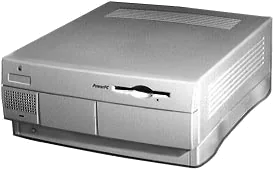
More comparisons
- Apple Mac mini (M4 or M4 Pro) vs Apple Macintosh Performa 6360
- Apple Power Mac G5 (Late 2005) vs Apple Power Macintosh 7300/166
- Apple Power Mac G5 (Early 2005) vs Apple Power Macintosh 7300/166
- Apple Power Mac G5 (Late 2004) vs Apple Power Macintosh 7300/166
- Apple Power Mac G5 (June 2004) vs Apple Power Macintosh 7300/166
- Apple Power Mac G5 (2003) vs Apple Power Macintosh 7300/166
- Apple Power Mac G4 (Mirrored Drive Doors 2003) vs Apple Power Macintosh 7300/166
- Apple Power Mac G4 (FW800) vs Apple Power Macintosh 7300/166
- Apple Power Mac G4 (Mirrored Drive Doors 2002) vs Apple Power Macintosh 7300/166
- Apple Power Macintosh 7300/166 vs Apple Power Macintosh 7300/180
- Apple Power Macintosh 4400/160 vs Apple Power Macintosh 7300/166
- Apple Macintosh Performa 6360 vs Apple Power Macintosh 7300/180
- Apple Macintosh Performa 6360 vs Apple Power Macintosh 4400/160
- Apple Macintosh Performa 6360 vs Apple Power Macintosh 6300/120
- Apple Macintosh Performa 5400/160 vs Apple Macintosh Performa 6360
- Apple Macintosh Performa 6360 vs Apple Power Macintosh 7200/120