Apple Macintosh Performa 6400/200 vs Apple Macintosh Quadra 630
Better figure, where one is clearly better
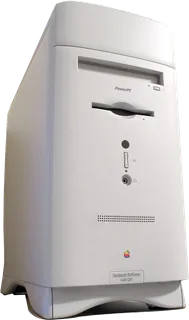
| AppleMacintosh Performa 6400/200 | AppleMacintosh Quadra 630 | |
|---|---|---|
| Overview | ||
| Released | 1996 | 1994 |
| Performance | ||
| Processor | PowerPC 603e 200 MHz (Macintosh Performa 6400/200) | 68040 33 MHz (Macintosh Quadra 650) |
| CPU cores | 1 | 1 |
| Memory | 16 MB or 32 MB (better) | 4 MB or 8 MB |
| Storage | 2.4 GB (better) | 250 MB |
| CPU | 200 MHz PowerPC 603e with integrated floating-point unit, 32 KB L1 cache, 256 KB L2 cache and 64-bit data path at 40 MHz | Motorola MC68040 with integrated floating-point unit, paged memory management and 8 KB cache. Apple gives nominal 33 MHz in its support table and October 1994 catalogue; its developer note explains the 33 MHz bus and 66 MHz internal clock. The LC 630 and Performa 630 use the FPU-less MC68LC040 instead |
| GPU | Built-in video with 1 MB DRAM supports 640 × 480 at 16-bit colour and 1024 × 768 at 8-bit colour | Built-in video with 1 MB dedicated DRAM, 16-bit colour at 640 × 480 or 512 × 384 and 8-bit at 800 × 600 or 832 × 624; video capture not supported at 832 × 624 |
| Memory type | 8 MB on the logic board, two 168-pin DIMM slots and 16–136 MB total supported by Apple | 4 MB on the logic board and one 72-pin SIMM slot; Apple catalogue offers 4 MB or 8 MB configurations and supports up to 36 MB using a 32 MB SIMM. Minimum SIMM speed is 80 ns; 1 MB ROM |
| Storage type | 2.4 GB internal IDE hard drive, 1.44 MB floppy drive and 8× CD-ROM drive | 250 MB internal IDE hard disk and 1.44 MB SuperDrive floppy. A double-speed internal SCSI CD-ROM drive is optional, not standard on the base Quadra. Other hard-disk capacities in the shared family developer note are not copied into these exact Quadra configurations |
| Expansion slots | Two PCI slots plus Communications Slot II, TV and video input positions; the Video Editing Edition's Avid Cinema card uses one PCI slot | LC-compatible processor-direct slot, communications slot for either Ethernet or modem, video-input slot and optional TV tuner. Apple Video and TV/Video kits add capture and television features; they are not built into the base configuration. Optional PowerPC processor upgrade |
| Display | ||
| Screen | None built in | None built in |
| Connections | ||
| Ports | Headphone jack | 2 × headphone jack |
| Back ports | DB-15 monitor output, Apple Desktop Bus, external DB-25 SCSI, two GeoPort serial connectors, PlainTalk microphone input and speaker output; front headphone jack | DB-15 video, DB-25 external SCSI, one ADB, two serial ports with LocalTalk, sound input and rear sound output. Front headphone jack and infrared receiver; no USB. Ethernet uses an optional communications card |
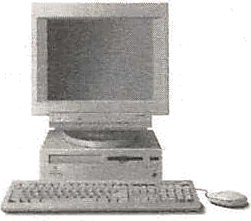
| External displays | – | Requires a separate monitor; Apple lists Color Plus 14-inch, Macintosh Color Display, AudioVision 14 and Multiple Scan 15 plus compatible VGA/SVGA displays. The maker catalogue photo includes an external monitor, keyboard and mouse |
| Speakers | Built-in subwoofer in the tower enclosure, as described by Apple Directions | Single internal speaker, stereo output and front/rear audio jacks. Apple developer note specifies 8-bit sampling; a contemporary MacUser review calls output 16-bit, so maker specification retained |
| Design and power | ||
| Type | Tower | Compact |
| Weight | – | 7.7 kg |
| Width × depth × height | – | 320 × 419 × 109 mm |
| Operating system | macOS | macOS |
| Size and weight detail | Apple lists 16 × 7.8 × 16.9 inches (height × width × depth) and 44.5 lb | October 1994 AppleFacts gives 10.9 cm high, 32.0 cm wide and 41.9 cm deep; metric values retained. Shared Service Source reverses width and depth (41.95 cm width, 32 cm depth), an unresolved documentation conflict. Base weight without CD-ROM is 7.7 kg; with CD-ROM is 8.6 kg, varying with options. AppleFacts' 8.6 kg reference does not identify its drive configuration |
| Power supply | Apple lists a 220 W maximum, 100–125 or 200–240 V AC at 47–63 Hz | 100–240 V AC, 50–60 Hz; 45 W maximum excluding monitor, according to Service Source. 4.5 V alkaline clock battery |
| In the box | Apple Directions lists a standard 16 MB configuration and a 32 MB Video Editing Edition with Avid Cinema hardware, both with 2.4 GB storage. Original System Software 7.5.3. Apple lists 5 August 1996 as introduction; a distinct maker first-sale date was not established. | System 7.1.2P with System Enabler 405. Apple introduces the model on 18 July 1994; contemporary TidBITS states planned 2 August shipping for the Quadra, distinct from the education-market Performa. October 1994 maker buying catalogue confirms the Quadra was offered during 1994; exact first-delivery date remains unconfirmed, so release uses year precision |
More comparisons
- Apple Mac mini (M4 or M4 Pro) vs Apple Macintosh Performa 6400/200
- Apple Macintosh Performa 5400/160 vs Apple Macintosh Performa 6400/200
- Apple Macintosh Performa 6360 vs Apple Macintosh Performa 6400/200
- Apple Macintosh Performa 6400/180 vs Apple Macintosh Performa 6400/200
- Apple Macintosh Performa 6400/200 vs Apple Power Macintosh 8500/180
- Apple Macintosh Performa 6400/200 vs Apple Power Macintosh 9500/150
- Apple Macintosh Performa 6400/200 vs Apple Power Macintosh 9500/180MP
- Apple Macintosh LC 580 vs Apple Macintosh Performa 6400/200
- Apple Macintosh Performa 5200CD vs Apple Macintosh Performa 6400/200
- Apple Macintosh Performa 5300CD vs Apple Macintosh Performa 6400/200
- Apple Macintosh Performa 6300CD vs Apple Macintosh Performa 6400/200
- Apple Macintosh Performa 6400/200 vs Apple Power Macintosh 6200/75
- Apple Macintosh Performa 6400/200 vs Apple Power Macintosh 9500/200
- Apple Macintosh Performa 6400/200 vs Apple Power Macintosh 9500/132
- Apple Macintosh Performa 6400/200 vs Apple Macintosh Quadra 610 DOS Compatible
- Apple Macintosh LC 550 vs Apple Macintosh Performa 6400/200