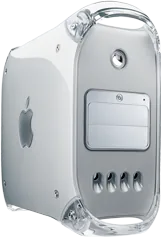
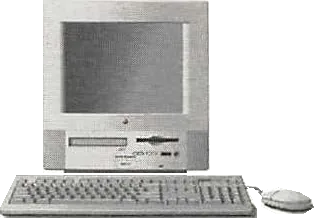
Apple Power Mac G4 (Mirrored Drive Doors 2003) vs Apple Power Macintosh 5260/100
Better figure, where one is clearly better
| ApplePower Mac G4 (Mirrored Drive Doors 2003) | ApplePower Macintosh 5260/100 | |
|---|---|---|
| Overview | ||
| Released | June 2003 | 1996 |
| Performance | ||
| Processor | PowerPC G4 1250 MHz (Power Mac MDD 2003) or 2 × PowerPC G4 1250 MHz (Power Mac MDD 2003) | PowerPC 603e 100 MHz (Power Macintosh 5260/100) |
| CPU cores | 1 or 2 | 1 |
| Graphics | ATI Radeon 9000 Pro (64 MB) | – |
| Memory | 256 MB or 2 GB (better) | 16 MB |
| Storage | 80 GB (better) | 800 MB |
| CPU | Stock single 1.25 GHz PowerPC G4 with 256 KB L2 cache and 1 MB L3 cache. Contemporary Macworld reporting of Apple Store configurations also documents dual 1.25 GHz processors, each with 2 MB L3; this custom build is labelled in configuration details rather than presented as a second stock base. | 100 MHz PowerPC 603e with integrated floating-point unit. Exact Apple support lists 32 KB L1 cache and a 64-bit processor data path at 40 MHz; Original exact Apple TIL 19602 and May 1996 Apple Facts instead say 16 KB L1, an unresolved maker conflict. Apple's separate comparison table gives the narrower memory bus as 32-bit at 37.5 MHz, not the same path. Optional 256 KB L2 High Performance Module M4849LL/A is a 160-pin SIMM, not interchangeable with the later 5400/6400 DIMM. Original ordering description and cache note establish it as optional despite the support/service tables listing 256 KB without that qualification. |
| GPU | Stock ATI Radeon 9000 Pro with 64 MB DDR in an AGP 4x slot. Macworld also documents a custom dual-processor build with NVIDIA GeForce4 Titanium; that build has other upgrades and is not treated as a freely interchangeable stock configuration. | 1 MB built-in DRAM framebuffer; exact support and shared service video-mode list support 640 × 480 with 16-bit colour. Other higher-resolution timing pages in the shared service do not establish those as supported modes for the built-in 14-inch display. |
| Memory type | Stock 256 MB PC2700 DDR333; four DIMM slots, maximum 2 GB. The single-processor configurations retain the stock drive and graphics at base and maximum memory. The documented dual-processor custom base has 256 MB. | 16 MB standard in one 72-pin SIMM, with a second socket for expansion to 64 MB. No memory soldered on board; SIMMs can be installed individually. Exact original TIL 19602 specifies 70 ns, while exact current support and shared service specify 80 ns or faster. The timing difference remains qualified. Shared comparison lists an 8 MB minimum, without an exact factory bundle. |
| Storage type | Stock 80 GB 7200 rpm Ultra ATA/100 hard drive; up to four internal drives. Tray-loading Combo drive reads DVD at 8x and CD at 32x, writes CD-R at 16x and CD-RW at 10x. Macworld documents a dual 1.25 GHz custom base with 80 GB, Combo drive and Radeon 9000 Pro, and a separate upgraded build with 2 GB RAM, two 160 GB drives, SuperDrive and GeForce4 Titanium. The two-drive build is described here without flattening its drives into a single capacity. | 800 MB IDE hard drive, 1.44 MB Apple SuperDrive floppy and quadruple-speed AppleCD 600i in original M4982LL/A ordering information. May 1996 Apple Facts says CD-ROM is present in most configurations; no undocumented drive-free factory combination is added. Shared service lists larger family drives without coupling them to an exact 5260/100 bundle. |
| Expansion slots | Four PCI slots and an occupied AGP 4x graphics slot. | LC-compatible PDS, 68040-bus communications slot for optional modem or Ethernet, optional video-input card and TV tuner bay. PDS is not a direct connection to the PowerPC processor; processor-dependent cache/FPU cards are not compatible. Optional MPEG Media System requires the video-input card. Video capture accepts NTSC, PAL and SECAM; tuner standard varies by region. |
| Display | ||
| Screen | None built in | 12.3″ |
| Resolution | – | 640 × 480 |
| Panel | – | CRT |
| Refresh rate | – | 66.67 Hz |
| Display type | – | Built-in 14-inch nominal shadow-mask colour CRT with 12.3-inch viewable diagonal in the exact original ordering description and technical sheet. Shared Service Source instead says 12.8-inch viewable; exact model wording is retained. Dot pitch 0.28 mm; tilt-and-swivel base. A CRT has selectable raster modes rather than a fixed LCD pixel grid. |
| Display features | – | 640 × 480 at 16-bit colour and 66.67 Hz in the exact original TIL 19602 technical sheet. Shared service agrees on 66.7 Hz; a separate service timing table headed 60 Hz instead gives 15 ms, so no second 60 Hz mode is inferred. |
| Connections | ||
| Ports | 2 × USB-A, Ethernet, headphone jack | Headphone jack |
| Ethernet | 1 Gb/s | – |
| Front ports | Headphone connection and built-in mono speaker. | Headphone output, push-button volume and display brightness controls, infrared remote receiver. |
| Back ports | Two USB 1.1, two FireWire 400, Gigabit Ethernet with Auto-MDIX, ADC and DVI display connectors, audio line-in/out and Apple Pro Speakers connection. The maker lists a V.92 modem. Optional original AirPort; the contemporary Apple-spokesman report confirms no AirPort Extreme, internal Bluetooth or FireWire 800. | ADB, external DB-25 SCSI, two RS-232/422 modem/printer serial ports with LocalTalk, PlainTalk-compatible sound input and stereo sound output. Ethernet requires an optional communications-slot card; no GeoPort inferred from a similar-looking serial connector. Exact original TIL gives six external SCSI devices in its ports section but five in expansion; maker catalogue says five and shared service seven. Limits remain source-qualified. |
| External displays | ADC and DVI connectors with included DVI-to-VGA adapter. Digital resolution up to 1920 × 1200; analogue up to 1600 × 1200. The exact sheet does not publish a simultaneous display count. | Optional Apple External Video Connector provides DB-15 mirroring, with a compatible display. Optional Apple Presentation System converts the mirrored output for television/projector or VCR use; it is not an independent extended desktop. |
| Speakers | Built-in mono speaker and connection for Apple Pro Speakers; no built-in microphone. | Two built-in speakers and 16-bit stereo output. Shared service specifies 22 kHz playback and 11/22 kHz recording, with ordinary audio-CD playback. Stereo input connectors are combined to mono for recording/play-through; do not treat the connector as stereo capture. |
| Microphones | – | Built-in microphone for mono recording; rear microphone/line input supports PlainTalk-compatible microphones. |
| Keyboard and mouse | Black Apple Pro input devices and DVI-to-VGA adapter. | Original M4982LL/A ordering description includes matching keyboard, mouse and necessary cables. External speakers, optional cache, Ethernet, video input/output, TV tuner and MPEG expansion are separate. Maker photograph shows the exact 5260/100 with keyboard and mouse. |
| Design and power | ||
| Type | Tower | All-in-one |
| Weight | 19.1 kg (better) | 20.5 kg |
| Width × depth × height | 226 × 467 × 432 mm | 383 × 406 × 445 mm |
| Operating system | macOS | macOS |
| Size and weight detail | Maker dimensions: height 43.2 cm, width 22.6 cm, depth 46.7 cm; weight 19.1 kg. These published metric values differ slightly from the FW800 sheet. | Exact original TIL 19602 technical sheet gives 44.5 × 38.3 × 40.6 cm (height × width × depth), 20.5 kg/45 lb; exact current support agrees on 16-inch depth and 45 lb. May 1996 Apple Facts instead gives 41.4 cm depth, 20.2 kg/44.9 lb, varying with installed devices. Shared service swaps width/depth and has inconsistent weight units. Exact original technical-sheet dimensions and complete-unit kg figure are used; disagreement remains explicit. |
| Power supply | – | Exact current support lists 125 W maximum , 110–240 V AC at 50–60 Hz. Exact original TIL 19602 instead gives 240 W maximum at 110–240 V AC 50–60 Hz; shared service gives 100–240 V 47–63 Hz, 240 W maximum and a separate 220 W all-line/load maximum. Conflicting ratings remain qualified; no universal headline operating consumption is assigned. |
| In the box | Mac OS X 10.2.4 and bootable Mac OS 9.2.2, install/restore DVD and Apple Hardware Test. First sale uses the 23 June 2003 Macworld report that these models were for sale at Apple’s online store; a 29 June report quotes an Apple spokesman confirming manufacture and sale. The first day is contemporary Apple Store reporting rather than a retained maker launch notice. | System 7.5.3 and 4 MB ROM in exact Apple support; original ordering description calls it System 7.5. Apple records introduction on 15 April 1996; current May 1996 maker education catalogue establishes sale in 1996, not a first-sale month. Release remains year precision. North American education 5260/100 is separate from later 5260/120 and international Performa bundles. |
More comparisons
- Apple Mac Studio (M4 Max or M3 Ultra) vs Apple Power Mac G4 (Mirrored Drive Doors 2003)
- Apple Mac Pro (M2 Ultra) vs Apple Power Mac G4 (Mirrored Drive Doors 2003)
- Apple Mac Pro (2006) vs Apple Power Mac G4 (Mirrored Drive Doors 2003)
- Apple Power Mac G4 (Mirrored Drive Doors 2003) vs Apple Power Mac G5 (Late 2005)
- Apple Power Mac G5 (Late 2005) vs Apple Power Macintosh 5260/100
- Apple Power Mac G4 (Mirrored Drive Doors 2003) vs Apple Power Mac G5 (Early 2005)
- Apple Power Mac G5 (Early 2005) vs Apple Power Macintosh 5260/100
- Apple Mac mini (2005) vs Apple Power Mac G4 (Mirrored Drive Doors 2003)
- Apple Power Mac G4 (Mirrored Drive Doors 2003) vs Apple Power Mac G5 (Late 2004)
- Apple Power Mac G5 (Late 2004) vs Apple Power Macintosh 5260/100
- Apple Power Mac G4 (Mirrored Drive Doors 2003) vs Apple Power Mac G5 (June 2004)
- Apple Power Mac G5 (June 2004) vs Apple Power Macintosh 5260/100
- Apple Power Mac G4 (Mirrored Drive Doors 2003) vs Apple Power Mac G5 (2003)
- Apple Power Mac G5 (2003) vs Apple Power Macintosh 5260/100
- Apple Power Mac G4 (FW800) vs Apple Power Mac G4 (Mirrored Drive Doors 2003)
- Apple Power Mac G4 (Mirrored Drive Doors 2002) vs Apple Power Mac G4 (Mirrored Drive Doors 2003)