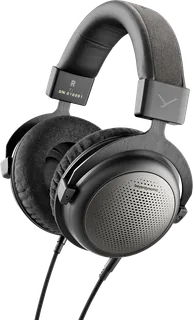
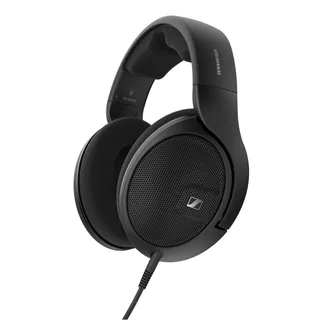
beyerdynamic T1 (3rd generation) vs Sennheiser HD 560S
Better figure, where one is clearly better
| beyerdynamicT1 (3rd generation) | SennheiserHD 560S | |
|---|---|---|
| Overview | ||
| Released | September 2020 | September 2020 |
| Sound | ||
| Type | Over-ear | Over-ear |
| Noise cancelling | No | No |
| Back | Open | Open |
| Impedance | 32 ohms | 120 ohms |
| Bluetooth codecs | None (wired) | None (wired) |
| Drivers | Tesla dynamic drivers, individually measured and matched in pairs, open-back; 5 – 50,000 Hz; 100 dB (1 mW); max. 124 dB (300 mW); THD < 0.05% (800 Hz, 1 mW); power handling 300 mW; Hi-Res Audio certified | Dynamic, open, with a polymer-blend membrane, angled towards the ears; 6 – 38,000 Hz; 110 dB SPL (1 kHz, 1 Vrms); THD < 0.05% (1 kHz, 90 dB SPL) |
| Battery | ||
| Listening time (maker's claim) | No battery (wired) | No battery (wired) |
| Design | ||
| Weight | 360 g | 280 g (better) |
| Headphone cable | Yes | Yes |
| Fit and ear tips | Over-ear, open-back; headband pressure approx. 4 N; replaceable velour and memory foam ear pads; stainless steel, anodised aluminium and Alcantara | Over-ear (circumaural), open-back, velour ear pads; 198 x 111 x 300 mm |
| Works with | Detachable 3 m double-sided cable of OCC 7N copper with gold-plated 3-pole 3.5 mm jack and screw-on 6.35 mm adapter; optional balanced cables with 4-pin XLR (3 m) or 2.5 mm 4-pole jack (1.4 m) | Detachable 1.8 m cable with 3.5 mm plug and a screw-on 6.3 mm adapter (the 2020 launch version came with a 3 m cable and 6.3 mm plug) |
| In the box | T1 headphones, 3 m cable with 3.5 mm jack, 3.5 mm to 6.35 mm adapter, hard case | HD 560S headphones, 1.8 m cable with 3.5 mm plug, 3.5 to 6.3 mm adapter, drawstring bag |