BMW R 1250 GS vs Yamaha MT-09 (2024)
Better figure, where one is clearly better
| BMWR 1250 GS | YamahaMT-09 (2024) | |
|---|---|---|
| Overview | ||
| Released | 2018 | 2024 |
| Engine and transmission | ||
| Powertrain | Petrol | Petrol |
| Engine capacity | 1,254 cc | 890 cc |
| Cylinders | 2 | 3 |
| Power | 100 kW | 87.5 kW |
| Torque | 143 Nm | 93 Nm |
| Engine details | Air/liquid-cooled four-stroke boxer twin, four valves per cylinder, double overhead camshafts, counterbalance shaft and BMW ShiftCam variable intake valve timing and lift. Bore × stroke 102.5 × 76 mm, compression 12.5:1, BMS-O engine control | Liquid-cooled four-stroke DOHC CP3 inline triple; four valves per cylinder; 78.0 × 62.1 mm bore and stroke; 11.5:1 compression; electronic fuel injection and wet-sump lubrication. UK displacement is 890 cc; Japanese announcement lists 888 cm³. |
| Power details | Maker 100 kW at 7750 rpm, also labelled 136 hp | Maximum 87.5 kW (119.0 PS) at 10,000 rpm, UK full-power version. |
| Torque details | 143 Nm at 6250 rpm | Maximum 93.0 Nm at 7,000 rpm. |
| Gearbox | Constant-mesh six-speed gearbox with helical gears; Shift Assistant Pro is optional | Six-speed constant-mesh manual with third-generation quickshifter. Later Y-AMT offers finger-operated manual selection or fully automatic shifts. |
| Clutch | Hydraulically activated wet clutch with anti-hopping function | Wet multiplate assist and slipper clutch on the manual version; Y-AMT automates clutch operation. |
| Final drive | Cardan shaft | Chain. |
| Restricted versions | – | Current UK full-power specifications list limited power as n/a; other European restricted-version figures are not substituted for this UK record. |
| Chassis and dimensions | ||
| Style | Adventure | Naked |
| Seat height | 850 mm | 825 mm |
| Road-ready weight | 249 kg | 193 kg |
| Frame | Two-section main frame and bolt-on rear frame, with engine as a load-bearing member | Diamond frame; revised engine mounts and front rigidity balance for 2024. |
| Front suspension | BMW Telelever with central spring strut and 37 mm tubes; 190 mm travel | 41 mm upside-down telescopic fork; 130 mm travel; adjustable suspension. |
| Rear suspension | Cast aluminium single-sided BMW Paralever swingarm with WAD spring strut, continuously adjustable preload and rebound damping; 200 mm travel. Dynamic ESA Next Generation is optional | Linked swingarm suspension; 117 mm travel; revised linkage for 2024. |
| Brakes | Front twin floating 305 mm discs with four-piston radial calipers; rear single 276 mm disc with two-piston floating caliper. Standard disengageable partly integral ABS; cornering ABS Pro is optional through Riding Modes Pro | Two hydraulic 298 mm front discs and one 245 mm rear disc; Brembo radial front master cylinder; lean-sensitive Brake Control and ABS. SP-only Stylema calipers are not included. |
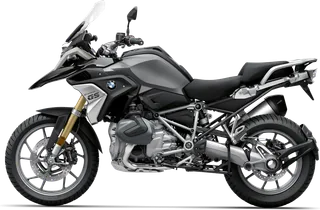
| Wheels and tyres | Standard die-cast aluminium wheels, 3.00 × 19 inches front and 4.50 × 17 inches rear; tyres 120/70 R19 and 170/60 R17. The press photos show optional cross-spoke wheels | Bridgestone Battlax Hypersport S23 tyres; front 120/70ZR17 M/C (58W), rear 180/55ZR17 M/C (73W); tubeless. |
| Geometry | Wheelbase 1514 mm, castor 100.6 mm and steering-head angle 64.3° | 24°40′ caster angle; 108 mm trail; 1,430 mm wheelbase; 140 mm minimum ground clearance. |
| Dimensions | Length 2207 mm; width including mirrors 952.5 mm | 2,090 × 820 × 1,145 mm overall length, width and height. |
| Seat height details | Standard rider seat adjusts between 850 and 870 mm; alternative seats and suspension provide other heights. HP style equipment differs | 825 mm seat height; separate rider and passenger seats; adjustable handlebar and footrest positions. |
| Weight conditions | Original 2018 maker technical table lists DIN unladen weight, road-ready, 249 kg; fuel-fill percentage is not specified in that table. Permitted total weight 465 kg; accessories and options change weight | Yamaha wet weight includes full oil and fuel tank; 193 kg standard manual and 196 kg Y-AMT. |
| Fuel and range | ||
| Fuel tank | 20 litres | 14 litres |
| Fuel consumption | Maker WMTC 4.75 litres/100 km; usable fuel tank 20 litres | Maker fuel-consumption claim 5.0 L/100 km; no calculated tank range. |
| Emissions | Original launch specification EU4, closed-loop three-way catalyst; maker CO₂ 110 g/km | UK maker claim 116 g/km CO₂; EU5+ engine. |
| Equipment | ||
| ABS | Yes | Yes |
| Traction control | Yes | Yes |
| Rider aids | Standard Automatic Stability Control ASC and Hill Start Control; Riding Modes Pro adds Dynamic Traction Control, ABS Pro, Hill Start Control Pro and Dynamic Brake Control | Six-axis IMU; traction, slide, front-wheel lift and brake control; Back Slip Regulator and conventional cruise control. Adaptive cruise control is not fitted. |
| Riding modes | Standard Road and Rain; optional Riding Modes Pro adds Dynamic, Dynamic Pro, Enduro and Enduro Pro | Yamaha Ride Control SPORT, STREET and RAIN presets plus two custom programmes. |
| Display | Standard 6.5-inch full-colour TFT instrument screen with Multi-Controller | Five-inch colour TFT with four display themes. |
| Connectivity | Standard BMW Motorrad Connectivity, including compatible smartphone and headset functions | UK MyRide smartphone connectivity and Garmin StreetCross navigation; calls and music require a Bluetooth headset, supplied separately. Japanese Y-Connect branding is not substituted. |
| Lighting | Standard LED headlight and LED rear light; LED daytime riding light is optional | LED headlamp and self-cancelling indicators. |
| Equipment and options | Optional cruise control, Dynamic ESA, Shift Assistant Pro, Intelligent Emergency Call and luggage; regional equipment packages vary | USB-C socket, intake-sound amplification and revised switchgear. Smart Key is available only on the later Y-AMT version. Standard MT-09 is covered; SP is a separate specification. |
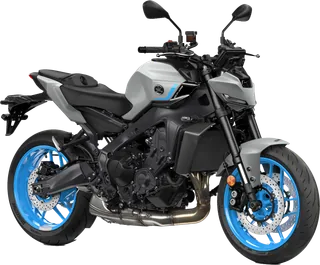
| Release and generation details | Announced 17 September 2018. Canadian announcement planned October 2018 sale; BMW USA's 16 November 2018 model update retrospectively says Available Now. A first actual retail month is not confirmed, so the headline retains 2018. Figures describe the original generation; later 2020 updates and the separate GS Adventure are not substituted | Substantive 2024 redesign announced on 1 November 2023, documented in Yamaha's retrospective 2024 exhibition and retained in the current UK range. Japan's 14 March announcement scheduled sale for 17 April 2024; this does not establish the earliest worldwide retail day, so year precision is retained. Main specifications and Ice Storm images use the current UK 2025 model-year listing of this generation. Y-AMT is a later transmission option, not a separate paint-year model. The available 2024-named UK fact sheet has been updated to mention Y-AMT weight; it is not treated as an untouched launch sheet. |
| Battery and charging | ||
| Battery details | Original technical table lists 12 V/11.8 Ah starter battery and 508 W generator; starter battery is not a traction battery | – |
More comparisons
- Triumph Trident 660 (2026) vs Yamaha MT-09 (2024)
- Yamaha MT-07 (2025) vs Yamaha MT-09 (2024)
- Honda CB750 Hornet (2025 generation) vs Yamaha MT-09 (2024)
- Honda CB650R (2024 generation) vs Yamaha MT-09 (2024)
- BMW R 1300 GS vs Yamaha MT-09 (2024)
- BMW R 1250 GS vs Honda CB650R (2024 generation)
- BMW R 1250 GS vs BMW R 1300 GS