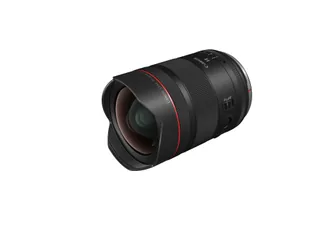
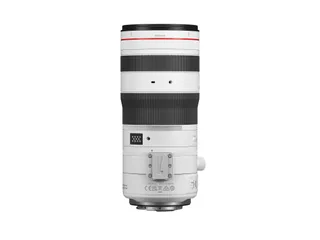
Canon RF 14mm F1.4L VCM vs Canon RF 70-200mm F2.8L IS USM Z
Better figure, where one is clearly better
| CanonRF 14mm F1.4L VCM | CanonRF 70-200mm F2.8L IS USM Z | |
|---|---|---|
| Overview | ||
| Released | February 2026 | November 2024 |
| Optics | ||
| Lens type | Prime | Zoom |
| Focal length | 14 mm | 70–200 mm |
| Maximum aperture | f/1.4 | f/2.8 |
| Minimum aperture | f/16 | f/22 |
| Optical construction | 18 elements in 13 groups | 18 elements in 15 groups |
| Special elements | One fluorite, one UD, one BR and three glass-moulded aspherical elements | Three aspherical elements including two glass-moulded and one replica; two Super UD elements and one UD element, with the UD glass-moulded aspherical element also counted among the asphericals |
| Coatings | Two ASC coatings, SWC and Super Spectra; fluorine coating on the front element | ASC and Super Spectra; fluorine coating on front element |
| Aperture detail | f/1.4–16; iris ring supports stepless aperture control in video, with stills compatibility dependent on camera model | Constant f/2.8 maximum and f/22 minimum; smooth electronic iris ring |
| Diaphragm | 11 circular aperture blades | 11 circular aperture blades |
| Angle of view | 104° horizontal, 81° vertical and 114° diagonal on full frame | 29°–10° horizontal, 19°30′–7° vertical and 34°–12° diagonal on full frame |
| Projection | Rectilinear ultra-wide design | – |
| Mount and compatibility | ||
| Mounts | Canon RF | Canon RF |
| Image circle | Full frame | Full frame |
| Compatibility | Canon EOS R cameras; full-frame image circle; iris-ring functions depend on the camera and firmware | Canon EOS R cameras; full-frame image circle; stills iris-ring operation depends on camera support |
| Teleconverter support | Canon RF extenders not compatible | RF 1.4x gives 98–280 mm f/4 with 0.42× maximum magnification; RF 2x gives 140–400 mm f/5.6 with 0.6×; autofocus and stabilisation retained |
| Focus and stabilisation | ||
| Autofocus | Yes | Yes |
| Minimum focus distance | 0.24 m | 0.49 m |
| Maximum magnification | 0.11× | 0.3× |
| Optical stabilisation | No | Yes |
| Autofocus detail | Voice Coil Motor autofocus; electronic manual focus ring; maker rear-focus design maintains lens length during focusing | Dual Nano USM motors independently drive two focusing groups for electronic floating focus control; full-time manual focus |
| Focus distance detail | – | Closest focus 0.49 m at 70 mm and 0.68 m at 200 mm; separate AF/MF distance modes not published |
| Magnification detail | – | 0.2× at 70 mm and 0.3× at 200 mm (Canon Japan) |
| Stabilisation detail | No lens optical IS; maker lists camera IBIS CIPA-2024 performance of 6.5 stops at the centre and 2.5 at the corners, subject to the compatible camera/test conditions | Lens OIS 5.5 stops at centre with EOS R8 at 200 mm; combined OIS/IBIS 7.5 centre and seven corner stops with EOS R1 at 200 mm under Canon's CIPA-2024 conditions |
| Video features | Stepless iris ring; Canon Japan identifies EOS R1/EOS R5 Mark II stills iris-ring support; the US launch also names EOS R6 Mark III; do not assume the same support on every EOS R body | Optically suppressed focus breathing and electronic floating focus control; optional PZ-E2/PZ-E2B adapters provide motorised zoom; iris operation in stills depends on camera and firmware |
| Design | ||
| Dust and moisture resistant | Yes | Yes |
| Filter diameter | – | 82 mm |
| Maximum diameter | 76.5 mm | 88.5 mm |
| Length | 112 mm | 199 mm |
| Weight | 578 g (better) | 1,115 g |
| Controls | Customisable control ring, electronic focus ring, iris ring with Auto-position lock, AF/MF switch and custom function button (controls confirmed by Digital Camera World) | Control, focus, zoom and iris rings; iris Auto lock; lens function buttons |
| Zoom design | – | Internal zoom with 70° rotation; barrel length remains constant |
| Filter detail | No front screw-in filter thread; rear gelatin-filter holder for 36.7 × 29.4 mm filters | 82 mm front screw-in filter thread |
| Weather resistance | Dust and moisture resistant structure with mount gasket; Canon states resistance requires attachment to a camera and cannot prevent all dust or water ingress; no IP rating inferred | Dust and moisture resistant construction with mount gasket; maker states it cannot completely prevent ingress and requires attachment to a camera |
| Dimensions detail | Approximately 76.5 mm maximum diameter × 112 mm length; integral hood | Approximately 88.5 mm maximum diameter × 199 mm length; same barrel size for white and black versions |
| Weight detail | Approximately 578 g lens | White 1115 g and black 1110 g, excluding tripod mount; headline uses photographed white model |
| Tripod mount | – | Tripod foot removable; PetaPixel notes no Arca-Swiss profile or 90° collar click stops |
| Lens hood | Built into the lens barrel; maker lists lens cap 14B, Lens Dust Cap RF and pouch LP1219 as accessories | White ET-88C (WIII) or black ET-88C (B); LZ1328 case and E-82 II/Lens Dust Cap RF listed as accessories |
| In the box | – | ET-88C lens hood (Web Cameraman) |
| Release detail | Canon Japan specifies first sale on 20 February 2026; US announcement expected availability by the end of February, rather than the same exact regional day | Canon Camera Museum confirms marketed November 2024; Photography Blog preview reports 14 November UK/Europe/US, while Web Cameraman reports 29 November Japan; precise regional retail days are secondary and headline retains maker-confirmed month |
More comparisons
- Canon RF 20-50mm F4L IS USM PZ vs Canon RF 70-200mm F2.8L IS USM Z
- Canon RF 14mm F1.4L VCM vs Canon RF 20-50mm F4L IS USM PZ
- Canon RF 14mm F1.4L VCM vs Canon RF 16mm F2.8 STM
- Canon RF 14mm F1.4L VCM vs Canon RF 16–28mm F2.8 IS STM
- Canon RF 14mm F1.4L VCM vs Canon RF 7-14mm F2.8-3.5L FISHEYE STM
- Canon RF 14mm F1.4L VCM vs Canon RF 20mm F1.4 L VCM
- Canon RF 14mm F1.4L VCM vs Canon RF 24mm F1.4 L VCM
- Canon RF 14mm F1.4L VCM vs Canon RF 45mm F1.2 STM
- Canon RF 14mm F1.4L VCM vs Canon RF 85mm F1.4L VCM
- Canon RF 14mm F1.4L VCM vs Canon RF 75–300mm F4–5.6
- Canon RF 14mm F1.4L VCM vs Canon RF-S 14–30mm F4–6.3 IS STM PZ
- Canon RF 14mm F1.4L VCM vs Canon RF 50mm F1.4 L VCM
- Canon RF 7-14mm F2.8-3.5L FISHEYE STM vs Canon RF 70-200mm F2.8L IS USM Z
- Canon RF 14mm F1.4L VCM vs Canon RF 28–70mm F2.8 IS STM
- Canon RF 14mm F1.4L VCM vs Canon RF 35mm F1.4 L VCM
- Canon RF 14mm F1.4L VCM vs Canon RF 200–800mm F6.3–9 IS USM