Dell XPS 17 9700 vs Lenovo ThinkPad P16s Gen 4 (Intel)
Better figure, where one is clearly better
| DellXPS 17 9700 | LenovoThinkPad P16s Gen 4 (Intel) | |
|---|---|---|
| Overview | ||
| Released | June 2020 | July 2025 |
| Display | ||
| Screen size | 17″ | 16″ |
| Resolution | 1920 × 1200 or 3840 × 2400 | 1920 × 1200 or 3840 × 2400 |
| Panel | – | IPS LCD or OLED |
| Refresh rate | 60 Hz | 60 Hz |
| Brightness | 500 nits | 400 nits or 500 nits |
| Touchscreen | No or Yes | No or Yes |
| Display type | 17-inch WVA LCD; FHD+ 1920 × 1200 non-touch or UHD+ 3840 × 2400 touch, both 60 Hz and 500 nits | 16-inch, 16:10, 60 Hz; WUXGA IPS (400-nit, or 500-nit low power) or WQUXGA (3840 × 2400) OLED with add-on film touch |
| Pixel density | 133 ppi (FHD+); 266 ppi (UHD+) | – |
| Colour range | 100% sRGB (FHD+); 100% Adobe RGB (UHD+); original Dell reviewer's guide also states 94% DCI-P3 typical for UHD+ | 45% NTSC (400-nit IPS); 100% sRGB (500-nit IPS); 100% DCI-P3 (OLED) |
| Screen finish | Anti-glare (FHD+); anti-reflective (UHD+) | Anti-glare (IPS); anti-reflection and anti-smudge (OLED) |
| Display features | 1650:1 FHD+ or 1600:1 UHD+ typical contrast; original maker guide lists Dolby Vision for both panels, DisplayHDR 400 for UHD+ and Gorilla Glass 6 on touch | IPS 1,200:1 contrast with AICCP colour calibration; OLED 400 nits, 100,000:1 contrast and X-Rite factory colour calibration; TÜV Low Blue Light |
| Performance | ||
| Processor | Intel Core i5-10300H or Intel Core i7-10875H | Intel Core Ultra 5 225H, Intel Core Ultra 7 255H, Intel Core Ultra 7 265H or Intel Core Ultra 9 285H |
| CPU cores | 4 or 8 | 14 or 16 |
| CPU threads | 8 or 16 | 14 or 16 |
| Graphics | Intel UHD Graphics 630 or NVIDIA GeForce RTX 2060 Max-Q | Intel Arc 130T, NVIDIA RTX PRO 500 Blackwell (6 GB), NVIDIA RTX PRO 1000 Blackwell (8 GB) or Intel Arc 140T |
| AI engine (NPU) | – | 13 TOPS |
| Memory | 8 GB or 32 GB | 16 GB, 32 GB or 64 GB (better) |
| Storage | 256 GB to 1 TB | 512 GB to 2 TB (better) |
| CPU | 45 W Core i5-10300H, i7-10750H, i7-10875H or later i9-10885H; four, six or eight cores depending on processor | Core Ultra 5 225H (4 P-cores, 8 E-cores, 2 LP E-cores); Core Ultra 7 255H or 265H and Core Ultra 9 285H (6 P-cores, 8 E-cores, 2 LP E-cores); Intel vPro on selected models |
| GPU | Intel UHD Graphics 630; optional GTX 1650 Ti with 4 GB GDDR6 or RTX 2060 Max-Q with 6 GB GDDR6 | Integrated Intel Arc 130T or 140T (Intel Graphics with single-channel memory); optional NVIDIA RTX PRO 500 Blackwell (6 GB GDDR7, 294 AI TOPS) or RTX PRO 1000 Blackwell (8 GB GDDR7, 440 AI TOPS) |
| AI engine | – | AI PC; Intel AI Boost NPU up to 13 TOPS |
| Memory type | Two replaceable SO-DIMMs; dual-channel DDR4-2933, with 8, 16, 32 or 64 GB factory configurations | Two slots, DDR5-5600 SODIMM (8–32 GB modules) or DDR5-6400 CSODIMM (32 or 48 GB modules), non-ECC, up to 96 GB |
| Storage type | Two M.2 2230/2280 PCIe Gen 3 x4 NVMe SSD slots; up to 256 GB per 2230 or 2 TB per 2280 drive. Listed i5/FHD+ and i7/UHD+ combinations are the exact base and tested configurations documented by Tom’s Hardware | One M.2 2280 PCIe 4.0 x4 slot (PCIe 5.0 SSDs run at PCIe 4.0 speed); NVMe SSD up to 2 TB, Opal 2.0 |
| Cooling | Original maker guide describes dual opposite-outlet fans and a large vapour chamber on NVIDIA graphics configurations | – |
| Battery and size | ||
| Battery capacity | 97 Wh (better) | 75 Wh |
| Weight | 2.11 kg | 1.82 kg (better) |
| Thickness | 19.5 mm | 18.17 mm (better) |
| Width × depth | 374.45 × 248.05 mm | 361.5 × 248.6 mm |
| Battery life detail | 56 Wh three-cell or 97 Wh six-cell lithium-ion; the main capacity is the larger option, not every configuration | 57 Wh or 75 Wh Li-ion; Lenovo publishes no battery life figures |
| Charger | 90 W or 130 W USB-C adapter | 100 W USB-C slim adapter (PD 3.0) |
| Fast charging | Standard charge approximately four hours; ExpressCharge approximately two hours at 16–45°C, with different times outside that range | Rapid Charge to 80% in 1 hour (when off, in standby or hibernating) |
| Materials | CNC-machined aluminium with carbon-fibre palm rest. Original maker guide gives 374.45 × 248.05 × 19.5 mm and starting weights of 2.11 kg non-touch/56 Wh or 2.51 kg touch/97 Wh; later setup guide instead lists 374.48 × 248.08 mm, 13.15 mm rear height and 2.53 kg maximum weight | Aluminium top and bottom covers |
| Colours | Platinum Silver with black palm rest | Black |
| Connections | ||
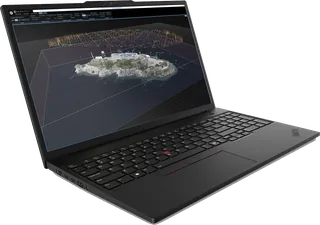
| Ports | 4 × Thunderbolt 3, SD card slot, headphone jack | 2 × Thunderbolt 4, 2 × USB-A, HDMI, Ethernet, headphone jack |
| Wi-Fi | Wi-Fi 6 | Wi-Fi 7 |
| Bluetooth | 5.0 / 5.2, depending on wireless module | 5.4 |
| Webcam | 720p at 30 fps, with IR | 5MP, optional IR |
| Operating system | Windows | Windows |
| Port detail | Four Thunderbolt 3 USB-C ports with Power Delivery and DisplayPort; SD card reader; headset jack; wedge-shaped security slot | 2 × Thunderbolt 4 with USB PD 3.0; 2 × USB-A 5 Gbps (one Always On); HDMI 2.1 up to 4K 60 Hz; Gigabit Ethernet (RJ-45); 3.5 mm headphone/mic combo jack; optional smart card reader and nano-SIM slot (4G models, not in North America) |
| External displays | – | Up to three external displays (four including the built-in), three at 4K 60 Hz; one Thunderbolt display up to 8K 60 Hz or 4K 240 Hz; HDMI up to 4K 60 Hz |
| Keyboard | Backlit QWERTY keyboard, 80 keys for UK layout; original guide states 1.3 mm key travel; no number pad | 6-row, spill-resistant, backlit, with numeric keypad; Copilot key; TrackPoint |
| Trackpad | Setup guide gives 150 × 89 mm; original reviewer's guide describes 151 × 90 mm | Mylar 3-button trackpad, 67 × 115 mm |
| Speakers | Four drivers; original maker guide lists two 2.5 W woofers and two 1.5 W tweeters, 8 W total peak output | Stereo 2 W × 2, Dolby Audio |
| Microphones | Dual digital-array microphones | Dual-microphone array, 360° far-field, Dolby Voice |
| Biometrics | IR camera for Windows Hello; fingerprint reader in the power button | Fingerprint reader in the power button (match-on-chip); optional IR camera for Windows Hello |
| In the box | USB-C to USB-A v3.0 and HDMI v2.0 adapter, listed in the original maker guide | – |

More comparisons
- Dell XPS 13 DX13260 vs Dell XPS 17 9700
- Dell XPS 16 DA16260 vs Dell XPS 17 9700
- Dell XPS 14 DA14260 vs Dell XPS 17 9700
- Lenovo ThinkPad P14s Gen 6 (Intel) vs Lenovo ThinkPad P16s Gen 4 (Intel)
- Dell Dell Pro 16 PC16250 vs Lenovo ThinkPad P16s Gen 4 (Intel)
- Dell XPS 15 L502X vs Lenovo ThinkPad P16s Gen 4 (Intel)
- Lenovo ThinkPad P16s Gen 4 (Intel) vs Lenovo ThinkPad T16 Gen 4 (AMD)
- Lenovo ThinkPad L14 Gen 6 (AMD) vs Lenovo ThinkPad P16s Gen 4 (Intel)
- Lenovo ThinkPad L14 Gen 6 (Intel) vs Lenovo ThinkPad P16s Gen 4 (Intel)
- Lenovo ThinkPad P14s Gen 6 (AMD) vs Lenovo ThinkPad P16s Gen 4 (Intel)
- Lenovo ThinkPad P16s Gen 4 (AMD) vs Lenovo ThinkPad P16s Gen 4 (Intel)
- Lenovo ThinkPad E14 Gen 7 (AMD) vs Lenovo ThinkPad P16s Gen 4 (Intel)
- Lenovo ThinkPad E14 Gen 7 (Intel) vs Lenovo ThinkPad P16s Gen 4 (Intel)
- Lenovo ThinkPad E16 Gen 3 (AMD) vs Lenovo ThinkPad P16s Gen 4 (Intel)
- Lenovo ThinkPad E16 Gen 3 (Intel) vs Lenovo ThinkPad P16s Gen 4 (Intel)
- Dell XPS 15 9500 vs Lenovo ThinkPad P16s Gen 4 (Intel)