Elgato Facecam 4K vs Razer Kiyo V2
Better figure, where one is clearly better
| ElgatoFacecam 4K | RazerKiyo V2 | |
|---|---|---|
| Overview | ||
| Released | July 2025 | October 2025 |
| Video | ||
| Highest resolution | 4K (3840 × 2160) at 60 fps | 4K (3840 × 2160) at 30 fps |
| Highest frame rate | 60 fps | 60 fps |
| Sensor | Sony STARVIS 2 1/1.8″ | 8.3 MP Sony STARVIS |
| Field of view | 90° diagonal | 93° diagonal |
| Autofocus | No | Yes |
| HDR | Yes | Yes |
| Auto framing | – | Yes |
| Sensor | Sony STARVIS 2 CMOS sensor, 1/1.8-inch | 8.3 MP Sony STARVIS sensor; still images up to 3840 × 2160 |
| Resolutions and frame rates | Over USB 3.0, 2160p60 (MJPEG only), 2160p30 (NV12 or MJPEG), 1440p60 (NV12 or MJPEG), 1440p30, 1080p60, 1080p30, 720p60, 720p30, 540p60 and 540p30; over USB 2.0, up to 1080p60 in MJPEG; HDR at 2160p30, 1440p30, 1080p30, 720p30 and 540p30 | 4K at 30 fps; 1440p at 30 fps; 1080p at 60, 30 or 24 fps; 720p at 60 or 30 fps |
| Lens | Elgato Prime Lens; f/4.0; 21 mm focal length; 90° field of view; 49 mm filter thread | 3.0 mm focal length, 93° maximum diagonal field of view; framing can be adjusted in software |
| Focus | Fixed focus; 30–120 cm at 4K, 25 cm to infinity at 1080p | Auto or manual focus |
| Image features | HDR; manual exposure (shutter speed, ISO); tint control; 2D and 3D noise reduction; built-in colour grading; settings stored on the camera | HDR at up to 30 fps; MJPEG, YUY2 and NV12 recording formats; automatic exposure, white balance and noise reduction |
| Framing and tracking | – | Camo Studio software offers automatic framing with digital pan and zoom |
| Audio | ||
| Microphones | None | 2 |
| Microphones | None | Built-in omnidirectional stereo microphones with noise cancellation, 16-bit/48 kHz audio |
| Connections and software | ||
| Connector | USB-C | USB-C |
| Connection | USB-C on the camera; USB-C to USB-C 3.0 cable; USB-A ports need an adapter (not included); USB 2.0 limited to 1080p MJPEG; UVC 1.5 | Detachable USB-C to USB-C cable, USB 3.0; a direct USB-C port is required for full 4K use |
| Works with | Windows 11 or later, macOS 13 or later, iPadOS 17 or later on iPads with USB-C | Windows 10 or later; OBS and XSplit supported |
| Software | Elgato Camera Hub | Razer Synapse for image controls and Camo Studio for auto framing and effects |
| Design | ||
| Privacy shutter | No | Yes |
| Weight | 112 g (better) | 255 g |
| Mount | Monitor mount; ¼-inch thread | Fixed L-shaped monitor mount with ¼-inch tripod thread |
| Privacy | No built-in shutter; privacy cap sold as an accessory | Twist-operated physical lens shutter |
| Cable | 200 cm USB-C to USB-C 3.0, detachable | 2 m USB-C to USB-C cable supplied |
| Size | 104 × 54 × 52 mm (width × height × depth), without mount | 116 × 65.3 × 74 mm including mount; camera body 116 × 27 × 27 mm |
| Colours | Black, Carbon, Pine, White | Black, White and Quartz |
| In the box | Facecam 4K, monitor mount, USB-C to USB-C 3.0 cable (200 cm) | Camera, USB-C cable and product information guide |
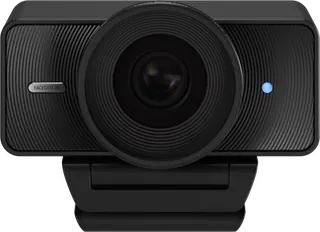

More comparisons
- Razer Kiyo V2 vs Razer Kiyo V2 Pro
- OBSBOT Meet 2 vs Razer Kiyo V2
- OBSBOT Tiny 2 Lite vs Razer Kiyo V2
- OBSBOT Tiny 2 vs Razer Kiyo V2
- Razer Kiyo V2 vs Razer Kiyo V2 X
- Razer Kiyo Pro Ultra vs Razer Kiyo V2
- Razer Kiyo V2 vs Razer Kiyo X
- Razer Kiyo Pro vs Razer Kiyo V2
- Razer Kiyo vs Razer Kiyo V2
- Elgato Facecam 4K vs Razer Kiyo V2 X
- Elgato Facecam 4K vs Logitech MX Brio
- Elgato Facecam 4K vs Razer Kiyo Pro Ultra