Fitbit Sense 2 vs Garmin vívomove Sport
Better figure, where one is clearly better
| FitbitSense 2 | Garminvívomove Sport | |
|---|---|---|
| Overview | ||
| Released | September 2022 | January 2022 |
| Display | ||
| Case sizes | 40.5 mm | 40 mm |
| Panel | OLED | OLED |
| Always-on display | Yes | No |
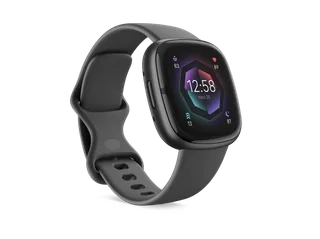
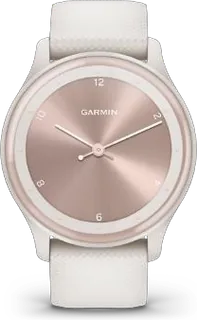
| Display detail | colour AMOLED touchscreen; always-on option | Hidden monochrome OLED touchscreen in the lower half of the dial, 8.6 x 18.5 mm (0.34 x 0.73 inches), 72 x 154 pixels; the digital display turns off when idle while the analogue hands remain visible |
| Screen protection | Corning Gorilla Glass 3 | Chemically strengthened glass |
| Health and fitness | ||
| ECG | Yes | No |
| Blood oxygen | Yes | Yes |
| Skin temperature | Yes | No |
| Sleep apnoea alerts | No | No |
| High blood pressure alerts | No | No |
| Body composition | No | No |
| Fall detection | No | No |
| Crash detection | No | No |
| GPS | Single-band | None |
| Water resistance | 50 m | 50 m |
| Sensors | Multipath optical heart-rate sensor; electrical sensors compatible with ECG and EDA apps; continuous electrodermal activity (cEDA) sensor; red and infrared SpO2 sensors; gyroscope; altimeter; 3-axis accelerometer; skin temperature sensor; ambient light sensor; NFC; vibration motor; speaker and microphone. | Garmin Elevate optical heart-rate sensor; Pulse Ox sensor; accelerometer; ambient-light sensor. No barometric altimeter is listed for this model |
| Health features | ECG app and irregular rhythm notifications in supported regions; continuous electrodermal activity (cEDA) for body-response tracking, sleep tracking, SpO2 and skin temperature variation. Availability varies by country. | Continuous heart rate and high/low resting alerts; respiration; Body Battery; stress and relaxation reminders; advanced sleep tracking, with sleep score and insights on the current UK page; spot-check or optional overnight Pulse Ox; hydration; menstrual-cycle and pregnancy logging; fitness age |
| Fitness features | Built-in GPS and GLONASS; 40+ exercise modes; Active Zone Minutes; connected Google Maps directions and Google Wallet. GPS use reduces battery life. | HIIT, cardio, elliptical, stair stepping, walking, Pilates, yoga, treadmill running, running, cycling and pool swimming; phone-connected GPS; steps, calories and intensity minutes; automatic rep counting; running VO2 max; heart-rate zones and alerts; ANT+ heart-rate broadcasting; Auto Lap; Move IQ; underwater wrist heart rate. The current UK activity list omits strength training despite the exact owner manual providing its recording instructions |
| Safety features | – | Assistance and incident detection during selected activities require a paired compatible smartphone and connectivity; these do not establish general fall detection |
| Battery and connections | ||
| Battery life (maker's claim) | Up to 6 days | Up to 5 days |
| In low-power mode | – | Up to 6 days |
| Mobile data option | No | No |
| Works with | iPhone and Android | iPhone and Android |
| Battery life detail | 6+ days; use of the always-on display, SpO2 and cEDA sensor requires more frequent charging. Continuous GPS lasts up to 5 hours. A 12-minute fast charge is stated to provide a day of battery life; a full 0–100% charge takes about 2 hours. | Up to five days in smartwatch mode, followed by up to one additional day in watch-only mode; actual life depends on usage |
| Charging | Included charging cable; Google states a 12-minute charge provides a day of battery life; a full 0–100% charge takes about 2 hours. | Built-in rechargeable lithium-ion battery; supplied USB cable connects to the proprietary Garmin plug charging port. Charging temperature 0–45 °C |
| Connectivity | Bluetooth; built-in GPS and GLONASS; NFC; Wi-Fi is disabled. On-wrist Bluetooth calls require a paired phone nearby. Compatible with Android 11 or newer and iOS 16.4 or newer using the Google Health app. | Bluetooth Smart and ANT+; iPhone and Android compatibility; phone notifications, with text replies and text rejection of calls on Android; controls smartphone music; heart-rate broadcasting; connected GPS requires a paired phone |
| Storage | Saves 7 days of detailed motion data minute by minute. | Ten timed activities and 14 days of activity-tracking data; storage capacity in GB is not published |
| Design | ||
| Weight (lightest version) | 37.64 g | 33.8 g (better) |
| Software | Other | Garmin |
| Case materials | Flexible sport-watch-style band; aluminium watch case and buckle; Corning Gorilla Glass 3 display cover; water resistant to 5 ATM. | Fibre-reinforced polymer case; chemically strengthened glass lens; silicone band |
| Size | 40.5 × 40.5 × 11.2 mm; 37.64 g including band. | 40 x 40 x 11 mm; 19 g case only or 33.8 g with silicone band |
| Bands | Small and large classic flexible-material bands included; small fits 130–180 mm wrists and large fits 165–220 mm. | Standard 20 mm quick-release bands; fits wrists 125–190 mm in circumference |
| Colours | Shadow Grey/Graphite; Lunar White/Platinum; Blue Mist/Soft Gold. | Slate accents/Black; Peach Gold accents/Ivory; Peach Gold accents/Cocoa; Silver accents/Cool Mint. All four finish records remain published on the UK page but are not currently sellable there |
| In the box | Fitbit Sense 2; small and large classic bands; charging cable. | vívomove Sport; charging/data cable; documentation |
| Movement | ||
| Movement detail | – | Analogue hands synchronise to a paired smartphone and move out of the way when the touchscreen is used; hands can be realigned through the exact owner settings |
| Functions | – | Time and date; automatic daylight saving time; alarm; timer; stopwatch |
More comparisons
- Fitbit Charge 6 vs Fitbit Sense 2
- Garmin vívomove Sport vs Garmin vívomove Trend
- Fitbit Sense 2 vs Garmin vívomove Trend
- Fitbit Sense 2 vs Fitbit Versa 4
- Fitbit Sense vs Fitbit Sense 2
- Fitbit Sense 2 vs Fitbit Versa 3
- Fitbit Inspire 3 vs Fitbit Sense 2
- Fitbit Versa 4 vs Garmin vívomove Sport
- Garmin Venu 2S vs Garmin vívomove Sport