Garmin fēnix vs Garmin fēnix E
Better figure, where one is clearly better
| Garminfēnix | Garminfēnix E | |
|---|---|---|
| Overview | ||
| Released | 2012 | August 2024 |
| Display | ||
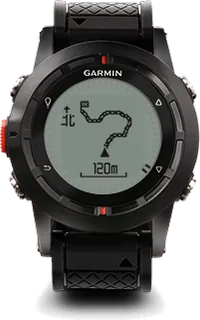
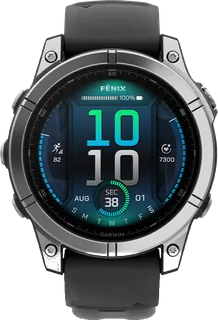
| Case sizes | 49 mm | 47 mm |
| Panel | LCD | OLED |
| Always-on display | Yes | Yes |
| Display detail | Transflective monochrome LCD, 31 mm diameter and 70 × 70 pixels, with LED backlight and five physical buttons. | 33 mm (1.3 inch) AMOLED touchscreen, 416 x 416 pixels, five physical buttons; always-on option and red-shift mode. |
| Screen protection | – | Corning Gorilla Glass; no Sapphire configuration in the exact current range. |
| Health and fitness | ||
| ECG | No | No |
| Blood oxygen | No | Yes |
| Skin temperature | No | No |
| Sleep apnoea alerts | No | No |
| High blood pressure alerts | No | No |
| Body composition | No | No |
| Fall detection | No | No |
| Crash detection | No | No |
| GPS | Single-band | Single-band |
| Water resistance | 50 m | 100 m (better) |
| Sensors | High-sensitivity GPS receiver, barometric altimeter, three-axis compass and temperature sensor. Optional ANT+ heart-rate, foot-pod, speed/cadence and tempe temperature sensors. | GPS, GLONASS, Galileo, QZSS and BeiDou; Garmin Elevate wrist heart rate, Pulse Ox, barometric altimeter, compass, gyroscope, accelerometer, thermometer and ambient-light sensor. Single-frequency GNSS, with no multi-band/SatIQ (confirmed by exact Wareable and T3 tests); maker does not number the heart-rate sensor generation in its current table. |
| Health features | – | Continuous heart rate and high/low alerts, respiration, Body Battery, stress, advanced sleep tracking/coach/score/alignment, breathing variations, nap detection, HRV status, Health Snapshot/Status, jet lag adviser and lifestyle logging. Current table lists smart wake alarm. Hydration and menstrual-cycle/pregnancy features use Garmin Connect and optional Connect IQ widget. Pulse Ox is not available in every country. No ECG or skin-temperature feature is listed for this exact hardware; the ambient thermometer does not establish skin-temperature tracking. |
| Fitness features | Outdoor activity profiles including hiking, mountaineering, running and cycling; configurable data fields, Auto Pause, Auto Lap and training alerts. No optical wrist heart-rate sensor. | Training readiness/status, training load/focus/effect, recovery time, endurance and hill scores, VO2 max, real-time stamina, running tolerance, running dynamics/power, PacePro and ClimbPro. Running economy, step speed loss and some sensor metrics require a compatible accessory. Garmin running, cycling, strength and triathlon coaching, suggested workouts and animated strength/cardio/yoga/Pilates workouts. Triathlon auto transitions, pool/open-water swimming, cycling, climbing, skiing, golf and many other profiles. Download free regional TopoActive maps over Wi-Fi for offline navigation; dynamic round-trip routing, turn-by-turn courses, NextFork, TracBack and back-to-start. Maker table calls road/trail maps “Yes (downloadable)”; do not treat them as preinstalled. Golf courses and ski-resort maps are listed as preloaded; premium map contents require optional Outdoor Maps+ subscription. |
| Safety features | Waypoint, route and breadcrumb navigation with TracBack; worldwide city basemap and paperless geocaching, without preloaded detailed maps or turn-by-turn routing. | Incident detection during selected activities, assistance, LiveTrack and live event sharing require a compatible paired phone/connectivity. Screen flashlight lights the display; no separate LED torch. Current web safety table marks hands-free voice control, but Garmin’s Japanese launch explicitly excludes fēnix E from speaker/microphone/voice commands; that ambiguous table entry does not establish those hardware features. No dive-rated inductive buttons, depth sensor, LTE or satellite messaging. |
| Battery and connections | ||
| Battery life (maker's claim) | Up to 42 days | Up to 16 days |
| In low-power mode | – | Up to 21 days |
| Mobile data option | No | No |
| Works with | iPhone | iPhone and Android |
| Storage | – | 16 GB |
| Battery life detail | Rechargeable 500 mAh lithium-ion battery; up to six weeks in watch mode, two weeks with sensors always on, sixteen hours in normal GPS mode or fifty hours in UltraTrac according to the owner's manual. | Up to 16 days smartwatch with gesture wake, or 6 days always-on; battery-saver watch mode 21 days. GPS-only 42 h gesture/30 h always-on; all satellite systems 32/24 h; all satellites plus music 10 h in either mode; maximum-battery GPS 75 h; expedition GPS 14 days. Headline figures use gesture-wake smartwatch and battery saver. Actual life depends on enabled features and connected sensors; no solar charging. |
| Charging | USB contact charging cradle and AC adapter. | Built-in rechargeable lithium-ion battery. Garmin proprietary charging/data cable to USB-C computer port or AC adaptor rated at least 5 W, per September 2026 owner guide; cable is supplied. |
| Connectivity | ANT+ sensors and wireless sharing with compatible Garmin devices; Bluetooth Smart transfer to the BaseCamp Mobile iPhone app and USB computer transfer to BaseCamp or Garmin Connect. | Bluetooth, ANT+ and Wi-Fi; Garmin Connect for iPhone/Android, Connect IQ apps/watch faces, Garmin Pay with supported banks, downloaded music and supported subscription services. Smart notifications, Garmin Share and Garmin Messenger with paired phone; notification text replies/images are Android-specific. No calls through the watch speaker or offline voice commands. |
| Storage | 20 MB internal memory; 1,000 waypoints, fifty routes, 10,000 track points and 100 saved tracks. | – |
| Design | ||
| Weight (lightest version) | 82 g | 76 g (better) |
| Software | Garmin | Garmin |
| Case materials | Shock-resistant housing, mineral-glass lens and polyurethane wristband; 50 m water resistance. | Stainless-steel bezel (natural or Slate Grey), fibre-reinforced polymer case with metal rear cover, silicone band. |
| Size | 49 × 49 × 17 mm; 82 g. | 47 x 47 x 14.5 mm. 76 g with supplied band, 53 g case only. Included 22 mm QuickFit silicone band fits 125–208 mm wrists. Maker separately lists optional UltraFit 125–215 mm, leather 132–210 mm and metal 132–215 mm bands. |
| Reference and release detail | – | First documented availability is Garmin forum’s “Now Available” announcement dated 27 August 2024 at 16:14 UTC. UK first shipping date is not independently established; Japanese launch announced mid-September 2024 availability separately. This is fēnix E hardware, not fēnix 8 AMOLED or Solar. |
More comparisons
- Garmin fēnix 9 vs Garmin fēnix E
- Garmin fēnix vs Garmin fēnix 9
- Garmin fēnix E vs Garmin Forerunner 970
- Garmin fēnix E vs Garmin Instinct E
- Garmin fēnix 8 Solar vs Garmin fēnix E
- Garmin fēnix 8 AMOLED (47 mm, Sapphire) vs Garmin fēnix E
- Garmin Approach S70 vs Garmin fēnix E
- Garmin fēnix 7 vs Garmin fēnix E
- Garmin fēnix 6 vs Garmin fēnix E
- Garmin fēnix 5 Plus vs Garmin fēnix E
- Garmin fēnix 5 vs Garmin fēnix E
- Garmin fēnix 5S vs Garmin fēnix E
- Garmin fēnix 5X vs Garmin fēnix E
- Garmin fēnix 3 HR vs Garmin fēnix E
- Garmin fēnix 3 vs Garmin fēnix E
- Garmin fēnix 2 vs Garmin fēnix E