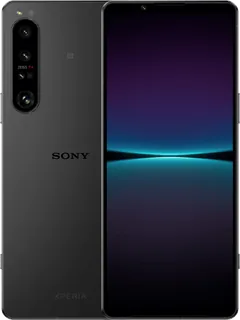
Google Pixel 7 Pro vs Sony Xperia 1 IV
Better figure, where one is clearly better
| GooglePixel 7 Pro | SonyXperia 1 IV | |
|---|---|---|
| Overview | ||
| Released | October 2022 | June 2022 |
| Display | ||
| Screen size | 6.7″ | 6.5″ |
| Resolution | 3120 × 1440 | 3840 × 1644 (better) |
| Sharpness | 513 pixels per inch | 643 pixels per inch (better) |
| Panel | LTPO OLED | OLED |
| Refresh rate | 120 Hz | 120 Hz |
| Peak brightness | 1,500 nits | – |
| Display type | LTPO OLED | 4K HDR OLED, 21:9 |
| Pixel density | 512 ppi | – |
| Brightness detail | Up to 1000 nits HDR; up to 1500 nits peak | – |
| Always-on display | Always-on display with At a Glance and Now Playing | – |
| Screen protection | Corning Gorilla Glass Victus | Corning Gorilla Glass Victus front and rear |
| Display features | 19.5:9 aspect ratio; Smooth Display up to 120 Hz; HDR support; over 1,000,000:1 contrast ratio; 24-bit colour (16 million colours) | 120 Hz refresh; 240 Hz motion blur reduction and touch scanning; Creator mode powered by CineAlta; Sony says about 50% brighter than Xperia 1 III |
| Performance | ||
| Chip | Tensor G2 | Snapdragon 8 Gen 1 |
| Memory | 12 GB | 12 GB |
| Storage | 128 GB, 256 GB | 256 GB |
| Storage type | UFS 3.1 storage; LPDDR5 RAM; UK configurations are 128 or 256 GB, with 512 GB offered elsewhere (TechRadar) | 256 GB UFS in UK specification; microSDXC slot supports up to 1 TB |
| Cameras | ||
| Main camera | 50 MP (better) | 12 MP |
| Ultra wide camera | 12 MP | 12 MP |
| Telephoto camera | 48 MP | 12 MP |
| Optical zoom | 5× | 5.2× (better) |
| Front camera | 10.8 MP | 12 MP (better) |
| Main camera | 50 MP Octa PD Quad Bayer wide camera; 1.2 μm pixel width; f/1.85 aperture; 82° field of view; 1/1.31" image sensor size | 12 MP, 24 mm, ƒ/1.7, 1/1.7-inch Exmor RS sensor |
| Ultra wide camera | 12 MP ultrawide camera with autofocus; 1.25 μm pixel width; f/2.2 aperture; 125.8° field of view; Lens correction | 12 MP, 16 mm, ƒ/2.2, 1/2.5-inch Exmor RS sensor |
| Telephoto camera | 48 MP Quad Bayer PD telephoto camera; 0.7 μm pixel width; f/3.5 aperture; 20.6° field of view; 5x optical zoom; Super Res Zoom up to 30x | 12 MP, continuous 85–125 mm, ƒ/2.3–2.8, 1/3.5-inch Exmor RS sensor |
| Front camera | 10.8 MP; 1.22 μm pixel width; f/2.2 aperture; Fixed focus; 92.8° ultrawide field of view | 12 MP, ƒ/2.0, 1/2.9-inch Exmor RS sensor |
| Zoom | Super Res Zoom up to 30x; 5× optical telephoto zoom | Continuous 85–125 mm optical telephoto (about 3.5–5.2× relative to 24 mm main); 15.6× hybrid zoom |
| Video recording | Rear camera; 4K video recording at 30 fps, 60 fps; 1080p video recording at 30 fps, 60 fps; 10-bit HDR video; Front camera; 4K video recording at 30 fps, 60 fps; 10-bit HDR video; Cinematic Blur; Cinematic Pan; Slow-motion video support up to 240 fps; 4K timelapse with stabilisation; Astrophotography timelapse; Optical image stabilisation; Fused Video Stabilisation; 4K Cinematic Pan video stabilisation; 4K locked video stabilisation; 1080p active video stabilisation; Digital zoom up to 20x; Video formats: HEVC (H.265) and AVC (H.264); Audio; Stereo recording; Speech enhancement; Wind noise reduction; Audio zoom | 4K HDR at 24, 25, 30, 60 or 120 fps on all three rear cameras; Cinematography Pro and Videography Pro |
| Front video | 4K video recording at 30 fps, 60 fps | – |
| Camera features | Macro Focus; Night Sight; Astrophotography; Portrait Mode; Face Unblur; Long Exposure; Action Pan; Real Tone; Panorama; Top Shot; Frequent Faces; Magic Editor; Magic Eraser; Photo Unblur; Portrait Light; Macro Focus Video; 10-bit HDR video; Cinematic Blur; Cinematic Pan; Astrophotography timelapse; Speech enhancement; LDAF (laser detect auto-focus) sensor; Spectral and flicker sensor; Optical + electronic image stabilisation on wide and telephoto; Fast camera launcher | Photography Pro; ZEISS T* coating; up to 20 fps AF/AE burst; Real-time Eye AF and subject tracking; 3D iToF sensor |
| Battery and charging | ||
| Battery | 5,000 mAh | 5,000 mAh |
| Wired charging | Up to 23 W | Up to 30 W (better) |
| Wireless charging | Up to 23 W (better) | Up to 15 W |
| Battery life detail | 24+ hours; up to 72 hours with Extreme Battery Saver; minimum capacity 4926 mAh | – |
| Wired charging | Up to 23 W; USB Power Delivery (PPS); up to 50% in about 30 minutes with Google’s 30 W USB-C charger (sold separately) | USB Power Delivery; Sony claims 50% charge in 30 minutes; 30 W maximum reported by Stuff |
| Wireless charging | Qi-certified; up to 23 W with Google Pixel Stand (2nd gen) | Qi wireless charging; 15 W maximum reported by Stuff |
| Charges other devices | Battery Share: wirelessly charges Qi-certified devices | Battery Share charges other Qi devices |
| Design | ||
| Type | Standard | Standard |
| Weight | 212 g | 185 g (better) |
| Thickness | 8.9 mm | 8.2 mm (better) |
| Height × width | 162.9 × 76.6 mm | 165 × 71 mm |
| Water and dust resistance | IP68 | IP68 |
| Materials | Gorilla Glass Victus front and back; polished aluminium frame | – |
| Colours | Obsidian, Snow, Hazel | Black, Ice White, Purple |
| Buttons | Power button; volume buttons | Power, volume and dedicated two-stage camera shutter |
| Water resistance detail | IP68 under IEC 60529 | IPX5/IPX8 water resistance and IP6X dust resistance |
| Biometrics | Under-display fingerprint sensor; Face Unlock | Fingerprint sensor |
| Sensors | Proximity sensor; Ambient light sensor; Accelerometer; Gyrometer; Magnetometer; Barometer | – |
| Speakers | Stereo speakers; spatial audio | Front-facing full-stage stereo speakers; Dolby Atmos, 360 Reality Audio Upmix and DSEE Ultimate |
| Microphones | Three microphones with noise suppression | – |
| Software | ||
| Operating system | Android | Android |
| Software at launch | Android 13 | Android 12 |
| Software updates | 5 years of OS and security updates, counted from first US Google Store availability; may include new and upgraded features with Pixel Drops | – |
| In the box | Pixel 7 Pro; 1 m USB-C to USB-C cable (USB 2.0); Quick Switch adaptor; SIM tool; no power adaptor | Sony says no charger or cable is included |
| Connectivity | ||
| Mobile network | 5G and 4G LTE; network and band availability depend on region and operator | Sub-6 GHz 5G and 4G LTE |
| SIM | Dual SIM: one nano-SIM and eSIM | Dual SIM, nano-SIM and eSIM |
| Wi-Fi | Wi-Fi 6E (802.11ax); 2.4, 5 and 6 GHz; HE160; MIMO; Google Cast | Wi-Fi 6E, 2.4/5/6 GHz |
| Bluetooth | Bluetooth 5.2 with dual antennas | Bluetooth 5.2 and LE Audio |
| Ultra Wideband | Ultra Wideband for accurate ranging and spatial orientation | – |
| NFC | Yes | Yes |
| USB | USB Type-C 3.2 Gen 2 | USB-C 3.2 at 5 Gbps with DisplayPort 4K/60 output; separate 3.5 mm headphone socket |
| Positioning | Dual-band GNSS: GPS, GLONASS, Galileo, QZSS and BeiDou (rest-of-world specification) | – |

More comparisons
- Google Pixel 11 Pro vs Google Pixel 7 Pro
- Google Pixel 11 vs Google Pixel 7 Pro
- Google Pixel 11 Pro Fold vs Google Pixel 7 Pro
- Google Pixel 11 Pro XL vs Google Pixel 7 Pro
- Sony Xperia 1 IV vs Sony Xperia 1 VIII
- Google Pixel 10a vs Google Pixel 7 Pro
- Google Pixel 10 Pro Fold vs Google Pixel 7 Pro
- Google Pixel 10 vs Google Pixel 7 Pro
- Google Pixel 10 Pro vs Google Pixel 7 Pro
- Sony Xperia 1 IV vs Sony Xperia 1 VII
- Sony Xperia 1 IV vs Sony Xperia 1 VI
- Google Pixel 7 Pro vs Google Pixel 8 Pro
- Sony Xperia 1 IV vs Sony Xperia 5 V
- Sony Xperia 1 IV vs Sony Xperia 1 V
- Google Pixel 7 Pro vs Sony Xperia 1 V
- Google Pixel 7 Pro vs Xiaomi POCO F5 Pro