Hisense E8S vs Hisense U7S Pro
Better figure, where one is clearly better
| HisenseE8S | HisenseU7S Pro | |
|---|---|---|
| Overview | ||
| Released | July 2026 | July 2026 |
| Display | ||
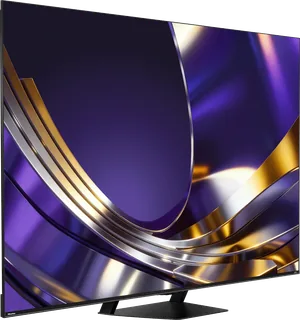
| Panel | Mini-LED | Mini-LED |
| Panel detail | Hi-QLED MiniLED (quantum dot LCD) with a direct-lit Mini-LED backlight and full-array local dimming | Hi-QLED MiniLED Pro with full-array local dimming |
| Resolution | 3840 × 2160 (4K) | 3840 × 2160 (4K) |
| Refresh rate | 144 Hz | 165 Hz (better) |
| HDR formats | Dolby Vision, HDR10, HDR10+, HLG | Dolby Vision, HDR10, HDR10+, HLG |
| HDR extras | Dolby Vision IQ, HDR10+ Adaptive | Dolby Vision 2, HDR10+ Adaptive, IMAX Enhanced |
| Screen finish | – | Anti-Reflection & Glare-Free |
| Peak brightness | – | Up to 3,000 nits (Hisense, as reported by HDTVTest) |
| Colour range | Hi-QLED Colour; Pantone Validated | Hi-QLED Colour, Pantone Validated |
| Picture processing | Hi-View AI Engine, 4K upscaling, MEMC, light sensor; Calman Ready | AI scene recognition of skin tones, depth and motion; light sensor; Calman Ready |
| Picture modes | Filmmaker Mode; Native 144Hz Game Mode; eye-care mode | Filmmaker Mode |
| Motion handling | MEMC; panel response time 6 ms (50″, 55″, 85″) or 8 ms (65″, 75″) (Hisense) | MEMC |
| Viewing angle | 178° | 178° |
| Sizes | ||
| Sizes | 50, 55, 65, 75, 85″ | 55, 65, 75, 85, 100″ |
| Largest size | 85″ | 100″ (better) |
| Gaming | ||
| HDMI ports | 4 (2 HDMI 2.1 at 4K 120 Hz+) | 4 (all HDMI 2.1 at 4K 120 Hz+) (better) |
| Variable refresh rate | HDMI VRR, FreeSync Premium | HDMI VRR, FreeSync Premium Pro |
| Auto low latency mode | Yes | Yes |
| HDMI detail | 4 × HDMI 2.1 with ALLM; HDMI 1 and 2 4K 60Hz; HDMI 3 (eARC) and HDMI 4 4K 144Hz with VRR | 4 × HDMI 2.1 with ALLM and VRR up to 165 Hz; eARC on HDMI 3 |
| Variable refresh range | Up to 144 Hz | – |
| Input lag | ≤ 6 ms with a 4K 120 Hz input (Hisense, listed for the 85″) | ≤ 5 ms (55″), ≤ 8 ms (65″, 85″) or ≤ 7 ms (75″, 100″) at 4K 120 Hz (Hisense) |
| Game features | AMD FreeSync Premium, Game Bar, Dolby Vision Gaming, HDR10+ Gaming | Native 165Hz Game Mode, Game Bar, Dolby Vision Gaming, HDR10+ Gaming |
| Smart TV and sound | ||
| Smart TV platform | VIDAA | VIDAA |
| Processor | Hi-View AI Engine | Hi-View AI Engine Pro |
| Speakers | 40 W, 2.1 channels | 2.1.2 channels |
| Dolby Atmos | Yes | Yes |
| eARC | Yes | Yes |
| Wi-Fi | Wi-Fi 5 (802.11ac, 2.4/5 GHz) | Wi-Fi 5 (802.11ac, 2.4/5 GHz) |
| Bluetooth | Yes | Yes |
| Speaker detail | 2 × 10 W plus a 20 W subwoofer, 2.1 ch; tuned by Devialet | 2.1.2 channels tuned by Devialet, with a subwoofer; 50 W (55″ to 85″) or 60 W (100″) |
| Audio features | Dolby Atmos, Hi-Concerto, EzPlay, TV mode, room fitting tuning, user equaliser | Hi-Concerto, TV Mode, Room Fitting Tuning and EzPlay with Hisense soundbars; user equaliser |
| Voice assistants | Hands-free voice control | Hands-free voice control; Alexa built in; works with Apple HomeKit |
| Casting | AirPlay 2; screen sharing; DMP/DMR content sharing | AirPlay 2; screen sharing; DMP/DMR content sharing |
| Software updates | Software and firmware updates for at least 8 years (Hisense) | Software and firmware updates for at least 8 years (Hisense) |
| TV tuners | 2 × RF; DVB-T2/T/C/S2/S; CI+ 2.0 | 2 × RF; DVB-T2/T/C/S2/S; CI+ 2.0; Freely |
| USB | 1 × USB 2.0, 1 × USB 3.0 | 1 × USB 2.0, 1 × USB 3.0 |
| Ethernet | 1 × RJ45 | 1 × RJ45 |
| Optical audio out | 1 × S/PDIF | 1 × S/PDIF |
| Design and power | ||
| Size | Without stand, 50″ 1110 × 648 × 59 mm; 55″ 1226 × 715 × 59 mm; 65″ 1445 × 837 × 59 mm; 75″ 1668 × 963 × 58 mm; 85″ 1891 × 1087 × 66 mm | Without stand, 55″ 1226 × 714 × 52 mm; 65″ 1446 × 837 × 52 mm; 75″ 1668 × 963 × 52 mm; 85″ 1890 × 1088 × 52 mm; 100″ 2229 × 1282 × 82 mm |
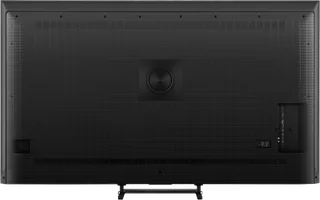
| Stand | Single metal and plastic pedestal, 397 × 280 mm (50″, 55″), 397 × 325 mm (65″) or 425 × 325 mm (75″, 85″); with cable management | Height-adjustable metal pedestal on 55″ to 85″ (377 × 263 mm on the 55″ up to 430 × 360 mm on the 85″); feet spanning 1735 × 480 mm on the 100″, not height-adjustable |
| VESA pattern | 50″ and 65″ 400 × 300 mm; 55″ 200 × 300 mm; 75″ 500 × 400 mm; 85″ 600 × 400 mm | 400 × 400 mm (55″, 75″); 400 × 300 mm (65″); 600 × 400 mm (85″); 800 × 400 mm (100″) |
| Power use | Maximum 160 W (50″), 180 W (55″), 200 W (65″), 230 W (75″), 280 W (85″); 0.5 W standby | SDR/HDR on mode, 55″ 64/150 W; 65″ 84/180 W; 75″ 83/240 W; 85″ 103/300 W; 100″ 127/380 W; maximum 180–450 W; 0.5 W standby |
| Energy class | SDR: E; HDR: G | SDR: E (55″, 65″), D (75″, 85″, 100″); HDR: G |
| Colours | Black/dark grey | Black/dark grey |
| Warranty | 2 years (UK) | 2 years (UK) |
More comparisons
- Hisense E8S vs Philips MLED910
- Hisense E8S vs Samsung Neo QLED QN85F (2025)
- Hisense E8S vs Samsung Neo QLED QN90B
- Hisense E8S vs Hisense U8Q
- Hisense E8Q vs Hisense E8S
- Hisense E8S vs Hisense U7Q
- Hisense E8S vs TCL Q7D
- Hisense U7S Pro vs LG Micro RGB evo MRGB96
- Hisense U7S Pro vs Samsung Neo QLED QN90F
- Hisense U7S Pro vs Samsung Neo QLED QN80F
- Hisense U7S Pro vs Hisense U8Q
- Hisense E8Q vs Hisense U7S Pro
- Hisense U7Q vs Hisense U7S Pro
- Hisense E8S vs TCL X11L
- Hisense E8S vs LG QNED evo Mini LED QNED86
- Hisense E8S vs Samsung Neo QLED QN90C