Intel Core i5-2500K vs Intel Core i7-6700K
Better figure, where one is clearly better
| IntelCore i5-2500K | IntelCore i7-6700K | |
|---|---|---|
| Overview | ||
| Released | January 2011 | August 2015 |
| Cores and clocks | ||
| Cores | 4 | 4 |
| Threads | 4 | 8 (better) |
| Base clock | 3.3 GHz | 4 GHz |
| Boost clock | 3.7 GHz | 4.2 GHz (better) |
| L3 cache | 6 MB | 8 MB (better) |
| Cores | Four cores without Hyper-Threading; Intel Turbo Boost 2.0 and VT-x supported; VT-d not supported. | Four cores with Hyper-Threading; Intel Turbo Boost 2.0 supported. |
| Clocks | Maximum turbo is a single-core frequency. The multiplier is unlocked, but motherboard support and cooling determine available overclocking; the original H67 platform does not support CPU multiplier overclocking. | Maximum turbo is a single-core frequency; overclocking requires an appropriate motherboard and cooling. Intel publishes TDP without a separate maximum turbo-power figure. |
| Graphics and AI | ||
| Built-in graphics | Yes | Yes |
| Graphics | Intel HD Graphics 3000; 850 MHz base, up to 1.10 GHz; two displays; Quick Sync Video. Available display outputs and access to integrated graphics depend on the motherboard. | Intel HD Graphics 530; 350 MHz base, up to 1.15 GHz; three displays; Quick Sync Video. DisplayPort and eDP up to 4096×2304 at 60 Hz; HDMI up to 4096×2304 at 24 Hz. |
| Platform | ||
| Socket | LGA1155 | LGA1151 |
| Base power | 95 W | 91 W |
| Unlocked | Yes | Yes |
| Cooler in the box | – | No |
| Memory support | Up to 32 GB; two channels; DDR3-1066/1333; 21 GB/s maximum bandwidth as published by Intel; ECC not supported. | Up to 64 GB; two channels; DDR4-1866/2133 or DDR3L-1333/1600 at 1.35 V; 34.1 GB/s maximum bandwidth; ECC not supported. |
| PCIe | PCIe 2.0; up to 16 CPU lanes. Motherboard support determines available slot configurations. | PCIe 3.0; 16 CPU lanes, configured as 1×16, 2×8 or 1×8+2×4. PC Gamer describes the Z170 platform's faster DMI 3.0 chipset link and expanded storage connectivity. |
| Process | 32 nm; Sandy Bridge; 37.5 × 37.5 mm package; 72.6°C Tcase limit, not a junction-temperature limit. | 14 nm; Skylake; 37.5 × 37.5 mm package; Intel lists a 64°C Tcase limit, which is a case-temperature specification rather than a junction-temperature limit. |
| Cooler | LGA1155-compatible cooling required. Intel's 5 January 2011 announcement gives 9 January availability for quad-core systems; APH Networks' contemporaneous exact-model review also identifies 9 January as the processor's release date. | Boxed processor includes no fan or heatsink. Requires a compatible Intel 100-series motherboard; the launch notice names the Z170 chipset for unlocked processors. |
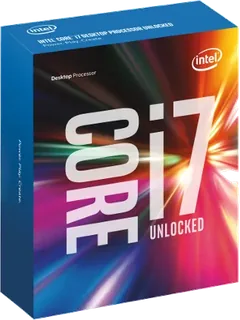
More comparisons
- Intel Core i7-6700K vs Intel Core i9-14900KS
- Intel Core i5-2500K vs Intel Core i9-14900KS
- Intel Core i5-14400F vs Intel Core i7-6700K
- Intel Core i5-14500 vs Intel Core i7-6700K
- Intel Core i5-14400F vs Intel Core i5-2500K
- Intel Core i5-14500 vs Intel Core i5-2500K
- Intel Core i5-14600K vs Intel Core i7-6700K
- Intel Core i7-14700K vs Intel Core i7-6700K
- Intel Core i7-6700K vs Intel Core i9-14900K
- Intel Core i5-14600K vs Intel Core i5-2500K
- Intel Core i5-2500K vs Intel Core i7-14700K
- Intel Core i5-2500K vs Intel Core i9-14900K
- Intel Core i7-6700K vs Intel Core i9-13900KS
- Intel Core i5-2500K vs Intel Core i9-13900KS
- Intel Core i3-13100F vs Intel Core i7-6700K
- Intel Core i3-13100F vs Intel Core i5-2500K