JBL Bar 300MK2 vs Sony BRAVIA Theatre Bar 5
Better figure, where one is clearly better
| JBLBar 300MK2 | SonyBRAVIA Theatre Bar 5 | |
|---|---|---|
| Overview | ||
| Released | June 2025 | 2026 |
| Sound | ||
| Type | Soundbar | Soundbar |
| Channels | 5.0 | 3.1 |
| Dolby Atmos | Yes | Yes |
| Drivers | Five 42 × 80 mm racetrack drivers and four 20 mm tweeters; built-in bass ports, without external subwoofer, rear speakers or upward-firing drivers | Three forward-facing 45 × 82 mm full-range cone drivers in the SA-B500 bar, including a dedicated centre channel; supplied SA-WB500 bass-reflex subwoofer with a 160 mm driver. Four active drivers in total; Atmos height and surround effects use virtual processing, without upward-firing or rear units |
| Amplifiers | 450 W maximum output at 1% THD; 225 W RMS at 1% THD, separately specified by the maker | S-Master digital amplifier; 250 W total claimed output. Japan maker qualifies this as non-simultaneous JEITA maximum, comprising 50 W each for left, centre and right and 100 W for the subwoofer |
| Frequency response | 50 Hz–20 kHz (−6 dB), maker specification | – |
| Audio formats | Dolby Atmos with virtual height effects and DTS Virtual:X; DTS Virtual:X was scheduled for a late-2025 software update and is listed in the current maker specifications | Dolby Atmos, Dolby TrueHD, Dolby Digital Plus, Dolby Digital, DTS:X, DTS and multichannel LPCM over HDMI eARC; Japan table also lists DTS-HD High Resolution and Master Audio. Compatible input and television output settings determine available formats |
| Room tuning | Automatic sound calibration, MultiBeam 3.0, PureVoice 2.0 dialogue enhancement and SmartDetails; seven-band EQ in JBL One. What Hi-Fi?'s December 2025 test reports no preset sound modes | Manual listening-distance adjustment in BRAVIA Connect; S-Force PRO, Vertical Surround Engine and Dolby Speaker Virtualizer. No automatic microphone room calibration (WIRED) |
| Connections | ||
| Wi-Fi | Yes | No |
| Bluetooth | Yes | Yes |
| AirPlay | Yes | No |
| HDMI eARC | Yes | Yes |
| Voice assistants | None | None |
| Wi-Fi | Dual-band 2.4/5 GHz Wi-Fi 802.11 a/b/g/n/ac/ax | – |
| Bluetooth | Bluetooth 5.3; A2DP 1.3 and AVRCP 1.5 | Bluetooth 5.3 receiver with SBC and AAC; A2DP and AVRCP; Bluetooth Low Energy for BRAVIA Connect communication |
| Ports | One HDMI input, one HDMI eARC output, optical input and USB-A service port. HDR10+ and Dolby Vision passthrough; What Hi-Fi? and Les Numériques report no 4K 120 Hz support. USB music playback is US-only | One HDMI TV eARC/ARC output and optical digital input; no HDMI input or video passthrough. USB-A UPDATE port is for software updates on HT-B500; USB music playback in the shared manual applies only to regional models with that function. Separate mains connections for bar and subwoofer |
| Streaming | AirPlay, Google Cast, Spotify Connect, Tidal Connect and Roon Ready; subscriptions may be required | Bluetooth audio from a phone, tablet or computer; no Wi-Fi, AirPlay or integrated voice assistant (WIRED) |
| Multi-room | AirPlay or Google Cast multiroom playback | Included subwoofer connects wirelessly to the bar; this is a dedicated bar-and-subwoofer system, without additional rear speakers |
| App | JBL One for network setup, sound calibration, equaliser, music services, Moment presets and software updates | Sony BRAVIA Connect for setup, listening-distance settings and controls; maker manual requires a smartphone app, account and sign-in for initial setup |
| Design | ||
| Weight | 2.9 kg (better) | 3 kg |
| Controls | Included remote, top-panel volume/source controls and front display; HDMI CEC and app controls. Works with external Google Assistant or Siri devices, without a built-in voice assistant | Side power button, supplied remote, status LEDs, voice and night modes, bass adjustment and Sound Field on/off; DSEE enhancement. Voice Zoom 3 and TV quick settings require a compatible BRAVIA television |
| Microphones | Built-in microphone for sound calibration | No automatic calibration microphone or built-in voice assistant (WIRED); Voice Zoom 3 processes programme dialogue through a compatible television |
| Mounting | Two included wall-mount brackets and mounting template | Tabletop placement or wall mounting using the supplied paper template; suitable screws are not supplied according to the shared maker guide |
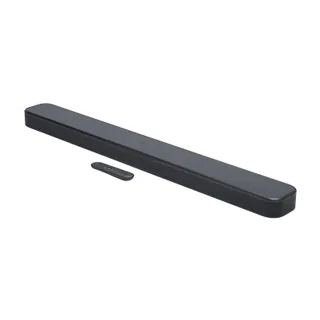
| Size | 940 × 50.5 × 104 mm (width × height × depth); main weight is the soundbar, while 4.8 kg is the packaged weight | UK specification gives bar 900 × 64 × 100 mm (W × H × D), 3 kg body alone; Japan table gives 110 mm depth. Subwoofer 192 × 388 × 400 mm and 7.3 kg; weights are separate components rather than shipping mass |
| Colours | Black; maker lists recycled plastic and aluminium in the construction | Black |
| In the box | Soundbar, remote with two batteries, mains leads, HDMI cable, two wall-mount brackets, mounting template and product documentation; mains plugs vary by region | Bar speaker, wireless subwoofer, remote with batteries, AC cords, reference and quick setup guides, wall-mounting template and warranty card; UK maker additionally lists an HDMI cable, while WIRED's US review unit did not include a connection cable |

More comparisons
- Sonos Beam Ultra vs Sony BRAVIA Theatre Bar 5
- JBL Bar 300MK2 vs Sonos Beam Ultra
- Sony BRAVIA Theatre Bar 5 vs Sony BRAVIA Theatre Bar 7
- Polk Audio Signa S4 vs Sony BRAVIA Theatre Bar 5
- Sony BRAVIA Theatre Bar 5 vs Sony BRAVIA Theatre Bar 6
- JBL Bar 500MK2 vs Sony BRAVIA Theatre Bar 5
- Sony BRAVIA Theatre Bar 5 vs Sony BRAVIA Theatre Bar 8
- Sony BRAVIA Theatre Bar 5 vs Sony BRAVIA Theatre Bar 9
- JBL Bar 300MK2 vs Sonos Beam (Gen 2)
- JBL Bar 300MK2 vs JBL Bar 500MK2
- JBL Bar 300MK2 vs Marshall Heston 60
- Hisense AX5140Q vs JBL Bar 300MK2
- JBL Bar 300MK2 vs Sony BRAVIA Theatre Bar 6
- JBL Bar 300MK2 vs Sony BRAVIA Theatre System 6 (HT-S60)