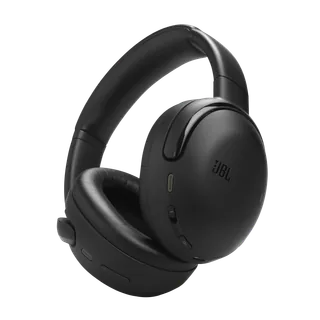
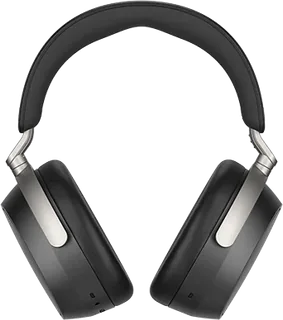
JBL Tour One M3 vs Sennheiser HDB 630
Better figure, where one is clearly better
| JBLTour One M3 | SennheiserHDB 630 | |
|---|---|---|
| Overview | ||
| Released | April 2025 | October 2025 |
| Sound | ||
| Type | Over-ear | Over-ear |
| Noise cancelling | Yes | Yes |
| Transparency mode | Yes | Yes |
| Spatial audio with head tracking | Yes | – |
| Driver size | 40 mm | 42 mm |
| Back | – | Closed |
| Impedance | – | 480 ohms |
| Bluetooth codecs | SBC, AAC, LC3 and LDAC | SBC, AAC, aptX and aptX Adaptive |
| Lossless over USB-C | Yes | Yes |
| Drivers | 40 mm mica dome dynamic drivers; 10 Hz to 40 kHz; 18 Ω; sensitivity 122 dB SPL at 1 kHz; maximum SPL 94 dB | Dynamic transducer; 6 Hz to 40 kHz via line-in, 96 kHz USB or 96 kHz aptX Adaptive, 6 Hz to 22 kHz otherwise; active impedance 480 Ω; 105 dB SPL at 1 kHz/0 dBFS; THD below 0.2% at 1 kHz/100 dB SPL |
| Noise cancelling detail | True Adaptive Noise Cancelling 2.0 with eight microphones (four on and in each ear cup) adjusting in real time; Ambient Aware and TalkThru; Smart Talk switches to TalkThru when you speak | Adaptive noise cancellation and adjustable Transparency Mode |
| Audio features | LDAC Hi-Res Audio; built-in 24-bit/192 kHz DAC for lossless USB-C audio; JBL Spatial 360 with head tracking; Personi-Fi 3.0 hearing profile with a 12-band EQ and left/right balance; Auracast broadcast audio through the JBL app | Smart Control Plus parametric EQ and crossfeed; USB audio up to 24-bit/96 kHz; Bluetooth codecs include aptX HD as well as aptX Adaptive, aptX, AAC and SBC; the headphones do not support aptX Lossless even though the included BTD 700 supports it with other compatible headphones |
| Battery | ||
| Listening time (maker's claim) | Up to 40 hours | Up to 60 hours |
| Battery life detail | 850 mAh battery; up to 70 hours with noise cancelling off; talk time up to 34 hours with noise cancelling on, 38 hours off | Bluetooth playback with ANC activated; 700 mAh, 3.7 V, 2.59 Wh lithium-polymer battery (manual); analogue listening requires power (What Hi-Fi?); USB audio also charges the headphones |
| Fast charging | 5 minutes of charging gives up to 5 hours; full charge in 2 hours | 10 minutes gives up to 7 hours of listening; full charge approximately 2 hours (manual) |
| Design | ||
| Weight | 278 g (better) | 311 g |
| Bluetooth | 5.3 | 5.2 |
| Two devices at once | Yes | Yes |
| Headphone cable | Yes | Yes |
| Controls | Buttons and touch controls on the ear cups | Right-earcup touch pad for playback, volume, calls and ANC/transparency, multifunction button for power/pairing and the phone's voice assistant; Smart Pause wearing detection |
| Microphones | Ten microphones in total; eight for noise cancelling and four adaptive beamforming microphones with an AI algorithm for calls; Zoom certified | Four omnidirectional MEMS microphones in two beamforming pairs; 50 Hz to 10 kHz microphone response (manual) |
| Fit and ear tips | Foldable, with a carrying case; ear cup external size 99.8 × 78 mm, internal 64 × 42 mm, depth 19.5 mm | Synthetic leatherette earpads and Japanese IDEATEX Protein Leatherette headband; swivelling earcups and replaceable pads; 311 g without cable on the UK specification page, versus 293 g in the manual |
| Water resistance detail | No water resistance rating published | No water resistance rating published |
| Works with | JBL Headphones app; multipoint connection to two devices; Google Fast Pair and Google Audio Switch; Bluetooth 5.3 LE Audio and Auracast | Sennheiser Smart Control Plus; connects to two Bluetooth devices, plays audio from one at a time; included BTD 700 is Bluetooth 5.4, while the headphones are Bluetooth 5.2; aptX Adaptive via the dongle requires High Resolution mode in the app |
| Colours | Black, Blue, Green, Mocha (JBL UK) | Black; Lunar Silver added in September 2026 (Sennheiser US announcement) |
| In the box | Headphones, USB-C to USB-C cable (1.2 m), USB-C to 3.5 mm cable (1.2 m), USB-C to USB-A adapter, carrying case, Quick Start Guide and safety sheet | Headphones, BTD 700 USB-C dongle, 1.2 m USB-C to USB-C charging/audio cable, 1.2 m analogue cable with 3.5 mm source plug, in-flight adapter and carrying case |
More comparisons
- Sennheiser HDB 630 vs Sonos Ace Ultra
- Beats Beats 360 vs JBL Tour One M3
- Sennheiser HDB 630 vs Sennheiser MOMENTUM 5 Wireless
- Sennheiser HDB 630 vs Sony 1000X THE COLLEXION (WH-1000XX)
- JBL Live 780NC vs JBL Tour One M3
- JBL Live 780NC vs Sennheiser HDB 630
- JBL Tune 780NC vs Sennheiser HDB 630
- Sennheiser HDB 630 vs Sennheiser MOMENTUM 4 Wireless
- Bose QuietComfort Ultra Headphones (2nd Gen) vs JBL Tour One M3
- JBL Tour One M3 vs Nothing Headphone (1)
- Bowers & Wilkins Px7 S3 vs JBL Tour One M3
- JBL Tour One M3 vs Anker soundcore Space One Pro