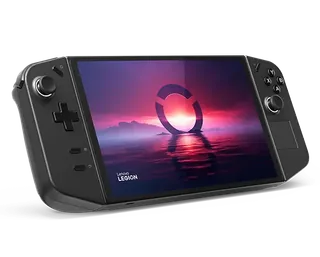
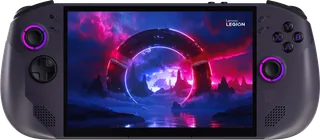
Lenovo Legion Go (2023) vs Lenovo Legion Go S (8″, 1)
Better figure, where one is clearly better
| LenovoLegion Go (2023) | LenovoLegion Go S (8″, 1) | |
|---|---|---|
| Overview | ||
| Released | October 2023 | January 2025 |
| Performance | ||
| Type | Handheld | Handheld |
| CPU | AMD Ryzen Z1 or Ryzen Z1 Extreme | AMD Ryzen Z2 Go, 4 cores |
| GPU | AMD Radeon Graphics (integrated) | AMD Radeon Graphics |
| Memory | 16 GB | 16 GB |
| Storage | 256 GB, 512 GB, 1 TB | 512 GB, 1 TB |
| Disc drive | No | No |
| CPU | Ryzen Z1 Extreme has 8 cores, 16 threads, 3.3 GHz base and up to 5.1 GHz boost, with 8 MB L2 and 16 MB L3 cache. Ryzen Z1 has 6 cores, 12 threads, 3.2 GHz base and up to 4.9 GHz boost, with 6 MB L2 and 16 MB L3 cache. Processor availability varies by configuration and market. | AMD Ryzen Z2 Go, 3.0 GHz up to 4.3 GHz, 4 cores / 8 threads, 2 MB L2 / 8 MB L3 |
| GPU | Integrated AMD Radeon Graphics, shared system memory and DirectX 12 support | Integrated AMD Radeon Graphics |
| Memory detail | 16 GB LPDDR5X-7500 soldered to the system board; no memory slots | 16 GB or 32 GB soldered LPDDR5 or LPDDR5X-6400, not upgradable |
| Storage detail | PCIe 4.0 x4 NVMe M.2 2242 SSD, with one drive slot; Lenovo lists 256 GB, 512 GB and 1 TB offerings. Storage and processor availability vary by market. First sale on 31 October 2023 is documented by Windows Central's contemporary availability report; Lenovo's EMEA announcement stated November 2023 for that region. | 512 GB or 1 TB M.2 2242 PCIe 4.0 x4 SSD in an M.2 2280 slot |
| Storage expansion | microSD card reader; Lenovo's launch announcement states support for up to 2 TB of additional storage | microSD card reader |
| Display and video | ||
| Built-in screen | 8.8″ LCD, 2560 × 1600, 144 Hz | 8″ LCD, 1920 × 1200, 120 Hz |
| Built-in screen | IPS touchscreen with 10-point in-cell touch, 500 nits brightness, 97% DCI-P3 coverage and 1500:1 contrast; glossy anti-fingerprint surface, Gorilla Glass 5 and 16:10 aspect ratio | 8-inch WUXGA (1920 × 1200) IPS touchscreen, 16:10; 500 nits; 1200:1 contrast; 100% sRGB; glossy with anti-fingerprint coating; Panda King Glass; TÜV Rheinland Low Blue Light |
| Video output | Both USB4 ports support DisplayPort 1.4; an external display and separate peripherals can be connected for TV or desktop use | DisplayPort 1.4 over either USB-C port |
| Variable refresh rate | – | 48–120 Hz on the built-in screen |
| Audio | Two 2 W speakers, high-definition audio and dual microphones; no camera | Stereo speakers, 2 × 2 W; dual microphones; headphone/mic combo jack |
| Connections | ||
| Ports | Two USB4 Type-C ports at up to 40 Gbps with DisplayPort 1.4 and Power Delivery 3.0; one 3.5 mm headphone/microphone socket; one microSD reader; two five-point pogo-pin controller connectors | 2 × USB-C (USB4 40 Gb/s) with USB PD 65–100 W in and DisplayPort 1.4; microSD card reader; 3.5 mm headphone/mic combo jack |
| Wi-Fi and Bluetooth | AMD Wi-Fi 6E RZ616 (802.11ax), 2×2, and Bluetooth 5.3 in the current PSREF; the launch announcement listed Bluetooth 5.2. Bluetooth operation can be lower depending on OS and drivers. | AMD Wi-Fi 6E RZ616, 2 × 2; Bluetooth 5.3 |
| Controller | Detachable Legion TrueStrike controllers with Hall effect joysticks, analogue triggers, D-pad, ABXY buttons, bumpers, assignable grip buttons and release buttons. The right controller has a 28.5 × 28.5 mm touchpad, mouse wheel and optical sensor for FPS mode with its controller base. Accelerometer, six-axis gyroscope, ambient light sensor, HD haptics and RGB joystick lighting. | Built-in TrueStrike controls with hall-effect joysticks, adjustable trigger range switches, 10 × 10 mm touchpad, Y1 and Y2 back buttons; gyroscope |
| Backward compatibility | Windows 11 Home or Home Single Language, with Legion Space for supported PC game launchers; game compatibility and performance vary by title | Windows 11 Home (Legion Space) or SteamOS |
| Design and power | ||
| Battery life (maker's claim) | – | Up to 15.4 hours |
| Weight | – | 740 g |
| Battery life detail | 49.2 Wh rechargeable lithium-ion battery. Lenovo claims 7.1 hours in MobileMark 25 and 7.55 hours of local 1080p video at 150 nits; these are not gaming-runtime figures. Controllers are rated for up to 11 hours separately. Super Rapid Charge is rated at 30% in 10 minutes, 70% in 30 minutes and 100% in 80 minutes under Lenovo's stated conditions. | 55.5 Wh; Super Rapid Charge 0–70% in 30 minutes; local 1080p video up to 15.4 hours (Lenovo) |
| Power use | 65 W USB-C adapter with Power Delivery 3.0 and universal 100–240 V input; adapter design varies by country. Lenovo's launch announcement describes battery bypass when gaming plugged in and up to 25 W TGP in Custom Mode. | 65 W USB-C charger (PD 3.0) |
| Colours | Shadow Black. Current PSREF gives less than 854 g with controllers and less than 640 g without; the launch announcement gives nominal 854 g and 640 g. Dimensions are 298.83 × 131 × 40.7 mm with controllers, or 210 × 131 × 20.1 mm for the main unit. | Glacier White; Nebula Nocturne |
| In the box | Carry bag with controller dock; bundled accessories and power adapter vary by market | – |
More comparisons
- ASUS ROG Xbox Ally vs Lenovo Legion Go S (8″, 1)
- ASUS ROG Xbox Ally X vs Lenovo Legion Go S (8″, 1)
- Lenovo Legion Go (2023) vs Lenovo Legion Go Gen 2
- Lenovo Legion Go Gen 2 vs Lenovo Legion Go S (8″, 1)
- Lenovo Legion Go S (8″, 1) vs MSI Claw A8
- Lenovo Legion Go S (8″, 1) vs Nintendo Switch 2
- Lenovo Legion Go S (8″, 1) vs Valve Steam Deck OLED
- ASUS ROG Ally X (2024) vs Lenovo Legion Go (2023)
- Lenovo Legion Go (2023) vs MSI Claw A1M
- Lenovo Legion Go (2023) vs Valve Steam Deck OLED
- Lenovo Legion Go (2023) vs Sony PlayStation Portal
- ASUS ROG Ally (2023) vs Lenovo Legion Go (2023)
- Lenovo Legion Go (2023) vs Valve Steam Deck LCD