Lenovo ThinkPad X13 Gen 6 (AMD) vs Lenovo ThinkPad X260
Better figure, where one is clearly better
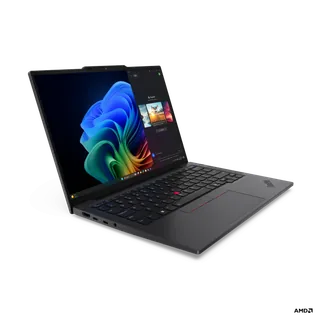
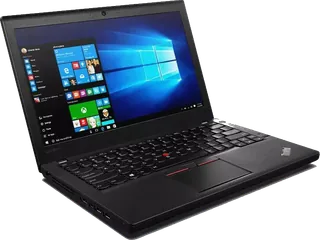
| LenovoThinkPad X13 Gen 6 (AMD) | LenovoThinkPad X260 | |
|---|---|---|
| Overview | ||
| Released | June 2025 | February 2016 |
| Display | ||
| Screen size | 13.3″ | 12.5″ |
| Resolution | 1920 × 1200 (better) | 1366 × 768 |
| Panel | IPS LCD | IPS LCD |
| Refresh rate | 60 Hz | – |
| Brightness | 400 nits (better) | 300 nits |
| Touchscreen | No or Yes | No |
| Display type | WUXGA IPS, non-touch or on-cell touch, 16:10 | HD (200 nits), HD IPS (300 nits) or Full HD IPS (300 nits); no touchscreen |
| Colour range | 100% sRGB | – |
| Screen finish | Anti-glare | Anti-glare |
| Display features | 1,500:1 contrast; Eyesafe Certified 2.0; 87.8% screen-to-body ratio | – |
| Performance | ||
| Processor | AMD Ryzen AI 5 PRO 340 or AMD Ryzen AI 7 PRO 350 | Intel Core i5-6200U |
| CPU cores | 6 or 8 | 2 |
| CPU threads | 12 or 16 | 4 |
| Graphics | Radeon 840M Graphics or Radeon 860M Graphics | Intel HD Graphics 520 |
| AI engine (NPU) | 50 TOPS | – |
| Memory | 16 GB or 32 GB (better) | 4 GB |
| Storage | 512 GB to 1 TB (better) | 500 GB |
| CPU | Ryzen AI 5 PRO 340 (6 cores, 12 threads) or Ryzen AI 7 PRO 350 (8 cores, 16 threads) | Sixth-generation dual-core Intel Core i3, i5 or i7 |
| GPU | Integrated AMD Radeon 840M or 860M, shared memory, DirectX 12 | Integrated Intel HD Graphics 520 |
| AI engine | Copilot+ PC; NPU up to 50 TOPS | – |
| Memory type | LPDDR5X-8000 (LPDDR5X-8533 fitted), soldered, dual-channel, not upgradable | DDR4-2133; one SO-DIMM socket, up to 16 GB |
| Storage type | One M.2 2280 PCIe 4.0 x4 slot (PCIe 5.0 SSDs run at PCIe 4.0 speed); NVMe SSD up to 1 TB, Opal 2.0 | SATA HDD, SSD or SSHD, or PCIe 3.0 ×2 NVMe SSD; listed configuration has 500 GB SSHD with 8 GB NAND cache (Notebookcheck) |
| Battery and size | ||
| Battery life (maker's claim) | Up to 23.6 hours | Up to 12 hours |
| Battery capacity | 54.7 Wh | – |
| Weight | 0.953 kg (better) | 1.44 kg |
| Thickness | 13.35 mm (better) | 20.3 mm |
| Width × depth | 299.3 × 207 mm | 305.5 × 208.5 mm |
| Battery life detail | 41 Wh or 54.7 Wh Li-ion; with 54.7 Wh, Ryzen AI 7 PRO 350 and WUXGA non-touch, MobileMark 25 up to 14.88 hr, JEITA 3.0 up to 15.4 hr video and 22.9 hr idle, local video up to 23.6 hr; Ryzen AI 5 PRO 340 with touch, local video up to 20.2 hr | Optional internal 23 Wh; removable external 23, 48 or 72 Wh; internal plus 23 Wh external up to 12 hours (MobileMark 2014), plus 48 Wh up to 18.5 hours, plus 72 Wh up to 25 hours; weight shown with internal and three-cell external batteries |
| Charger | 65 W USB-C (PD 3.0) adapter, including nano GaN and slim GaN versions; offerings vary by country | 45 W |
| Fast charging | Rapid Charge to 80% in 1 hour with the 65 W adapter (when off, in standby or hibernating) | – |
| Materials | CFRP top cover with aluminium or magnesium bottom cover, or carbon fibre hybrid top cover with aluminium bottom cover | Glass-fibre reinforced plastic |
| Colours | Black | Black |
| Connections | ||
| Ports | 2 × Thunderbolt 4, USB-A, HDMI, headphone jack | 3 × USB-A, HDMI, Ethernet, SD card slot, headphone jack |
| Wi-Fi | Wi-Fi 7 | 802.11ac |
| Bluetooth | 5.4 | Bluetooth 4.1 |
| Webcam | 5MP, optional IR | Optional 720p |
| Operating system | Windows | Windows |
| Port detail | 2 × USB-C (Thunderbolt 4 / USB4 40 Gbps) with USB PD 15–65 W and DisplayPort 2.1; USB-A 5 Gbps (Always On); HDMI 2.1 up to 4K 60 Hz; 3.5 mm headphone/mic combo jack; optional smart card reader and nano-SIM slot (5G models) | Three USB 3.0, HDMI, Mini DisplayPort, Gigabit Ethernet, combo audio, SD/MMC/SDHC/SDXC reader and docking connector; optional smart card and micro-SIM slot |
| External displays | Up to three external displays (four including the built-in); USB-C up to 8K 30 Hz, HDMI up to 4K 60 Hz | Three independent displays; Mini DisplayPort up to 3840 × 2160 at 60 Hz, HDMI up to 1920 × 1080 at 60 Hz |
| Keyboard | 6-row, spill-resistant, backlit or non-backlit; 1.5 mm key travel (1.35 mm on Fn row and G/H/B); Copilot key; TrackPoint | Six-row spill-resistant keyboard; optional backlight |
| Trackpad | Mylar 3-button trackpad, 74.3 × 115 mm | Multi-touch Mylar clickpad; TrackPoint with dedicated buttons |
| Speakers | Stereo 2 W × 2, Dolby Atmos | 1 W × 2 stereo speakers |
| Microphones | Dual-microphone array, 360° far-field, Dolby Voice | Dual-array microphone |
| Biometrics | Optional fingerprint reader in the power button (match-on-chip); optional IR camera for Windows Hello | Optional swipe fingerprint reader; discrete TPM 1.2 and firmware TPM 2.0 |
More comparisons
- Lenovo ThinkPad X1 Carbon Gen 14 vs Lenovo ThinkPad X260
- Dell XPS M1330 vs Lenovo ThinkPad X13 Gen 6 (AMD)
- Lenovo ThinkPad X13 Gen 6 (AMD) vs Sony VAIO Z (VGN-Z11WN/B)
- Dell XPS 13 9310 vs Lenovo ThinkPad X13 Gen 6 (AMD)
- Lenovo ThinkPad X13 Gen 6 (AMD) vs Lenovo ThinkPad X13 Gen 6 (Intel)
- Lenovo ThinkPad X13 Gen 6 (AMD) vs Lenovo ThinkPad X390
- Lenovo ThinkPad X13 Gen 6 (AMD) vs Lenovo ThinkPad X280
- Lenovo ThinkPad X13 Gen 6 (AMD) vs Lenovo ThinkPad X270
- Lenovo ThinkPad X13 Gen 6 (AMD) vs Lenovo ThinkPad X250
- Lenovo ThinkPad X13 Gen 6 (AMD) vs Lenovo ThinkPad X240
- Lenovo ThinkPad X13 Gen 6 (AMD) vs Lenovo ThinkPad X230
- Lenovo ThinkPad X13 Gen 6 (Intel) vs Lenovo ThinkPad X260
- Lenovo ThinkPad X13 Gen 6 (AMD) vs Lenovo ThinkPad X220
- Lenovo ThinkPad X13 Gen 6 (AMD) vs Lenovo ThinkPad X201
- Lenovo ThinkPad X13 Gen 6 (AMD) vs Lenovo ThinkPad X200
- Lenovo ThinkPad X13 Gen 6 (AMD) vs Lenovo ThinkPad X61