LG OLED B4 vs Sony BRAVIA 8 II
Better figure, where one is clearly better
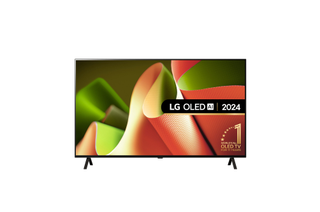
| LGOLED B4 | SonyBRAVIA 8 II | |
|---|---|---|
| Overview | ||
| Released | March 2024 | June 2025 |
| Display | ||
| Panel | OLED | QD-OLED |
| Panel detail | Self-lit 4K OLED with pixel dimming | – |
| Resolution | 3840 × 2160 (4K) | 3840 × 2160 (4K) |
| Refresh rate | 120 Hz | 120 Hz |
| HDR formats | Dolby Vision, HDR10, HLG | Dolby Vision, HDR10, HLG |
| HDR extras | – | IMAX Enhanced |
| Screen finish | – | Low-reflection film |
| Peak brightness | – | About 1,800 cd/m² calibrated and up to 2,200 cd/m² in Vivid mode, HDR (FlatpanelsHD, 65″) |
| Colour range | – | XR Triluminos Max |
| Picture processing | AI Picture Pro, α8 AI Super Upscaling 4K, AI Brightness Control, Dynamic Tone Mapping Pro and Filmmaker Mode | XR Contrast Booster 25, XR 4K Upscaling, AI scene recognition, ambient light sensor |
| Picture modes | Personalised Picture Wizard, Vivid, Standard, APS, Cinema, Sports, Game, Filmmaker and ISF Expert bright/dark room modes | Vivid, Standard, Cinema, Professional, Calm, Photo, IMAX Enhanced, Dolby Vision (Vivid, Bright, Dark, Game), FPS Game, RTS Game; Studio Calibrated modes for Netflix, Prime Video and Sony Pictures Core |
| Motion handling | Native 120Hz panel; OLED Motion and HDMI 4K 120 fps input | XR OLED Motion |
| Sizes | ||
| Sizes | 48, 55, 65, 77″ | 55, 65″ |
| Largest size | 77″ (better) | 65″ |
| Gaming | ||
| HDMI ports | 4 (all HDMI 2.1 at 4K 120 Hz+) (better) | 4 (2 HDMI 2.1 at 4K 120 Hz+) |
| Variable refresh rate | HDMI VRR, FreeSync Premium, G-Sync Compatible | HDMI VRR |
| Auto low latency mode | Yes | Yes |
| HDMI detail | Four inputs support 4K 120Hz, VRR, ALLM and QMS; eARC on HDMI 3 | HDMI 2.1 features: 4K 120 fps, eARC, VRR, ALLM, SBTM (Source-Based Tone Mapping); HDCP 2.3 on all four inputs |
| Input lag | – | 17 ms at 60 Hz, about half that at 120 Hz (FlatpanelsHD) |
| Variable refresh range | LG specifies 40–120Hz | – |
| Game features | Game Optimiser and Dashboard, HGiG, AMD FreeSync Premium, NVIDIA G-SYNC Compatible and Dolby Vision gaming at 4K 120Hz | Game Menu; Auto HDR Tone Mapping and Auto Genre Picture Mode with a PS5; Dolby Vision Game mode |
| Smart TV and sound | ||
| Smart TV platform | webOS | Google TV |
| Processor | α8 AI Processor 4K | XR Processor |
| Speakers | 20 W, 2.0 channels | 50 W, 2.2 channels (better) |
| Dolby Atmos | Yes | Yes |
| DTS:X | – | Yes |
| eARC | Yes | Yes |
| Wi-Fi | Wi-Fi 5 | Wi-Fi 6E |
| Bluetooth | 5.1 | 5.3 |
| Speaker detail | Down-firing 2.0-channel speakers | Acoustic Surface Audio+ with 2 actuators and 2 subwoofers, 15 W + 15 W + 10 W + 10 W |
| Audio features | α8 AI Sound Pro with virtual 9.1.2 up-mixing, acoustic tuning, Clear Voice Pro, Bluetooth Surround Ready and WiSA up to 2.1 channels | Acoustic Center Sync, Voice Zoom 3, 3D Surround Upscaling, S-Force Front Surround, automatic room and position sound calibration, S-Master digital amplifier |
| Voice assistants | Built-in Amazon Alexa and LG intelligent voice recognition; supported languages vary by country | Google Assistant built in with hands-free voice search; works with Alexa and Apple HomeKit |
| Casting | Apple AirPlay 2, ThinQ remote app and Multi View | Google Cast, Apple AirPlay |
| TV tuners | – | DVB-T/T2, DVB-C and DVB-S/S2; 2 terrestrial/cable and 2 satellite digital tuners; CI+ |
| Software updates | webOS 24; LG states four upgrades over five years with regional scheduling differences and security support through 31 December 2028. LG Australia's March 2024 launch notice confirms the range available now and lists 55/65-inch B4 March availability; release records that first confirmed series month, not a universal UK size-specific date. | – |
| USB | Two USB 2.0 ports | 2 × USB; USB hard disk recording |
| Ethernet | Ethernet LAN port | 1 × Ethernet |
| Optical audio out | One optical digital audio output | 1 × optical digital audio out (shared with the S-Center speaker input) |
| Design and power | ||
| Size | Without stand (W × H × D): 48″ 1070 × 620 × 45.9 mm; 55″ 1228 × 708 × 45.9 mm; 65″ 1449 × 832 × 45.9 mm; 77″ 1719 × 989 × 50.9 mm | Without stand, 55″ 1224 × 707 × 34 mm; 65″ 1443 × 830 × 34 mm |
| Stand | With stand (W × H × D; weight): 48″ 1070 × 684 × 235 mm, 11.7 kg; 55″ 1228 × 772 × 235 mm, 14.5 kg; 65″ 1449 × 896 × 235 mm, 17.3 kg; 77″ 1719 × 1057 × 319 mm, 23.5 kg. Stand footprint: 48″ 933 × 235 mm; 55/65″ 1057 × 235 mm; 77″ 1403 × 319 mm. | Aluminum Edge Stand with two heights (standard and soundbar) |
| VESA pattern | 300 × 200 mm across these UK sizes | 300 × 300 mm |
| Power use | Under 0.5 W standby; 100–240 V AC, 50–60Hz supply | 55″ 334 W, 65″ 418 W rated; 0.5 W standby |
| Colours | – | Black |
| In the box | Magic Remote MR24, two AA batteries and attached power cable | – |
More comparisons
- LG OLED B4 vs Samsung OLED S95H
- Sony BRAVIA 7 II vs Sony BRAVIA 8 II
- Sony BRAVIA 8 II vs Sony BRAVIA 9 II
- LG OLED B4 vs LG OLED B6
- Sony BRAVIA 3 II vs Sony BRAVIA 8 II
- Sony BRAVIA 8 II vs Sony XEL-1
- Sony BRAVIA 8 II vs Sony Trinitron KV-1310
- Sony BRAVIA 8 II vs Sony FD Trinitron WEGA XBR KD-34XBR970
- LG OLED evo G3 vs Sony BRAVIA 8 II
- LG OLED evo G2 vs Sony BRAVIA 8 II
- Samsung OLED S95C vs Sony BRAVIA 8 II
- Sony A95L vs Sony BRAVIA 8 II
- Sony A95K vs Sony BRAVIA 8 II
- LG OLED C6 (2016) vs Sony BRAVIA 8 II
- LG OLED C7 vs Sony BRAVIA 8 II
- LG OLED C8 vs Sony BRAVIA 8 II