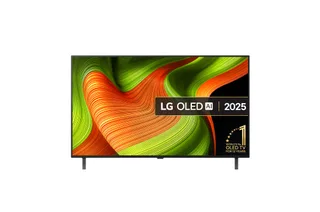
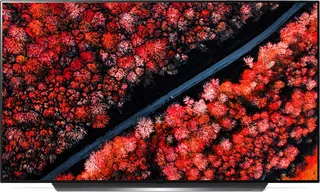
LG OLED B5 vs LG OLED C9
Better figure, where one is clearly better
| LGOLED B5 | LGOLED C9 | |
|---|---|---|
| Overview | ||
| Released | March 2025 | 2019 |
| Display | ||
| Panel | OLED | OLED |
| Panel detail | Self-lit 4K OLED with pixel dimming | – |
| Resolution | 3840 × 2160 (4K) | 3840 × 2160 (4K) |
| Refresh rate | 120 Hz | 120 Hz |
| HDR formats | Dolby Vision, HDR10, HLG | Dolby Vision, HDR10, HLG |
| HDR extras | – | Advanced HDR by Technicolor also supported |
| Picture processing | AI Picture Pro, α8 AI Super Upscaling 4K, AI Brightness Control, Dynamic Tone Mapping Pro and Filmmaker Mode | AI Picture, AI Brightness, 4K Upscaler and dynamic tone mapping |
| Picture modes | Personalised Picture Wizard, Vivid, Standard, APS, Cinema, Sports, Game, Filmmaker and ISF Expert bright/dark room modes | – |
| Motion handling | Native 120Hz panel; OLED Motion and HDMI 4K 120 fps input | Native 120Hz (Trusted Reviews). Original UK sheets retain the launch wording that 4K HFR via HDMI would be enabled by update. |
| Sizes | ||
| Sizes | 48, 55, 65, 77, 83″ | 55, 65, 77″ |
| Largest size | 83″ (better) | 77″ |
| Gaming | ||
| HDMI ports | 4 (all HDMI 2.1 at 4K 120 Hz+) | 4 (all HDMI 2.1 at 4K 120 Hz+) |
| Variable refresh rate | HDMI VRR, FreeSync Premium, G-Sync Compatible | HDMI VRR, G-Sync Compatible |
| Auto low latency mode | Yes | Yes |
| HDMI detail | Four inputs support 4K 120Hz, VRR, ALLM and QMS; eARC on HDMI 3 | Four HDMI 2.1 inputs, one rear and three side; eARC on HDMI 2 |
| Variable refresh range | LG specifies VRR up to 120Hz | – |
| Game features | Game Optimiser and Dashboard, HGiG, AMD FreeSync Premium, NVIDIA G-SYNC Compatible and Dolby Vision gaming at 4K 120Hz | HDMI VRR and ALLM. G-Sync Compatible was a post-launch update; LG's November 2019 rollout began in North America, followed by Europe and other regions, so firmware availability differed by country. |
| Cloud gaming | Xbox Cloud Gaming requires internet, Game Pass Ultimate and a compatible Bluetooth controller; available in supported regions including the UK. App and service availability varies by country. | – |
| Smart TV and sound | ||
| Smart TV platform | webOS | webOS |
| Processor | α8 AI Processor 4K Gen2 | α9 Gen2 Intelligent Processor |
| Speakers | 20 W, 2.0 channels | 40 W, 2.2 channels (better) |
| Dolby Atmos | Yes | Yes |
| eARC | Yes | Yes |
| Wi-Fi | Wi-Fi 6 | Wi-Fi 5 (802.11ac) |
| Bluetooth | 5.3 | 5.0 |
| Speaker detail | Down-firing 2.0-channel speakers | – |
| Audio features | α8 AI Sound Pro with virtual 9.1.2 up-mixing, acoustic tuning, Clear Voice Pro, Bluetooth Surround Ready and WiSA up to 2.1 channels | Dolby Atmos, AI Sound, Clear Voice III and DTS decoding |
| Voice assistants | LG intelligent voice recognition and Voice ID; AI Search, AI Chatbot, AI Concierge and picture/sound wizards; regional language and account restrictions apply | – |
| Casting | Google Cast, Apple AirPlay, Apple Home, ThinQ remote app and Multi View | Apple AirPlay 2; introduced through a post-launch update |
| Software updates | webOS 25; webOS Re:New supports upgrades for up to five years, varying by model and region, with security support through 31 December 2029. LG Australia's March 19, 2025 launch confirms local availability and lists 48/55/65-inch B5 availability that day. Release records the first confirmed series month; LG's May 12 US release lists 55/65/77-inch models available now and the 83-inch model for preorder. TechRadar's July/August regional date does not override the earlier maker evidence. | Launch webOS 4.5. Release year is conservative because LG's Australian launch table schedules 55″ and 65″ for March and 77″ for April, while the surrounding text says the range starts in April. The US schedule gives April for 55″ and 65″ and May for 77″; these schedules do not establish a single actual first shipping day. |
| TV tuners | DVB-T/T2, DVB-C and DVB-S/S2. LG specifies the CI slot is excluded for the UK and Ireland. | – |
| USB | Two USB 2.0 ports | Three USB ports, two rear and one side |
| Ethernet | Ethernet LAN port | Ethernet LAN port |
| Optical audio out | One optical digital audio output | Optical digital audio output; headphone output also fitted |
| Design and power | ||
| Size | Without stand (W × H × D): 48″ 1070 × 620 × 45.9 mm; 55″ 1228 × 708 × 45.9 mm; 65″ 1449 × 832 × 45.9 mm; 77″ 1719 × 989 × 50.9 mm; 83″ 1842 × 1055 × 52.9 mm | Without stand (W × H × D): 55″ 1228 × 706 × 46.9 mm; 65″ 1449 × 830 × 46.9 mm; 77″ 1722 × 991 × 56 mm |
| Stand | With stand (W × H × D; weight): 48″ 1070 × 684 × 235 mm, 11.7 kg; 55″ 1228 × 772 × 235 mm, 14.5 kg; 65″ 1449 × 896 × 235 mm, 17.3 kg; 77″ 1719 × 1057 × 319 mm, 23.5 kg; 83″ 1842 × 1144/1084 × 300 mm, 27.7 kg (two published stand heights). Stand footprint: 48″ 933 × 235 mm; 55/65″ 1057 × 235 mm; 77″ 1403 × 319 mm; 83″ 1477 × 300 mm. | Stand width: 55″ and 65″ 998 mm; 77″ 1189 mm |
| VESA pattern | 48/55/65/77″ 300 × 200 mm; 83″ 400 × 400 mm | 55″ and 65″: 300 × 200 mm; 77″: 400 × 200 mm |
| Power use | Under 0.5 W standby; 100–240 V AC, 50–60Hz supply | – |
| In the box | Magic Remote MR25GA / MR25GB (UK and Italy) and attached power cable; TechRadar distinguishes the UK remote with AI button from the streamlined US remote | MR19 Magic Remote, two AA batteries and attached power cable |
More comparisons
- LG OLED C9 vs Samsung OLED S95H
- LG OLED B5 vs Samsung OLED S95H
- LG OLED C9 vs LG OLED evo C6
- LG OLED B5 vs LG OLED B6
- LG OLED B6 vs LG OLED C9
- LG OLED C9 vs Sony BRAVIA 8 II
- LG OLED B5 vs Sony BRAVIA 8 II
- LG OLED B5 vs Samsung OLED S90F
- LG OLED B4 vs LG OLED B5
- LG OLED B5 vs Sony A90J
- LG OLED B5 vs Samsung OLED S90D
- LG OLED B5 vs LG OLED evo G4
- LG OLED B3 vs LG OLED B5
- LG OLED B2 vs LG OLED B5
- LG OLED B5 vs LG OLED C1
- LG OLED B5 vs LG OLED evo G1