LG OLED C6 (2016) vs Samsung OLED S95H
Better figure, where one is clearly better
| LGOLED C6 (2016) | SamsungOLED S95H | |
|---|---|---|
| Overview | ||
| Released | May 2016 | May 2026 |
| Display | ||
| Panel | OLED | OLED (48″), QD-OLED (55, 65, 77″) |
| Panel detail | – | The 48-inch uses a WOLED panel (AVForums); the 55, 65 and 77-inch use QD-OLED |
| Resolution | 3840 × 2160 (4K) | 3840 × 2160 (4K) |
| Refresh rate | 120 Hz | 165 Hz (better) |
| HDR formats | Dolby Vision, HDR10 | HDR10, HDR10+, HLG |
| HDR extras | – | OLED HDR Pro; HDR10+ Adaptive and HDR10+ Gaming |
| Screen finish | – | OLED Glare Free |
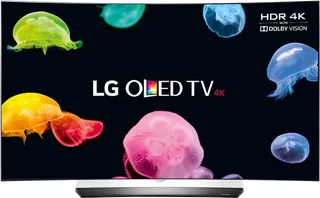
| Picture processing | Perfect Mastering Engine, pixel dimming, Ultra Luminance and 4K upscaling. Curved panel with passive 3D; two pairs of glasses supplied. | 4K AI Upscaling Pro, AI Motion Enhancer Pro, Real Depth Enhancer, Auto HDR Remastering Pro, Color Booster Pro, HDR Brightness Optimizer, AI Optimized / AI Customization |
| Picture modes | – | Filmmaker Mode, EyeComfort Mode; Smart Calibration (Basic) |
| Motion handling | Native 120Hz panel (RTINGS); HDMI input does not accept 120Hz signals. TruMotion interpolation is separate from input refresh. | Motion Xcelerator 165 Hz |
| Viewing angle | – | Ultra Viewing Angle |
| Sizes | ||
| Sizes | 55, 65″ | 48, 55, 65, 77″ |
| Largest size | 65″ | 77″ (better) |
| Gaming | ||
| HDMI ports | 3 (0 HDMI 2.1 at 4K 120 Hz+) | 4 (all HDMI 2.1 at 4K 120 Hz+) (better) |
| Variable refresh rate | None | HDMI VRR, FreeSync Premium Pro, G-Sync Compatible |
| Auto low latency mode | – | Yes |
| HDMI detail | Three HDMI 2.0a inputs, including ARC (Expert Reviews); no HDMI 2.1 input | 4K 165 Hz on HDMI 1/2/3/4; eARC; Anynet+ (HDMI-CEC) |
| Game features | Game picture mode. RTINGS records the addition of HDR Game mode in firmware 04.30.19 in December 2016; this was a later update to its US C6P test unit. | Game Motion Plus, Dynamic Black EQ, Super Ultra Wide Game View, Game Bar, Mini Map Zoom, Surround Sound, HGiG, AI Auto Game Mode |
| Cloud gaming | – | Samsung Gaming Hub |
| Smart TV and sound | ||
| Smart TV platform | webOS | Tizen |
| Processor | – | NQ4 AI Gen3 Processor |
| Dolby Atmos | – | Yes |
| eARC | – | Yes |
| Speakers | 40 W, 4.0 channels | – |
| Wi-Fi | Wi-Fi 5 (802.11ac) | Wi-Fi 6E |
| Bluetooth | – | 5.3 |
| Speaker detail | 40 W, 4.0-channel Harman Kardon sound system in LG's exact Austrian C6V sheets | 48″ 60 W, 2.1.2ch, Object Tracking Sound; 55–77″ 70 W, 4.2.2ch, Object Tracking Sound+ |
| Audio features | OLED Surround, Magic Sound Tuning, Clear Voice III, DTS-HD decoding and wired/wireless Sound Sync | Q-Symphony, Active Voice Amplifier Pro, Adaptive Sound Pro, 360 Audio, Audio Pre-selection Descriptor |
| Voice assistants | – | Bixby and Alexa built in, with far-field voice; works with Alexa and Google Assistant speakers |
| Casting | Miracast, WiDi and DLNA supported; Bluetooth supported but version unpublished | Apple AirPlay, Google Cast, Tap View and screen or sound mirroring from Samsung phones |
| Software updates | webOS 3.0 with Magic Zoom and Magic Mobile Connection. The May 2016 What Hi-Fi? review describes UK Freeview Play as a forthcoming update; the October Expert Reviews review confirms it present. LG's May 24 US press release describes C6 as newly launched and available at retail; month precision records that confirmed regional availability without claiming a worldwide first day. | Security updates until at least 31 December 2031 |
| TV tuners | DVB-T2/C/S2, CI+ 1.3, eight-day programme guide and USB recording/time shift | Twin DVB-T2/C/S2 and analogue; CI+ 1.4 slot; HbbTV 2.0.4 |
| USB | Three USB ports, including one USB 3.0 port | 3 × USB-A, 1 × USB-C |
| Ethernet | Ethernet LAN port | 1 × LAN |
| Optical audio out | Optical digital audio output and switchable headphone/line output | 1 × optical |
| Design and power | ||
| Size | Without stand (W × H × D), exact LG Austria C6V sheets: 55″ 1225 × 714 × 48.9 mm; 65″ 1446 × 838 × 48.9 mm. UK maker pages were inaccessible. | Without stand, 48″ 1069.3 × 619.9 × 39.6 mm; 55″ 1224.6 × 706.3 × 11.0 mm; 65″ 1443.5 × 829.4 × 11.0 mm; 77″ 1716.6 × 984.1 × 11.2 mm |
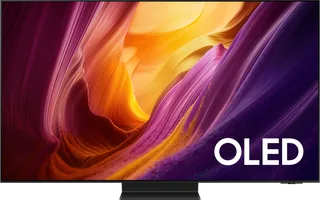
| Stand | Floating pedestal; with stand (W × H × D): 55″ 1225 × 762 × 191 mm; 65″ 1446 × 883 × 237 mm | 48″ LaserSlim design with a built-in connection panel; 55–77″ Slim OC Stand (Infinity One design), with a separate One Connect (Y24 4K) box |
| VESA pattern | 400 × 200 mm for both sizes | 48″ 300 × 200 mm; 55″ and 65″ 400 × 300 mm; 77″ 400 × 400 mm |
| Power use | 0.5 W standby; 100–240 V AC, 50–60Hz supply | Typical/max, 48″ 61/260 W; 55″ 84/400 W; 65″ 99/540 W; 77″ 127/700 W; 0.5 W standby |
| Energy class | – | 48″ F; 55″ G; 65″ F; 77″ F |
| Colours | – | Graphite Black |
| In the box | Magic Motion Remote Control and two pairs of 3D glasses | – |
More comparisons
- LG OLED evo G6 vs Samsung OLED S95H
- Samsung OLED S95C vs Samsung OLED S95H
- Samsung OLED S95B vs Samsung OLED S95H
- LG OLED C7 vs Samsung OLED S95H
- LG OLED C8 vs Samsung OLED S95H
- LG OLED C9 vs Samsung OLED S95H
- LG OLED CX vs Samsung OLED S95H
- LG OLED C1 vs Samsung OLED S95H
- LG OLED evo C2 vs Samsung OLED S95H
- LG OLED evo C3 vs Samsung OLED S95H
- LG OLED evo C4 vs Samsung OLED S95H
- LG OLED evo C5 vs Samsung OLED S95H
- LG OLED B6 (2016) vs Samsung OLED S95H
- LG OLED B7 vs Samsung OLED S95H
- LG OLED B8 vs Samsung OLED S95H
- LG OLED B9 vs Samsung OLED S95H