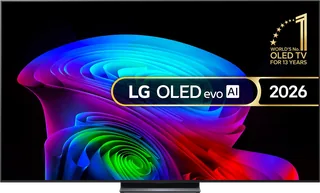
LG OLED evo C6 vs LG OLED evo G5
Better figure, where one is clearly better
| LGOLED evo C6 | LGOLED evo G5 | |
|---|---|---|
| Overview | ||
| Released | March 2026 | March 2025 |
| Display | ||
| Panel | OLED | OLED |
| Panel detail | WOLED; 77″ and 83″ use a Primary RGB Tandem panel with Hyper Radiant Colour Tech | WOLED; Primary RGB Tandem panel on 55″ to 83″ (RTINGS); 48″ has an Ultra Slim design; One Wall Design on 55″ to 97″ |
| Resolution | 3840 × 2160 (4K) | 3840 × 2160 (4K) |
| Refresh rate | 165 Hz | 144 Hz (48″), 165 Hz (55, 65, 77, 83″), 120 Hz (97″) |
| HDR formats | Dolby Vision, HDR10, HLG | Dolby Vision, HDR10, HLG |
| HDR extras | Dolby Vision IQ | OLED Dynamic Tone Mapping Pro |
| Screen finish | Glossy | Reflection Free on 55″ to 83″ |
| Peak brightness | 1,251 nits in HDR on a 10% window, 65″ (Tom's Guide) | – |
| Picture processing | AI Picture Pro, AI HDR Remastering, Brightness Booster; 77″ and 83″ add Hyper Radiant Colour Tech (up to 3.2x peak brightness) | Brightness Booster Ultimate (up to 3x brighter than LG's non-evo OLED, per LG), Pixel Dimming, AI Picture Pro |
| Picture modes | FILMMAKER MODE with Ambient Light Compensation, Creator Original mode | 10 modes, including FILMMAKER MODE |
| Motion handling | – | OLED Motion; VESA ClearMR 10000 (55″ to 83″), ClearMR 9000 (48″) |
| Sizes | ||
| Sizes | 42, 48, 55, 65, 77, 83″ | 48, 55, 65, 77, 83, 97″ |
| Largest size | 83″ | 97″ (better) |
| Gaming | ||
| HDMI ports | 4 (all HDMI 2.1 at 4K 120 Hz+) | 4 (all HDMI 2.1 at 4K 120 Hz+) |
| Variable refresh rate | HDMI VRR, G-Sync Compatible, FreeSync Premium | HDMI VRR, G-Sync Compatible, FreeSync Premium |
| Auto low latency mode | Yes | Yes |
| HDMI detail | 4K 120 Hz on all four ports; eARC, VRR, ALLM, QMS and QFT | 4 × HDMI with 4K 120Hz, eARC, VRR, ALLM, QMS and QFT on all four |
| Variable refresh range | – | Up to 165 Hz (55″ to 83″), 144 Hz (48″); the 97″ runs at 120 Hz |
| Game features | Up to 4K 165 Hz; G-SYNC Compatible, FreeSync Premium, HGiG, VESA ClearMR 10000, 0.1 ms response; Game Dashboard and Optimiser; Bluetooth Ultra Low Latency controllers (under 2.5 ms) | G-Sync Compatible, AMD FreeSync Premium, HGiG, 0.1 ms response (Intertek), Game Optimiser and Game Dashboard |
| Cloud gaming | NVIDIA GeForce NOW (4K 120 Hz HDR) | – |
| Smart TV and sound | ||
| Smart TV platform | webOS | webOS |
| Processor | alpha 11 AI Processor 4K Gen3 (Dual AI Engine) | α11 AI Processor 4K Gen2 |
| Speakers | – | 60 W, 4.2 channels |
| Dolby Atmos | Yes | Yes |
| DTS:X | No | – |
| eARC | Yes | Yes |
| Wi-Fi | Wi-Fi 6 | Wi-Fi 6 |
| Bluetooth | 5.3 | 5.3 |
| Speaker detail | 42″ 20 W, 2.0 ch; 48″ to 83″ 40 W, 2.2 ch | 48″ 40 W, 2.2 ch; 55″ to 97″ 60 W, 4.2 ch; down-firing |
| Audio features | Virtual 11.1.2 ch, AI Sound, AI Object Remastering Ultra, Dolby Atmos | α11 AI Sound Pro (virtual 11.1.2 up-mix) |
| Software updates | webOS 26; webOS Re:New Program upgrades for up to 5 years | webOS 25; security updates until 31 December 2029 |
| TV tuners | – | DVB-T2/T, DVB-C and DVB-S2/S |
| USB | 2 × USB 2.0 | 3 × USB 2.0 |
| Ethernet | – | 1 × Ethernet |
| Optical audio out | – | 1 × optical |
| Design and power | ||
| Size | Without stand, 42″ 932 × 540 × 41.1 mm; 48″ 1071 × 620 × 46.9 mm; 55″ 1222 × 703 × 45.1 mm; 65″ 1441 × 826 × 45.1 mm; 77″ 1711 × 982 × 47.1 mm; 83″ 1842 × 1055 × 52.9 mm | Without stand, 48″ 1071 × 618 × 46.9 mm; 55″ 1222 × 703 × 27.2 mm; 65″ 1441 × 826 × 24.3 mm; 77″ 1712 × 982 × 24.8 mm; 83″ 1847 × 1057 × 28.0 mm; 97″ 2155 × 1230 × 28.2 mm |
| Stand | Central pedestal stand; 65″ stands 880 mm tall on it, stand footprint 470 × 230 mm | Stand footprint 470 × 230 mm (48″), 485 × 263 mm (55″, 65″), 501 × 321 mm (77″, 83″), 1658 × 580 mm (97″); stand versions OLED55G56LS and OLED65G56LS |
| VESA pattern | 48″, 55″ and 65″ 300 × 200 mm; 83″ 400 × 400 mm | 48″ and 55″ 300 × 200 mm; 65″ and 77″ 300 × 300 mm; 83″ 400 × 400 mm; 97″ 600 × 400 mm |
| Power use | – | Under 0.5 W standby |
| Energy class | – | E (55″ to 83″); F (48″, 97″) |
| In the box | – | Magic Remote MR25GB, power cable (attached) |
| Warranty | OLED Care+ covers the panel for 5 years | – |

More comparisons
- LG OLED evo C6 vs LG OLED evo W6
- LG OLED evo G5 vs LG OLED evo W6
- LG OLED evo C6 vs Samsung OLED S90H
- LG OLED evo G5 vs Samsung OLED S95H
- LG OLED evo G5 vs Samsung OLED S90H
- LG OLED evo C3 vs LG OLED evo C6
- LG OLED evo C2 vs LG OLED evo C6
- LG OLED C1 vs LG OLED evo C6
- LG OLED CX vs LG OLED evo C6
- LG OLED B3 vs LG OLED evo C6
- LG OLED evo C6 vs Samsung OLED S95C
- LG OLED C9 vs LG OLED evo C6
- LG OLED C8 vs LG OLED evo C6
- LG OLED B8 vs LG OLED evo C6
- LG OLED C7 vs LG OLED evo C6
- LG OLED C6 (2016) vs LG OLED evo C6