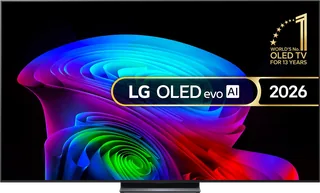
LG OLED evo C6 vs Samsung Neo QLED QN85D
Better figure, where one is clearly better
| LGOLED evo C6 | SamsungNeo QLED QN85D | |
|---|---|---|
| Overview | ||
| Released | March 2026 | April 2024 |
| Display | ||
| Panel | OLED | Mini-LED |
| Panel detail | WOLED; 77″ and 83″ use a Primary RGB Tandem panel with Hyper Radiant Colour Tech | Quantum dot LCD with Mini LED backlight and Quantum Matrix Technology |
| Resolution | 3840 × 2160 (4K) | 3840 × 2160 (4K) |
| Refresh rate | 165 Hz (better) | 120 Hz |
| HDR formats | Dolby Vision, HDR10, HLG | HDR10, HDR10+, HLG |
| HDR extras | Dolby Vision IQ | Neo Quantum HDR; HDR10+ Adaptive and Gaming |
| Screen finish | Glossy | – |
| Peak brightness | 1,251 nits in HDR on a 10% window, 65″ (Tom's Guide) | – |
| Picture processing | AI Picture Pro, AI HDR Remastering, Brightness Booster; 77″ and 83″ add Hyper Radiant Colour Tech (up to 3.2x peak brightness) | 4K AI Upscaling, Real Depth Enhancer, Auto HDR Remastering, HDR Brightness Optimizer and Supreme UHD Dimming; Supersize Picture Enhancer on 85″ |
| Picture modes | FILMMAKER MODE with Ambient Light Compensation, Creator Original mode | Filmmaker Mode; Smart Calibration Basic |
| Motion handling | – | Motion Xcelerator 120Hz; UK tables label the standard refresh rate 100Hz and specify 4K 120Hz on all four HDMI inputs |
| Viewing angle | – | Wide Viewing Angle |
| Sizes | ||
| Sizes | 42, 48, 55, 65, 77, 83″ | 55, 65, 75, 85″ |
| Largest size | 83″ | 85″ (better) |
| Gaming | ||
| HDMI ports | 4 (all HDMI 2.1 at 4K 120 Hz+) | 4 (all HDMI 2.1 at 4K 120 Hz+) |
| Variable refresh rate | HDMI VRR, G-Sync Compatible, FreeSync Premium | HDMI VRR, FreeSync Premium Pro |
| Auto low latency mode | Yes | Yes |
| HDMI detail | 4K 120 Hz on all four ports; eARC, VRR, ALLM, QMS and QFT | 4K 120Hz on HDMI 1/2/3/4; eARC and Anynet+ HDMI-CEC |
| Game features | Up to 4K 165 Hz; G-SYNC Compatible, FreeSync Premium, HGiG, VESA ClearMR 10000, 0.1 ms response; Game Dashboard and Optimiser; Bluetooth Ultra Low Latency controllers (under 2.5 ms) | Game Motion Plus, Dynamic Black EQ, Super Ultra Wide Game View, Mini Map Zoom, Surround Sound, HGiG and light synchronisation |
| Cloud gaming | NVIDIA GeForce NOW (4K 120 Hz HDR) | Samsung Gaming Hub; compatible controller, internet connection and separate service subscriptions may be required |
| Smart TV and sound | ||
| Smart TV platform | webOS | Tizen |
| Processor | alpha 11 AI Processor 4K Gen3 (Dual AI Engine) | NQ4 AI Gen2 Processor |
| Speakers | – | 40 W, 2.2 channels |
| Dolby Atmos | Yes | Yes |
| DTS:X | No | – |
| eARC | Yes | Yes |
| Wi-Fi | Wi-Fi 6 | Wi-Fi 5 |
| Bluetooth | 5.3 | 5.2 |
| Speaker detail | 42″ 20 W, 2.0 ch; 48″ to 83″ 40 W, 2.2 ch | Object Tracking Sound Lite (OTS Lite) |
| Audio features | Virtual 11.1.2 ch, AI Sound, AI Object Remastering Ultra, Dolby Atmos | Q-Symphony, Active Voice Amplifier Pro, Adaptive Sound Pro, 360 Audio and Audio Pre-selection Descriptor |
| Voice assistants | – | Bixby and Alexa built in, with far-field voice; works with Alexa and Google Assistant speakers |
| Casting | – | Apple AirPlay, Tap View, TV/mobile screen mirroring and sound mirroring; Multi View for up to two videos |
| Software updates | webOS 26; webOS Re:New Program upgrades for up to 5 years | UK specification tables list security updates until 31 December 2029 |
| TV tuners | – | Twin DVB-T2/C/S2 and analogue; CI+ 1.4; HbbTV 2.0.3 |
| USB | 2 × USB 2.0 | 2 × USB-A |
| Ethernet | – | 1 × LAN |
| Optical audio out | – | 1 × optical audio out |
| Design and power | ||
| Size | Without stand, 42″ 932 × 540 × 41.1 mm; 48″ 1071 × 620 × 46.9 mm; 55″ 1222 × 703 × 45.1 mm; 65″ 1441 × 826 × 45.1 mm; 77″ 1711 × 982 × 47.1 mm; 83″ 1842 × 1055 × 52.9 mm | Without stand (W × H × D): 55″ 1227.6 x 706.4 x 46.1 mm; 65″ 1446.5 x 829.5 x 46.3 mm; 75″ 1670.2 x 958.2 x 46.7 mm; 85″ 1892.4 x 1082.9 x 47.0 mm |
| Stand | Central pedestal stand; 65″ stands 880 mm tall on it, stand footprint 470 × 230 mm | Carbon Silver One Touch Hexagon pedestal; Simple Chamfer design |
| VESA pattern | 48″, 55″ and 65″ 300 × 200 mm; 83″ 400 × 400 mm | 55″ 200 x 200 mm; 65″ 400 x 300 mm; 75″ 400 x 400 mm; 85″ 600 x 400 mm |
| Power use | – | Typical/max: 55″ 80.0 W/195 W; 65″ 102 W/250 W; 75″ 121 W/330 W; 85″ 143 W/380 W; 0.50 W standby |
| Energy class | – | 55″ G; 65/75/85″ F |
| Colours | – | Carbon Silver |
| In the box | – | TM2360E remote controller, power cable and user manual. Samsung’s US 12 April 2024 notice confirms the series was on sale that month; UK April coverage still described pre-orders, so this release month is not a UK first-sale claim |
| Warranty | OLED Care+ covers the panel for 5 years | – |

More comparisons
- LG OLED evo C6 vs LG OLED evo W6
- LG OLED evo C6 vs Samsung OLED S90H
- Samsung Neo QLED QN80H vs Samsung Neo QLED QN85D
- Samsung Neo QLED QN85D vs Sony BRAVIA 7 II
- Samsung Neo QLED QN70H vs Samsung Neo QLED QN85D
- LG OLED evo C3 vs LG OLED evo C6
- LG OLED evo C2 vs LG OLED evo C6
- LG OLED C1 vs LG OLED evo C6
- LG OLED CX vs LG OLED evo C6
- LG OLED B3 vs LG OLED evo C6
- LG OLED evo C6 vs Samsung OLED S95C
- LG OLED C9 vs LG OLED evo C6
- LG OLED C8 vs LG OLED evo C6
- LG OLED B8 vs LG OLED evo C6
- LG OLED C7 vs LG OLED evo C6
- LG OLED C6 (2016) vs LG OLED evo C6