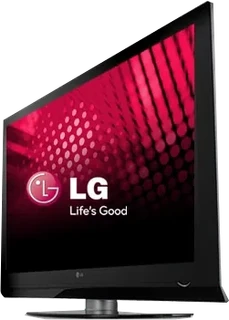
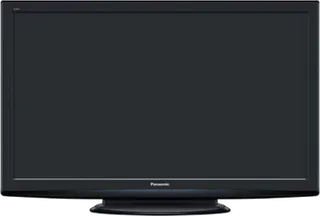
LG PG6000 vs Panasonic VIERA S20
Better figure, where one is clearly better
| LGPG6000 | PanasonicVIERA S20 | |
|---|---|---|
| Overview | ||
| Released | April 2008 | 2010 |
| Display | ||
| Panel | Plasma | Plasma |
| Panel detail | HD Ready plasma with LG's single-layer glass front; the two sizes have different native pixel grids. LG France's promotional 1366 × 768 heading conflicts with its detailed 42-inch 1024 × 768 and 50-inch 1365 × 768 tables, which are used here. | Panasonic's exact UK manual lists 1920 × 1080 pixels on all three sizes. The 600 Hz sub-field drive marketed for this generation is not native image refresh. |
| Resolution | 1024 × 768 (42″), 1365 × 768 (50″) | 1920 × 1080 (Full HD) (better) |
| HDR formats | None | None |
| Picture processing | Dual XD Engine, AV Mode II and picture wizard with ISF Expert controls | NeoPDP panel with Intelligent Frame Creation. Picture controls are basic, without the higher-range THX mode or user-accessible advanced greyscale and colour controls. |
| Picture modes | Vivid, Standard, Cinema, Sports, Game and two Expert modes on LG France's tables | – |
| Motion handling | LG markets 100 Hz TruMotion; native panel refresh is not separately stated, so no scalar refresh is assigned | HDTVTest measured 16 ms input lag in Game mode on its 50-inch UK review sample. This measured figure is not asserted for the other sizes. |
| Sizes | ||
| Sizes | 42, 50″ | 42, 46, 50″ |
| Largest size | 50″ | 50″ |
| Gaming | ||
| HDMI ports | 4 (0 HDMI 2.1 at 4K 120 Hz+) | 3 (0 HDMI 2.1 at 4K 120 Hz+) |
| Variable refresh rate | None | None |
| HDMI detail | Four HDMI 1.3 inputs, three rear and one side, in LG's UK launch and French specification | Three HDMI Type A inputs; HDMI1 and HDMI3 are version 1.3a, while HDMI2 adds HDMI 1.4 Audio Return Channel. Two SCART inputs, component and composite video are listed in the UK manual. |
| Smart TV and sound | ||
| Smart TV platform | None (no smart platform) | None (no smart platform) |
| Speakers | 20 W, 2.0 channels | 20 W |
| Speaker detail | Hidden 2 × 10 W speakers, described as four two-way drivers in LG France's specification | Two 160 × 40 mm, 6-ohm speakers rated 10 W + 10 W. |
| Audio features | Clear Voice and SRS TruSurround XT | Optical PCM/Dolby Digital output, analogue RCA stereo output and 3.5 mm headphone socket. |
| Casting | – | No wireless or DLNA media streaming. The Ethernet socket does not add VIERA CAST online services. |
| Software updates | No smart-TV platform. HDTVTest reported UK stock on 15 April 2008; its account says the Korean series had sold since an early March launch. LG's UK release promised the first half of 2008 rather than an exact UK day. | – |
| TV tuners | UK Freeview DVB-T on AVForums' 42-inch review; LG France specifies MPEG-2 terrestrial reception | UK DVB-T2 Freeview HD, DVB-T and PAL I analogue terrestrial; no satellite tuner. |
| USB | One side USB 2.0 input for JPEG images and MP3 audio | No USB socket is listed in Panasonic's UK specifications; an SD/SDXC card slot supports local photo and video media. |
| Ethernet | – | RJ45 10BASE-T/100BASE-TX is present, but neither VIERA CAST nor DLNA media streaming is provided. |
| Optical audio out | One rear optical digital audio output | Optical PCM and Dolby Digital output. |
| Design and power | ||
| Size | Without stand (W × H × D), LG France: 42-inch 1044.4 × 680.6 × 79.6 mm; 50-inch 1236 × 793 × 80 mm | Panasonic TV-only width × height × depth and weight: 42-inch 1029 × 661 × 93 mm, 23 kg; 46-inch 1132 × 722 × 93 mm, 26 kg; 50-inch 1218 × 769 × 93 mm, 29 kg. With pedestal: 1029 × 704 × 334 mm, 24.5 kg; 1132 × 767 × 401 mm, 28 kg; 1218 × 814 × 401 mm, 31 kg. |
| Stand | Detachable swivel stand; LG France lists 28 kg with stand for 42-inch and 43.7 kg for 50-inch | Circular pedestal supplied. |
| VESA pattern | 400 × 400 mm on LG France's 42- and 50-inch sheets | – |
| Power use | LG France lists on/standby power of 310/1 W for 42-inch and 420/1 W for 50-inch | Panasonic rated consumption: 275 W (42-inch), 285 W (46-inch), 320 W (50-inch); standby 0.40 W, or 16 W with monitor-out recording. |
| In the box | Detachable swivel table stand and remote control | Panasonic's manual includes a pedestal, remote, batteries and mains lead. The earliest exact UK on-sale month was not confirmed; released uses year precision. |
More comparisons
- LG OLED evo C6 vs LG PG6000
- LG PG6000 vs Panasonic Z95B
- Panasonic VIERA S20 vs Panasonic Z90B
- Panasonic VIERA DX802 vs Panasonic VIERA S20
- Panasonic VIERA DX902 vs Panasonic VIERA S20
- Panasonic VIERA CX802 vs Panasonic VIERA S20
- Panasonic VIERA AX902 vs Panasonic VIERA S20
- LG PG6000 vs Panasonic VIERA GT60
- LG PG6000 vs Panasonic VIERA ST60
- LG PG6000 vs Panasonic VIERA ZT65
- Panasonic VIERA GT60 vs Panasonic VIERA S20
- Panasonic VIERA S20 vs Panasonic VIERA ST60
- Panasonic VIERA S20 vs Panasonic VIERA VT60
- Panasonic VIERA S20 vs Panasonic VIERA ZT65
- LG PG6000 vs Panasonic VIERA GT50
- LG PG6000 vs Panasonic VIERA G30