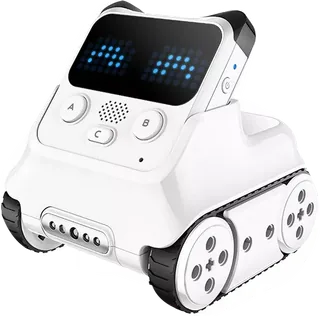
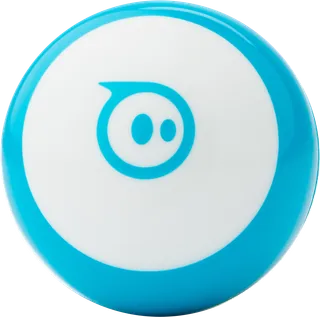
Makeblock Codey Rocky vs Sphero Mini
Better figure, where one is clearly better
| MakeblockCodey Rocky | SpheroMini | |
|---|---|---|
| Overview | ||
| Released | – | 2017 |
| Task and control | ||
| Form | Wheeled | Wheeled |
| Use | Education | Education |
| User programming | Yes | Yes |
| Phone app | Yes | Yes |
| Movement | – | Motor-driven rolling ball; the interchangeable outer shell encloses the drive mechanism. |
| User programming | Block coding and Python. | Sphero Edu supports drawing, blocks and JavaScript; Sphero Play provides driving and game controls. |
| Regional availability | SKU P1030069 orderable on 3 October 2026. Orderable on the maker store on 3 October 2026; maker states delivery to the contiguous United States only. | The maker US store lists individual blue, green and red robots as orderable on 3 October 2026; availability is regional. |
| Release details | Exact first-sale date not established from the maker evidence read. | Contemporary MacRumors coverage records sale from 29 September 2017. Year precision is retained because a maker first-sale notice was not located. |
| Hardware | ||
| Height | – | 39.878 mm |
| Width | – | 39.878 mm |
| Depth | – | 39.878 mm |
| Wi-Fi | Yes | – |
| Bluetooth | Yes | Yes |
| Processing | ESP32 Tensilica LX6 dual-core processor, up to 240 MHz. | – |
| Sensors | Buttons, potentiometer, sound and light sensing, gyroscope, accelerometer, infrared emitter/receiver and infrared colour sensor. | Gyroscope, accelerometer and motor encoders; RGB LED. |
| Size and weight | – | Maker diameter: 1.57 inches (39.878 mm). |
| Accessories | – | Three mini traffic cones and six mini bowling pins included. Blue, green and red shells offered on the current maker page. |
| Audio | Speaker. | – |
| Display | LED matrix and RGB LED. | – |
| Connections | USB, Bluetooth and Wi-Fi. | – |
| Battery | ||
| Battery life (maker's claim) | Approximately 1–2 hours of play | 45 minutes of play |
| Battery capacity | 950 mAh | – |
| Battery | 3.7 V 950 mAh lithium-polymer battery. | – |
| Charging | Maker states approximately 1.5 hours charging. | Micro-USB charging cable included; remove the shell to access the charging port. |
| Runtime conditions | Specification table gives approximately 1–2 hours; FAQ describes two hours of full-load operation. | – |