Nokia 3510 vs Sony Ericsson T610
Better figure, where one is clearly better
| Nokia3510 | Sony EricssonT610 | |
|---|---|---|
| Overview | ||
| Released | 2002 | 2003 |
| Display | ||
| Screen size | – | 1.8″ |
| Resolution | 96 × 65 | 160 × 128 (better) |
| Sharpness | – | 114 pixels per inch |
| Panel | LCD | LCD |
| Display type | Monochrome graphic LCD, 96 × 65 pixels, maker launch release. Text layout varies with function and font size; no maker-published diagonal or refresh assigned. | 65,536-colour LCD with 160 × 128 pixels; 1.8-inch diagonal and STN technology from GSMArena |
| Cameras | ||
| Main camera | None | 0.1 MP (better) |
| Ultra wide camera | None | None |
| Telephoto camera | None | None |
| Optical zoom | None | None |
| Main camera | No camera (GSMArena). | CIF still camera with 352 × 288 output specified by the maker; 0.1 MP classification from GSMArena |
| Camera features | – | Dedicated camera button, QuickShare picture sharing and night mode |
| Battery and charging | ||
| Battery | 950 mAh | – |
| Wireless charging | None | None |
| Battery life detail | Removable BLC-2 Li-ion, 950 mAh (GSMArena and GSMOnline's tested handset). Original guide names BLC-2 but gives no capacity. Maker launch claims up to 4 h 30 min talk and 13 days standby, dependent on network and use. Some regional listings/tests describe BLC-1 instead; no claim that every regional box includes BLC-2. | Maker white paper conflicts internally, listing a BST-25 750 mAh battery in the consumer pack and a BST-14 700 mAh battery in general technical data; capacity omitted |
| Wired charging | Original English issue 3 guide gives approximately 3 h 45 min for BLC-2 with ACP-7. Contemporary reviews quote other timings; maker guide used for this charger example. Proprietary bottom charger socket; no inferred wattage. | – |
| Design | ||
| Type | Standard | Standard |
| Weight | 105 g | 95 g (better) |
| Thickness | 21 mm | 19 mm (better) |
| Height × width | 118 × 50 mm | 102 × 44 mm |
| Materials | – | Anodised aluminium outer shell |
| Weight detail | Maker launch specifies 105 g. Dimensions 118 × 42–50 × 18–21 mm (GSMArena, matching contemporary exact-model tests); headline uses the maximum published width and thickness. Shape and fitted cover determine measurements, as GSMOnline qualifies; no sibling-model dimensions substituted. | – |
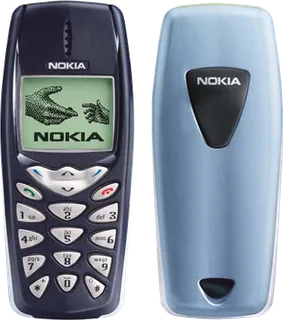
| Colours | Replaceable Xpress-on covers. Archived promotional images show dark blue, red, white and other cover finishes plus Active light-effect, Gaming directional-key and Reactive glow-in-the-dark accessories. Accessory covers alter appearance or keypad geometry, not the handset generation; pictured cover packs do not establish supplied accessories in every region. | Aluminium Haze, Volcanic Red, Deep Sea Blue |
| Buttons | Numeric keypad, two selection keys, up/down scroll keys, call/end keys and top power key, original guide. Optional Gaming cover provides different directional-key geometry; automatic keyguard is supported. | Five-way joystick and dedicated camera button |
| Software | ||
| Operating system | Proprietary software | Proprietary software |
| Software at launch | – | Sony Ericsson proprietary phone software; Java CLDC 1.0 and MIDP 1.0 applications |
| Software features | Original guide documents predictive text, SMS and picture messaging, receive-only MMS, polyphonic MIDI sounds, calendar, alarm, stopwatch, countdown timer and screensavers. Maker launch names Kart Racing, Dance 2 Music, Space Impact II, Bumper and Link5, with Club Nokia downloadable game content. No Java (GSMArena); no later 3510i colour display or Java support copied. | – |
| Release detail | Announced 12 March 2002 with planned second-quarter shipments. Nokia's 18 July 2002 results confirm actual shipping during that quarter in Europe and Asia Pacific, without a first worldwide sale month; year precision retained. Contemporary test predictions of early-June sale are not maker-confirmed first-sale dates. No explicit maker predecessor wording established. | – |
| Performance | ||
| Storage | – | 2 MB |
| Memory | Up to 500 internal names and 14 voice tags, maker launch. Original guide permits multiple numbers and text items per name with shared memory; maximum contacts depend on entry contents. Phonebook and message allocations are not generic handset storage or RAM. | – |
| Storage type | No memory-card slot (GSMArena). | 2 MB shared file system for pictures, games and other content |
| Connectivity | ||
| Mobile network | GSM 900/1800 and WAP 1.2.1 over GPRS, maker launch. GPRS class 4 and no EDGE (GSMArena). Guide also permits GSM circuit-switched data for WAP. MMS reception depends on network services, device compatibility and supported content; no MMS sending. | GSM 900/1800/1900 with GPRS and HSCSD |
| SIM | Mini-SIM behind the removable battery, original guide. | Small plug-in 3 V SIM |
| Wi-Fi | No Wi-Fi (GSMArena). | – |
| Bluetooth | No Bluetooth (GSMArena). | Bluetooth 1.0B with critical errata; headset, dial-up, synchronisation and object-push profiles |
| USB | – | Serial RS-232 accessory connection and infrared transceiver |
| Positioning | No satellite positioning (GSMArena). | – |