Nokia E65 vs Nokia N95
Better figure, where one is clearly better
| NokiaE65 | NokiaN95 | |
|---|---|---|
| Overview | ||
| Released | February 2007 | 2007 |
| Display | ||
| Screen size | – | 2.6″ |
| Resolution | 320 × 240 | 320 × 240 |
| Sharpness | – | 154 pixels per inch |
| Panel | LCD | LCD |
| Display type | QVGA 320 × 240 LCD with up to 16 million colours in both production reviews; portrait screen, with resolution stored long side first. PhoneArena gives a 2.24-inch diagonal; a maker physical diagonal was not recovered, so no headline inches inferred. | 2.6-inch QVGA TFT, 240 × 320 pixels, up to 16 million colours and ambient-light sensor; original maker consumer specifications. Brightness in nits and native refresh not published. |
| Performance | ||
| Chip | ARM9 220 MHz (PhoneArena) | – |
| Storage | 50 MB | 160 MB (better) |
| CPU | 220 MHz ARM9 processor identified by PhoneArena's exact-model production review; not transferred from another Nokia model | – |
| Memory | 50 MB internal user storage in the GSMArena/MobilMania production review. PhoneArena's approximately 24 MB wording describes available RAM, not installed physical RAM; no installed-RAM figure inferred. | Up to 160 MB dynamic shared internal storage for applications and personal files. Installed physical RAM and chip model are not inferred from available working-memory figures or unspecified review references. |
| Storage type | microSD slot under the rear cover; exact owner guide supports FAT16/FAT32 and card removal without switching off or removing the battery. No maximum card capacity inferred from a sibling. | Hot-swappable microSD slot; original maker consumer specification supports cards up to 2 GB. Bundled cards vary by regional sales package; no universal included card assumed. |
| Cameras | ||
| Main camera | 2 MP | 5 MP (better) |
| Ultra wide camera | None | None |
| Telephoto camera | None | None |
| Optical zoom | None | None |
| Front camera | – | 0.1 MP |
| Main camera | 2 MP rear camera; up to 1600 × 1200 pixels in the GSMArena/MobilMania production test. PhoneArena confirms no flash. | 5 MP CMOS, up to 2592 × 1944 pixels, autofocus Carl Zeiss optics, called Vario-Tessar by the original consumer table. Physical focal length 5.6 mm; focus 10 cm to infinity, macro 10–50 cm. Mechanical shutter 1/1000–1/3 second and integrated flash. Active sliding lens cover and two-stage shutter key. |
| Front camera | No front video-call camera in the production reviews | Maker consumer table specifies a CIF 352 × 288-pixel front sensor; headline 0.1 MP rounds that pixel count. GSMArena reports 640 × 480 output; sensor format and processed output are not treated as equivalent. |
| Zoom | – | No optical zoom. Maker consumer table gives up to 20× digital still zoom, up to 6× at 5 MP; video up to 10×, up to 4× at VGA. Earlier launch datasheet gives 8× video zoom; preserve mode/source distinction. |
| Video recording | CIF 352 × 288 MPEG-4 recording in both production tests; no frame rate inferred | MPEG-4 VGA 640 × 480 at up to 30 fps, digital stabilisation; MP4 default and 3GP sharing modes. Consumer table claims AAC stereo and a digital stereo microphone, but All About Symbian’s original production test identifies one recording microphone and mono audio; the stereo claim is not treated as verified recording hardware. Clip length depends on available storage. |
| Camera features | Night mode, image sequence, self-timer, white balance and colour effects in the GSMArena/MobilMania test | Automatic/user/close-up/sport/landscape/night/night-portrait scenes, white balance, colour effects, exposure compensation ±2 EV in 0.5 steps, flash settings, self-timer and sequence shooting. On-device still/video editing and compatible PictBridge, Bluetooth or UPnP printing. |
| Battery and charging | ||
| Battery | – | 950 mAh |
| Wireless charging | None | None |
| Battery life detail | Removable BL-5F in both production tests, described as 1000 mAh. An exact maker capacity specification was not recovered, so no headline capacity set. PhoneArena measures 4 hours 15 minutes of talk in its conditions; GSMArena/MobilMania reports four to five days on GSM. These are different workloads, not playback or universal endurance claims. | Removable BL-5F 950 mAh. Original consumer claims up to 160 minutes WCDMA or 240 minutes GSM talk, 200/225 hours standby respectively. Earlier launch datasheet gives 210 minutes GSM talk and 215 hours standby; runtime conditions and source date matter. Datasheet claims up to 7 hours music playback. |
| Wired charging | Separate charger connector. Exact issue 2 guide lists AC-3, AC-4 and AC-5, plus specified older chargers through CA-44. The GSMArena/MobilMania test confirms no charging through the computer data port; no wattage published in the maker guide. | Dedicated small Nokia charger connector with supplied AC-5 in the Danish package. mini-USB is for data, not charging, independently tested by GSMArena. Charging wattage not published. |
| Design | ||
| Type | Standard | Standard |
| Weight | 115 g (better) | 120 g |
| Thickness | 15.5 mm (better) | 21 mm |
| Height × width | 105 × 49 mm | 99 × 53 mm |
| Weight detail | 115 g and 105 × 49 × 15.5 mm from PhoneArena's production review; GSMArena/MobilMania rounds thickness to 16 mm. Exact maker dimensions were not recovered and review precision is explicitly attributed. | – |
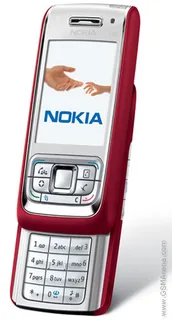
| Materials | Mechanical numeric-keypad slider; textured plastic rear cover resembling leather in the GSMArena/MobilMania test. This is not a folding or flexible-display phone. | – |
| Colours | Brown and Red in the original production reviews; later regional finishes not inferred | – |
| Buttons | Numeric keypad, navigation key, conference key, configurable shortcut, Contacts key and microphone mute; side voice-record, edit and volume keys. Exact owner guide identifies the Pop-Port and separate charging connector. | Numeric keypad slides out one way; dedicated media controls slide out the other and switch to landscape use. Five-way navigation/soft/menu keys, side volume/zoom, shutter and Gallery controls. This is a slider, not a hinged folding screen. |
| Speakers | Built-in speaker; no stereo Bluetooth capability inferred from generic Bluetooth support | Integrated stereo loudspeakers, 3.5 mm stereo headphone/TV-out connector with PAL/NTSC support and stereo FM/Visual Radio. Compatible wired headset provides the radio antenna; optional Bluetooth audio uses A2DP. |
| Software | ||
| Operating system | Symbian | Symbian |
| Software at launch | Symbian OS 9.1 with S60 Third Edition in both production reviews; not Feature Pack 1 from the later E66 | Symbian OS 9.2 with S60 3rd Edition Feature Pack 1, independently verified in the original GSMArena full test. Launch datasheet’s unusual “Feature Pack 3.1” wording is not copied as a separate OS version. |
| Software features | Team Suite, conference calling, internet calling, email, phone-content search, PDF reader and ZIP manager. Quickoffice document viewing; editing required a purchased upgrade in both production reviews. Original alarm has one non-repeating alarm in the tests. Historical online services may no longer operate. | Contacts/calendar/tasks/notes, email with attachments, Nokia Web Browser with Mini Map, music/video player, image/video editing, Quickoffice and PDF document viewers, and PC Suite synchronisation. The 2008 owner guide covers later software; retired online services are not promised current functionality. |
| Release detail | Nokia's 12 February 2007 announcement confirms already available in selected markets, with broader first-quarter availability. Month precision retained; the statement does not establish a worldwide first-sale day. No unsupported predecessor relation. | Announced 26 September 2006. Maker announces first regional shipments on 22 March 2007; contemporary March/April production tests establish 2007 retail presence, but no exact worldwide first-sale date is confirmed, so year precision is retained. This record is the original N95-1/RM-159, not the later N95 8GB or American/Chinese variants. |
| In the box | GSMArena/MobilMania's tested package includes AC-4 charger, battery, software CD, owner guide, CA-53 USB cable, HS-5 mono headset and CP-18 pouch; no memory card or stereo headset. Regional contents may differ. | Original Danish consumer package: N95, CA-75U video cable, DKE-2 data cable, HS-45/AD-43 stereo headset/adapter, BL-5F battery and AC-5 charger. Region/operator bundles can differ. |
| Connectivity | ||
| Mobile network | GSM/EDGE and UMTS in the exact owner guide. PhoneArena's tested model supports quad-band GSM and UMTS 2100 MHz; no HSDPA or American UMTS support inferred. | Original N95-1/RM-159: GSM/EDGE 850/900/1800/1900 and WCDMA/HSDPA 2100 MHz. Consumer overview specifies 3.6 Mbps downlink/384 kbps uplink; its later packet-data row reverses the labels. The overview ordering is retained with that discrepancy explicit. Regional N95 variants are not silently combined. |
| Wi-Fi | IEEE 802.11b/g in PhoneArena's exact production test; maker guide describes WLAN and internet calling | IEEE 802.11b/g, 2.4 GHz; infrastructure and ad-hoc modes, WEP/WPA/802.1x and compatible UPnP home-network sharing, exact English owner guide. Actual network and service compatibility applies. |
| Bluetooth | Bluetooth 1.2 without multimedia stereo profiles in PhoneArena's exact-model review; not copied from the E66's Bluetooth 2.0/A2DP specification | Bluetooth 2.0; English N95-1 guide lists A2DP, audio/video remote control, imaging/printing, dial-up networking, file transfer, hands-free/headset, HID, object push, SIM access and synchronisation profiles. |
| USB | Nokia Pop-Port data/accessory connector with CA-53 USB cable; PC Suite and memory-card mass-storage modes. Infrared and separate charger connector. No standard 2.5/3.5 mm headset socket or micro-USB port in the production tests. | mini-USB, USB 2.0 full-speed and USB mass storage, maker datasheet and tested physical connector. The Danish consumer table incorrectly labels it Pop-Port. Guide documents PC Suite, Media player, Data transfer and Image print modes; infrared is also provided. |
| Positioning | No built-in GPS receiver; software supports a compatible external Bluetooth GPS module in the GSMArena/MobilMania review. Historical services are not promised available today. | Built-in GPS and Nokia Maps at launch. The 2008 issue-3 exact owner guide additionally documents network-assisted A-GPS; this later software feature is not assigned to initial firmware. Launch mapping/route planning and paid navigation packages are historical services, not promised to operate today. |

More comparisons
- Nokia N8 vs Nokia N95
- Nokia E65 vs Samsung Galaxy S
- Nokia E65 vs Nokia E72
- Nokia E65 vs Nokia N97 mini
- Nokia N95 vs Nokia N97 mini
- Nokia N86 8MP vs Nokia N95
- Nokia N95 vs Nokia N97
- Nokia E52 vs Nokia E65
- Nokia E55 vs Nokia E65
- Nokia E65 vs Sony Ericsson Xperia X1
- Nokia N85 vs Nokia N95
- Nokia E65 vs Nokia N96
- Nokia N95 vs Nokia N96
- Apple iPhone 3G vs Nokia E65
- Nokia E63 vs Nokia E65
- Nokia E65 vs Nokia E66