Nokia E66 vs Nokia N85
Better figure, where one is clearly better
| NokiaE66 | NokiaN85 | |
|---|---|---|
| Overview | ||
| Released | 2008 | October 2008 |
| Display | ||
| Screen size | 2.4″ | 2.6″ |
| Resolution | 320 × 240 | 320 × 240 |
| Sharpness | 167 pixels per inch (better) | 154 pixels per inch |
| Panel | LCD | OLED |
| Display type | 2.4-inch 320 × 240 LCD with up to 16 million colours in the maker datasheet; TFT identified in GSMArena's production test. The physical screen is portrait-oriented; resolution is stored long side first for comparison. | 2.6-inch AMOLED, QVGA, up to 16 million colours; no maker refresh-rate or peak-brightness figure published in the launch sheet. |
| Display features | Ambient light sensor and accelerometer-driven portrait/landscape rotation; non-touchscreen | – |
| Performance | ||
| Chip | ARM11 369 MHz (GSMArena) | ARM11 369 MHz (GSMArena) |
| Memory | 128 MB | – |
| Storage | 110 MB (better) | 78 MB |
| CPU | 369 MHz ARM11 processor identified by GSMArena's exact-model production review | – |
| Memory | 128 MB installed SDRAM from GSMArena, distinct from free application memory. Maker publishes up to 110 MB internal user memory; the configuration records that user-accessible capacity. | Maker datasheet lists up to 74 MB internal dynamic memory and up to 78 MB internal NAND flash. Configs record the latter, not the included 8 GB removable card. Installed RAM is left unpublished; dynamic/free memory is not treated as installed RAM. GSMArena reports a different user-available figure, just under 85 MB. |
| Storage type | microSD expansion up to 8 GB in the maker launch sheet; optional card capacity is not built-in storage | microSD expansion; 8 GB microSD card supplied in the original maker launch package. No inferred maximum card size. |
| Cameras | ||
| Main camera | 3.2 MP | 5 MP (better) |
| Ultra wide camera | None | None |
| Telephoto camera | None | None |
| Optical zoom | None | None |
| Main camera | 3.2 MP autofocus camera with LED flash; maker gives up to 2048 × 1536 still pixels | 5 MP autofocus Carl Zeiss Tessar lens, F2.8, 5.45 mm physical focal length and dual LED flash/video light. Maker sheet gives 2584 × 1938 capture; GSMArena production review gives 2592 × 1944. Exact disagreement retained. |
| Front camera | Front camera for video calls confirmed by maker; no sensor megapixel figure inferred | Secondary front camera for video calls; GSMArena identifies CIF without an inferred megapixel count. |
| Video recording | Maker specifies QVGA video; GSMArena's production test records 320 × 240 at 15 fps | Main camera MPEG-4 VGA (640 × 480) at up to 30 fps, from maker launch datasheet. |
| Camera features | Dedicated shutter key; scene, white-balance, exposure, self-timer and sequence controls in GSMArena's production test. Its tested software does not geotag photos. | Sliding lens cover activates camera; location tagging, scene modes, white balance, ISO, exposure compensation, sharpness, contrast and colour effects. Two-stage capture button. |
| Battery and charging | ||
| Battery | 1,000 mAh | 1,200 mAh (better) |
| Wireless charging | None | None |
| Battery life detail | Removable BL-4U 1000 mAh Li-Ion. Maker maxima are 7.5 hours GSM or 3.5 hours WCDMA talk, and 11 days GSM or 14 days WCDMA standby. These are network operating conditions, not video-playback claims. GSMArena's stationary GPS/display-on test lasts six hours. | Removable Nokia BL-5K, 1200 mAh. Launch maker maxima: 270 minutes 3G or 410 minutes GSM talk, 360 hours standby, 160 minutes video calls, seven hours QVGA/15fps video playback or 30 hours music in offline mode; different activities and conditions, not interchangeable endurance. |
| Wired charging | Separate charging connector; compatible Nokia charger. No charging wattage published in the maker datasheet; micro-USB data support does not establish USB charging. | Micro-USB charging, confirmed by exact RM-333 guide. USB data transfer can continue while charging; no maker charging wattage inferred. |
| Design | ||
| Type | Standard | Standard |
| Weight | 121 g (better) | 128 g |
| Thickness | 13 mm (better) | 16 mm |
| Height × width | 107 × 49 mm | 103 × 50 mm |
| Weight detail | Maker launch sheet rounds size to 107 × 49 × 13 mm and gives 121 g. GSMArena measures/lists 107.5 × 49.5 × 13.6 mm; that greater precision is review evidence, not a silently substituted maker claim. | – |
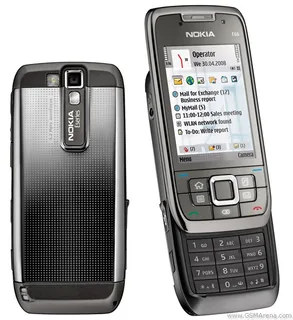
| Materials | Stainless-steel rear cover and slider body; numeric keypad slides out below the display. This is a mechanical slider, not a folding or flexible-display phone. | – |
| Colours | Grey Steel and White Steel in original maker launch sheet; regional availability varies | – |
| Buttons | Numeric keypad, navigation control and one-touch Home, Calendar, Contacts and Email keys; dedicated shutter and side volume controls | Dual slider exposes numeric keypad or media/game keys; physical scroll control with optional touch-sensitive Navi wheel, multimedia key, camera/zoom controls and keylock switch. Guide confirms Navi wheel in supported applications; unlike N96, the production reviews test it as active. |
| Sensors | Accelerometer and ambient light sensor | – |
| Speakers | Built-in loudspeaker and FM/Visual Radio; GSMArena reports no RDS. Compatible wired headset serves as radio antenna. | Two built-in stereo speakers with 3D sound effect. FM radio with RDS and FM transmitter; guide qualifies transmitter availability by country and documents short-range compatible receiver use. |
| Software | ||
| Operating system | Symbian | Symbian |
| Software at launch | Symbian OS 9.2, S60 Third Edition Feature Pack 1, identified by GSMArena's production review | – |
| Software features | Business/personal home-screen profiles; Mail for Exchange, Nokia Intellisync and POP/IMAP email. PDF reader, ZIP manager and office-document viewing; editing required a Quickoffice upgrade in GSMArena's test, whereas TechRadar describes document creation. Exact tested software/upgrade status differs between reports. Historical online services may no longer operate. | S60 3rd Edition Feature Pack 2 on Symbian OS 9.3, music/podcasting, video player, Photos and N-Gage client. Document viewers do not include editing out of the box. Launch trials, online music, maps and regional iPlayer are historical services. |
| Release detail | Announced 16 June 2008 alongside E71, with July shipments forecast. Nokia's 2008 annual report confirms actual E66 shipments during that year; earliest worldwide retail month remains unresolved. No speculative E65 predecessor relation added while that model is absent. | Maker announcement on 26 August 2008 planned October shipping. Nokia shipping press release reproduced by Cheat Code Central on 15 October says globally shipping and available; October retained without assuming publication day is worldwide first retail. No explicit maker direct-predecessor evidence established. |
| In the box | GSMArena's tested package contains a compact charger, 2.5 mm headset, leather case and 2 GB microSD card with maps; regional contents may differ | – |
| Connectivity | ||
| Mobile network | Quad-band GSM/EGSM 850/900/1800/1900; separate WCDMA 900/2100, 850/2100 and 850/1900 variants, not one five-band handset. HSDPA up to 3.6 Mbps; WCDMA up to 384 kbps down/up. No LTE. | European RM-333: GSM 850/900/1800/1900 and WCDMA 900/1900/2100 with HSDPA. Maker sheet separately lists a regional 850/1900/2100 WCDMA version; RM-334 guide supports that regional version, not combined bands. |
| Wi-Fi | IEEE 802.11b/g | IEEE 802.11b/g at 2.4 GHz, with UPnP home-network sharing; guide documents WEP, WPA and 802.1x support. |
| Bluetooth | Bluetooth 2.0 with EDR and A2DP stereo audio | Bluetooth 2.0, with A2DP/AVRCP stereo audio, hands-free/headset, file transfer, HID, imaging/printing, serial port, phonebook and remote SIM profiles confirmed in exact guide. |
| USB | Micro-USB and infrared; separate 2.5 mm AV/headset connector. GSMArena describes USB 2.0 compatibility; no Hi-Speed rate inferred from that label. | Micro-USB Hi-Speed USB 2.0 data/charging; Nokia AV 3.5 mm socket for compatible headphones and PAL/NTSC TV-out. |
| Positioning | Built-in GPS with assisted GPS and Nokia Maps; original reviews describe temporary/subscription-based voice guidance. Historical online map services are not promised available today. | GPS and assisted GPS; historical Nokia Maps 2.0. Launch three-month navigation licence and retired online services are described as original features, not promised as current services. |

More comparisons
- Nokia N8 vs Nokia N85
- Nokia E66 vs Nokia E72
- Nokia N85 vs Nokia N97 mini
- Nokia N85 vs Nokia N86 8MP
- Nokia N85 vs Nokia N97
- Nokia E52 vs Nokia E66
- Nokia E55 vs Nokia E66
- Nokia N85 vs Sony Ericsson Xperia X1
- Nokia N85 vs Nokia N96
- Nokia N78 vs Nokia N85
- Nokia N79 vs Nokia N85
- Nokia N82 vs Nokia N85
- Nokia N85 vs Nokia N95
- Nokia N85 vs Nokia N95 8GB
- Nokia N73 vs Nokia N85
- Nokia N70 vs Nokia N85