Nokia E72 vs Nokia N86 8MP
Better figure, where one is clearly better
| NokiaE72 | NokiaN86 8MP | |
|---|---|---|
| Overview | ||
| Released | November 2009 | June 2009 |
| Display | ||
| Screen size | 2.4″ | 2.6″ |
| Resolution | 320 × 240 | 320 × 240 |
| Sharpness | 167 pixels per inch (better) | 154 pixels per inch |
| Panel | LCD | OLED |
| Display type | Maker specifies a 2.4-inch QVGA screen, 320 × 240 pixels and up to 16 million colours; non-touchscreen LCD confirmed by production reviews. GSMArena gives 2.36 inches, differing from the maker headline. | 2.6-inch AMOLED QVGA, up to 16 million colours; no published maker refresh-rate or brightness figure. |
| Screen protection | – | Scratch-resistant hardened glass and metal front frame, from the maker launch release; no inferred Gorilla Glass version. |
| Performance | ||
| Chip | ARM11 600 MHz (GSMArena) | ARM11 434 MHz (GSMArena) |
| Memory | 128 MB | 128 MB |
| Storage | 250 MB | 8 GB (better) |
| CPU | 600 MHz ARM11 processor identified by GSMArena in its full production review. | – |
| Memory | 128 MB installed SDRAM from GSMArena. Maker specifies up to 250 MB internal user storage; physical RAM and ROM are different quantities. | 8 GB internal flash from maker datasheet. Installed 128 MB RAM is from GSMArena’s full production review; the maker’s up to 74 MB internal dynamic memory is not total installed RAM. Free RAM varies with software and firmware. |
| Storage type | microSD expansion up to 16 GB in maker sheet; included 4 GB card varies by market and is not internal storage. | microSD expansion up to 16 GB, from maker sheet and launch release. Removable card capacity is separate from built-in 8 GB storage. |
| Cameras | ||
| Main camera | 5 MP | 8 MP (better) |
| Ultra wide camera | None | None |
| Telephoto camera | None | None |
| Optical zoom | None | None |
| Main camera | 5 MP autofocus camera with LED flash; up to 2592 × 1944 still pixels in maker sheet. | 8 MP autofocus Carl Zeiss Tessar: 4.61 mm physical focal length (28 mm equivalent), automatic F2.4/F3.2/F4.8 aperture, mechanical shutter up to 1/1000 second and third-generation dual LED flash/video light. Original launch sheet gives 3280 × 2464 stills; exact RM-484 owner guide and production reviews give 3264 × 2448. Owner-guide matrix retained as the later exact-model evidence. |
| Front camera | Front VGA video-call camera in maker sheet; sensor megapixels are not inferred from video resolution. | Front VGA camera, 640 × 480 pixels, from maker sheet; no inferred headline megapixel precision. |
| Video recording | Maker specifies VGA video. Both production reviews tested 640 × 480 at 15 fps; frame rate is review evidence. | Main camera VGA 640 × 480 at up to 30 fps, from maker sheet. No HD recording or optical zoom claimed. |
| Camera features | Touch the optical navigation key to focus, then press it to capture. Exact owner guide describes flash, scenes, sequence, self-timer, colour tone and white-balance controls. No dedicated camera key. | Sliding lens cover, two-stage capture key, geotagging, scene modes, white balance, exposure compensation and burst/interval capture. Aperture selection is automatic rather than a manual aperture control. GSMArena and All About Symbian differ strongly on still-image processing quality. |
| Battery and charging | ||
| Battery | 1,500 mAh (better) | 1,200 mAh |
| Wireless charging | None | None |
| Battery life detail | User-replaceable BP-4L 1500 mAh Li-Po. Maker maxima: 12.5 hours GSM or 6 hours WCDMA talk, and 20 days GSM or 24 days WCDMA standby; conditions differ from video playback. | Removable BL-5K, 1200 mAh. Maker maxima: 3.9 hours WCDMA or 6.3 hours GSM talk, 2.5 hours video calling, seven hours QVGA/30fps video playback or 25 hours offline music. The original sheet labels standby as 11.5 h WCDMA and 13 h GSM; GSMArena instead lists 264/312 hours. Unresolved apparent unit/error conflict is retained rather than silently converting the maker values into days. |
| Wired charging | Separate charger connector and USB charging. Owner guide warns USB charging can be slower and some hubs incompatible; simultaneous data transfer is supported. No charging wattage published in these maker sources. | Micro-USB charging and simultaneous USB data transfer confirmed by exact RM-484 guide; no charging wattage published. |
| Design | ||
| Type | Standard | Standard |
| Weight | 128 g (better) | 149 g |
| Thickness | 10 mm (better) | 16.5 mm |
| Height × width | 114 × 58 mm | 103.4 × 51.4 mm |
| Weight detail | Maker specifies 128 g and 114 × 58 × 10 mm. | – |
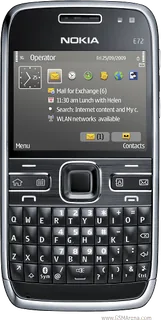
| Materials | Stainless steel and aluminium in maker sheet; patterned metal rear cover. | – |
| Colours | Zodium Black, Metal Grey and Topaz Brown in original maker sheet. White edition confirmed by maker in April 2010. Regional purple photographs are credited separately; no worldwide finish availability inferred. | – |
| Buttons | QWERTY keyboard, optical Navi key and one-touch Home, Calendar, Contacts and Email keys; side volume controls and torch function. | Dual slider exposes numeric keypad or media/game keys; physical directional control, volume/zoom, capture and keylock. Active kickstand opens Photos by default and is configurable in the exact guide. Maker sheet advertises automatic media launching with the short slide; GSMArena’s production unit did not perform that action. |
| Speakers | Built-in loudspeaker and FM radio; RDS confirmed in GSMArena production review. Compatible wired headset serves as radio antenna. | Built-in stereo speakers with 3D sound effect, FM radio with RDS and FM transmitter. Exact guide qualifies transmitter availability by country; stereo speaker sound is criticised in the original reviews. |
| Software | ||
| Operating system | Symbian | Symbian |
| Software at launch | Symbian OS 9.3, S60 Third Edition Feature Pack 2, identified by full production reviews. | – |
| Software features | Maker specifies Quickoffice 5.3 with Office 2007 support, Mail for Exchange, IBM Lotus Notes support, Nokia Messaging, mobile VPN and remote lock/wipe. GSMArena tested included office-document editing. Later firmware added internet radio. Historical apps and online services may no longer be available. | S60 3rd Edition Feature Pack 2 on Symbian OS 9.3; music/podcasting, Photos, video player, N-Gage, document viewers and original Ovi services. All About Symbian reports slowdowns and restarts on v10 launch firmware; no unverified later fix claimed. |
| Release detail | Announced 15 June 2009 with late-Q3 availability planned; later maker sheet instead states Q4. Maker article of 16 November 2009 says the E72 is now in stores globally; retain November precision rather than infer the earliest worldwide day. Maker retrospective explicitly identifies E72 as the successor to E71. | Maker announcement on 17 February 2009 planned Q2 shipping. Nokia Conversations’ 11 June article says shop sales started the previous day around the globe; its 19 June article separately confirms UK shop debut that day. June retained without assuming an identical first-sale day in every market. No maker-supported direct predecessor link established. |
| Connectivity | ||
| Mobile network | Quad-band GSM/EGSM 850/900/1800/1900. Separate WCDMA 850/1900/2100 and 900/1900/2100 variants in maker sheet, not one four-band model. HSDPA up to 10.2 Mbps and HSUPA up to 2 Mbps; no LTE. | European RM-484 guide: GSM 850/900/1800/1900 and UMTS 900/1900/2100. Maker launch sheet separately lists a regional 850/1900/2100 UMTS version with WLAN and a 900/1900/2100 version without WLAN; these are distinct regional variants, not combined bands/features. |
| Wi-Fi | IEEE 802.11b/g in maker sheet. | European guide confirms IEEE 802.11b/g at 2.4 GHz and UPnP home-network sharing. Maker sheet also lists a separate regional no-WLAN version. |
| Bluetooth | Bluetooth 2.0 with EDR and A2DP stereo audio. | Bluetooth 2.0 + EDR from exact guide; A2DP/AVRCP stereo audio, hands-free/headset, dial-up networking, imaging, file transfer, remote SIM and phonebook access profiles. |
| USB | Hi-Speed USB in maker sheet; micro-USB connector and 3.5 mm headset socket confirmed by exact guide. | Micro-USB Hi-Speed USB 2.0 data/charging and 3.5 mm Nokia AV socket for compatible headphones and PAL/NTSC TV-out. |
| Positioning | GPS, assisted GPS and digital compass. Original launch included lifetime walking navigation and ten one-day driving trials; April 2010 maker firmware announcement added free walking and driving navigation. Historical network services are not promised available today. | GPS, assisted GPS and digital compass; Nokia Maps 3.0 at launch. Navigation trial lengths varied: GSMArena describes three months, All About Symbian’s European package six months driving plus pedestrian navigation. Original licences and retired online services are historical features. |

More comparisons
- Nokia N8 vs Nokia N86 8MP
- Nokia E52 vs Nokia E72
- Nokia E55 vs Nokia E72
- Nokia E63 vs Nokia E72
- Nokia E66 vs Nokia E72
- Nokia E71 vs Nokia E72
- Nokia E65 vs Nokia E72
- Nokia E51 vs Nokia E72
- Nokia E61i vs Nokia E72
- Nokia E62 vs Nokia E72
- Nokia E50 vs Nokia E72
- Nokia E60 vs Nokia E72
- Nokia E61 vs Nokia E72
- Nokia E70 vs Nokia E72
- Nokia N86 8MP vs Nokia N97 mini
- Nokia E52 vs Nokia N86 8MP