Nothing Phone (3a) Pro vs Xiaomi Xiaomi 14T
Better figure, where one is clearly better
| NothingPhone (3a) Pro | XiaomiXiaomi 14T | |
|---|---|---|
| Overview | ||
| Released | March 2025 | September 2024 |
| Display | ||
| Screen size | 6.77″ | 6.67″ |
| Resolution | 2392 × 1084 | 2712 × 1220 (better) |
| Sharpness | 388 pixels per inch | 446 pixels per inch (better) |
| Panel | OLED | OLED |
| Refresh rate | 120 Hz | 144 Hz (better) |
| Peak brightness | 3,000 nits | 4,000 nits (better) |
| Display type | 6.77-inch flexible AMOLED, FHD+ | AMOLED with 68 billion colours; 6.67-inch diagonal confirmed by the full reviews |
| Pixel density | 387 ppi | 446 ppi |
| Brightness detail | 3,000 nits peak; 1,300 nits outdoor; 800 nits typical | Up to 4,000 nits peak |
| Screen protection | Panda glass | Gorilla Glass 5, identified by Tech Advisor and GSMArena |
| Display features | 120 Hz adaptive refresh; 480 Hz touch sampling (1,000 Hz in Gaming Mode); 2,160 Hz PWM dimming; 10-bit (1.07 billion colours); 1,000,000:1 contrast ratio | Up to 144 Hz and 480 Hz touch sampling, DCI-P3, up to 3,840 Hz PWM dimming, TrueColor, Original Colour Pro, adaptive colours, reading mode, HDR10+, Dolby Vision and TÜV low blue light, flicker-free and circadian certifications |
| Performance | ||
| Chip | Snapdragon 7s Gen 3 | MediaTek Dimensity 8300-Ultra |
| Memory | 12 GB | 12 GB |
| Storage | 256 GB | 256 GB, 512 GB (better) |
| CPU | 8-core, up to 2.5 GHz; 4 nm TSMC process (N4) | 4 nm; one Cortex-A715 up to 3.35 GHz, three Cortex-A715 up to 3.2 GHz and four Cortex-A510 up to 2.2 GHz |
| GPU | Qualcomm Adreno | Arm Mali-G615 MC6 |
| AI engine | – | MediaTek NPU 780 |
| Storage type | UFS 2.2; RAM Booster adds virtual RAM, up to 20 GB in total | 12 GB LPDDR5X at 8,533 Mbps and 256 or 512 GB UFS 4.0; Ultra Space adds 8 or 16 GB usable storage respectively; no microSD slot, confirmed by the reviews |
| Cooling | 4,500 mm² vapour chamber | Xiaomi IceLoop system |
| Cameras | ||
| Main camera | 50 MP | 50 MP |
| Ultra wide camera | 8 MP | 12 MP |
| Telephoto camera | 50 MP | 50 MP |
| Optical zoom | 3× (better) | 2× |
| Front camera | 50 MP (better) | 32 MP |
| Main camera | 50 MP, ƒ/1.88, 1/1.56″ sensor, 24 mm, 84.5° field of view, OIS and EIS, dual pixel PDAF | 50 MP Sony IMX906, f/1.7, 23 mm equivalent, 2 µm binned pixels and OIS |
| Ultra wide camera | 8 MP Sony sensor, ƒ/2.2, 1/4″ sensor, 15 mm, 120° field of view | 12 MP, f/2.2, 15 mm equivalent and 120° field of view |
| Telephoto camera | 50 MP Sony LYTIA 600 periscope, ƒ/2.55, 1/1.95″ sensor, 70 mm, 33.6° field of view, 3× optical zoom, OIS and EIS, autofocus; telemacro from 15 cm | 50 MP, f/1.9 and 50 mm equivalent; 2× optical zoom and no OIS, confirmed by GSMArena; TechRadar's 4× optical claim is inconsistent with that exact-model review |
| Front camera | 50 MP, ƒ/2.2, 1/2.76″ sensor, 24 mm, 81.2° field of view | 32 MP, f/2.0 and 80.8° field of view; fixed focus confirmed by Tech Advisor and GSMArena |
| Zoom | 3× optical; 6× in-sensor zoom; up to 60× Ultra Zoom | Up to 20× digital zoom; GSMArena distinguishes the 2× optical camera from the 4× crop mode |
| Video recording | 4K video recording with AI-powered stabilisation; 4K at 30 fps and 1080p at 30, 60 or 120 fps (GSMArena) | Rear 4K at 24/30/60 fps, 1080p at 30/60 fps and 720p at 30 fps; slow motion 720p or 1080p at 120/240/960 fps; HDR10+, MasterCinema, log recording, ShootSteady and Director mode |
| Front video | 4K with adaptive AI stabilisation and night video enhancement | 4K at 30 fps, 1080p at 30/60 fps and 720p at 30 fps |
| Camera features | TrueLens Engine 3.0 | Leica Authentic and Vibrant looks, Leica filters and portrait styles, ProFocus tracking, ProCut, Night mode, RAW/DNG, HEIF, JPEG, 50 MP main and telephoto modes, long exposure and document mode |
| Battery and charging | ||
| Battery | 5,000 mAh | 5,000 mAh |
| Wired charging | Up to 50 W | Up to 67 W (better) |
| Wireless charging | None | None |
| Battery life detail | Up to two days of use (Nothing) | 5,000 mAh typical |
| Wired charging | 50 W; 50% in 19 minutes, 100% in 56 minutes | 67 W HyperCharge; PD 3.0, PD 2.0 and Mi-FC 2.0; adaptor sold separately |
| Charges other devices | 7.5 W reverse wired charging | – |
| Connectivity | ||
| Satellite messaging | No | – |
| Mobile network | 5G (NSA and SA) with 4×4 MIMO; Gigabit LTE with 4×4 MIMO | 5G SA n1/n2/n3/n5/n7/n8/n12/n20/n26/n28/n38/n40/n41/n48/n66/n77/n78; maker also lists 5G NSA, LTE, UMTS and GSM; 4×4 MIMO |
| SIM | Dual nano-SIM and eSIM (eSIM not in India) | Dual nano-SIM, nano-SIM plus eSIM, or dual eSIM; carrier and regional support required |
| Wi-Fi | Wi-Fi 6 (802.11a/b/g/n/ac/ax), 2.4 and 5 GHz | Wi-Fi 6E, dual-band simultaneous, 2×2 MIMO, 8×8 MU-MIMO sounding and Wi-Fi Direct; availability varies by region |
| Bluetooth | Bluetooth 5.4 | Bluetooth 5.4; AAC, SBC, LDAC and LHDC |
| NFC | Yes, with Google Pay | NFC |
| USB | – | USB-C |
| Positioning | GPS (L1), GLONASS (G1), BDS (B1I), Galileo (E1), QZSS (L1) | Dual-frequency GPS L1/L5, Galileo E1/E5a, GLONASS G1, BeiDou, NavIC L5, A-GPS and electronic compass |
| Design | ||
| Type | Standard | Standard |
| Weight | 211 g | 195 g (better) |
| Thickness | 8.35 mm | 7.8 mm (better) |
| Height × width | 163.5 × 77.5 mm | 160.5 × 75.1 mm |
| Water and dust resistance | IP64 | IP68 |
| Stylus | No | – |
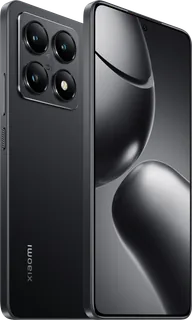
| Materials | Panda glass front; glass back; 100% recycled aluminium mid-frame and buttons | Glass versions are 7.80 mm and 195 g; PU rear version is 7.95 mm and 193 g; Tech Advisor and GSMArena identify the plastic frame, despite TechRadar describing aluminium construction |
| Colours | Grey, Black | Titan Black, Titan Gray, Titan Blue and Lemon Green |
| Buttons | Essential Key (press to capture to Essential Space, long press for a voice note, double tap to open it) | – |
| Water resistance detail | IP64 | IP68 tested at up to 2 m fresh water for 30 minutes; protection can decrease with wear |
| Biometrics | In-screen optical fingerprint sensor | In-screen fingerprint sensor and AI face unlock |
| Sensors | Accelerometer, electronic compass, front ambient light sensor, gyroscope, proximity sensor; linear haptic motor | Proximity, ambient light, accelerometer, gyroscope, electronic compass, IR blaster and flicker sensor; x-axis linear vibration motor |
| Speakers | Dual stereo speakers | Stereo speakers, Dolby Atmos, Hi-Res Audio and Hi-Res Audio Wireless |
| Microphones | Two high-definition microphones | – |
| Software | ||
| Operating system | Android | Android |
| Software at launch | Nothing OS 3.1 powered by Android 15 | Xiaomi HyperOS based on Android 14, confirmed by the full reviews |
| Software updates | Three years of Android updates and six years of security updates, from first availability on nothing.tech | Four Android version upgrades and five years of security patches, reported by GSMArena |
| AI features | Essential Space (early access) with the Essential Key | Circle to Search, Google Gemini, AI Interpreter, AI Notes, AI Recorder, AI Subtitles, AI Film and AI image editing; feature availability depends on software version and region |
| In the box | Nothing Phone (3a) Pro, Nothing Cable (USB-C to USB-C), pre-applied screen protector, SIM tray ejector, safety card (no charger) | Phone, USB-C cable, SIM tool, protective case, guides and warranty card; no power adaptor in the UK |

More comparisons
- Xiaomi Xiaomi 14T vs Xiaomi 17T Pro
- Xiaomi Xiaomi 14T vs Xiaomi Xiaomi 17T
- Nothing Phone (3a) Pro vs Nothing Phone (4a) Pro
- Xiaomi Xiaomi 14T vs Xiaomi Xiaomi 15T
- Nothing Phone (3a) Pro vs Xiaomi Xiaomi 15T
- Xiaomi Xiaomi 14T vs Xiaomi Xiaomi 15T Pro
- Nothing Phone (3a) Pro vs Xiaomi POCO F7
- Honor HONOR 400 Pro vs Nothing Phone (3a) Pro
- Motorola motorola edge 60 pro vs Nothing Phone (3a) Pro
- Motorola motorola edge 60 pro vs Xiaomi Xiaomi 14T
- Nothing Phone (3a) Pro vs OPPO Reno14 5G
- Nothing Phone (3a) Pro vs OPPO Reno14 Pro 5G
- Google Pixel 9a vs Xiaomi Xiaomi 14T
- Nothing Phone (2) vs Nothing Phone (3a) Pro
- Nothing Phone (2a) Plus vs Nothing Phone (3a) Pro
- Motorola edge 50 vs Nothing Phone (3a) Pro