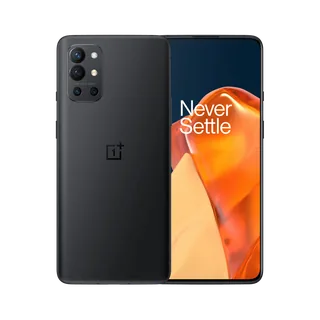
OnePlus OnePlus 9R vs Xiaomi Xiaomi 11T Pro
Better figure, where one is clearly better
| OnePlusOnePlus 9R | XiaomiXiaomi 11T Pro | |
|---|---|---|
| Overview | ||
| Released | April 2021 | October 2021 |
| Display | ||
| Screen size | 6.55″ | 6.67″ |
| Resolution | 2400 × 1080 | 2400 × 1080 |
| Sharpness | 402 pixels per inch (better) | 395 pixels per inch |
| Panel | OLED | OLED |
| Refresh rate | 120 Hz | 120 Hz |
| Peak brightness | – | 1,000 nits |
| Display type | 2.5D Fluid AMOLED; 20:9 aspect ratio | AMOLED DotDisplay; 20:9 aspect ratio |
| Pixel density | 402 ppi | – |
| Brightness detail | 8,192 brightness levels; maker does not publish peak brightness in nits in these exact specifications | 800 nits HBM typical; 1,000 nits peak typical |
| Screen protection | Corning Gorilla Glass; exact maker specifications do not identify its generation | Corning Gorilla Glass Victus |
| Display features | sRGB and Display P3 support; HDR10+; up to 240 Hz touch sampling; Reading Mode, Night Mode and Vibrant Color | Up to 480 Hz touch sampling; over 1 billion colours; P3 gamut; 5,000,000:1 contrast; Dolby Vision, HDR10+, MEMC, Reading mode 3.0 and Sunlight mode 3.0; DisplayMate A+ |
| Performance | ||
| Chip | Qualcomm Snapdragon 870 | Snapdragon 888 |
| Memory | 8 GB – 12 GB | 8 GB – 12 GB |
| Storage | 128 GB, 256 GB | 128 GB, 256 GB |
| CPU | Qualcomm Snapdragon 870 at up to 3.2 GHz | 5 nm process; Kryo 680 CPU up to 2.84 GHz with Arm Cortex-X1 technology |
| GPU | Qualcomm Adreno 650 | Qualcomm Adreno 660 |
| AI engine | – | Sixth-generation Qualcomm AI Engine |
| Storage type | UFS 3.1, two lanes; no microSD slot (Android Authority) | LPDDR5 RAM and UFS 3.1 storage; UK launch variants are 8/128 GB and 8/256 GB; maker sheet also lists 12/256 GB for other markets, as distinguished by Tech Advisor |
| Cooling | Vapour-chamber cooling system | LiquidCool technology |
| Cameras | ||
| Main camera | 48 MP | 108 MP (better) |
| Ultra wide camera | 16 MP | 8 MP |
| Telephoto camera | None | None |
| Optical zoom | None | None |
| Front camera | 16 MP | 16 MP |
| Main camera | 48 MP Sony IMX586, f/1.7, six-element lens; OIS and EIS; 0.8 µm pixels at 48 MP or 1.6 µm with four-in-one 12 MP output; PDAF and continuous autofocus | 108 MP, ƒ/1.75, 0.7 µm pixels, 9-in-1 2.1 µm pixels |
| Ultra wide camera | 16 MP Sony IMX481, f/2.2, 123° field of view | 8 MP, ƒ/2.2, 120° field of view |
| Front camera | 16 MP Sony IMX471, f/2.4, 1.0 µm pixels, five-element lens; fixed focus and EIS | 16 MP, ƒ/2.45 |
| Video recording | Rear: 4K at 30/60 fps and 1080p at 30/60 fps; slow motion at 1080p 240 fps or 720p 480 fps; time-lapse at 1080p/4K 30 fps | 8K at 30 fps; 4K and 1080p at 30 or 60 fps; 720p at 30 fps; slow motion 1080p at 120, 240 or 960 fps |
| Front video | 1080p at 30 fps; time-lapse | 1080p at 30 or 60 fps; 720p at 30 fps |
| Camera features | Additional 5 MP macro and 2 MP monochrome cameras; dual LED flash; Nightscape, UltraShot HDR, Pro/RAW, panorama, portrait, Smart Pet Capture, Cyberpunk-style filter, CINE aspect ratio, video portrait, focus tracking, Super Stable and Video Nightscape | 5 MP telemacro camera, ƒ/2.4, autofocus from 3–7 cm; night mode, AI Erase 2.0, six long-exposure effects, photo clones, 108 MP/document modes, Google Lens, audio zoom, AI cinema, HDR10+ filming and Pro video; selfie night mode |
| Battery and charging | ||
| Battery | 4,500 mAh | 5,000 mAh (better) |
| Wired charging | Up to 65 W | Up to 120 W (better) |
| Wireless charging | None | None |
| Battery life detail | Non-removable dual-cell 2S1P battery, two 2,250 mAh cells with equivalent 4,500 mAh capacity | 5,000 mAh typical equivalent; two 2,500 mAh cells |
| Wired charging | Warp Charge 65, 10 V/6.5 A. Maker claims 1–100% in 39 minutes; its 15-minute test reached about 58% from 1%, with screen off and phone/ambient temperatures of 25 ± 1°C using the official adapter | Included 120 W charger; maximum 120 W with 220–240 V input, 96 W with 100–120 V input; maker claims 2–100% in 17 minutes under laboratory conditions |
| Wireless charging | No wireless charging (Android Authority) | – |
| Design | ||
| Type | Standard | Standard |
| Weight | 189 g (better) | 204 g |
| Thickness | 8.4 mm (better) | 8.8 mm |
| Height × width | 160.7 × 74.1 mm | 164.1 × 76.9 mm |
| Materials | AG glass and metal frame; Carbon Black has matte anti-glare glass, Lake Blue has patterned PET film beneath a frosted exterior. Stated weight excludes the pre-applied protector, which adds about 3 g | – |
| Colours | Carbon Black and Lake Blue (India) | Celestial Blue, Moonlight White and Meteorite Gray |
| Buttons | Three-position alert slider; gesture or on-screen navigation; X-axis linear vibration motor | – |
| Water resistance detail | No official IP rating (Android Authority and Gadgets360) | – |
| Biometrics | In-display fingerprint reader and front-camera face unlock | Side-mounted fingerprint sensor |
| Sensors | Accelerometer, electronic compass, gyroscope, ambient-light, proximity, Sensor Core and flicker-detect sensors | Proximity, ambient light, accelerometer, gyroscope, compass, 8 × 9 mm X-axis linear motor, IR blaster, barometer and colour temperature |
| Speakers | Dual stereo speakers with Dolby Atmos; noise-cancellation support | Dedicated dual speakers tuned by Harman Kardon; Dolby Atmos and Hi-Res Audio |
| Software | ||
| Operating system | Android | Android |
| Software at launch | OxygenOS based on Android 11 (India model) | MIUI 12.5 based on Android 11 |
| In the box | OnePlus 9R, Warp Charge 65 adapter, USB-A to USB-C cable, quick-start guide, welcome letter, safety/warranty card, logo sticker, case, pre-applied screen protector and SIM ejector | Phone, 120 W adapter, USB-C cable, SIM tool, protective case, quick start guide and warranty card |
| Connectivity | ||
| Mobile network | India model: 5G SA/NSA n78 only; LTE-FDD bands 1/2/3/4/5/7/8/12/17/18/19/20/26 and LTE-TDD 34/38/39/40/41/46; WCDMA 1/2/4/5/8/9/19 and GSM 2/3/5/8. Snapdragon X55 modem; carrier-dependent 4×4 MIMO | Snapdragon X60 5G modem; NSA/SA n1/3/5/7/8/20/28/38/40/41/66/77/78; LTE FDD B1/2/3/4/5/7/8/12/13/17/18/19/20/26/28/32/66 and TDD B38/40/41/42; WCDMA B1/2/4/5/6/8/19; GSM 850/900/1800/1900 MHz |
| SIM | Dual nano-SIM. Maker launch footnote states dual 4G and single 5G SIM support and promises an OTA update for dual-SIM 4G/5G operation; this archive alone does not confirm that update shipped | Dual SIM; availability varies by region |
| Wi-Fi | Wi-Fi 6 (802.11 a/b/g/n/ac/ax), 2.4/5 GHz and 2×2 MIMO | Wi-Fi 6 |
| Bluetooth | Bluetooth 5.1; aptX, aptX HD, LDAC and AAC | Bluetooth 5.2 (Tech Advisor; absent from the current maker UK sheet) |
| NFC | Yes | Supported |
| USB | USB-C with USB 3.1 Gen 1 support; supplied USB-A to USB-C cable supports USB 2.0, so a separately purchased compatible cable is needed for Gen 1 data rates. USB-C earphones; no 3.5 mm socket (Android Authority) | USB-C |
| Positioning | Dual-band GPS L1/L5 and Galileo E1/E5a; GLONASS, Beidou and A-GPS | GPS L1/L5, Galileo E1/E5a, GLONASS G1 and BeiDou; A-GPS and assisted network positioning |

More comparisons
- Xiaomi Xiaomi 11T Pro vs Xiaomi 17T Pro
- Xiaomi Xiaomi 11T Pro vs Xiaomi Xiaomi 17T
- Xiaomi Xiaomi 11T Pro vs Xiaomi Xiaomi 15T Pro
- Xiaomi Xiaomi 11T Pro vs Xiaomi Xiaomi 15T
- Xiaomi Xiaomi 11T Pro vs Xiaomi Xiaomi 14T
- Xiaomi Xiaomi 11T Pro vs Xiaomi Xiaomi 14T Pro
- Xiaomi Xiaomi 11T Pro vs Xiaomi Xiaomi 13T Pro
- Xiaomi Xiaomi 11T Pro vs Xiaomi Xiaomi 13T
- Xiaomi Xiaomi 11T Pro vs Xiaomi Xiaomi 12T Pro
- Nothing Phone (1) vs OnePlus OnePlus 9R
- OnePlus OnePlus 10R / Ace vs OnePlus OnePlus 9R
- Samsung Galaxy S21 FE 5G vs Xiaomi Xiaomi 11T Pro
- OnePlus OnePlus 9RT vs Xiaomi Xiaomi 11T Pro
- OnePlus OnePlus 9R vs OnePlus OnePlus 9RT
- Xiaomi Xiaomi 11T vs Xiaomi Xiaomi 11T Pro
- Xiaomi Mi 11 vs Xiaomi Xiaomi 11T Pro