Panasonic VIERA G20 vs Panasonic VIERA VT20
Better figure, where one is clearly better
| PanasonicVIERA G20 | PanasonicVIERA VT20 | |
|---|---|---|
| Overview | ||
| Released | 2010 | 2010 |
| Display | ||
| Panel | Plasma | Plasma |
| Panel detail | Panasonic's UK TX-P42G20B, TX-P46G20B and TX-P50G20B manual specifies native Full HD NeoPDP plasma panels. The marketed 600 Hz sub-field drive is not the native image refresh rate, which remains unpublished. | Panasonic's UK TX-P50VT20B manual specifies a Full HD NeoPDP plasma panel. Its marketed 600 Hz sub-field drive is not a published native image refresh rate. |
| Resolution | 1920 × 1080 (Full HD) | 1920 × 1080 (Full HD) |
| HDR formats | None | None |
| Picture processing | Panasonic's second-generation NeoPDP panel, Intelligent Frame Creation, Resolution Enhancer and advanced white-balance, gamma and colour-management controls. The THX picture mode is certified; the 600 Hz sub-field drive is marketing for the panel drive rather than native frame refresh. | NeoPDP with Infinite Black Pro, Intelligent Frame Creation and 24p Smooth Film. Active-shutter frame-sequential Full HD 3D is supported; the 600 Hz sub-field figure describes panel drive, not native refresh. |
| Picture modes | Dynamic, Normal, Cinema, THX, Game and Photo where input-appropriate; ISFccc setup unlocks Professional 1 and 2 with per-input calibration settings. | Dynamic, Normal, Cinema, THX, Game, Photo and two Professional modes when ISFccc is enabled; True Cinema replaces THX for 3D and some other inputs. |
| Motion handling | HDTVTest measured 900 lines of motion resolution with Intelligent Frame Creation off and 1080 with it on, but saw some ball shimmer during sports. It found 1080p/24 playback free of telecine judder. These are measurements of the reviewed 42-inch set, not a native refresh specification. | AVForums found very low gaming lag but criticised missing film-cadence detection for interlaced sources; What Hi-Fi? preferred Intelligent Frame Creation off for films. |
| Sizes | ||
| Sizes | 42, 46, 50″ | 50″ |
| Largest size | 50″ | 50″ |
| Gaming | ||
| HDMI ports | 4 (0 HDMI 2.1 at 4K 120 Hz+) | 4 (0 HDMI 2.1 at 4K 120 Hz+) |
| Variable refresh rate | None | None |
| HDMI detail | Four HDMI Type A inputs; HDMI2 supports Audio Return Channel under HDMI 1.4, and all support VIERA Link HDAVI Control 5. Two RGB SCART inputs, component video and D-sub PC input also appear in the UK manual. | Four HDMI 1.4 inputs support 3D; HDMI2 supports ordinary Audio Return Channel. HDAVI Control 5, two SCART inputs, component input and D-sub PC input are specified. |
| Smart TV and sound | ||
| Smart TV platform | VIERA CAST | VIERA CAST |
| Speakers | 20 W | 30 W (better) |
| Speaker detail | Two 120 × 35 mm, 6-ohm speakers with 10 W + 10 W output. | Two 160 × 40 mm full-range drivers and one 100 mm woofer, rated 10 W + 10 W + 10 W. |
| Audio features | Optical PCM/Dolby Digital output, analogue RCA stereo output and 3.5 mm headphone socket; HDMI2 supports ordinary ARC, not eARC. | CONEQ equalisation, V-Audio surround modes and Dolby Digital optical output; 3.5 mm headphone socket. |
| Casting | DLNA media playback and VIERA CAST internet services; optional DY-WL10E-K wireless LAN adaptor, with no built-in Wi-Fi claimed. | DLNA media playback and VIERA CAST online services; the supplied USB wireless LAN adaptor provides Wi-Fi rather than an internal radio. |
| Software updates | Broadcast and network service updates described in the UK manual; VIERA CAST app availability may have changed since release. | – |
| TV tuners | UK Freesat HD DVB-S/S2 satellite, Freeview HD DVB-T2 terrestrial, DVB-T and PAL I analogue UHF tuners. | UK Freesat HD DVB-S/S2 satellite, Freeview HD DVB-T2, DVB-T and PAL I analogue UHF tuners. |
| USB | Two USB 2.0 ports for media and encrypted TV recording to a registered external USB hard drive; SD card slot also supports media. | Two USB 2.0 ports support media and encrypted recording to a registered external USB hard drive; SD card slot for media. |
| Ethernet | RJ45 10BASE-T/100BASE-TX for Freesat, DLNA and VIERA CAST network services. | RJ45 10BASE-T/100BASE-TX for network services and DLNA. |
| Optical audio out | Optical PCM and Dolby Digital output. | Fibre-optic PCM and Dolby Digital output. |
| Design and power | ||
| Size | Panasonic TV-only dimensions, width × height × depth: 42-inch 1029 × 654 × 82 mm, 20.5 kg; 46-inch 1132 × 722 × 82 mm, 24 kg; 50-inch 1218 × 769 × 82 mm, 26 kg. With supplied pedestal: 1029 × 693 × 308 mm, 23.5 kg; 1132 × 761 × 335 mm, 27 kg; 1218 × 808 × 335 mm, 29 kg respectively. | TX-P50VT20B TV only: 1224 × 771 × 90 mm and 27.5 kg. With supplied pedestal: 1224 × 810 × 335 mm and 30.5 kg. |
| Stand | Pedestal supplied; optional TY-WK4P1RW wall bracket. | Supplied pedestal; optional TY-WK4P1RW wall bracket with 400 × 300 mm mounting holes. |
| Power use | Panasonic rated power consumption: 290 W (42-inch), 300 W (46-inch), 335 W (50-inch); standby 0.40 W without monitor-output recording or 32 W with it. | Panasonic rated 425 W; standby 0.40 W, or 33 W during monitor-output recording. |
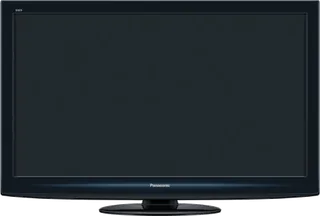
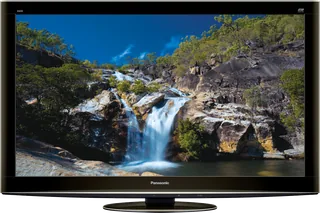
| Colours | Gloss black bezel with a dark-blue appearance under some lighting, as HDTVTest observed. | Dark metallic-brown bezel. |
| In the box | N2QAYB000490 remote, two R6 batteries, pedestal, cable clamper, mains lead, two ferrite cores, instructions and registration leaflet. HDTVTest reported UK retailer warehouse arrivals and online orders on 26 February 2010; contemporary coverage said shipments would begin in March. Exact first delivery month is unverified, so released uses year precision. | Remote, two R6 batteries, pedestal, wireless LAN adaptor and extension, two pairs of TY-EW3D10E 3D glasses, mains lead, cable clamper, ferrite cores and instructions. The dated UK launch coverage establishes 2010 availability but does not reliably establish the first sale month; only the maker-confirmed 50-inch UK configuration is listed here. |
More comparisons
- LG OLED evo C6 vs Panasonic VIERA G20
- LG OLED evo C6 vs Panasonic VIERA VT20
- Panasonic VIERA G20 vs Panasonic Z95B
- Panasonic VIERA VT20 vs Panasonic Z95B
- Panasonic VIERA DX802 vs Panasonic VIERA G20
- Panasonic VIERA DX802 vs Panasonic VIERA VT20
- Panasonic VIERA DX902 vs Panasonic VIERA G20
- Panasonic VIERA DX902 vs Panasonic VIERA VT20
- Panasonic VIERA CX802 vs Panasonic VIERA G20
- Panasonic VIERA CX802 vs Panasonic VIERA VT20
- Panasonic VIERA AX902 vs Panasonic VIERA G20
- Panasonic VIERA AX902 vs Panasonic VIERA VT20
- Panasonic VIERA G20 vs Panasonic VIERA GT60
- Panasonic VIERA G20 vs Panasonic VIERA ST60
- Panasonic VIERA G20 vs Panasonic VIERA VT60
- Panasonic VIERA G20 vs Panasonic VIERA ZT65