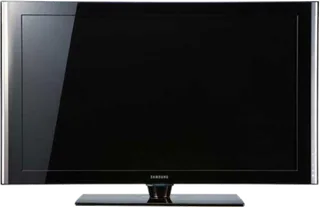
Samsung LCD F86 vs Samsung Neo QLED QN90F
Better figure, where one is clearly better
| SamsungLCD F86 | SamsungNeo QLED QN90F | |
|---|---|---|
| Overview | ||
| Released | 2007 | May 2025 |
| Display | ||
| Panel | LCD | Mini-LED |
| Panel detail | Full HD fluorescent-backlit LCD. Samsung's 100 Hz Motion Plus is a processing mode; the native panel refresh rate is not stated in its manual. | Mini LED with Quantum Matrix Technology Plus |
| Resolution | 1920 × 1080 (Full HD) | 3840 × 2160 (4K) (better) |
| Refresh rate | – | 165 Hz |
| HDR formats | None | HDR10, HDR10+, HLG |
| HDR extras | – | Neo Quantum HDR+; HDR10+ Adaptive and HDR10+ Gaming |
| Screen finish | – | Glare Free |
| Picture processing | Digital Natural Image engine, active colour, digital noise reduction and adjustable 100 Hz Motion Plus. | 4K AI Upscaling Pro, AI Motion Enhancer Pro, Real Depth Enhancer Pro, Auto HDR Remastering Pro, Color Booster Pro, HDR Brightness Optimizer; Ultimate UHD Dimming |
| Picture modes | Dynamic, Standard and Movie presets, with a Game mode. | Filmmaker Mode, EyeComfort Mode; Smart Calibration (Basic/Professional) |
| Motion handling | 100 Hz Motion Plus can be set to Low, Medium, High or Off. TechRadar found fast movement smoother but still saw background judder on camera pans in its 46-inch review. | Motion Xcelerator 165Hz |
| Viewing angle | – | Wide Viewing Angle |
| Sizes | ||
| Sizes | 40, 46″ | 43, 50, 55, 65, 75, 85, 98″ |
| Largest size | 46″ | 98″ (better) |
| Gaming | ||
| HDMI ports | 3 (0 HDMI 2.1 at 4K 120 Hz+) | 4 (all HDMI 2.1 at 4K 120 Hz+) (better) |
| Variable refresh rate | None | HDMI VRR, FreeSync Premium Pro |
| Auto low latency mode | No | Yes |
| HDMI detail | Three HDMI inputs with HDMI 2 used for DVI plus separate audio. The manual lists 1080p input over HDMI, but component input tops out at 1080i. Other connections include two SCART sockets, PC VGA, composite and S-Video. | 4K 165Hz on HDMI 1/2/3/4; eARC; Anynet+ (HDMI-CEC) |
| Game features | Manually selected Game mode; no automatic low-latency switching or VRR. | Game Motion Plus, Dynamic Black EQ, Super Ultra Wide Game View, Mini Map Zoom, Surround Sound, HGiG, AI Auto Game Mode |
| Cloud gaming | – | Samsung Gaming Hub |
| Smart TV and sound | ||
| Smart TV platform | None (no smart platform) | Tizen |
| Processor | DNIe picture processing | NQ4 AI Gen3 Processor |
| Dolby Atmos | – | Yes |
| Speakers | 20 W, 2.0 channels | – |
| eARC | No | Yes |
| Wi-Fi | – | Wi-Fi 5 |
| Bluetooth | – | 5.3 |
| Speaker detail | Two 10 W speakers on both sizes in Samsung's manual. | 43″ 20 W, 2ch, OTS Lite; 50″ 40 W, 2.2ch, OTS Lite; 55–98″ 60 W, 4.2.2ch, OTS+ |
| Audio features | SRS TruSurround XT, headphone jack, analogue stereo output and optical digital output. | Q-Symphony, Active Voice Amplifier Pro, Adaptive Sound Pro, 360 Audio, Audio Pre-selection Descriptor |
| Voice assistants | – | Bixby and Alexa built in, with far-field voice; works with Alexa and Google Assistant speakers |
| Casting | – | Apple AirPlay, Tap View and screen or sound mirroring from Samsung phones |
| Software updates | – | Security updates until at least 31 December 2030 |
| TV tuners | Analogue and DVB-T digital terrestrial reception with CI slot and electronic programme guide; the maker manual does not claim DVB-T2 or Freeview HD. | Twin DVB-T2/C/S2 and analogue; CI+ 1.4 slot; HbbTV 2.0.4 |
| USB | One USB port supports JPEG photo viewing and MP3 playback through WISELINK. | 2 × USB-A |
| Ethernet | – | 1 × LAN |
| Optical audio out | One optical digital audio output. | 1 × optical |
| Design and power | ||
| Size | Without stand, width × height × depth from Samsung's manual: 40-inch 1094 × 607 × 103 mm; 46-inch 1222 × 687 × 111 mm. The manual publishes weights only with stands, so configuration weights are omitted. | Without stand, 43″ 960.8 × 558.9 × 26.9 mm; 50″ 1113.6 × 644.1 × 26.9 mm; 55″ 1227.4 × 705.6 × 26.9 mm; 65″ 1446.3 × 828.7 × 26.9 mm; 75″ 1670.0 × 957.4 × 27.7 mm; 85″ 1892.2 × 1081.9 × 27.9 mm; 98″ 2185.1 × 1249.3 × 31.1 mm |
| Stand | Swivels ±20°. With-stand weights from Samsung's manual: 40-inch 24 kg; 46-inch 33 kg. | Sharp Neck Hexagon stand (NeoSlim design) |
| VESA pattern | – | 43–55″ 200 × 200 mm; 65″ 400 × 300 mm; 75″ 400 × 400 mm; 85″ and 98″ 600 × 400 mm |
| Power use | – | Typical/max, 43″ 50/145 W; 50″ 60/170 W; 55″ 76/235 W; 65″ 89/270 W; 75″ 101/315 W; 85″ 122/390 W; 98″ 152/475 W; 0.5 W standby |
| Energy class | – | 43–65″ F; 75–98″ E |
| Colours | – | Titan Black |
| In the box | – | Remote controls TM2360E and TM1240A (UK), power cable, user manual |

More comparisons
- Hisense U7S Pro vs Samsung Neo QLED QN90F
- Hisense UR8S vs Samsung Neo QLED QN90F
- LG Micro RGB evo MRGB96 vs Samsung Neo QLED QN90F
- Samsung Neo QLED QN70H vs Samsung Neo QLED QN90F
- Samsung Neo QLED QN80H vs Samsung Neo QLED QN90F
- LG OLED evo C6 vs Samsung LCD F86
- Samsung Neo QLED QN90C vs Samsung Neo QLED QN90F
- Samsung Neo QLED QN90B vs Samsung Neo QLED QN90F
- Samsung Neo QLED QN90D vs Samsung Neo QLED QN90F
- Samsung Neo QLED QN85D vs Samsung Neo QLED QN90F
- Samsung LCD A656 vs Samsung Neo QLED QN90F
- Samsung LED B8000 vs Samsung Neo QLED QN90F
- Samsung LED C8000 vs Samsung Neo QLED QN90F
- Samsung LED D8000 (2011) vs Samsung Neo QLED QN90F
- Samsung LED ES8000 (2012) vs Samsung Neo QLED QN90F
- Samsung LCD R74 vs Samsung Neo QLED QN90F