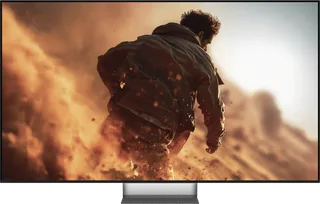
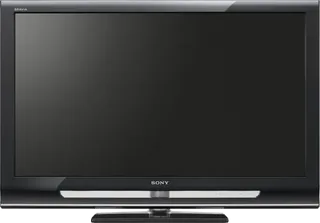
Sony BRAVIA 7 II vs Sony BRAVIA W4500
Better figure, where one is clearly better
| SonyBRAVIA 7 II | SonyBRAVIA W4500 | |
|---|---|---|
| Overview | ||
| Released | May 2026 | 2008 |
| Display | ||
| Panel | RGB Mini-LED | LCD |
| Panel detail | True RGB backlight with independently driven RGB LEDs, RGB Backlight Master Drive Pro | WCG-CCFL fluorescent backlight and 10-bit panel in Sony's exact model support sheets. Motionflow 100Hz is a processing feature; native panel refresh is not separately published in the sheets read. |
| Resolution | 3840 × 2160 (4K) (better) | 1920 × 1080 (Full HD) |
| Refresh rate | 120 Hz | – |
| HDR formats | Dolby Vision, HDR10, HLG | None |
| HDR extras | IMAX Enhanced | – |
| Peak brightness | 1,939 cd/m² on a 10% window and 1,613 cd/m² on a 2% window, HDR after calibration (RTINGS, 65″) | – |
| Colour range | RGB Triluminos Max | – |
| Picture processing | XR Clear Image, XR Contrast Booster 20, Luminance Booster, ambient light sensor | BRAVIA ENGINE 2, Motionflow 100Hz, 24p True Cinema, Live Colour Creation, x.v.Colour and Advanced Contrast Enhancer. |
| Picture modes | Vivid, Standard, Cinema, Professional, Calm, Photo, IMAX Enhanced, Dolby Vision (Vivid, Bright, Dark, Game), FPS Game, RTS Game; Studio Calibrated modes for Netflix, Prime Video and Sony Pictures Core | Vivid, Standard, Custom and Cinema. |
| Motion handling | XR Motion Clarity | Sony lists Motionflow 100Hz but does not separately specify native panel refresh. HDTVTest found higher motion resolution with Motionflow enabled; it also records judder-free 1080p/24 input on its 40-inch sample. |
| Viewing angle | X-Wide Angle Pro | – |
| Sizes | ||
| Sizes | 50, 55, 65, 75, 85, 98″ | 40, 46, 52″ |
| Largest size | 98″ (better) | 52″ |
| Gaming | ||
| HDMI ports | 4 (2 HDMI 2.1 at 4K 120 Hz+) (better) | 3 (0 HDMI 2.1 at 4K 120 Hz+) |
| Variable refresh rate | HDMI VRR | None |
| Auto low latency mode | Yes | – |
| HDMI detail | HDMI 2.1 features: 4K 120 fps, eARC, VRR, ALLM, SBTM (Source-Based Tone Mapping); HDCP 2.3 on all four inputs | Three HDMI inputs accept 1080p and 24p. Also two RGB SCART inputs, component, composite and VGA PC input. COMPUTER BILD says four HDMI on its reviewed set, conflicting with exact Sony and HDTVTest's three, which is used here. |
| Input lag | – | 0–10 ms in Game/Text mode on HDTVTest's KDL40W4500U sample; 30–50 ms in other modes. |
| Game features | Game Menu; Auto HDR Tone Mapping and Auto Genre Picture Mode with a PS5; Dolby Vision Game mode | Game/Text mode bypasses extra processing. No VRR or high-bandwidth HDMI 2.1 input. |
| Smart TV and sound | ||
| Smart TV platform | Google TV | None (no smart platform) |
| Processor | XR Processor | BRAVIA ENGINE 2 |
| Speakers | 40 W (better) | 20 W |
| Dolby Atmos | Yes | – |
| DTS:X | Yes | – |
| eARC | Yes | – |
| Wi-Fi | Wi-Fi 6E | – |
| Bluetooth | 5.3 | – |
| Speaker detail | 50″ and 55″ Acoustic Multi-Audio, 2 full-range and 2 tweeters (40 W); 65–85″ Acoustic Multi-Audio+, 2 full-range and 2 subwoofers (40 W); 98″ Acoustic Multi-Audio+, 4 full-range and 2 subwoofers (65 W) | Two 10 W speakers, 20 W total. |
| Audio features | Acoustic Center Sync, Voice Zoom 3, 3D Surround Upscaling, automatic room and position sound calibration, S-Master digital amplifier, Direct Connect for Sony wireless rear speakers and subwoofer | S-Force Front Surround, Voice Zoom, Dolby Digital Plus and automatic volume adjustment. |
| Voice assistants | Google TV with Gemini, hands-free voice search; works with Alexa and Apple HomeKit | – |
| Casting | Google Cast, Apple AirPlay | DLNA over Ethernet shares photos and music from compatible local devices, without video playback. |
| TV tuners | DVB-T/T2, DVB-C and DVB-S/S2; 2 terrestrial/cable and 2 satellite digital tuners; CI+ | Analogue PAL/SECAM and DVB-T terrestrial tuner; exact European support sheets also list DVB-C and MPEG-4 HD with compatible operators. UK tuner services may vary by region. |
| USB | 2 × USB; USB hard disk recording | One USB 2.0 port for photo and music playback. |
| Ethernet | 1 × Ethernet | Ethernet LAN port for DLNA photo and music sharing. |
| Optical audio out | 1 × optical digital audio out (shared with the S-Center speaker input) | Optical digital audio output. |
| Design and power | ||
| Size | Without stand, 50″ 1114 × 640 × 57 mm; 55″ 1228 × 704 × 57 mm; 65″ 1447 × 827 × 57 mm; 75″ 1671 × 953 × 58 mm; 85″ 1895 × 1078 × 58 mm; 98″ 2180 × 1243 × 75 mm | Without stand (W × H × D), exact Sony sheets: 40″ 986 × 646 × 110 mm; 46″ 1120 × 742 × 115 mm; 52″ 1262 × 829 × 119 mm. Configuration weights exclude stands. |
| Stand | Mirage Stand with a transparent centre panel (50–85″); T-shape stand (98″) | Swivel table stand supplied; Sony lists 300 × 300 mm VESA mounts and optional SU-WL500 wall bracket. |
| VESA pattern | 50″ 200 × 200 mm; 55″, 65″ and 75″ 300 × 300 mm; 85″ 400 × 400 mm; 98″ 600 × 400 mm | 300 × 300 mm. |
| Power use | 50″ 196 W, 55″ 206 W, 65″ 245 W, 75″ 258 W, 85″ 370 W, 98″ 426 W rated; 0.5 W standby | Sony lists operating/standby respectively: 40″ 234/0.2 W, 46″ 282/0.2 W and 52″ 293/0.2 W. HDTVTest measured higher standby use on its 40-inch sample with Quick Start enabled. |
| Colours | Black | Black bezel with clear lower insert and silver trim. |
| In the box | – | RM-ED011 remote, supplied table stand, AC cable and operating instructions. Planned autumn 2008 availability appears in launch coverage; the actual first-sale month is unverified, so release uses year precision. |
More comparisons
- Sony BRAVIA 7 II vs TCL C835K
- Sony BRAVIA 7 II vs TCL C845K
- Sony BRAVIA 7 II vs TCL C8L
- Sony BRAVIA 7 II vs Sony X90L
- Sony BRAVIA 7 II vs Sony X900H / XH90
- Sony BRAVIA 7 II vs Sony X950H / XH95
- Sony BRAVIA 7 II vs Sony X90J
- Sony BRAVIA 7 II vs Sony X90K
- Samsung Neo QLED QN90B vs Sony BRAVIA 7 II
- Samsung Neo QLED QN90C vs Sony BRAVIA 7 II
- Samsung Neo QLED QN90D vs Sony BRAVIA 7 II
- Samsung Neo QLED QN85D vs Sony BRAVIA 7 II
- Sony BRAVIA 3 II vs Sony BRAVIA 7 II
- Samsung QLED Q7F vs Sony BRAVIA 7 II
- Sony BRAVIA 7 II vs TCL C6K
- Sony BRAVIA 7 II vs Sony BRAVIA 9 II