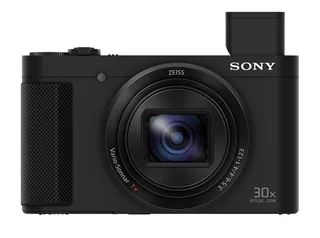
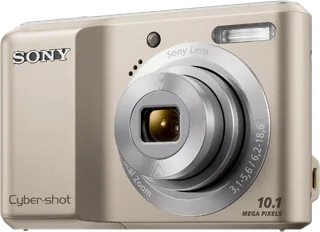
Sony Cyber-shot DSC-HX80 vs Sony Cyber-shot DSC-S2000
Better figure, where one is clearly better
| SonyCyber-shot DSC-HX80 | SonyCyber-shot DSC-S2000 | |
|---|---|---|
| Overview | ||
| Released | April 2016 | 2010 |
| Image and sensor | ||
| Camera type | Compact | Compact |
| Sensor format | 1/2.3-type | 1/2.3-type |
| Sensor type | Back-illuminated Exmor R CMOS | Super HAD CCD |
| Effective resolution | 18.2 MP | 10.1 MP |
| Largest image | 4896 × 3672 | 3648 × 2736 |
| RAW recording | No | No |
| Standard ISO range | 80–3200 | 100–3200 |
| Sensor detail | 1/2.3-type Exmor R CMOS; approximately 21.1 million total photosites. Optical format is not a physical sensor dimension | Optical 1/2.3-type Super HAD CCD, approximately 10.1 million effective / 10.3 million total pixels. Optical format is not a physical dimension; exact shared manual labels S2000 separately from S2100 |
| Image formats | JPEG Fine or Standard; 4:3, 3:2, 16:9 and square stills plus Sweep Panorama; no RAW | JPEG/Exif 2.21, DCF 2.0 and MPF Baseline; maximum 3648×2736. Also 2592×1944, 640×480 and 16:9 3648×2056/1920×1080. No RAW. Shared tables explicitly omit S2100-only 12 MP and 8 MP sizes for S2000; mixed UK 14 MP template excluded |
| ISO detail | Single-frame ISO 80–3200; Multi Frame Noise Reduction offers ISO 6400 and 12800 using combined exposures | – |
| Image processor | BIONZ X | – |
| Lens and shooting | ||
| Built-in lens | 24–720 mm equivalent | 35–105 mm equivalent |
| Maximum aperture | f/3.5–6.4 | f/3.1–5.6 |
| Optical zoom | 30× | 3× |
| Stabilisation | Optical lens stabilisation | Electronic only |
| Maximum continuous burst | 10 fps | – |
| Lens detail | ZEISS Vario-Sonnar T*, actual 4.1–123 mm, 11 elements in 10 groups including five aspherical elements; minimum focus approximately 5 cm wide or 250 cm telephoto | Sony 3× zoom, physical 6.2–18.6 mm F3.1–5.6; 35 mm equivalent 35–105 mm in exact instruction manual and UK archive. Singapore/AP sheets print 36–105 mm for stills, conflicting with the exact manual; manual value retained. Closest focus approximately 5 cm wide / 40 cm telephoto |
| Autofocus | Contrast autofocus with wide, centre, flexible spot and expanded flexible spot areas; AF-S, with AF-C in Advanced Sports and movie modes only; no manual focus or lens control ring | Intelligent autofocus with nine-area multi AF or centre AF, automatic macro. Face detection up to eight faces; Smile Shutter. No AF illuminator or manual focus |
| Shutter | Mechanical shutter; Manual and shutter-priority 30–1/2000 second, aperture-priority 8–1/2000, Program 1–1/2000 and Intelligent Auto 4–1/2000 | Intelligent Auto 1/4–1/2000 second; Program auto1–1/2000 second |
| Burst detail | Approximately 10 full-resolution fps in High or 2 fps in Low; both limited to ten photographs per sequence | Maker UK archive approximately 1.35 fps / 0.74-second interval for up to 100 images; exact instruction manual rounds interval to 1 second. Rate slows with image size; first-frame focus/exposure/white balance fixed. Flash off, ISO Auto or 100–800; not available in Movie, Smile Shutter or Easy mode. Self-timer burst up to five frames; no unrestricted sustained headline rate inferred |
| Stabilisation detail | Optical SteadyShot for stills; Intelligent Active movie stabilisation combines optical and electronic correction | Electronic SteadyShot only, no optical lens or sensor-shift stabilisation. Off during movies and Smile Shutter, ineffective with flash; handbook notes image-processing delay |
| Flash | Built-in manually raised pop-up flash; ISO Auto range approximately 0.3–5.4 m wide or 2.5–3.0 m telephoto | Auto ISO range approximately 0.5–3.3 m wide /0.5–1.8 m telephoto; ISO3200 claim up to 6.6 m wide /3.6 m telephoto. Auto, forced flash, slow sync and off; red-eye reduction |
| Exposure controls | P/A/S/M and Memory Recall; multi-pattern, centre-weighted or spot metering; ±3 EV in 1/3 EV steps | Intelligent Auto, Easy Shooting, Program auto and eight scene modes: High Sensitivity, Twilight, Twilight Portrait, Soft Snap, Landscape, Beach, Snow and Gourmet. Seven automatically recognised scene types are not the eight manually selected scenes. No manual or aperture/shutter-priority exposure. ±2 EV in 1/3 EV steps; multi-pattern, centre-weighted and spot metering. ISO Auto 100–800 or manual100, 200, 400, 800, 1600, 3200 |
| Video | ||
| Highest video resolution | 1920 × 1080 at 60 fps | 640 × 480 at 29.97 fps |
| Video detail | XAVC S Full HD at 60p, 30p or 24p, 50 Mbps; AVCHD Full HD at 60p, 60i or 24p; PAL-region rates differ. Optical zoom during filming; XAVC S requires compatible Class 10 or faster SDXC media | AVI Motion JPEG, VGA 640×480 or QVGA 320×240 at29.97 fps progressive (approximately 30 fps in handbook), CCITT u-Law mono audio. No HD recording despite mixed UK archive720p template. Optical zoom cannot change while recording; movie file limit2 GB |
| Audio | Stereo microphone and mono playback speaker; XAVC S Linear PCM, AVCHD Dolby Digital or MP4 AAC stereo | – |
| Screen and viewfinder | ||
| Viewfinder | Electronic | None |
| Screen size | 3″ | 2.5″ |
| Screen dots | 921,600 | 230,400 |
| Touchscreen | No | No |
| Tilting screen | Yes | No |
| Display detail | 3.0-type 4:3 TFT LCD, 921600 dots; tilts up 180 degrees without touch control. US specification also gives diagonal as 2.95 inches | Fixed 2.5-inch TFT, 230, 400 dots, 4:3; dots are not image pixels. No touchscreen, tilting or separate viewfinder |
| Viewfinder detail | Retractable 0.2-type OLED, 638400 dots, 100% coverage and 0.50× equivalent magnification; dioptre adjustment −4 to +3 | – |
| Connections and design | ||
| Wi-Fi | Yes | – |
| Battery life (maker's claim) | 390 photographs | 190 photographs |
| Body weight | – | 125 g |
| Release detail | Sony Canada’s 8 March 2016 announcement states availability in April 2016; month precision retained | Conservative year 2010 supported by ColorFoto contemporary full test dated 24 March 2010, describing a current retail price below €100 shortly after market launch. Sony European announcement planned end January; planned shipment is not proof of the actual first-sale month. No predecessor inferred from adjacent model numbers |
| Recording media | Memory Stick Duo, PRO Duo, PRO-HG Duo; SD, SDHC and SDXC including UHS-I. Micro formats require adapters | Approximately 6 MB internal memory; SD/SDHC or Memory Stick Duo/PRO Duo/PRO-HG Duo. Movies: SD/SDHC Class 2 or higher in exact handbook and Singapore sheet, versus Class 4 in UK archive; exact handbook retained. Memory Stick PRO Duo Mark2 or PRO-HG Duo recommended for movies. Plain Memory Stick Duo stills only; no card supplied |
| Ports | Micro HDMI and Multi/Micro USB with USB 2.0 | Hi-Speed USB2.0 with supplied dedicated cable; mass storage and PictBridge. No A/V or HDMI output. Monaural microphone and buzzer; recorded audio cannot play on camera, per exact handbook. Conflicting third-party HDMI/stereo entries excluded |
| Wireless connections | 2.4 GHz IEEE 802.11 b/g/n Wi-Fi and NFC Type 3 for sharing and remote control; no GPS receiver | – |
| Battery life detail | NP-BX1; CIPA claim approximately 390 photographs with LCD or 360 with viewfinder | Two AA batteries: supplied LR6 alkaline or optional HR15/51:HR6 NiMH. Approximately 190 shots / 95 minutes CIPA with new alkaline batteries at 25°C, SteadyShot off, normal LCD, half shots with flash. Separate S2000 playback claim 10, 800 images / 540 minutes is not shooting endurance. Manual lists oxy-nickel usable but not rechargeable; lithium/manganese not supported |
| Charging | In-camera USB charging and USB external power with battery inserted | No in-camera AA charging; external NiMH charger and batteries separate. Internal clock backup cell is not the shooting battery |
| Dimensions | 102 × 58.1 × 35.5 mm (width × height × depth), CIPA | 97.6×61×27.2mm width×height×depth excluding protrusions |
| Weight detail | Sony US specifies body-only weight as 7.69 oz; operating manual gives approximately 245 g including NP-BX1 and Memory Stick. Loaded weight is not body weight | 125 g body only, explicitly labelled in exact manufacturer Singapore sheet; 173 g including two batteries and memory card in exact shared instruction manual |
| Colours | Black | – |
| In the box | NP-BX1, AC adapter, micro USB cable, wrist strap and instructions; adapter model varies regionally | Two AA alkaline batteries, dedicated USB cable, wrist strap, PMB5/handbookCD and instruction manual. Memory card, NiMH batteries and charger separate |
More comparisons
- Sony Cyber-shot DSC-HX80 vs Sony Cyber-shot DSC-RX100 VII
- Sony Cyber-shot DSC-HX80 vs Sony Cyber-shot DSC-HX99
- Sony Cyber-shot DSC-HX99 vs Sony Cyber-shot DSC-S2000
- Sony Cyber-shot DSC-HX350 vs Sony Cyber-shot DSC-HX80
- Sony Cyber-shot DSC-HX350 vs Sony Cyber-shot DSC-S2000
- Sony Cyber-shot DSC-HX80 vs Sony Cyber-shot DSC-HX90V
- Sony Cyber-shot DSC-HX80 vs Sony Cyber-shot DSC-WX500
- Sony Cyber-shot DSC-HX60V vs Sony Cyber-shot DSC-HX80
- Sony Cyber-shot DSC-HX400V vs Sony Cyber-shot DSC-HX80
- Sony Cyber-shot DSC-H400 vs Sony Cyber-shot DSC-HX80
- Sony Cyber-shot DSC-HX80 vs Sony Cyber-shot DSC-W800
- Sony Cyber-shot DSC-HX80 vs Sony Cyber-shot DSC-W830
- Sony Cyber-shot DSC-HX80 vs Sony Cyber-shot DSC-WX350
- Sony Cyber-shot DSC-HX50V vs Sony Cyber-shot DSC-HX80
- Sony Cyber-shot DSC-HX300 vs Sony Cyber-shot DSC-HX80
- Sony Cyber-shot DSC-H200 vs Sony Cyber-shot DSC-HX80