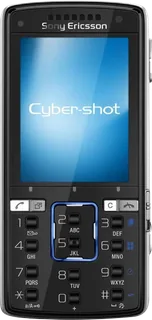
Sony Ericsson K800i vs Sony Ericsson K850i
Better figure, where one is clearly better
| Sony EricssonK800i | Sony EricssonK850i | |
|---|---|---|
| Overview | ||
| Released | 2006 | 2007 |
| Display | ||
| Screen size | 2″ | 2.2″ |
| Resolution | 320 × 240 | 320 × 240 |
| Sharpness | 200 pixels per inch (better) | 182 pixels per inch |
| Panel | LCD | LCD |
| Display type | 2-inch QVGA TFT LCD with 262,000 colours | 2.2-inch QVGA TFT LCD with 262,000 colours |
| Performance | ||
| Storage | 64 MB (better) | 40 MB |
| Storage type | Up to 64 MB internal storage, depending on software and file content; Memory Stick Micro (M2) expansion up to 2 GB | Up to 40 MB internal user storage, depending on software and file content; combined card slot accepts Memory Stick Micro (M2) or microSD |
| Cameras | ||
| Main camera | 3.2 MP | 5 MP (better) |
| Ultra wide camera | None | None |
| Telephoto camera | None | None |
| Optical zoom | None | None |
| Main camera | 3.2 MP autofocus camera with xenon flash and lens cover | 5 MP autofocus camera with xenon flash, automatic lens cover, BestPic and macro mode |
| Front camera | Separate VGA camera for video calls | Separate QCIF camera for video calls |
| Video recording | QCIF 176 × 144 video recording with image stabilisation | – |
| Camera features | BestPic records nine images around a shutter press; panorama, macro focus and red-eye reduction | – |
| Battery and charging | ||
| Battery | 950 mAh (better) | 930 mAh |
| Wireless charging | None | None |
| Battery life detail | 3.6 V 950 mAh lithium-polymer battery | 930 mAh battery |
| Design | ||
| Type | Standard | Standard |
| Weight | 115 g (better) | 118 g |
| Thickness | 22 mm | 18 mm (better) |
| Height × width | 106 × 47 mm | 103 × 48.5 mm |
| Size unfolded | Maker's white paper lists 106 × 47 × 18 (22) mm; the main thickness uses the larger published dimension, with 18 mm for the thinner body section | – |
| Software | ||
| Operating system | Proprietary software | Proprietary software |
| Software at launch | Sony Ericsson proprietary phone software with Java applications, RSS reader and web browser | Sony Ericsson proprietary phone software with Java applications and media browser |
| Connectivity | ||
| Mobile network | GSM 900/1800/1900 and WCDMA 2100; up to 384 kbit/s data transfer | – |
| Bluetooth | Bluetooth 2.0 with A2DP stereo audio support | Bluetooth 2.0 with stereo audio support |
| USB | USB cable through the Fast port; infrared; PictBridge printing | Proprietary Fast port for USB connection and accessories |

More comparisons
- Sony Ericsson K850i vs Sony Xperia 1 VII
- Sony Ericsson K800i vs Sony Xperia 1 VII
- Sony Ericsson C905 vs Sony Ericsson K850i
- Nokia E65 vs Sony Ericsson K850i
- Nokia 6230i vs Sony Ericsson K850i
- Sony Ericsson K850i vs Sony Ericsson W880i
- Sony Ericsson K750i vs Sony Ericsson K850i
- Sony Ericsson K750i vs Sony Ericsson K800i
- Nokia 6230i vs Sony Ericsson K800i
- Sony Ericsson K800i vs Sony Ericsson W810i
- Nokia 6230 vs Sony Ericsson K800i