Xiaomi Mi 10 vs Xiaomi Xiaomi 18 Pro
Better figure, where one is clearly better
| XiaomiMi 10 | XiaomiXiaomi 18 Pro | |
|---|---|---|
| Overview | ||
| Released | February 2020 | September 2026 |
| Display | ||
| Screen size | 6.67″ | 6.4″ |
| Resolution | 2340 × 1080 | 2436 × 1120 (better) |
| Sharpness | 386 pixels per inch | 419 pixels per inch (better) |
| Panel | OLED | OLED |
| Refresh rate | 90 Hz | 120 Hz (better) |
| Peak brightness | 1,200 nits | 4,000 nits (better) |
| Display type | Curved AMOLED with Gorilla Glass 5. | AMOLED; rear 2.7-inch AMOLED screen, 912 × 596, up to 120 Hz |
| Brightness detail | 500 nits typical, 800 nits high-brightness mode and 1,200 nits peak. | Multi-scenario peak 4,000 nits on both screens; minimum 1 nit |
| Always-on display | – | Full-screen always-on display |
| Screen protection | – | Xiaomi Dragon Crystal Glass 3.0 |
| Display features | HDR10+, P3 colour and 180 Hz touch sampling. | HDR10+, HDR Vivid and Dolby Vision; wet-hand touch; BT.2020 colour gamut; up to 300 Hz main-screen and 120 Hz rear-screen touch sampling; full-brightness single-pulse DC dimming; privacy display |
| Performance | ||
| Chip | Qualcomm Snapdragon 865 | Snapdragon 8 Elite Gen 6 |
| Memory | 8 GB | 12 GB – 16 GB (better) |
| Storage | 128 GB, 256 GB | 256 GB, 512 GB, 1 TB (better) |
| CPU | 7 nm Snapdragon 865 with one CPU core at 2.84 GHz, three at 2.42 GHz and four at 1.8 GHz. | Fourth-generation Qualcomm Oryon CPU up to 5 GHz; TSMC 2 nm process; TechRadar confirms the English Snapdragon 8 Elite Gen 6 name for this model |
| GPU | Adreno 650, up to 587 MHz. | Adreno GPU; maker does not publish a model number |
| AI engine | – | Qualcomm AI Engine |
| Storage type | LPDDR5 and UFS 3.0; no microSD expansion (TechRadar). | LPDDR5X RAM; UFS 4.1 storage; China launch configuration pairings corroborated by Sina |
| Cameras | ||
| Main camera | 108 MP | 200 MP (better) |
| Ultra wide camera | 13 MP | 50 MP |
| Telephoto camera | None | 200 MP |
| Optical zoom | None | 3.2× (better) |
| Front camera | 20 MP | 50 MP (better) |
| Main camera | f/1.69, 1/1.33-inch sensor, optical stabilisation and four-pixel binning. | 200 MP Light Hunter 960, 1/1.28-inch sensor, ƒ/1.67, 23 mm equivalent, OIS, QPD autofocus; 16-in-1 2.44 µm pixels; 1G+6P lens |
| Ultra wide camera | f/2.4 and 123° field of view. | 50 MP, ƒ/2.4, 17 mm equivalent, 102° field of view, autofocus; 5 cm macro |
| Telephoto camera | – | 200 MP, 1/1.56-inch sensor, ƒ/2.4, OIS; 12 cm telephoto macro |
| Front camera | – | 50 MP |
| Video recording | Rear 8K at 30 fps, 4K at 30/60 fps and 1080p at 30/60 fps; 720p and 1080p slow motion at 120 fps. | 8K at 30 fps; 4K at 30, 60 or 120 fps; 1080p at 30 or 60 fps; 720p at 30 fps; slow motion 720p at 120, 240, 480, 960 or 1,920 fps and 1080p at 120, 240 or 960 fps |
| Front video | 1080p at 30 fps; 720p slow motion at 120 fps. | 4K and 1080p at 30 or 60 fps; 720p at 30 fps |
| Camera features | Additional 2 MP f/2.4 macro and 2 MP f/2.4 depth cameras; no optical distance zoom. | Leica Authentic and Vibrant looks; rear-screen selfies and preview; dynamic photos, subject and audio tracking, portrait, night, Pro, time-lapse, panorama and document modes |
| Battery and charging | ||
| Battery | 4,780 mAh | 7,000 mAh (better) |
| Wired charging | Up to 30 W | Up to 100 W (better) |
| Wireless charging | Up to 30 W | Up to 50 W (better) |
| Battery life detail | 4,680 mAh minimum capacity. | 7,000 mAh typical; 6,860 mAh minimum; built-in non-removable battery |
| Wired charging | 30 W charger included; Quick Charge 4+ and USB Power Delivery 3.0. | 100 W; QC3+, QC3.0, QC2.0, PD3.0, PD2.0 and 100 W PPS supported |
| Wireless charging | 30 W wireless charging. TechRadar reports 5 W reverse charging for its UK unit; Android Authority describes 10 W as specific to India. | 50 W Xiaomi wireless charging |
| Charges other devices | – | 27 W wired reverse charging; wireless reverse charging also supported |
| Design | ||
| Type | Standard | Standard |
| Weight | 208 g | 203 g (better) |
| Thickness | 8.96 mm | 8.46 mm (better) |
| Height × width | 162.5 × 74.8 mm | 151.8 × 72 mm |
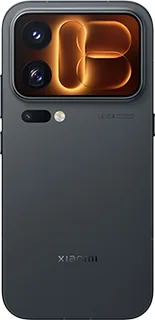
| Materials | Gorilla Glass 5 display; glass back and metal frame (Android Authority). | Fibreglass versions are 203 g and 8.46 mm thick; glass Galaxy Blue and transparent versions are 208 g and 8.56 mm thick |
| Colours | Twilight Grey and Coral Green. | Black, White, pink, Galaxy Blue and transparent editions; China-market names |
| Biometrics | In-display fingerprint reader. | 3D ultrasonic fingerprint sensor |
| Sensors | Infrared blaster, proximity, ambient light, accelerometer, gyroscope, compass, barometer and Hall sensor. | Proximity, under-screen and rear ambient light/colour temperature, accelerometer, gyroscope, compass, X-axis linear motor, IR blaster, flicker, laser autofocus, barometer and Hall sensors |
| Speakers | Dual stereo speakers. | Stereo dual speakers; Dolby Atmos, spatial audio and Hi-Res wired/wireless audio; USB-C digital headphones |
| Software | ||
| Operating system | Android | Android |
| Software at launch | MIUI 11; Android 10 confirmed by Android Authority. | Xiaomi HyperOS 4; China variant |
| In the box | UK charger, cable, USB-C audio adapter, case, SIM tool and documents. February 2020 is the conservative first-sale month from Gizmochina's actual China sale report; the precise maker-confirmed day remains unverified. These UK configurations became available later. | Phone, power adapter, USB-C cable, case, pre-applied screen protector, SIM tool and documentation; contents can vary with sales bundle |
| Connectivity | ||
| Mobile network | 5G and 4G; bands vary by market. | 5G n1/2/3/5/7/8/12/18/20/25/26/28/38/40/41/48/66/77/78/79/80/81/83/84/89; LTE FDD B1/2/3/4/5/7/8/12/17/18/19/20/25/26/28/66 and TDD B34/38/39/40/41/42/43/48; 4×4 MIMO; China carrier and software restrictions apply |
| SIM | Single nano-SIM on the UK model. | Dual nano-SIM; dual-active operation depends on SA bands and carrier support |
| Wi-Fi | Wi-Fi 6, 2×2 MIMO and WPA3. | Wi-Fi 7, enhanced Wi-Fi 6, Wi-Fi 5, Wi-Fi 4 and 802.11a/b/g; 2.4 and 5 GHz; 2×2 MIMO, MLO, 8×8 sounding, Wi-Fi Direct and Miracast |
| Bluetooth | Bluetooth 5.1 with AAC, LDAC, LHDC and LLAC. | Bluetooth 6.0; dual Bluetooth; SBC, AAC, aptX, aptX HD, aptX Adaptive, LDAC, LHDC 5.0, LC3 and MIHC |
| NFC | Multifunction NFC with Google Pay. | Chinese Wallet transport, access-card and payment functions; service availability depends on location and provider |
| USB | USB-C; no 3.5 mm socket (TechRadar). | USB-C, USB 3.2 Gen 1; a separate USB 3 cable is required because the supplied cable does not support USB 3 transfers |
| Positioning | – | GPS L1/L5, BeiDou B1I/B1C/B2a, Galileo E1/E5a, GLONASS G1, QZSS L1/L5, NavIC L5; A-GNSS and assisted network positioning |

More comparisons
- Apple iPhone 18 Pro vs Xiaomi Xiaomi 18 Pro
- Xiaomi Xiaomi 17 Pro vs Xiaomi Xiaomi 18 Pro
- Xiaomi Xiaomi 18 Pro vs Xiaomi Xiaomi 18 Pro Max
- Xiaomi Xiaomi 17 Ultra vs Xiaomi Xiaomi 18 Pro
- Samsung Galaxy S26 Ultra vs Xiaomi Xiaomi 18 Pro
- Google Pixel 11 Pro vs Xiaomi Xiaomi 18 Pro
- Xiaomi Xiaomi 12 vs Xiaomi Xiaomi 18 Pro
- OnePlus OnePlus 15T vs Xiaomi Xiaomi 18 Pro
- Sony Xperia 1 VIII vs Xiaomi Xiaomi 18 Pro
- vivo X300 FE vs Xiaomi Xiaomi 18 Pro
- Xiaomi Xiaomi 17 vs Xiaomi Xiaomi 18 Pro
- Xiaomi Xiaomi 17 Pro Max vs Xiaomi Xiaomi 18 Pro
- Xiaomi Xiaomi 15 Ultra vs Xiaomi Xiaomi 18 Pro
- Xiaomi Xiaomi 15 vs Xiaomi Xiaomi 18 Pro
- Xiaomi Xiaomi 14 Ultra vs Xiaomi Xiaomi 18 Pro
- Xiaomi Xiaomi 14 vs Xiaomi Xiaomi 18 Pro