Xiaomi Mi 11 Lite 5G vs Xiaomi Xiaomi 15 Ultra
Better figure, where one is clearly better
| XiaomiMi 11 Lite 5G | XiaomiXiaomi 15 Ultra | |
|---|---|---|
| Overview | ||
| Released | April 2021 | February 2025 |
| Display | ||
| Screen size | 6.55″ | 6.73″ |
| Resolution | 2400 × 1080 | 3200 × 1440 (better) |
| Sharpness | 402 pixels per inch | 521 pixels per inch (better) |
| Panel | OLED | LTPO OLED |
| Refresh rate | 90 Hz | 120 Hz (better) |
| Peak brightness | 800 nits | 3,200 nits (better) |
| Display type | Flat 10-bit AMOLED with Gorilla Glass 6. | WQHD+ LTPO AMOLED with 1–120 Hz adaptive refresh, 68 billion colours and DCI-P3; All Around Liquid Display glass curves around the edges |
| Pixel density | – | 522 ppi |
| Brightness detail | 500 nits typical and up to 800 nits in high-brightness mode. | 3,200 nits multi-scenario peak brightness |
| Always-on display | – | Always-active Display with 2–80 nits adaptive brightness and refresh as low as 1 Hz |
| Screen protection | – | Xiaomi Shield Glass 2.0; camera surround protected by Corning Gorilla Glass 7i |
| Display features | HDR10+, DCI-P3 colour and 240 Hz touch sampling. | DC dimming at high brightness, 1,920 Hz PWM dimming at low brightness, 300 Hz touch sampling, Original Colour PRO, Pro HDR, wet touch, HDR10+, Dolby Vision and TÜV low-blue-light, flicker-free and circadian-friendly certifications |
| Performance | ||
| Chip | Qualcomm Snapdragon 780G | Qualcomm Snapdragon 8 Elite |
| Memory | 6 GB – 8 GB | 16 GB (better) |
| Storage | 128 GB | 512 GB, 1 TB (better) |
| CPU | Eight-core Kryo 670 CPU up to 2.4 GHz. This is the original Snapdragon 780G model, distinct from the 4G Mi 11 Lite and later 11 Lite 5G NE. | Second-generation TSMC 3 nm Qualcomm Oryon CPU; two prime cores up to 4.32 GHz and six performance cores up to 3.53 GHz |
| GPU | Adreno 642. | Qualcomm Adreno GPU; maker gives no numeric suffix |
| AI engine | – | Qualcomm AI engine; maker states 80 TOPS computing power |
| Storage type | LPDDR4X and UFS 2.2; hybrid microSD expansion up to 512 GB, according to the maker's support FAQ. | LPDDR5X RAM at 8,533 Mbps and UFS 4.1 storage; UK 16 GB/512 GB or 16 GB/1 TB |
| Cooling | – | Xiaomi 3D Dual-Channel IceLoop system with 5,100 mm² overall loop heat-pipe area |
| Cameras | ||
| Main camera | 64 MP (better) | 50 MP |
| Ultra wide camera | 8 MP | 50 MP |
| Telephoto camera | None | 200 MP |
| Optical zoom | None | 4.3× (better) |
| Front camera | 20 MP | 32 MP (better) |
| Main camera | f/1.79 and six-element lens; no optical stabilisation (Notebookcheck). | Leica Summilux, Sony LYT-900, 50 MP, f/1.63 fixed aperture, 1-inch sensor, 23 mm equivalent focal length, eight-element lens, 4-axis OIS and 4-in-1 binning to 3.2 µm pixels |
| Ultra wide camera | f/2.2 and 119° field of view. | Leica 50 MP, f/2.2, 14 mm equivalent focal length, 115° field of view, six-element lens, 1.28 µm binned pixels and macro focusing from 5 cm |
| Telephoto camera | – | Leica 200 MP periscope, f/2.6, OIS, 100 mm equivalent focal length, 1/1.4-inch sensor and 2.24 µm binned pixels; second floating telephoto is 50 MP, f/1.8, OIS, 70 mm equivalent focal length, 1.4 µm binned pixels and macro focusing from 10 cm |
| Front camera | 20 MP, f/2.24; night and portrait modes. | OmniVision OV32B, 32 MP, f/2.0, 21 mm equivalent focal length and 90° field of view |
| Zoom | – | 3× floating telephoto and 4.3× periscope optical ratios identified by Tech Advisor and TechRadar; maker lists 23/70/100 mm focal lengths and up to 120× digital zoom |
| Video recording | Rear 4K at 30 fps, 1080p at 30/60 fps and 720p at 30 fps; 720p or 1080p slow motion at 120 fps. | 8K at 30 fps; 4K at 30/60/120 fps; Full HD at 30/60 fps; HD at 30 fps; Dolby Vision and 4K60 10-bit log across focal lengths; 4K120 on main/periscope; slow motion HD or Full HD at 120/240/480/960/1,920 fps |
| Front video | Time-lapse selfies; the UK maker sheet does not publish front-camera frame rates. | 4K or Full HD at 30/60 fps, HD at 30 fps; Dolby Vision video, teleprompter, slow motion selfie and time-lapse selfie |
| Camera features | Additional 5 MP f/2.4 telemacro camera with contrast autofocus at 3–7 cm; this is a close-focus camera rather than an optical telephoto zoom. | 13-channel multispectral sensor, Leica Authentic and Vibrant styles, Leica filters, ProFocus motion and eye tracking, Lightning Burst, Dynamic Shots, master portraits from 23–135 mm, 50/200 MP modes, macro, Fastshot, Supermoon, RAW/DNG/HEIF/JPEG, 16-bit UltraRAW, Movie mode, ShootSteady, Dual Video and Ultra Night Video; Photography Kit Legend Edition sold separately |
| Battery and charging | ||
| Battery | 4,250 mAh | 5,410 mAh (better) |
| Wired charging | Up to 33 W | Up to 90 W (better) |
| Wireless charging | None | Up to 80 W (better) |
| Battery life detail | 4,250 mAh typical capacity. | 5,410 mAh typical UK Xiaomi Surge Battery; maker laboratory claim of up to 25 hours video playback; Surge P3 charging and G2 battery-management chips |
| Wired charging | 33 W charger included. Maker support lists Quick Charge 4+, Quick Charge 3+ and USB Power Delivery 3.0 for the phone; supplied adapter supports Quick Charge 3.0, USB-PD and PPS. | 90 W HyperCharge; QC3+, QC3.0, QC2.0, PD3.0, PD2.0 and MI FC 2.0; separate Xiaomi 90 W adaptor recommended |
| Wireless charging | – | 80 W wireless HyperCharge; compatible wireless charger sold separately |
| Design | ||
| Type | Standard | Standard |
| Weight | 159 g (better) | 226 g |
| Thickness | 6.81 mm (better) | 9.35 mm |
| Height × width | 160.53 × 75.73 mm | 161.3 × 75.3 mm |
| Water and dust resistance | IP53 | IP68 |
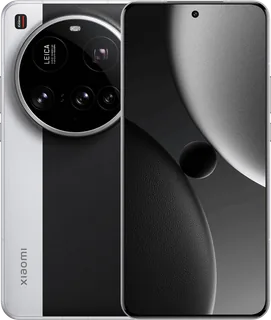
| Materials | Matte glass back and plastic frame (TechRadar and Notebookcheck). | 6M42 high-strength aluminium frame; maker confirms Silver Chrome glass fibre and PU leather; Tech Advisor identifies glass-fibre backs on Black/White |
| Colours | Truffle Black, Citrus Yellow and Mint Green. | Black, White and Silver Chrome; main dimensions and weight are for Black/White, while Silver Chrome is 9.48 mm thick and weighs 229 g |
| Water resistance detail | – | IP68; maker test in static freshwater at 1.5 m for 30 minutes with temperature difference no greater than 5 K; resistance can decline with wear; separate photography kit system rated IP54 |
| Biometrics | Side fingerprint reader integrated into the power button and face unlock. | Ultrasonic in-display fingerprint reader and AI Face Unlock |
| Sensors | Infrared blaster, proximity, ambient light, accelerometer, gyroscope, compass and linear motor. | Proximity, ambient light, accelerometer, gyroscope, electronic compass, IR blaster, laser autofocus, barometer and flicker sensor; X-axis linear vibration motor |
| Speakers | Dual speakers. | Stereo speakers, Dolby Atmos, Hi-Res Audio and Hi-Res Wireless Audio |
| Microphones | – | Four-microphone array with directional/omnidirectional recording and Audio Zoom |
| Software | ||
| Operating system | Android | Android |
| Software at launch | MIUI 12 based on Android 11. | Xiaomi HyperOS 2; Android 15 confirmed by Tech Advisor and TechRadar |
| Software updates | – | Four Android version upgrades and six years of security updates reported at launch by Tech Advisor and TechRadar |
| AI features | – | Regional HyperAI writing, speech recognition, interpreter, search, dynamic wallpapers, creativity and image-editing tools, Google Gemini and Circle to Search; applicable features require internet access and updates |
| In the box | 33 W adapter, USB-C cable, USB-C to 3.5 mm adapter, SIM tool, soft case and documents. April 2021 is the conservative first-sale month from TechRadar's actual retail-availability account; an exact maker-confirmed day remains unverified. | Phone, USB-C cable, SIM tool, protective case, safety information, quick-start guide, warranty card and desiccant; standard UK box excludes adaptor |
| Connectivity | ||
| Mobile network | 5G, 4G, 3G and 2G; global/UK published LTE bands include 20 and 28. VoLTE and Wi-Fi calling depend on the operator. | 5G SA/NSA, LTE, UMTS and GSM; 4×4 MIMO; Xiaomi Surge T1/T1S tuners and antenna array |
| SIM | One nano-SIM plus a hybrid slot for a second nano-SIM or microSD card; no eSIM, according to the maker's support FAQ. | Dual nano-SIM, nano-SIM plus eSIM or dual eSIM; eSIM depends on region and carrier |
| Wi-Fi | Wi-Fi 6, 5 and 4; 2.4 and 5 GHz, Wi-Fi Direct and Wi-Fi Display. | Wi-Fi 7/6E/6 capability depends on region and network; dual-band simultaneous operation, 2×2 MIMO, 8×8 sounding for MU-MIMO, Wi-Fi Direct and Miracast |
| Bluetooth | Bluetooth 5.2; maker support lists aptX, aptX HD, LDAC and LHDC audio codecs. | Bluetooth 6.0, Dual-Bluetooth; SBC, AAC, aptX, aptX HD, aptX Adaptive, LDAC, LHDC 5.0 and LC3 |
| NFC | Multifunction NFC with Google Pay; availability varies by market. | Supported |
| USB | USB-C with USB 2.0 data (Notebookcheck); USB OTG and wired reverse charging confirmed by maker support. No 3.5 mm socket; audio adapter included. | USB-C, USB 3.2 Gen 2 |
| Positioning | – | GPS L1/L5, Galileo E1/E5a, GLONASS G1, BeiDou, QZSS L1/L5 and NavIC L5; assisted positioning |

More comparisons
- Xiaomi Xiaomi 15 Ultra vs Xiaomi Xiaomi 18 Pro
- Xiaomi Xiaomi 15 Ultra vs Xiaomi Xiaomi 18 Pro Max
- Xiaomi Mi 11 Lite 5G vs Xiaomi Xiaomi 18 Pro
- Xiaomi Mi 11 Lite 5G vs Xiaomi Xiaomi 18 Pro Max
- Xiaomi Xiaomi 15 Ultra vs Xiaomi Xiaomi 17 Ultra
- Xiaomi Mi 11 Lite 5G vs Xiaomi Xiaomi 17 Ultra
- Xiaomi Xiaomi 15 Ultra vs Xiaomi Xiaomi 17
- Xiaomi Mi 11 Lite 5G vs Xiaomi Xiaomi 17
- Xiaomi POCO F8 Ultra vs Xiaomi Xiaomi 15 Ultra
- vivo X300 Pro vs Xiaomi Xiaomi 15 Ultra
- Xiaomi Xiaomi 15 Ultra vs Xiaomi Xiaomi 17 Pro
- Xiaomi Xiaomi 15 Ultra vs Xiaomi Xiaomi 17 Pro Max
- Xiaomi Mi 11 Lite 5G vs Xiaomi Xiaomi 17 Pro
- Xiaomi Mi 11 Lite 5G vs Xiaomi Xiaomi 17 Pro Max
- Google Pixel 10 Pro XL vs Xiaomi Xiaomi 15 Ultra
- vivo X200 Ultra vs Xiaomi Xiaomi 15 Ultra