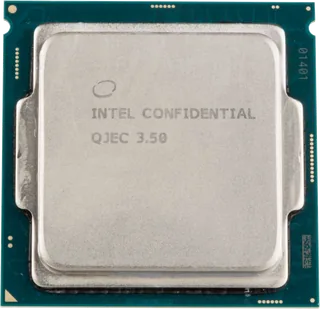
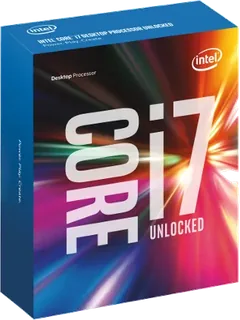
Reviews find higher stock performance and an improved thermal interface compared with the Core i7-4770K. The gains offer little reason for existing owners to upgrade, particularly for GPU-limited gaming. Overclocking falls short of the expectations raised at launch and varies between samples.
Four cores with Hyper-Threading; Intel Turbo Boost 2.0 supported. The current maker page lists Transactional Synchronization Extensions as unsupported, superseding early review specifications.
Clocks
Maximum turbo is a single-core frequency; overclocking requires an appropriate motherboard and cooling. Intel publishes TDP without a separate maximum turbo-power figure.
Graphics and AI
Built-in graphics
Yes
Graphics
Intel HD Graphics 4600; 20 execution units; 350 MHz base, up to 1.25 GHz; three displays; Quick Sync Video. HDMI up to 3840×2160 at 24 Hz; DisplayPort and eDP up to 3840×2160 at 60 Hz; VGA up to 1920×1200 at 60 Hz.
Platform
Socket
LGA1150
Base power
88 W
Unlocked
Yes
Memory support
Up to 32 GB; two channels; DDR3-1333/1600 or DDR3L-1333/1600 at 1.5 V, as listed by Intel; 25.6 GB/s maximum bandwidth; ECC not supported.
PCIe
PCIe 3.0; 16 CPU lanes, configured as 1×16, 2×8 or 1×8+2×4.
Process
22 nm; Devil's Canyon, a Haswell refresh; 37.5 × 37.5 mm package; 74.04°C Tcase limit, not a junction-temperature limit. New polymer thermal interface and additional capacitors, described in Intel's Computex launch coverage and the exact-model reviews.
Cooler
Intel lists both ordinary boxed and explicitly fanless boxed SKUs; cooler contents should be checked for the particular package. Compatible Intel 8- and 9-series chipsets require the appropriate motherboard BIOS. Intel's June 2014 fact sheet confirms volume availability that month; the announcement itself is not used as the on-sale day.