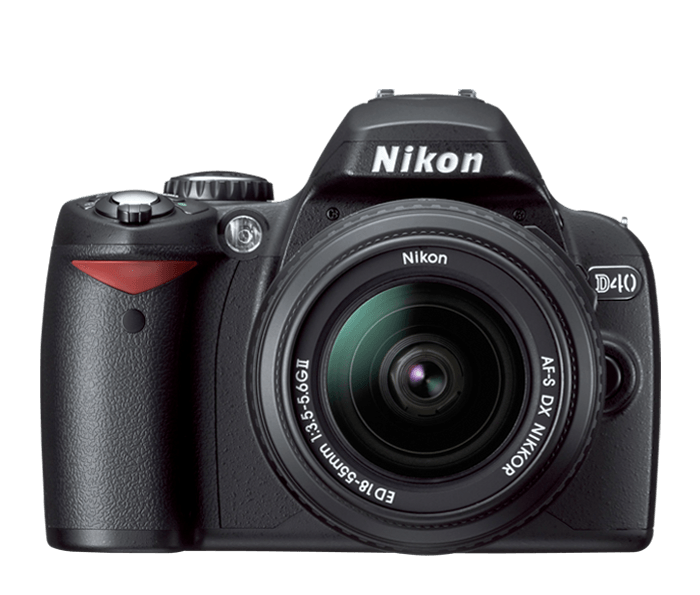
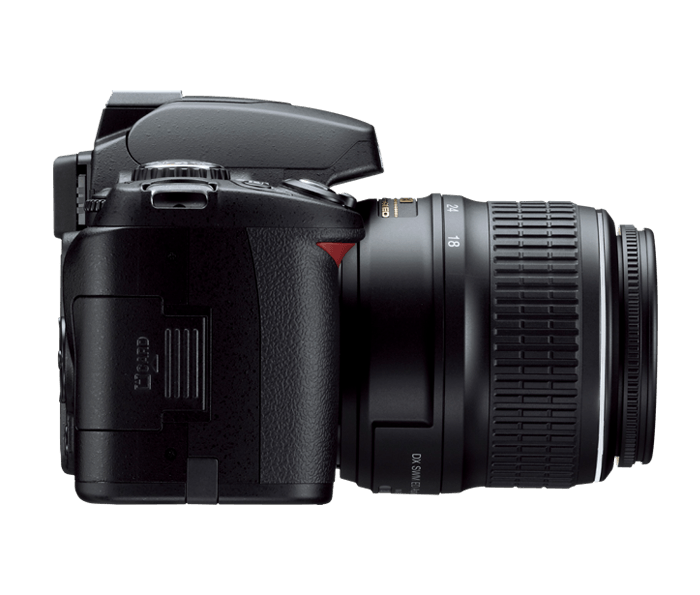
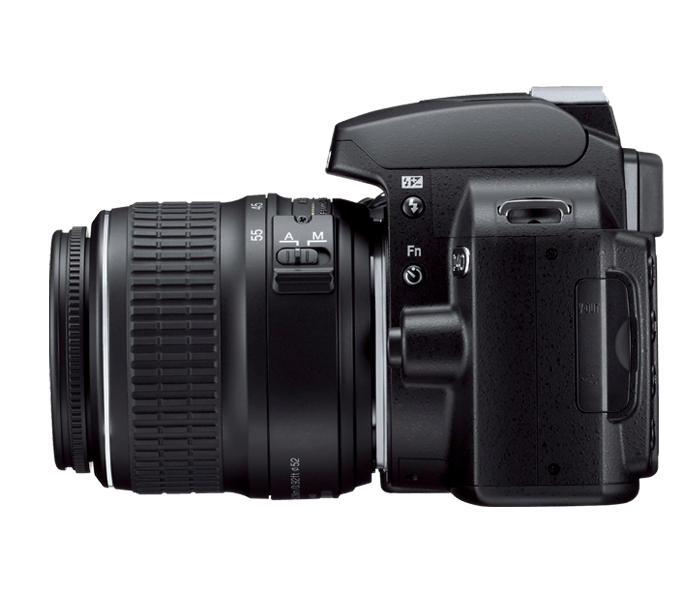
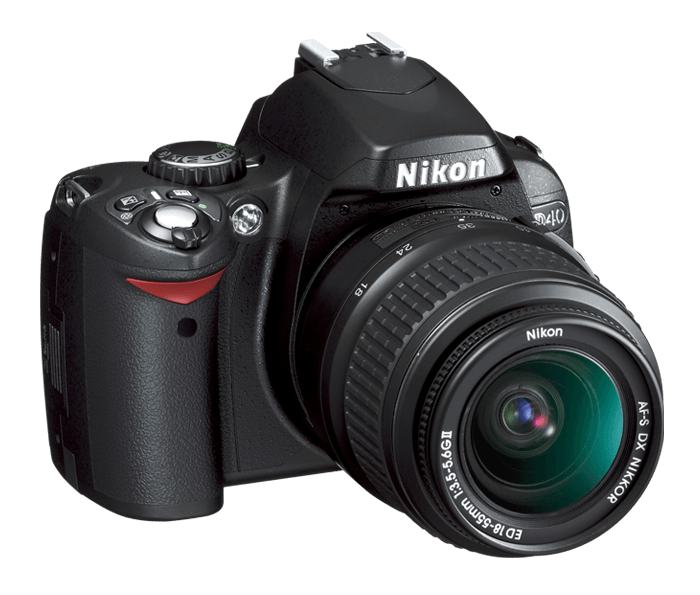
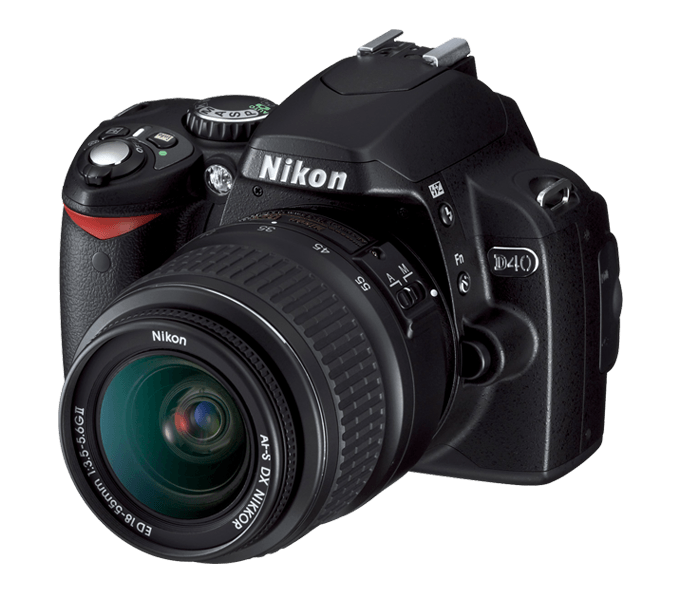
Both praise clean images, reliable exposure and approachable operation for first-time DSLR users. Camera Labs likes the comfortable grip and helpful menus, but finds changing common settings laborious and the three-point autofocus basic. Photo Review finds fast, accurate focusing except on low-contrast subjects in dim light. Both warn that older lenses lose autofocus; six megapixels limits cropping flexibility.
Nikon DX primary-colour CCD with 6.1 million effective and 6.24 million total pixels; approximately 1.5× lens focal-length equivalent
Image formats
Compressed 12-bit NEF RAW, JPEG and simultaneous RAW plus Basic JPEG; maximum 3008 × 2000 pixels; Image Optimisation settings and in-camera retouching
ISO detail
ISO 200–1600 in whole stops; Hi 1 expands to ISO 3200 equivalent
Lens and shooting
Lens mount
Nikon F mount
Stabilisation
Optical lens stabilisation
Maximum continuous burst
2.5 fps
Lens detail
Autofocus with AF-S and AF-I motor-equipped lenses; no body autofocus motor. Other compatible AF lenses require manual focusing; non-CPU lenses require manual exposure without metering; IX and F3AF lenses unsupported
Autofocus
Multi-CAM 530 phase-detection module; three selectable autofocus areas; -1 to +19 EV at ISO 100 equivalent, 20°C; AF-S/AF-C/AF-A, single-area, dynamic-area and closest-subject-priority dynamic-area modes; AF-assist illuminator
Shutter
Combined CCD electronic and mechanical shutter; 1/4000 to 30 seconds in one-third stops, Bulb and Time with optional ML-L3 remote; flash sync 1/500 second
Burst detail
Approximately 2.5 fps; self-timer and optional ML-L3 delayed or immediate infrared remote release
Stabilisation detail
Optical VR depends on the attached lens; no sensor-shift stabilisation. The pictured original 18–55mm ED II kit lens has no VR
Flash
Built-in pop-up flash; guide number approximately 17 m at ISO 200, 20°C, or 18 at manual full output; equivalent guide numbers 12 or 13 at ISO 100; accessory shoe
Exposure controls
P/S/A/M, Auto and scene modes; 420-pixel RGB matrix, centre-weighted and spot metering; ±5 EV compensation in one-third stops
Screen and viewfinder
Viewfinder
Optical
Screen size
2.5″
Screen dots
230,000
Touchscreen
No
Tilting screen
No
Display detail
Fixed 2.5-inch low-temperature-polysilicon TFT with approximately 230000 dots; Classic, Graphic and Wallpaper shooting-information displays, contextual help and playback magnification; dots count subpixels
Viewfinder detail
Pentamirror; approximately 95% coverage, 0.80× magnification with 50mm f/1.4 at infinity and 18 mm eyepoint
Connections and design
Battery life (maker's claim)
470 photographs
Body weight
475 g
Release detail
Nikon Japan records first sale on 1 December 2006; Nikon USA announced it on 16 November 2006 with US availability beginning December
Recording media
One SD/SDHC card slot; MMC unsupported
Ports
Hi-Speed USB and NTSC/PAL video output; optional ML-L3 infrared remote
Battery life detail
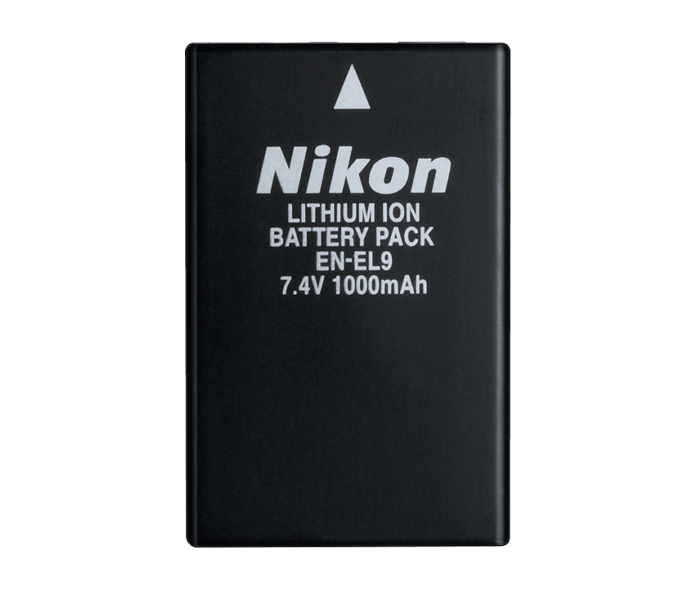
EN-EL9 rechargeable lithium-ion battery; Nikon USA lists approximately 470 CIPA photographs per charge
Charging
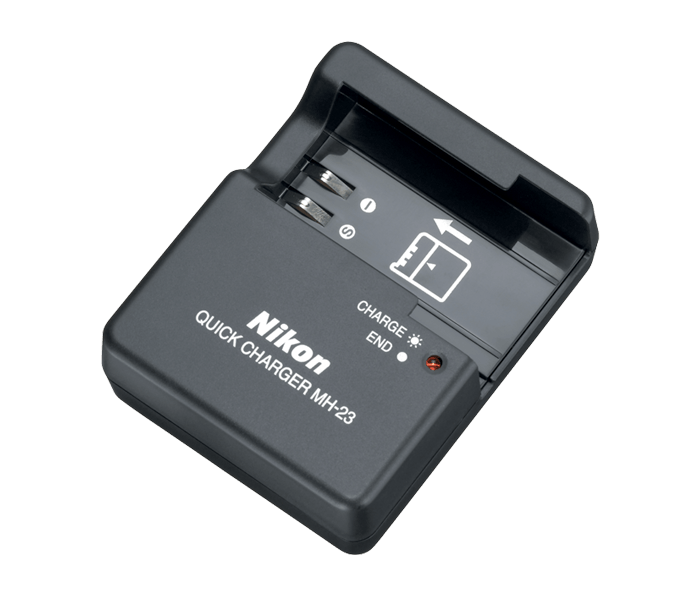
External MH-23 quick charger; optional EH-5 mains adapter with EP-5 power connector
Dimensions
Approximately 126 × 94 × 64 mm
Weight detail
Approximately 475 g excluding battery, SD card and body cap
Colours
Black or silver; regional kit availability varies
In the box
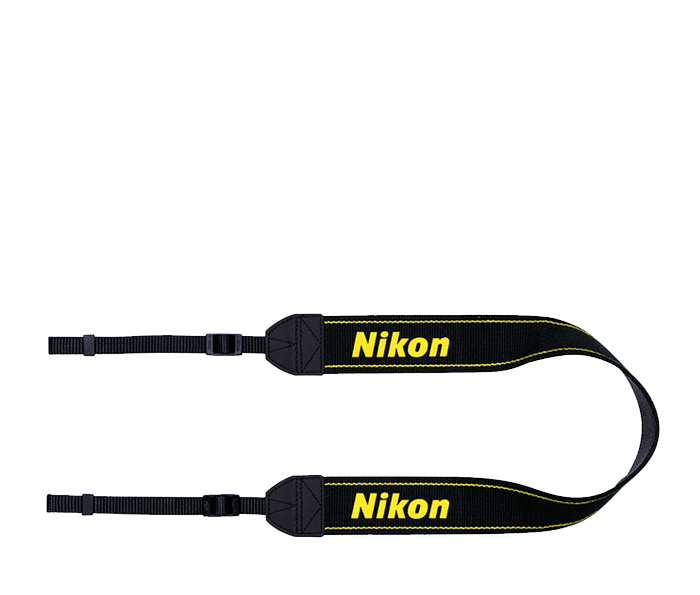
EN-EL9 battery, MH-23 charger, UC-E4 USB cable, AN-DC1 strap for black or AN-DC2 for silver, body cap, DK-5 eyepiece cap, DK-16 eyecup and PictureProject CD-ROM
Video
Video detail
No movie recording or live-view composition; NTSC/PAL output is for playback
Pros and cons
Pros
+12-bit RAW recording
+1/500-second flash sync
+In-camera help and selectable graphical information display