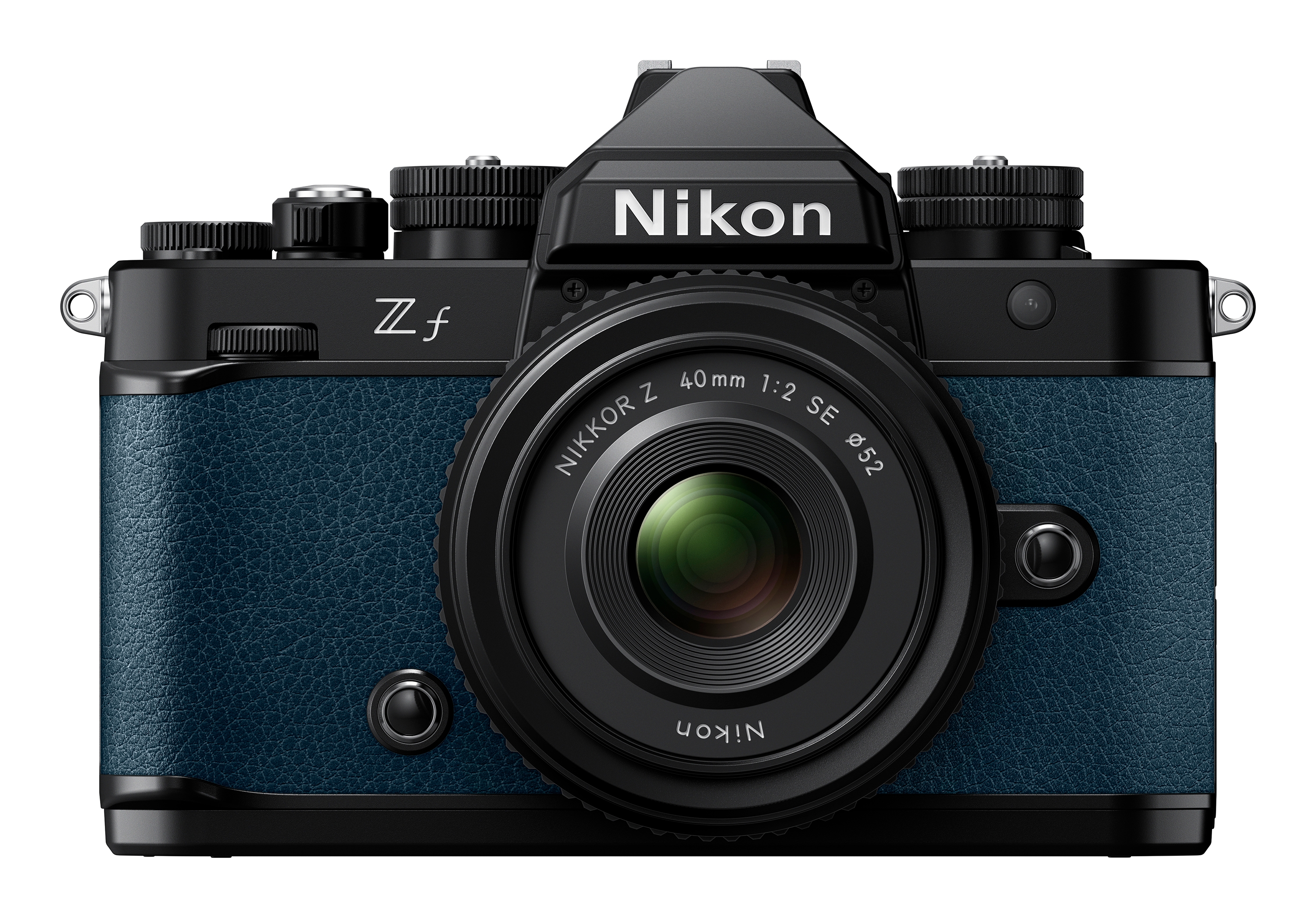
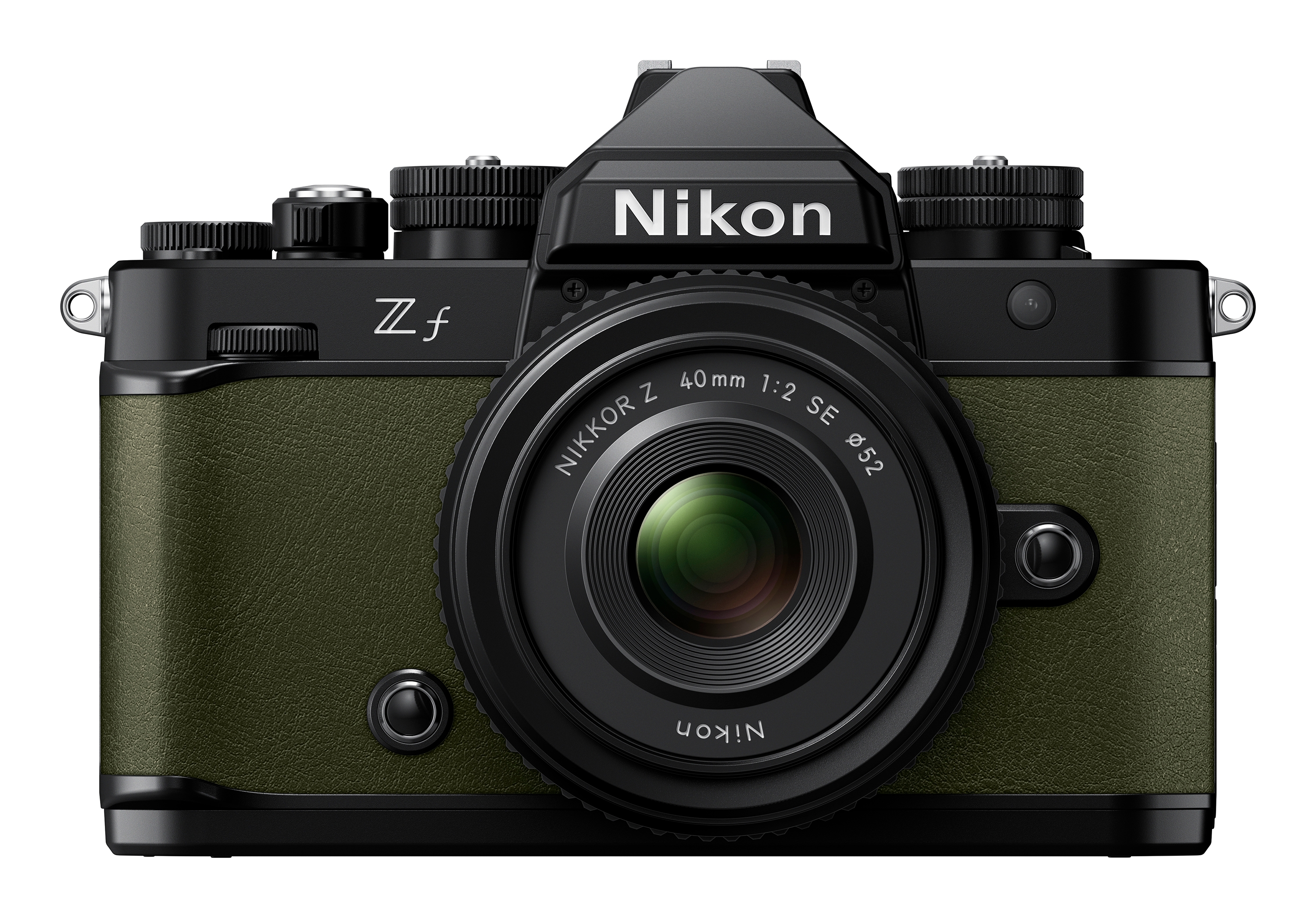
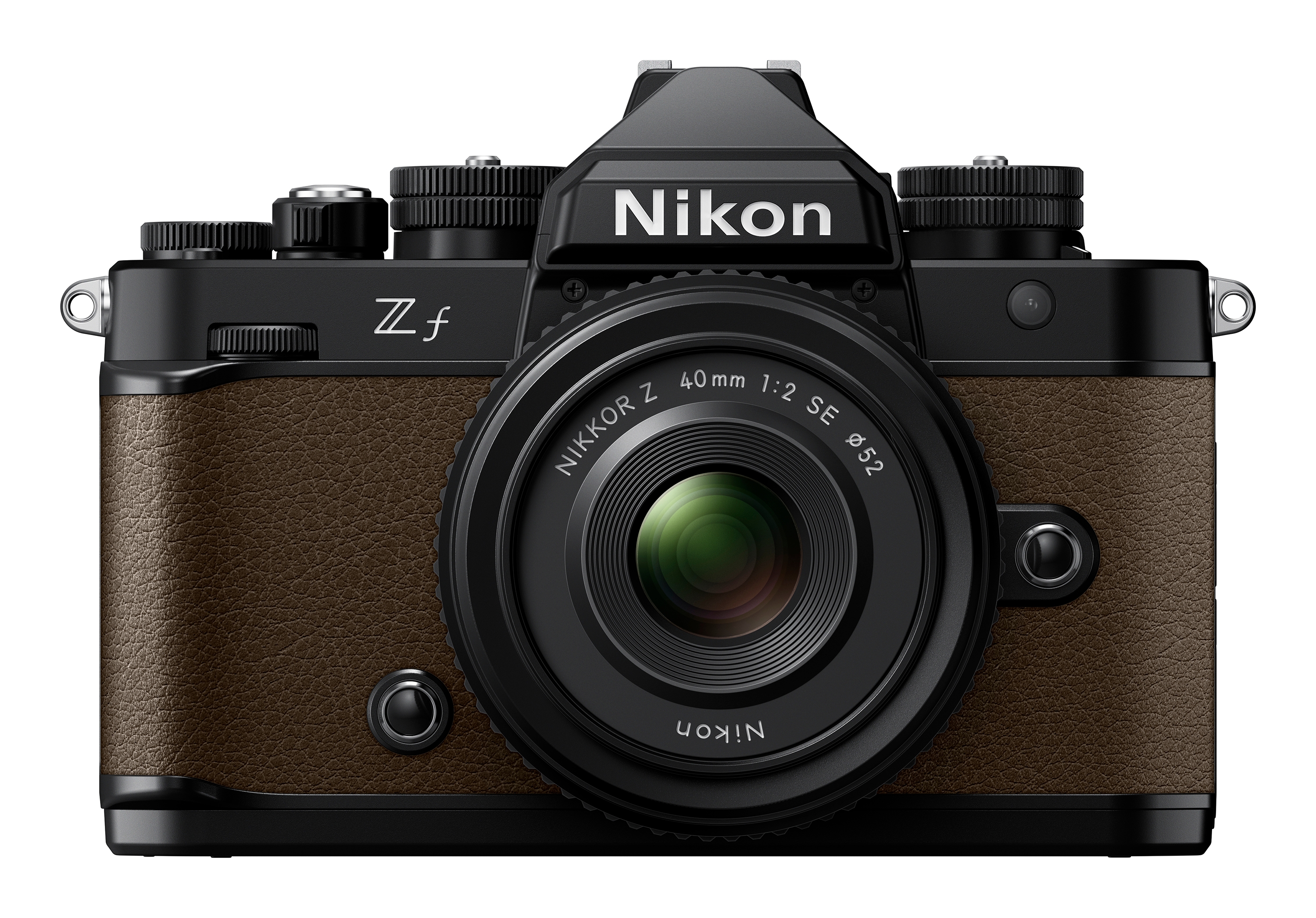
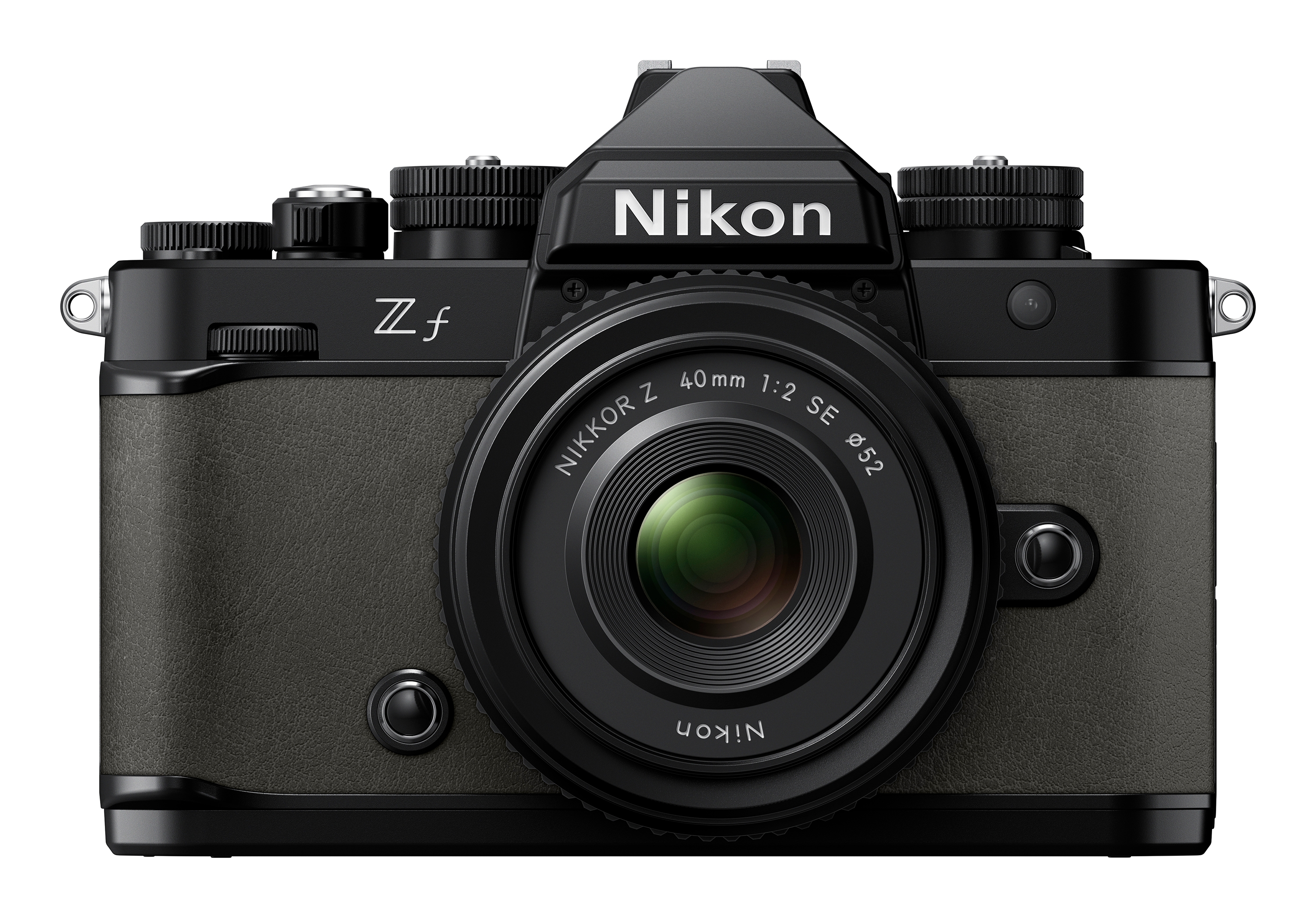
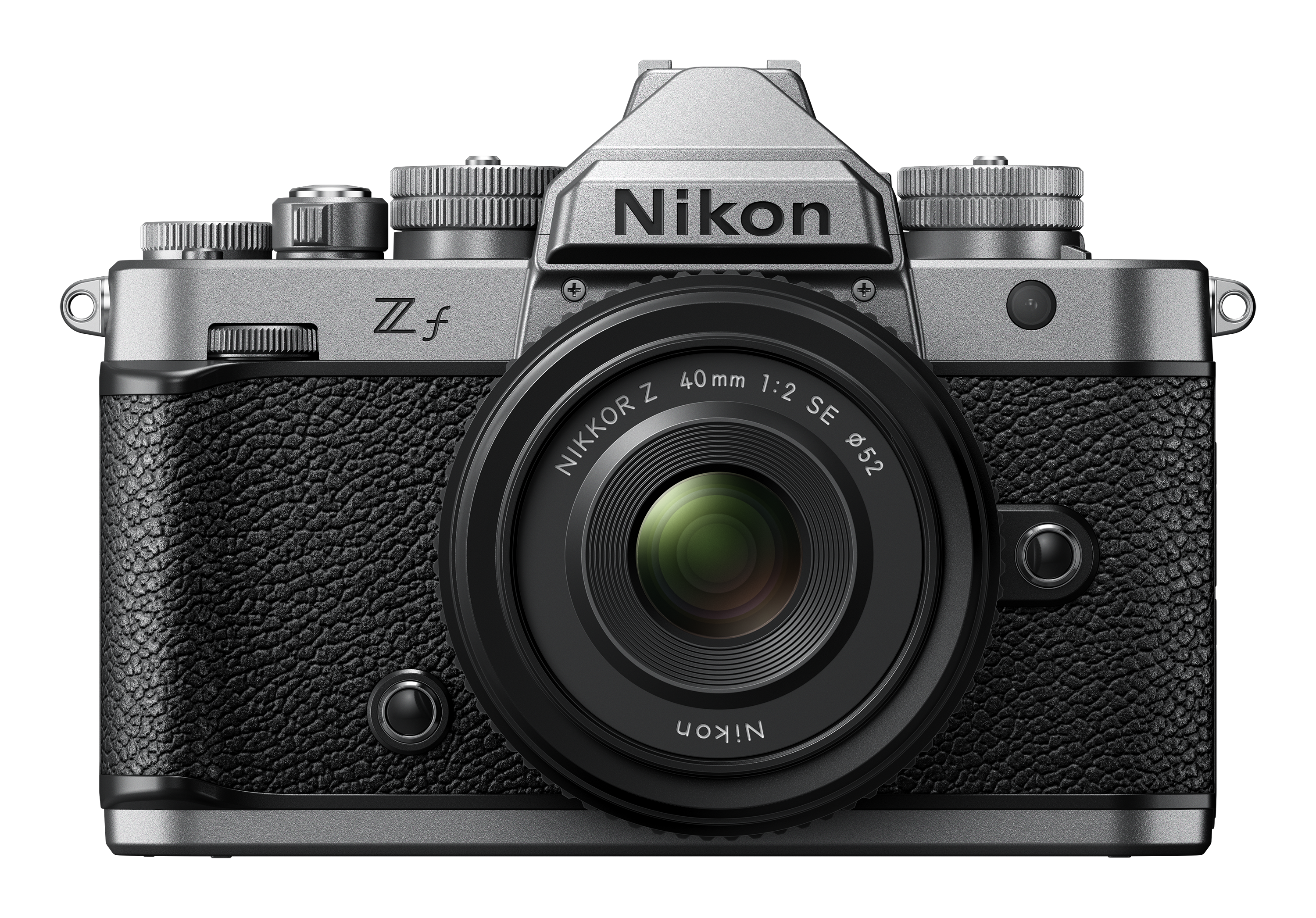
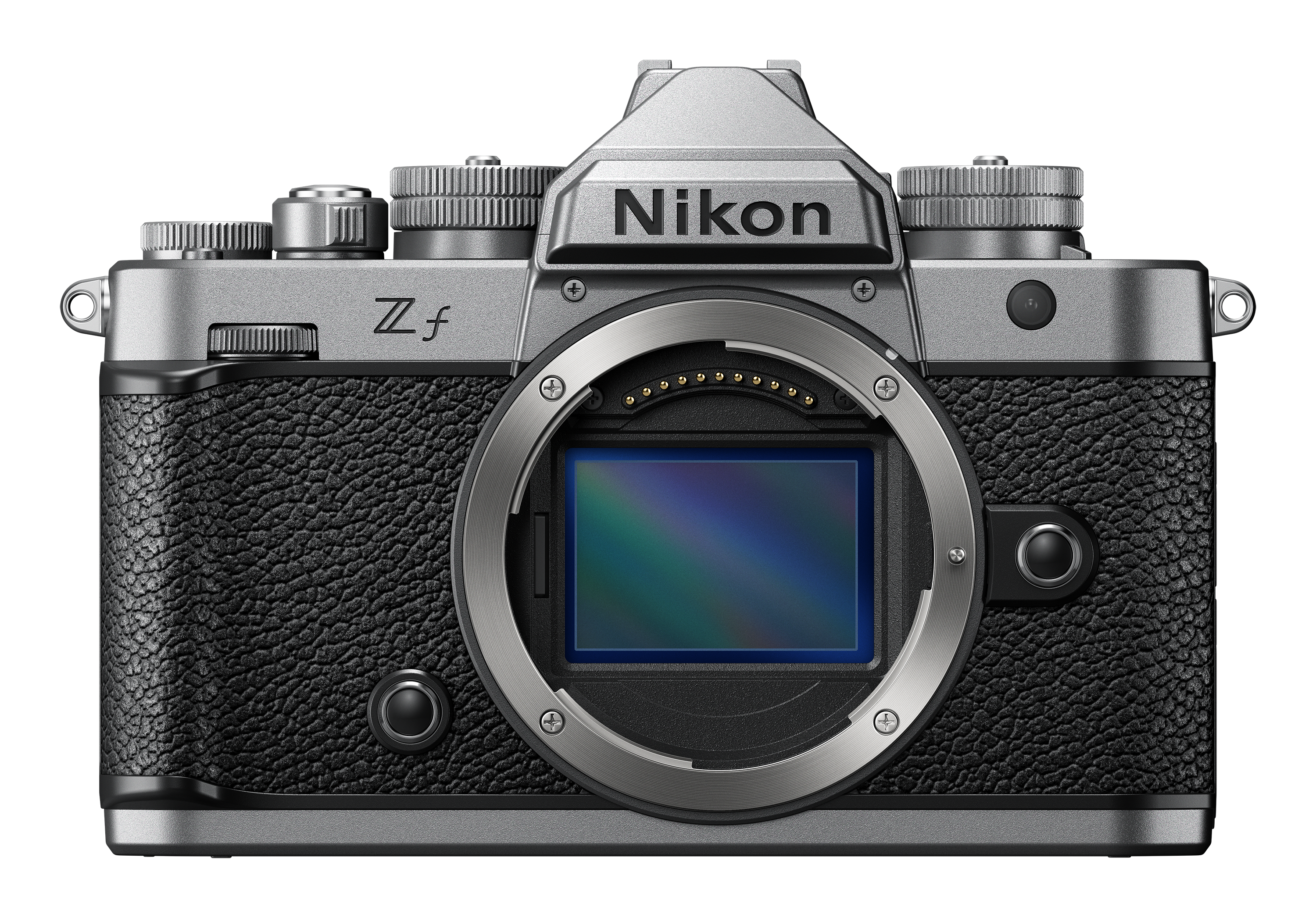
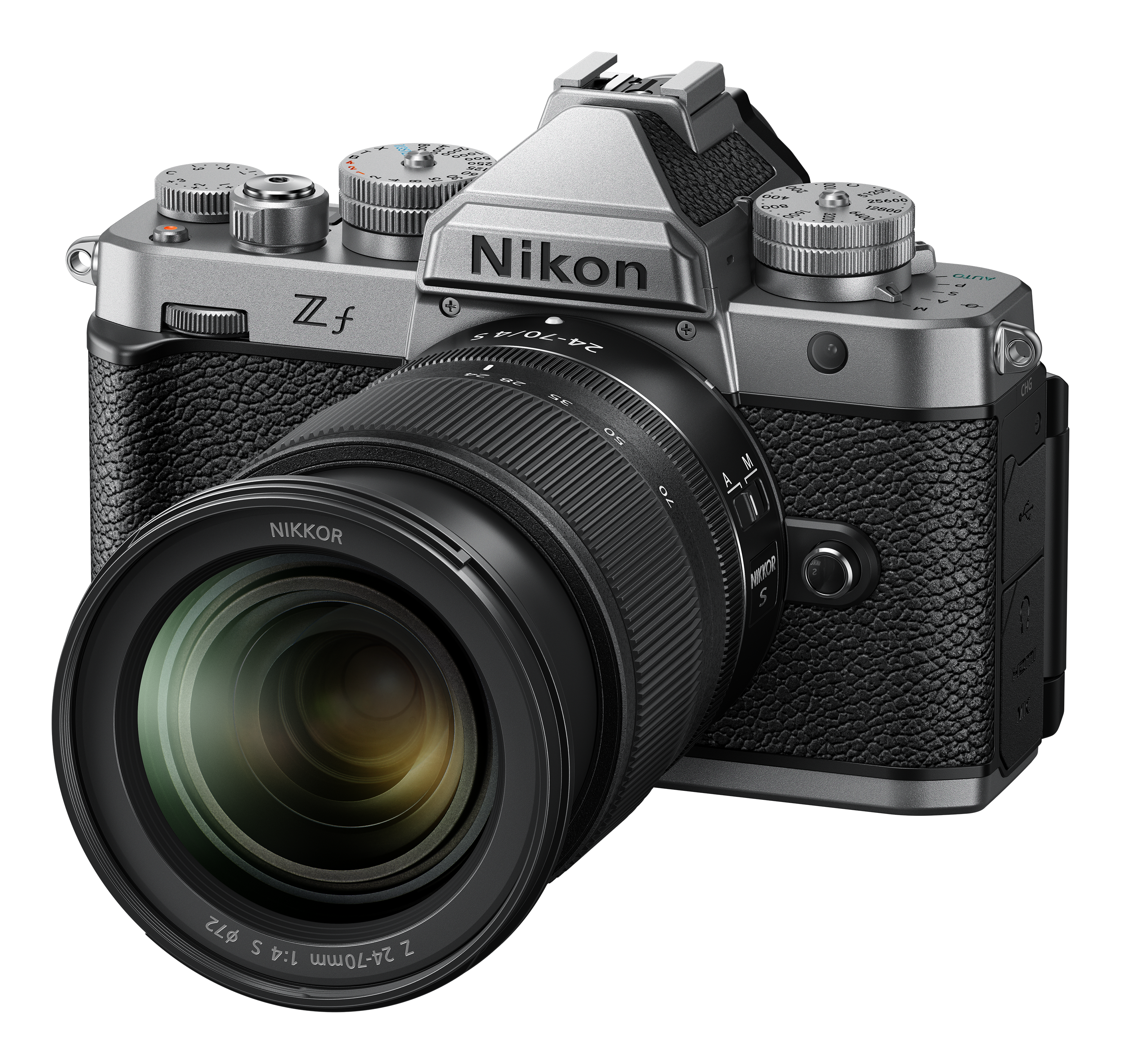
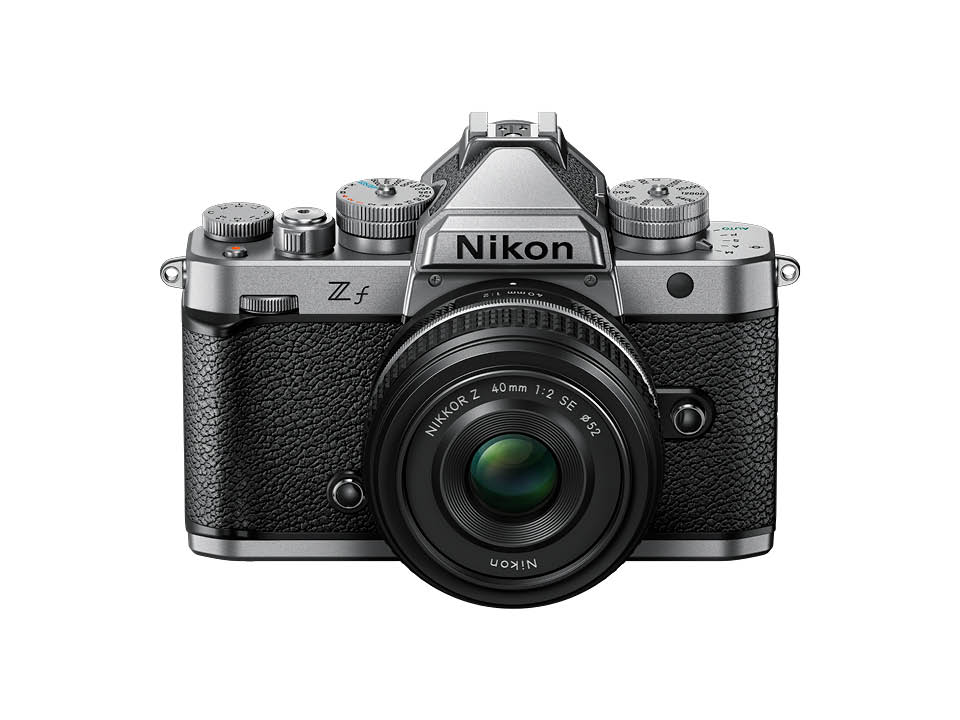
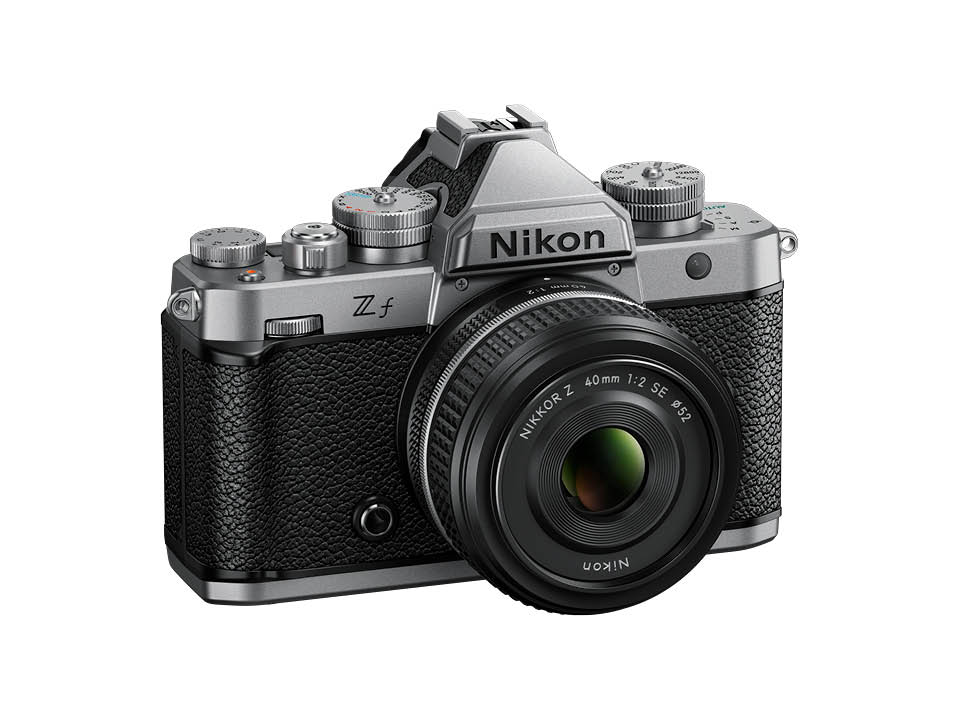
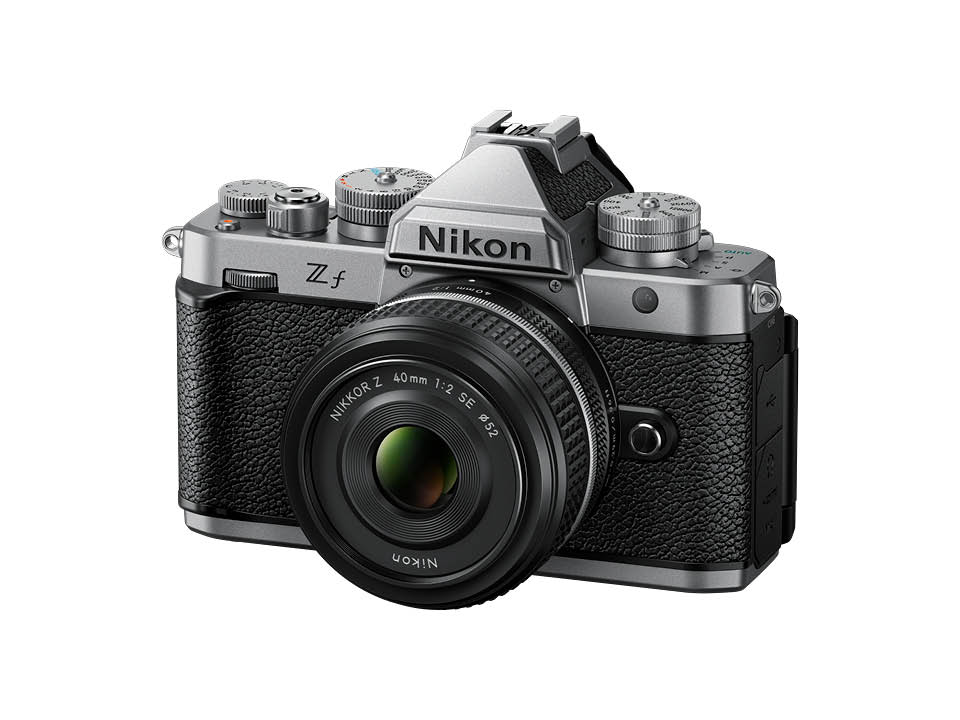
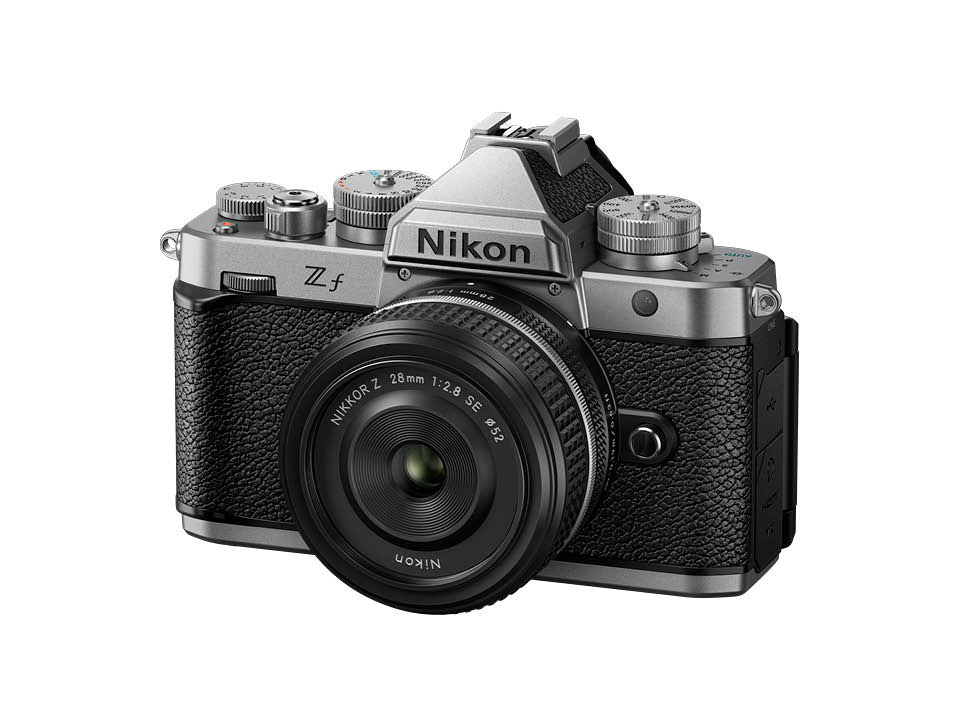
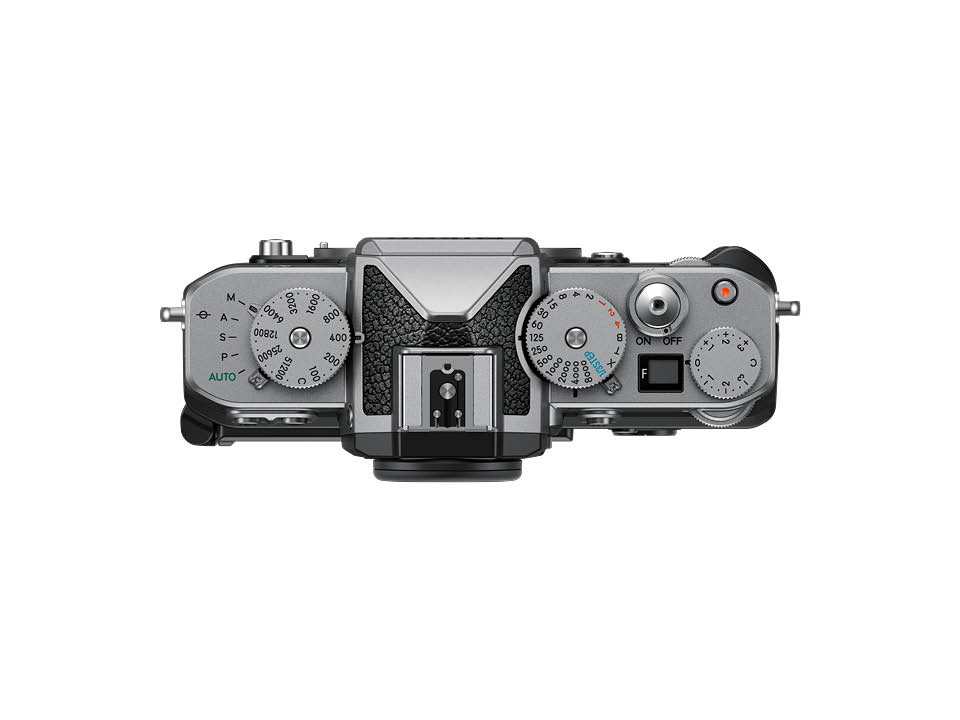
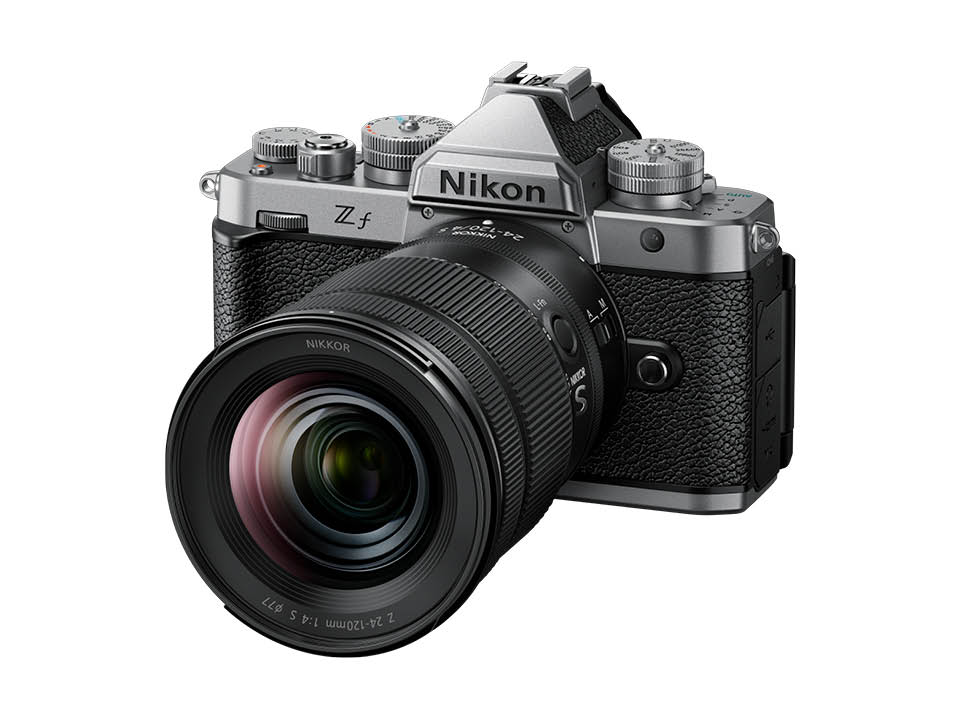
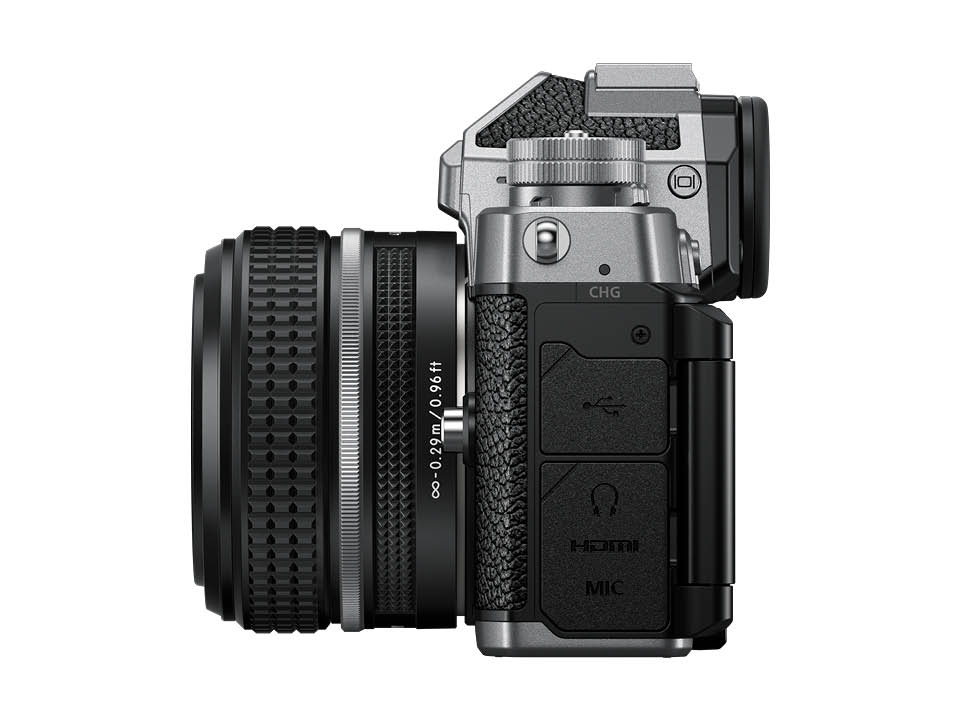
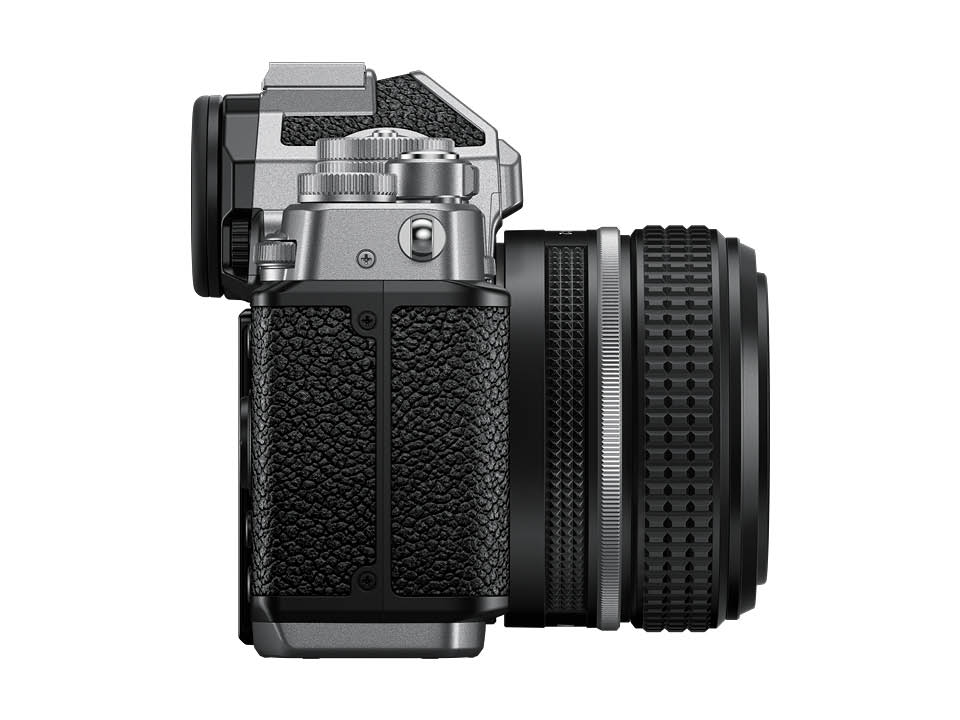
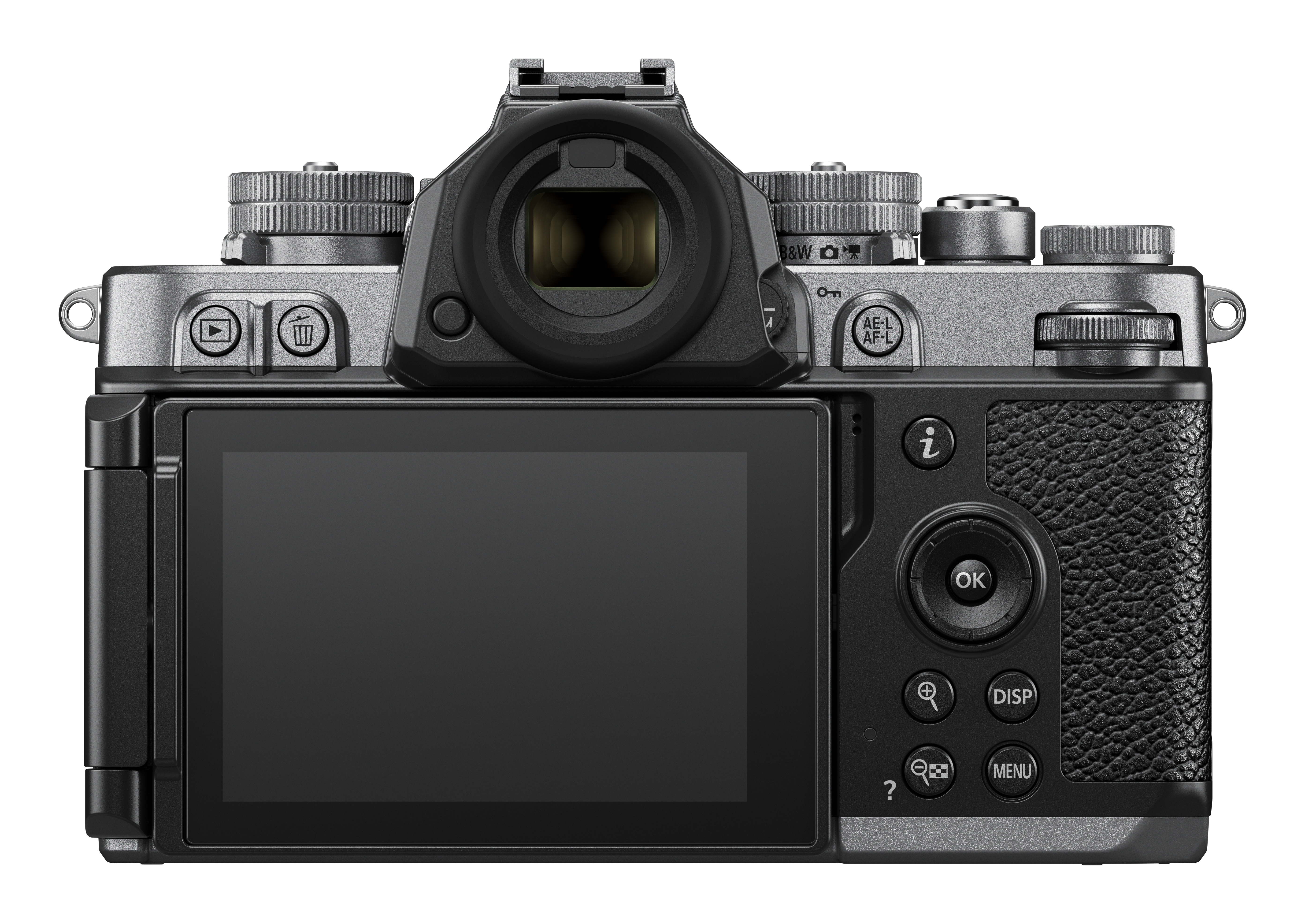
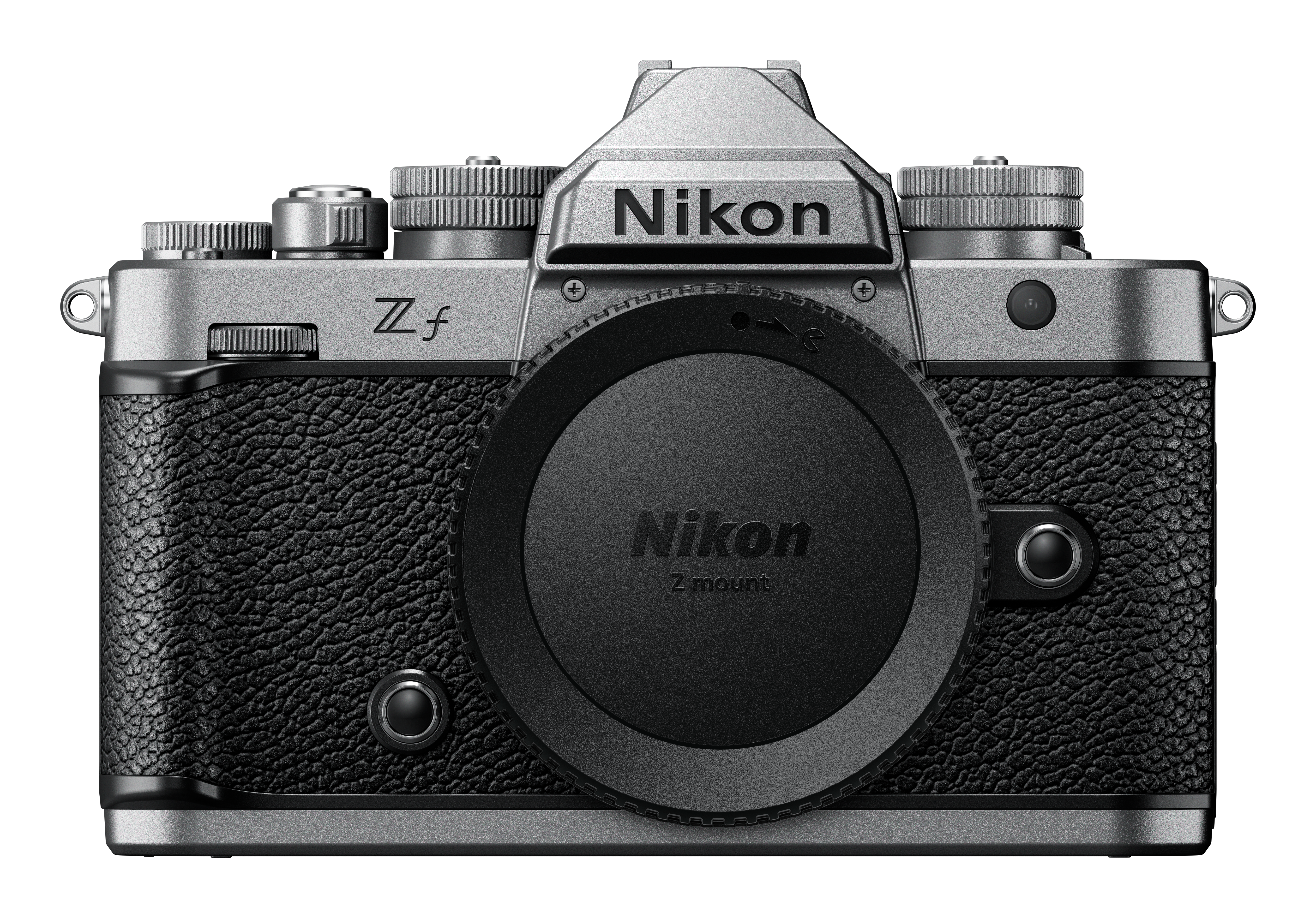
Nikon Z f · Nikon UK body-only photograph, silver/black exterior
Nikon · Nikon Z
Z f
A full-frame mirrorless camera combining an FM2-inspired body and brass exposure dials with EXPEED 7 processing, subject detection and five-axis stabilisation.
- Type
- Mirrorless
- Sensor
- Full frame
- Megapixels
- 24.5
- Lens
- Nikon Z mount
- Video
- 3840 × 2160 at 60 fps
- Body weight
- 630 g
What reviewers say
Both enjoy the retro design, physical controls and capable autofocus, and find the camera offers substantial modern performance behind its traditional appearance. TechRadar particularly praises stabilisation and manual-focus aids, but finds the small grip poorly balanced with large lenses and the storage formats restrictive. Photography Blog praises the improved focusing and versatile screen, while finding the matching 40mm Special Edition lens less solidly built than the body.
From photographyblog.com and techradar.com
Specifications
Report a wrong or missing specImage and sensor
- Camera type
- Mirrorless
- Sensor format
- Full frame
- Sensor type
- Back-illuminated CMOS
- Sensor dimensions
- 35.9 × 23.9 mm
- Effective resolution
- 24.5 MP
- Largest image
- 6048 × 4032
- RAW recording
- Yes
- Standard ISO range
- 100–64000
- Sensor detail
- 25.28 million total pixels; sensor cleaning and image-dust-off data for NX Studio. Pixel-shift frames require software combination and a static camera/subject; no composite resolution is substituted for the single-frame main figure.
- Image formats
- 14-bit NEF RAW with lossless or high-efficiency compression; JPEG and HEIF; RAW plus JPEG or HEIF. Firmware 3.00 adds adjustable Film Grain for stills/video with movie restrictions.
- ISO detail
- Standard still-image ISO 100–64000, expandable to equivalent ISO 50–204800; HLG starts at ISO 400. Movie ISO 100–51200 with format-dependent expansion; physical dial and command-dial ranges differ.
- Image processor
- EXPEED 7
Lens and shooting
- Lens mount
- Nikon Z mount
- Stabilisation
- Sensor shift
- Maximum continuous burst
- 30 fps
- Lens detail
- NIKKOR Z lenses; NIKKOR F lenses require an adapter and retain model-dependent restrictions. Manual-focus subject detection and focus confirmation available with compatible setups.
- Autofocus
- Hybrid phase/contrast detection; 273 single-point or 299 auto-area positions in FX stills; subject detection and 3D tracking. Nikon's −10 EV sensitivity uses AF-S, ISO 100, f/1.2 and 20°C.
- Shutter
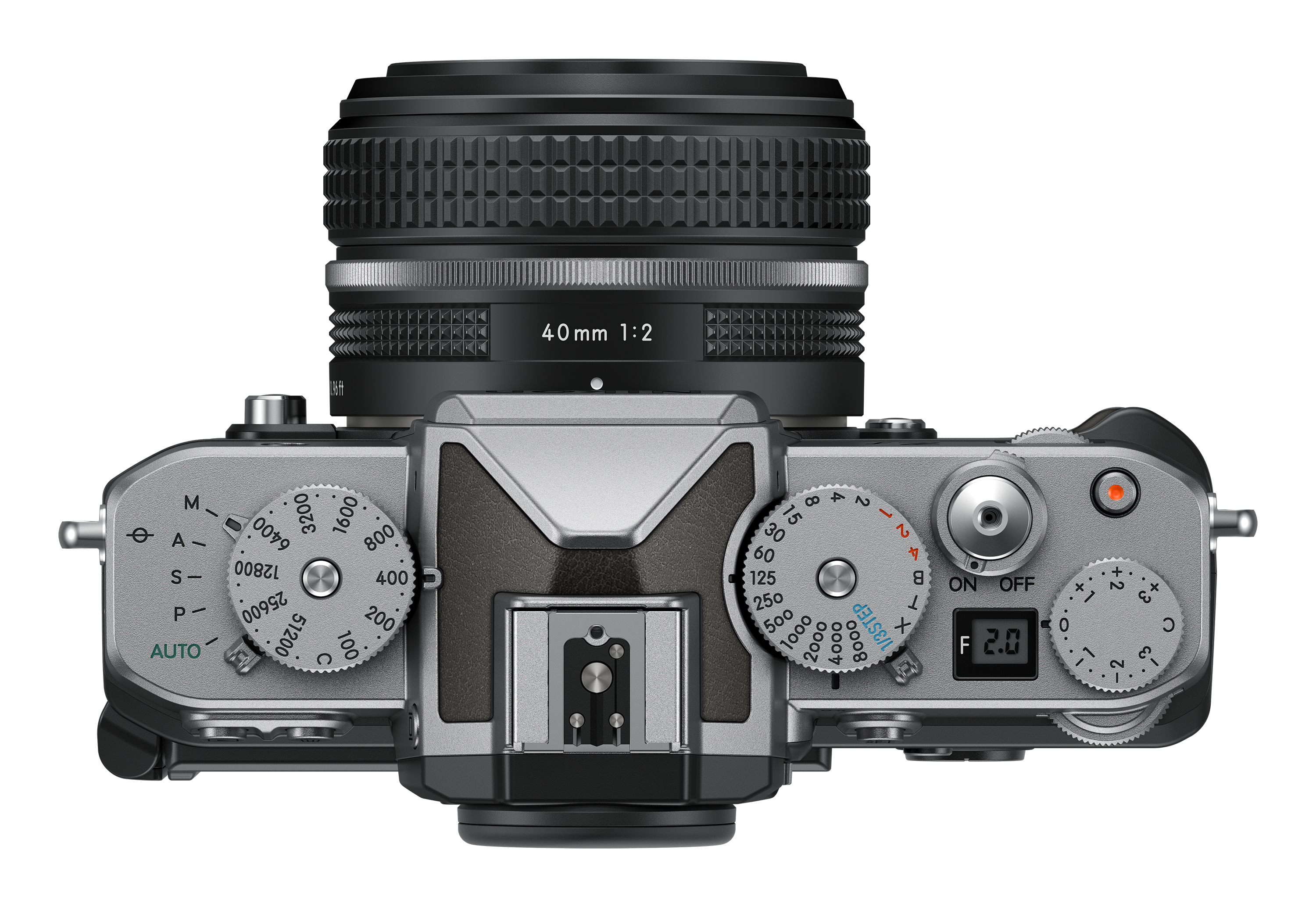
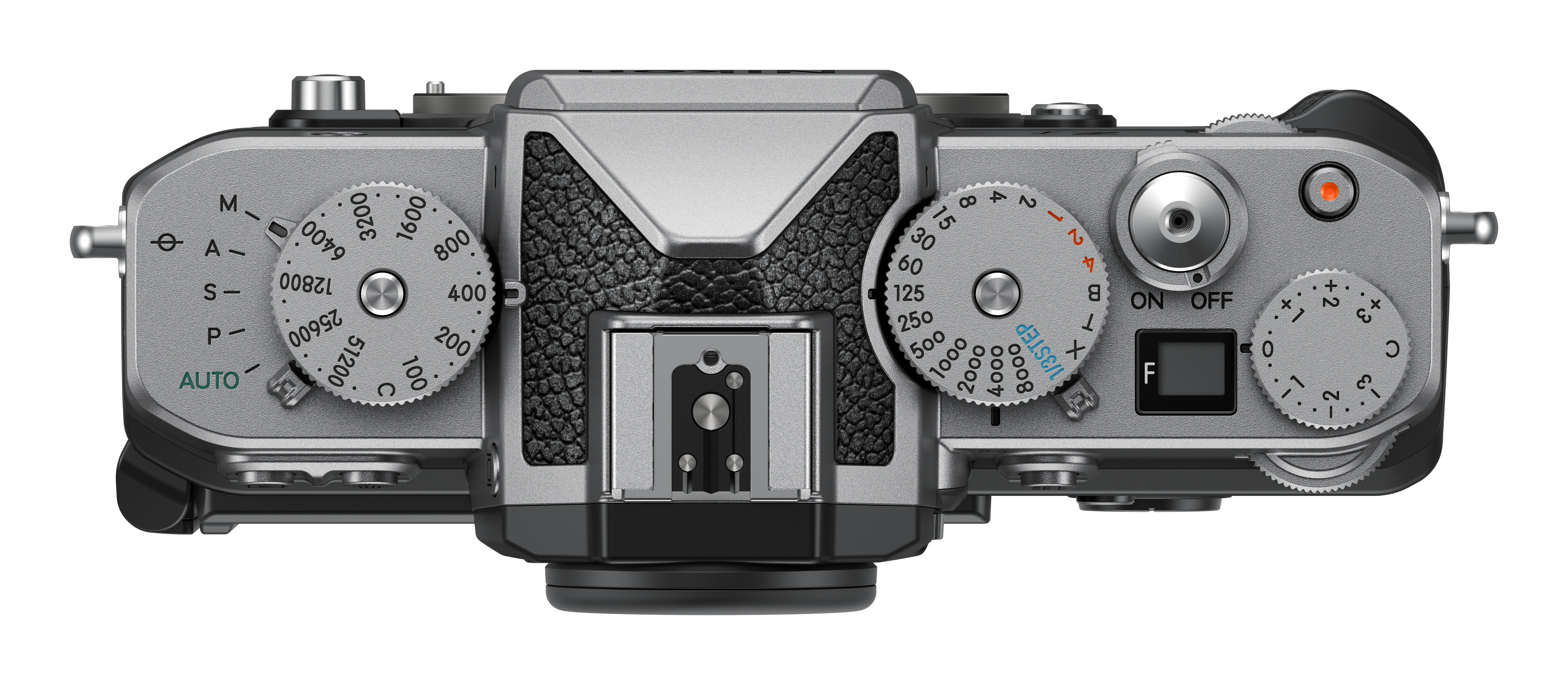
- Mechanical, electronic front-curtain and electronic; 1/8000 to 30 seconds using command dial, with Bulb/Time and manual extension to 900 seconds. Physical dial covers 1/8000 to 4 seconds plus special settings. Flash sync 1/200 and Auto FP support; threaded shutter button accepts a cable release.
- Burst detail
- Ordinary high approximately 7.8 fps and extended high up to 14 fps, subject to format restrictions. C15/C30 high-speed capture reaches 30 fps with pre-release capture for JPEG normal; it is not a 30 fps RAW mode.
- Stabilisation detail
- Five-axis sensor shift; Nikon claims 8 stops under CIPA with NIKKOR Z 24–120mm f/4 S at the telephoto end in NORMAL mode. Focus Point VR has compatible-lens and AF-area restrictions; electronic video VR available.
- Flash
- No built-in flash; ISO 518 accessory shoe and compatible external i-TTL Speedlights
- Exposure controls
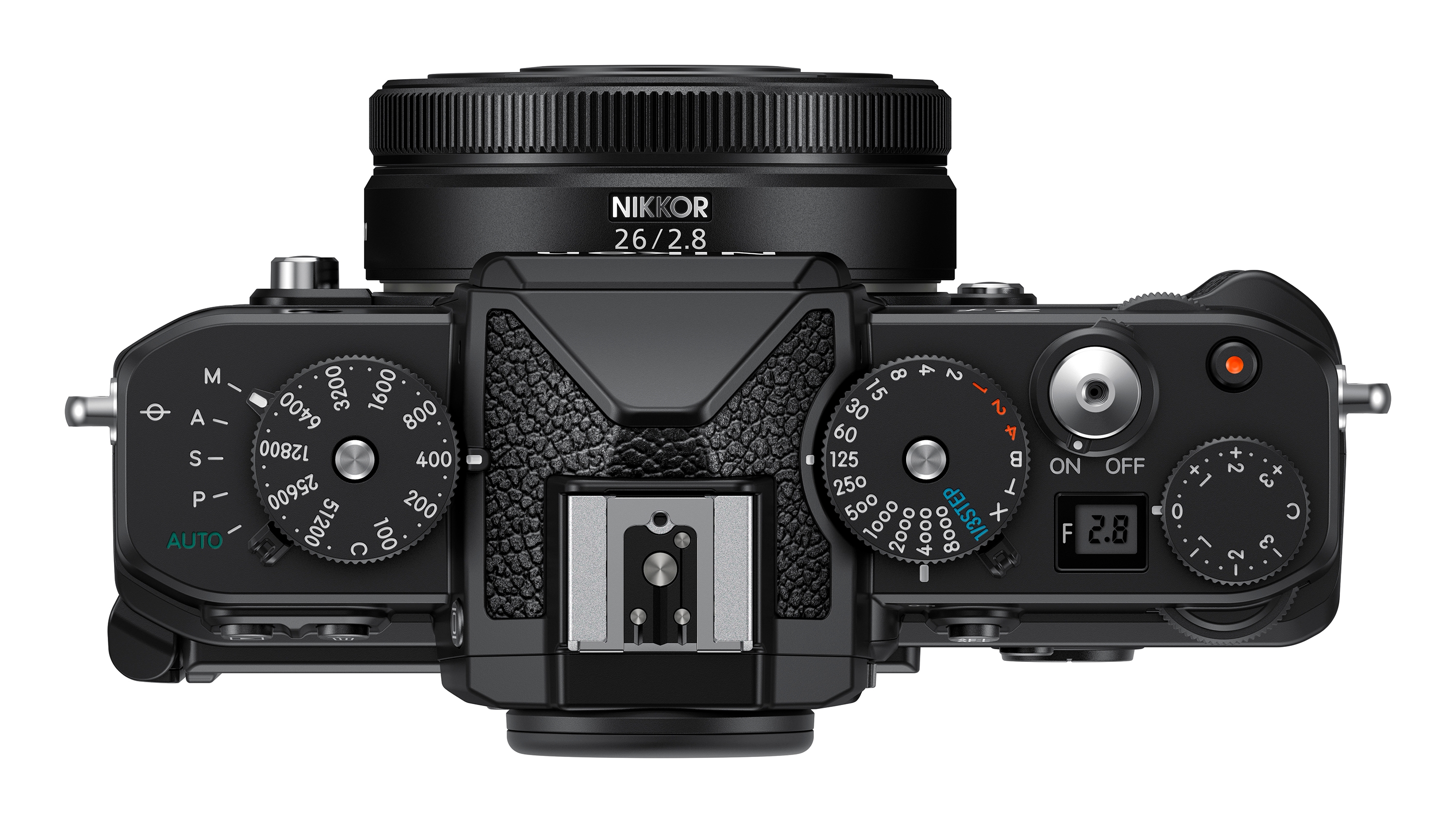
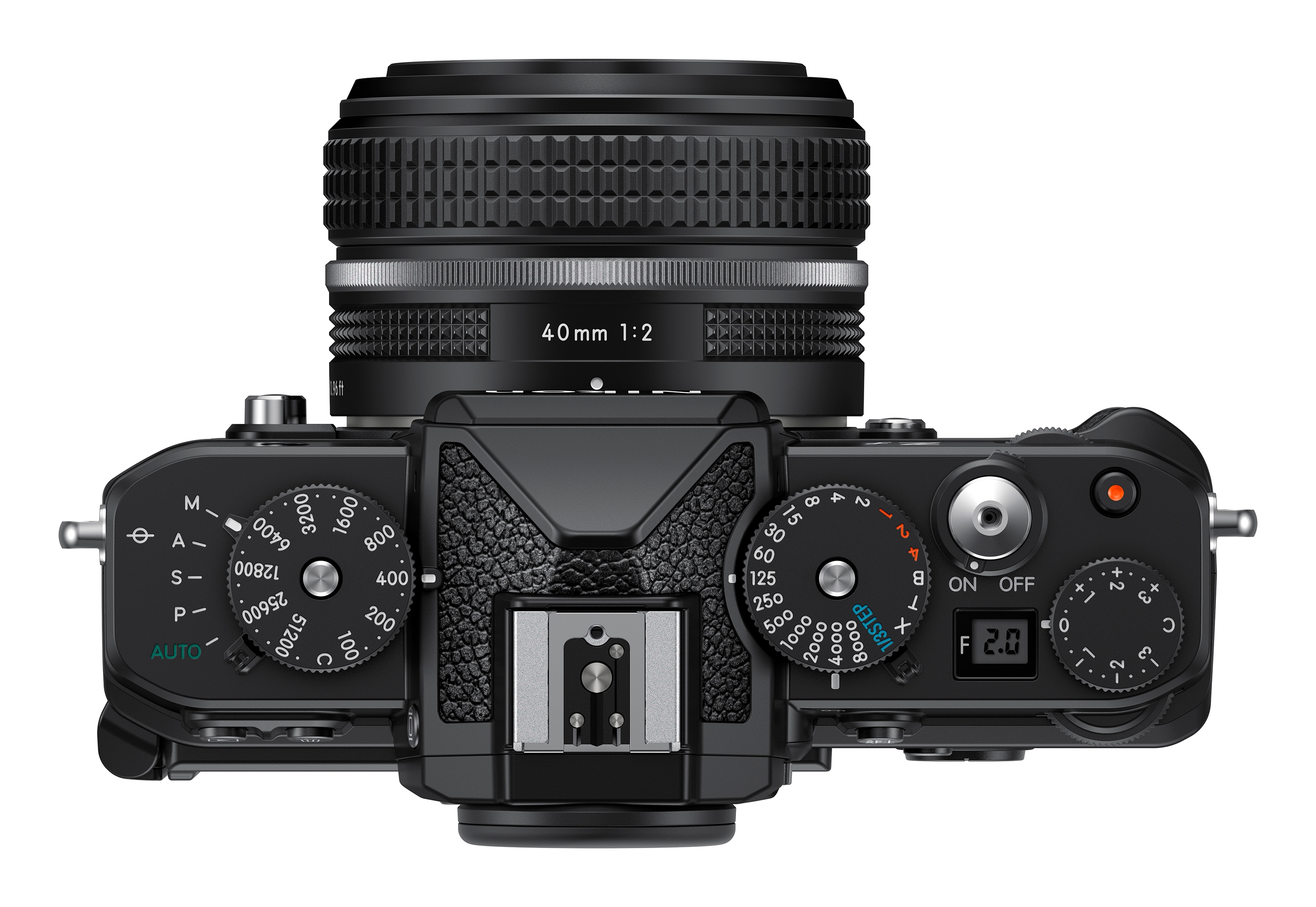
- Auto and P/S/A/M; physical compensation dial ±3 EV, command control ±5 EV in C setting; dedicated black-and-white switch
Video
- Highest video resolution
- 3840 × 2160 at 60 fps
- Video detail
- UHD 3840 × 2160 up to 60p in cropped DX mode; full-frame UHD up to 30p oversampled from 6K. Full HD up to 120p. H.265 8/10-bit and H.264, N-Log, HLG, waveform and timecode; current maker table lists Hi-Res Zoom. Maximum recording time 125 minutes, subject to temperature, power and media conditions; no internal RAW video listed.
- Audio
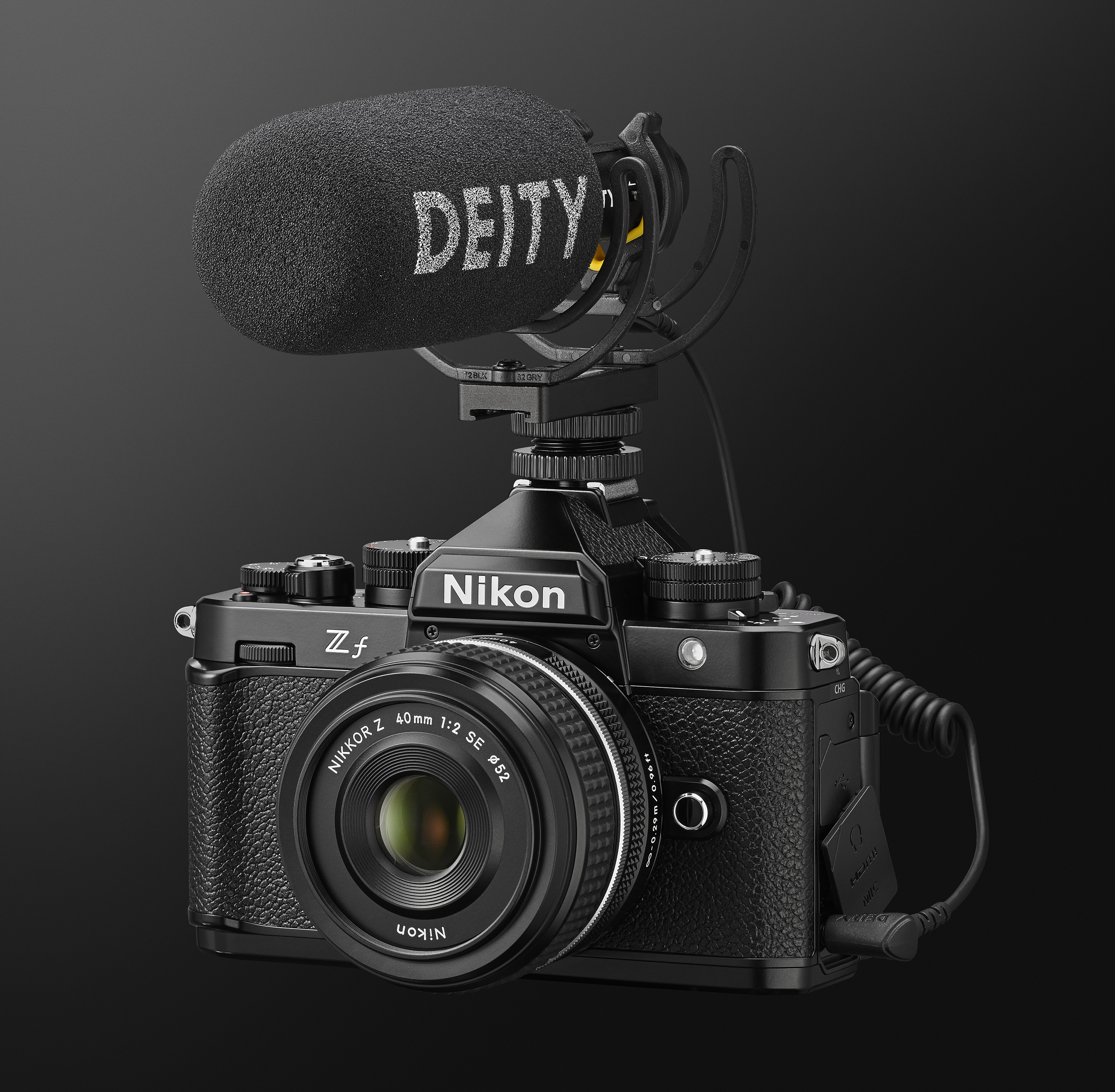
- Built-in stereo microphones; PCM 48 kHz/24-bit for MOV or AAC 48 kHz/16-bit for MP4; external microphone input and headphone monitoring
Screen and viewfinder
- Viewfinder
- Electronic
- Screen size
- 3.2″
- Screen dots
- 2,100,000
- Touchscreen
- Yes
- Tilting screen
- Yes
- Display detail
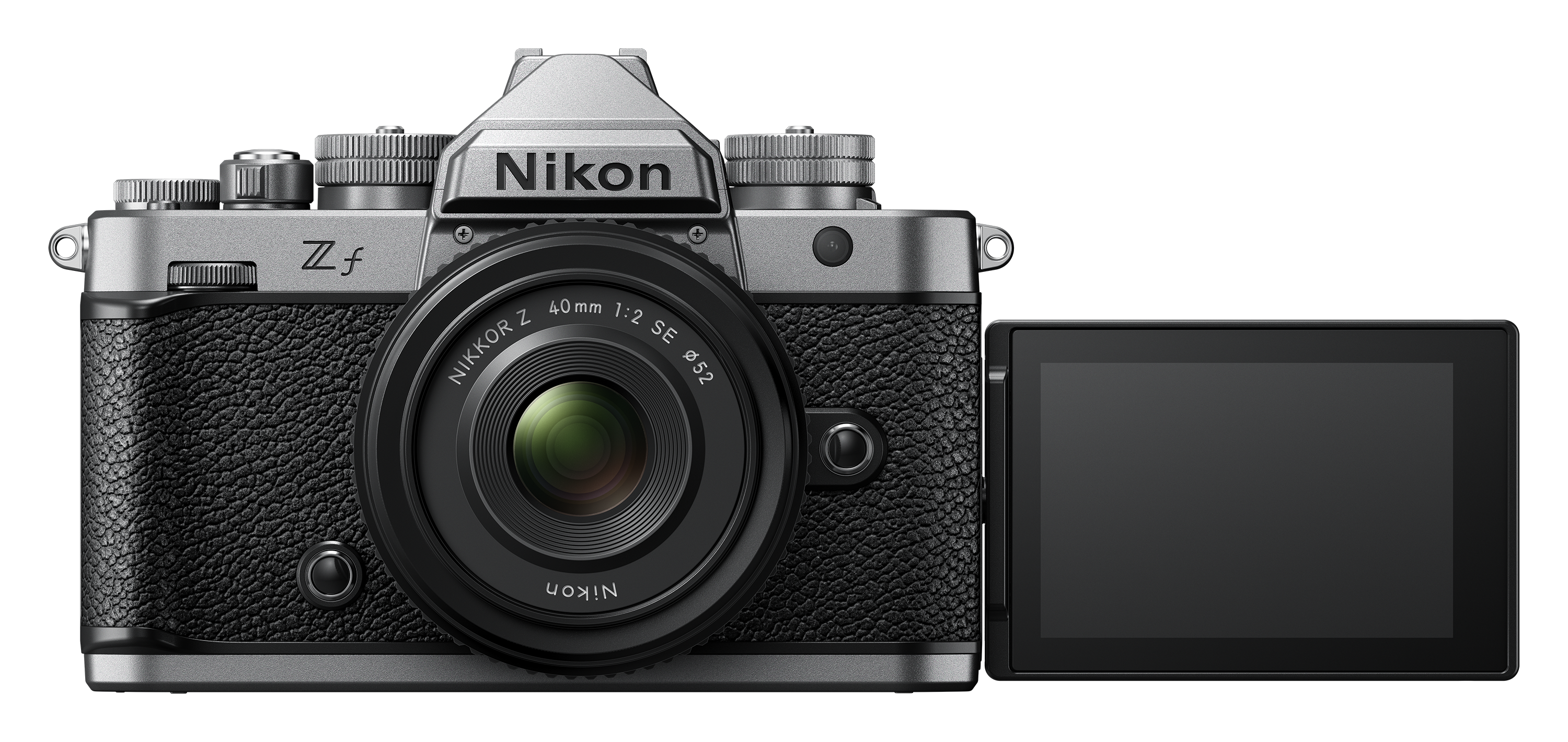
- Vari-angle TFT with approximately 100% coverage and 170° viewing angle; Touch Fn supports settings and focus-point adjustment while using the viewfinder; dots count subpixels
- Viewfinder detail
- 0.5-inch Quad-VGA OLED, approximately 3.69 million dots, 100% coverage, 0.8× magnification and 21 mm eyepoint
Connections and design
- Wi-Fi
- Yes
- Bluetooth
- Yes
- Battery life (maker's claim)
- 430 photographs
- Body weight
- 630 g
- Release detail
- Nikon US states first availability in mid-October 2023; main retains month precision. The later silver exterior is the same camera hardware, and Nikon explicitly states firmware 3.00 supports both original and silver editions.
- Recording media
- Primary UHS-II SD/SDHC/SDXC slot and secondary UHS-I microSD/microSDHC/microSDXC slot; overflow, backup and separate format recording
- Ports
- USB-C SuperSpeed USB, Micro HDMI Type D, 3.5 mm microphone and headphone sockets
- Wireless connections
- Wi-Fi IEEE 802.11a/b/g/n/ac and Bluetooth 5.0; SnapBridge. Nikon Imaging Cloud and automatic firmware updates supported by current firmware.
- Battery life detail
- EN-EL15c; CIPA approximately 430 monitor shots with power saving enabled or 380 without; EVF 410 with power saving or 360 without. Tested with NIKKOR Z 40mm f/2. Movie battery-life claim approximately 90 minutes; EN-EL15b/15a compatibility gives shorter endurance.
- Charging
- USB charging and power delivery with compatible equipment; optional EH-8P/EH-7P; EN-EL15c/15b rechargeable in camera. Nikon UK states no charger included.
- Dimensions
- Approximately 144 × 103 × 49 mm
- Weight detail
- Approximately 630 g body only or 710 g with battery/card, excluding body cap and shoe cover; TechRadar's body-only narrative uses the battery/card figure, so main follows Nikon.
- Materials
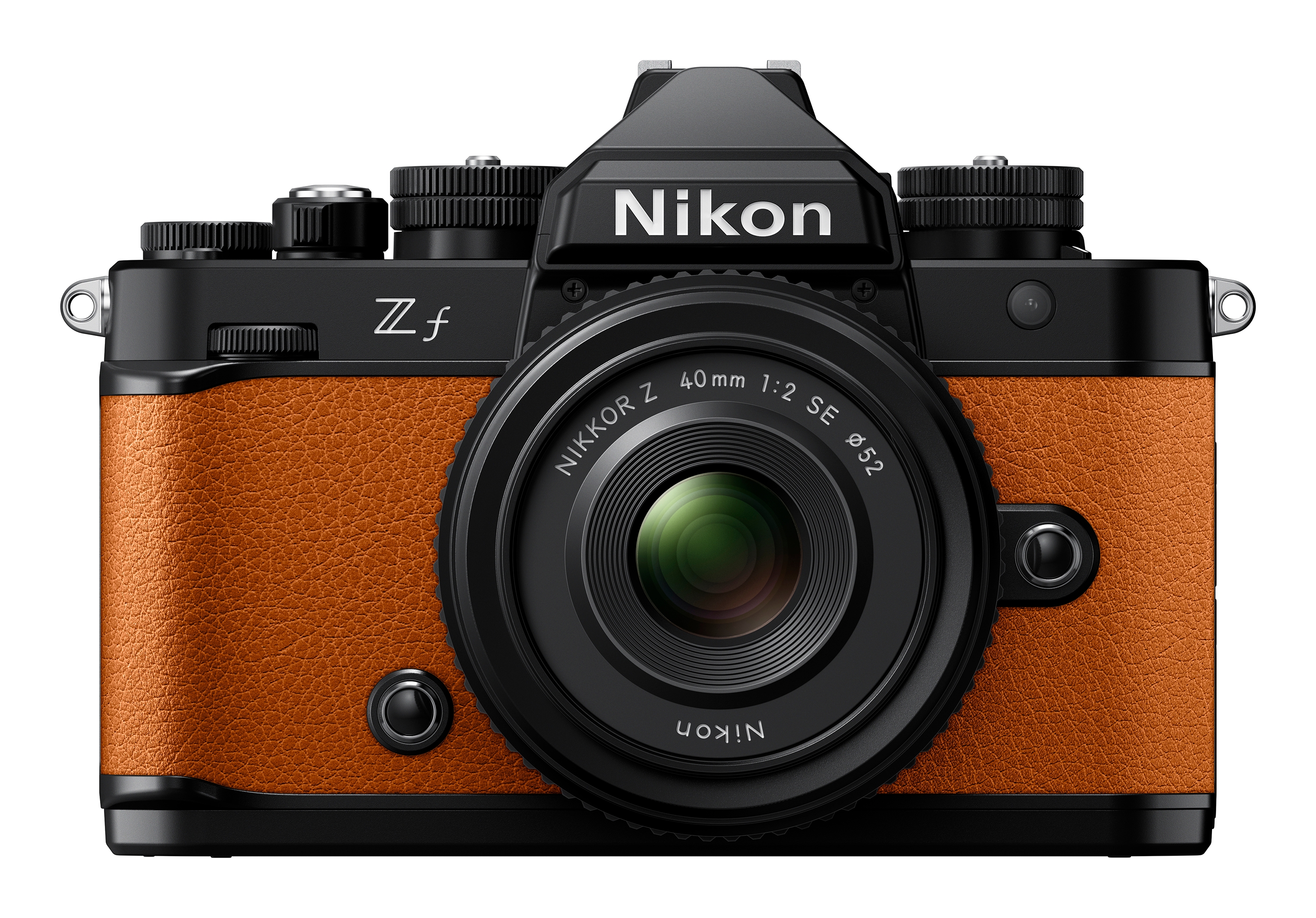
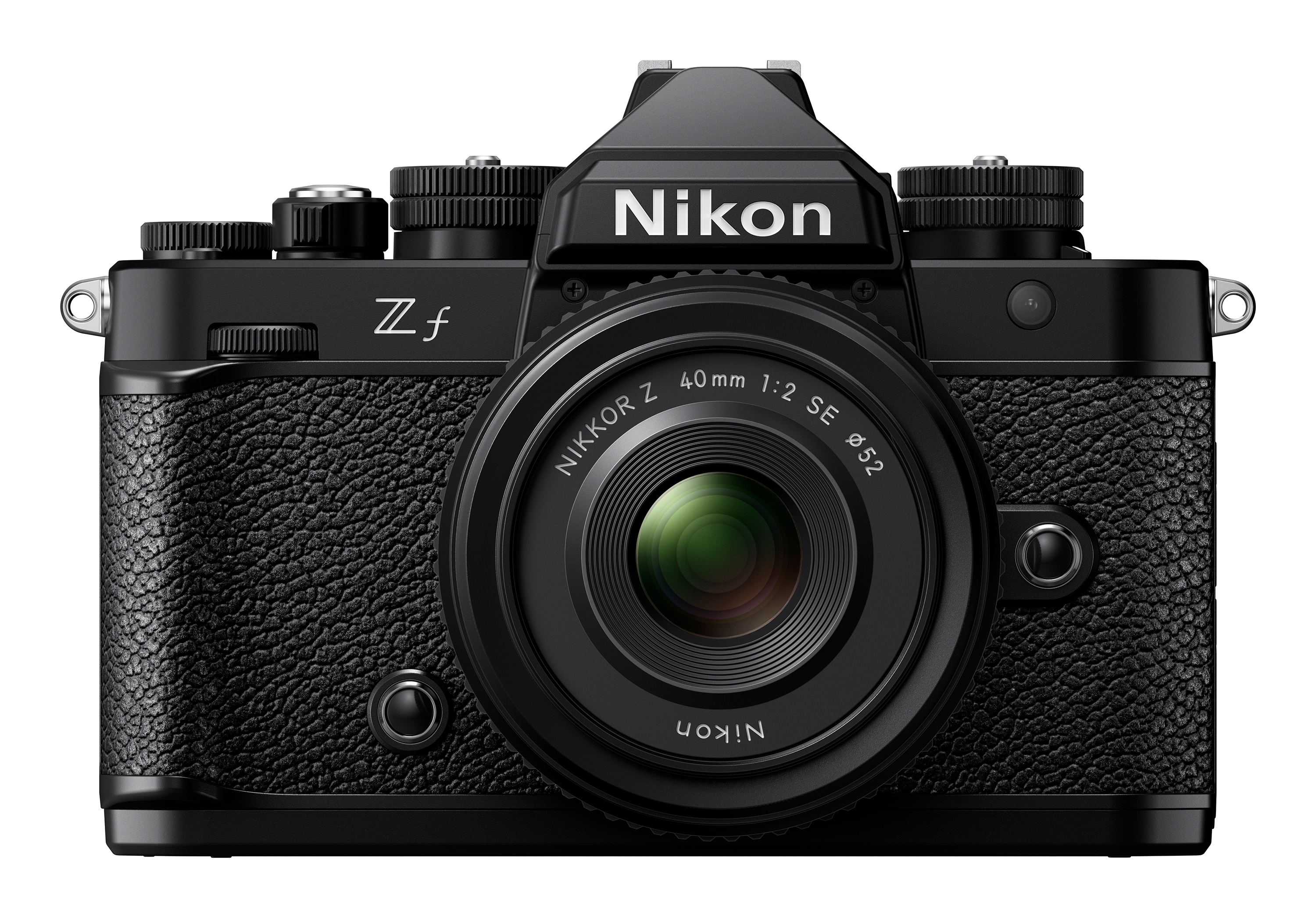
- Magnesium-alloy front and top covers, brass control dials and embossed artificial leather; dust- and drip-resistant construction
- Colours
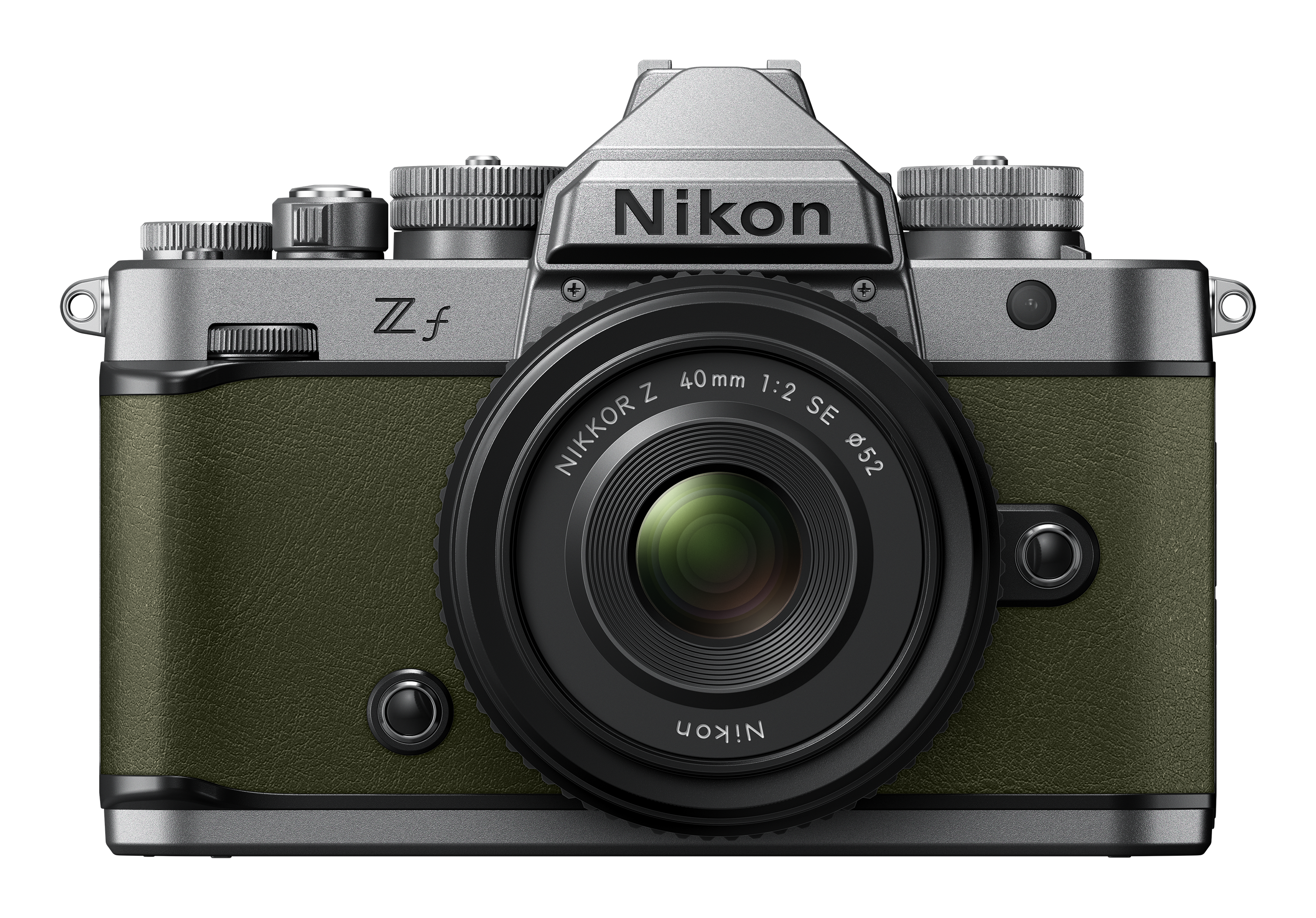
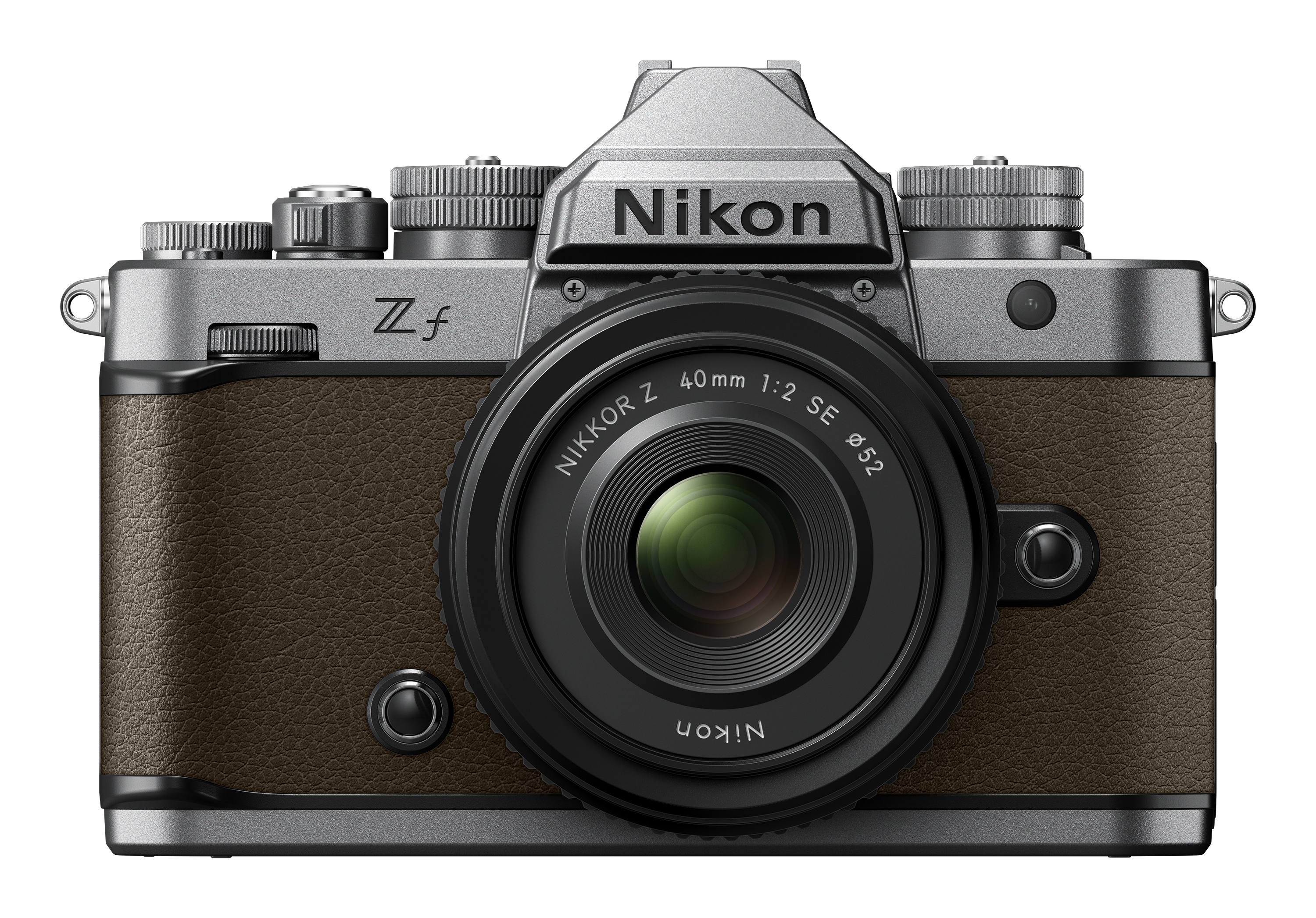
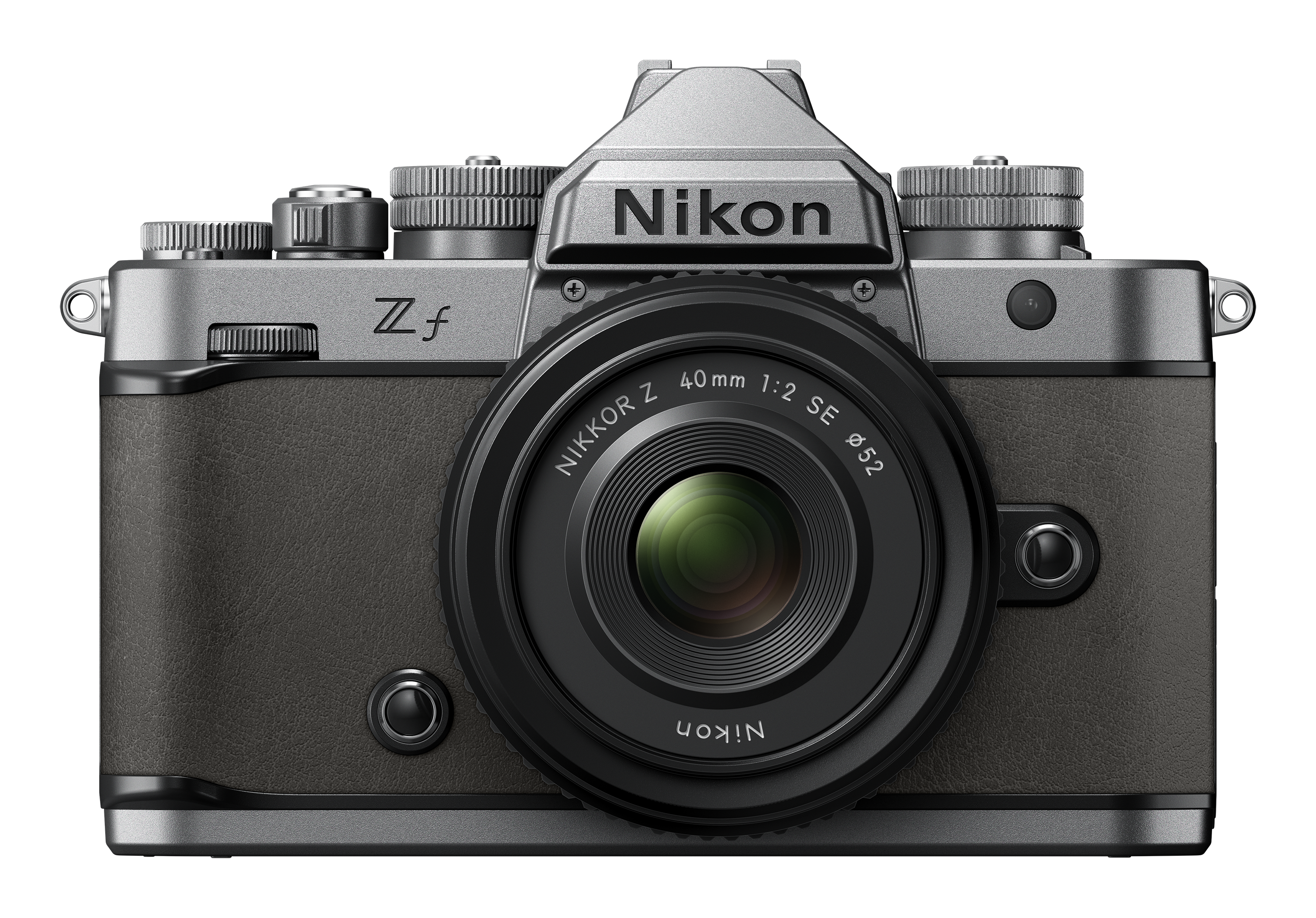
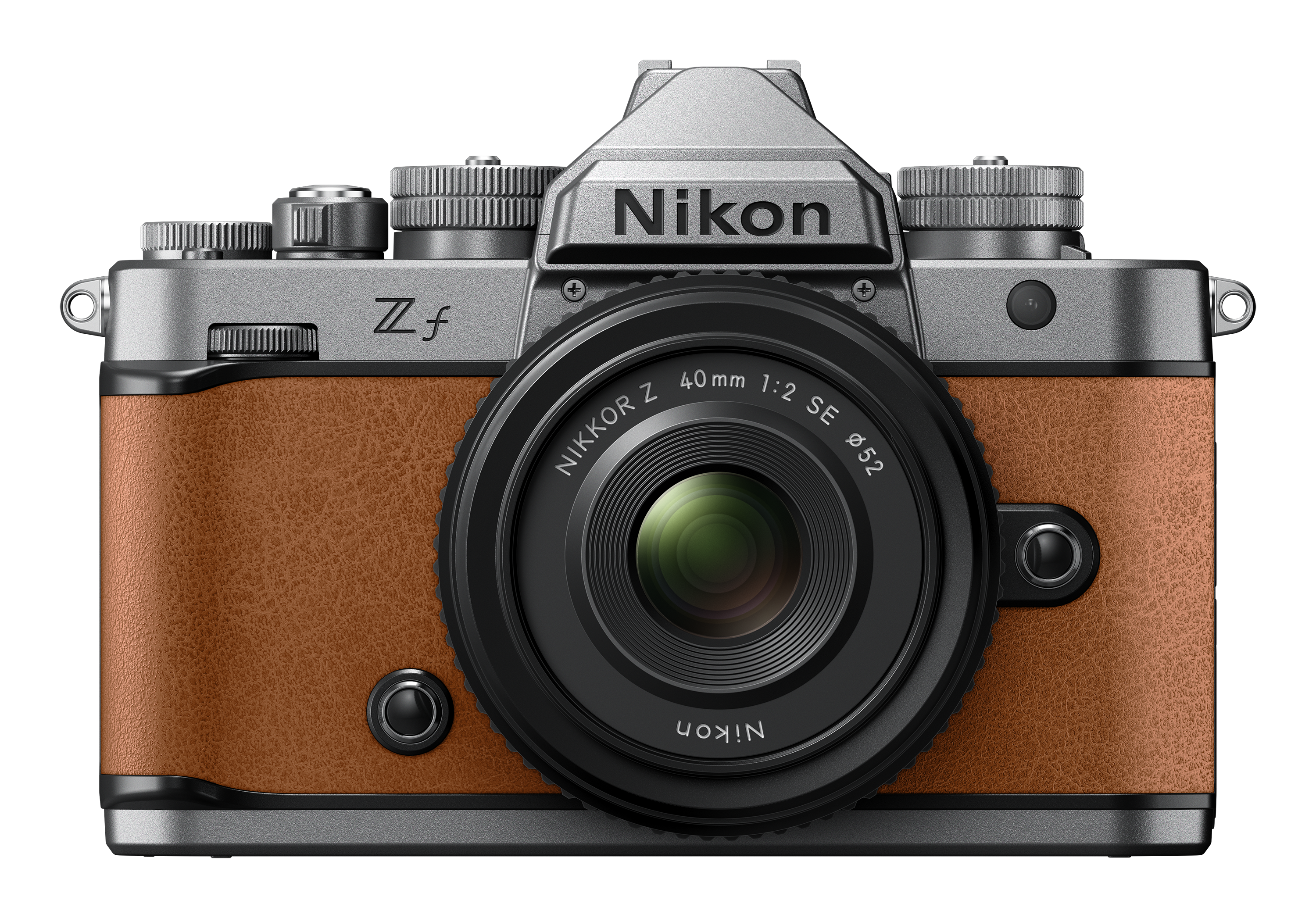
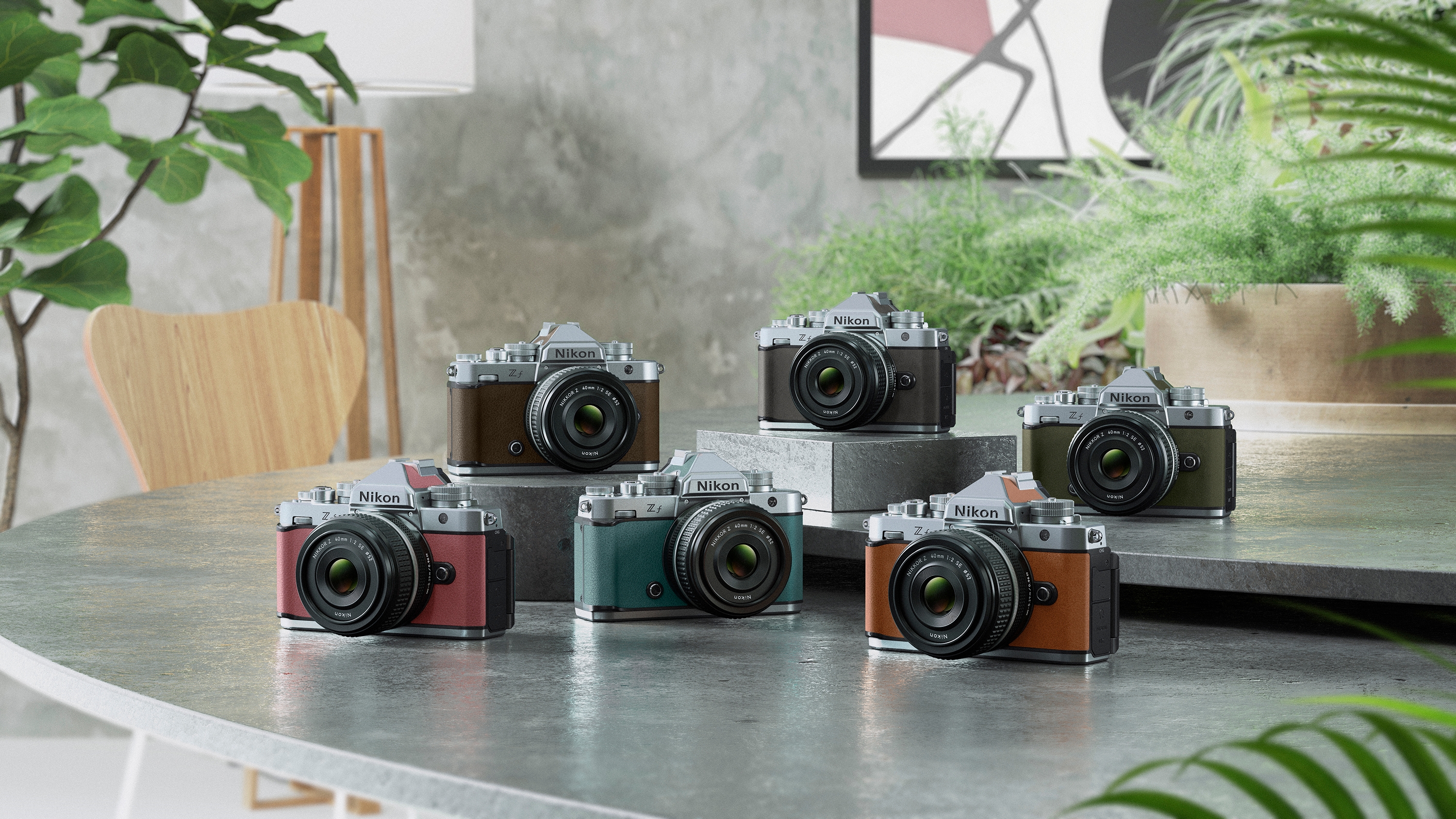
- Original black and later silver finishes with maker-specific exterior colour options; cosmetic variants remain one hardware product. Photograph shows the current silver/black finish.
- In the box
- EN-EL15c battery, UC-E25 USB cable, BF-N1 body cap, AN-DC27 strap, BS-1 shoe cover and DK-33 eyepiece
Pros and cons
Pros
- Physical exposure dials and vari-angle touchscreen
- Five-axis stabilisation and subject-detection manual-focus assistance
- Internal 10-bit N-Log video
Cons
- Secondary card slot is UHS-I microSD
- UHD 60p uses a DX crop
Closest rivals
Model | Type | Sensor | Megapixels | Lens | Video | Body weight | Released |
|---|---|---|---|---|---|---|---|
| Mirrorless | Full frame | 24.2 | Canon RF | 3840 × 2160 at 59.94 fps | 414 g | Apr 2023 | |
| Mirrorless | Full frame | 24.2 | L-Mount | 5952 × 3968 at 29.97 fps | 657 g | Jan 2023 | |
| Mirrorless | Full frame | 24.2 | L-Mount | 5952 × 3968 at 29.97 fps | 657 g | May 2023 |


Sources
- nikon.co.uk/en_GB/product/cameras/mirrorless/z-f
- nikon.co.uk/en_GB/product/cameras/mirrorless/z-f-sl-VOA123AE
- nij.nikon.com/products/lineup/mirrorless/zf/spec.html
- nikonusa.com/press-room/z-f-wwa
- nikonusa.com/press-room/in-camera-film-grain-feature
- photographyblog.com/reviews/nikon_zf_review
- techradar.com/cameras/mirrorless-cameras/nikon-zf-review
Photo: Nikon UK body-only photograph, silver/black exterior
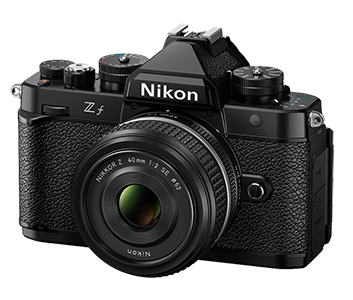
- Nikon Zf black body, three-quarter view with optional NIKKOR Z 40mm f/2 (SE): Nikon official us-press library
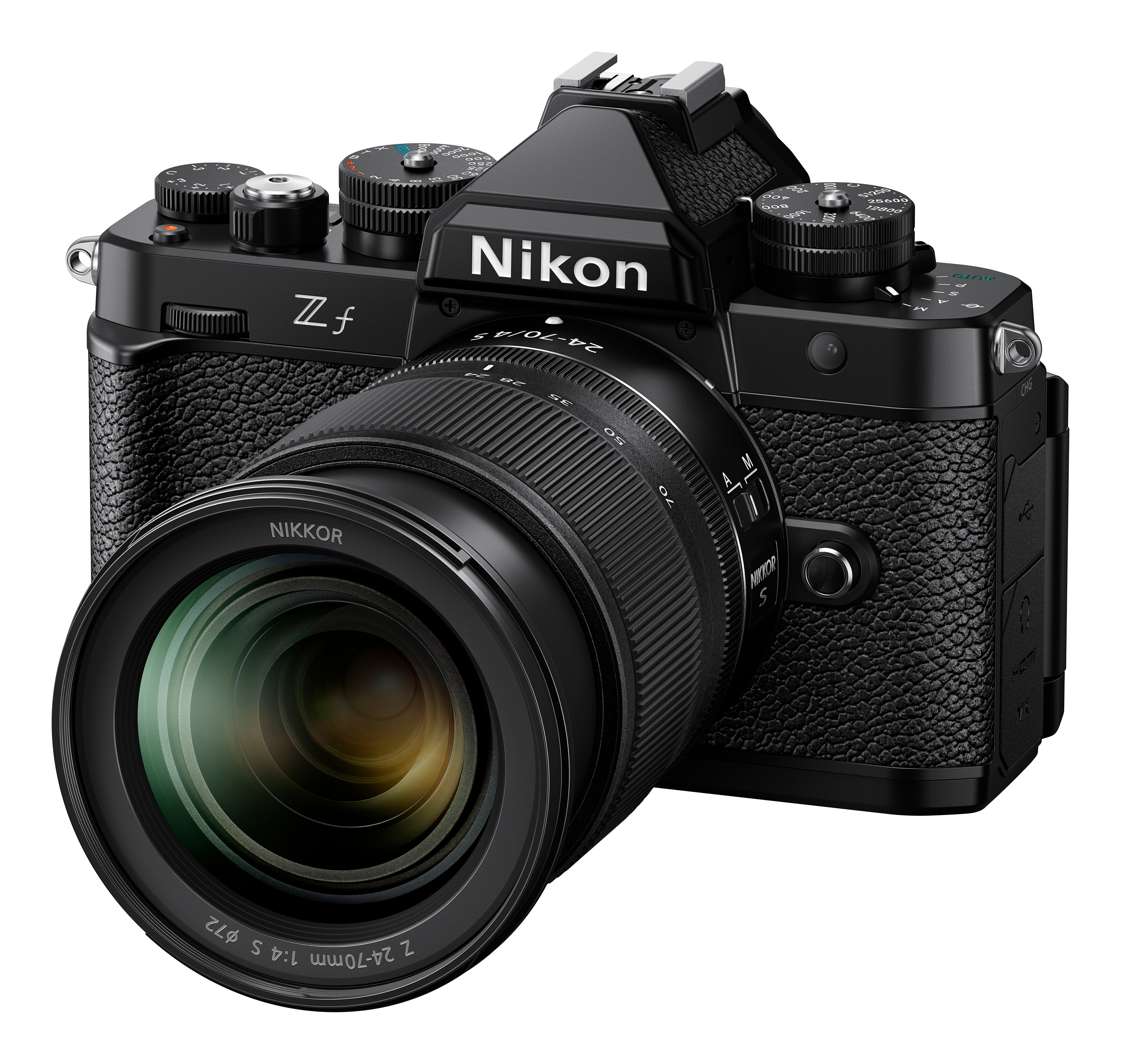
- Nikon Zf black body with optional NIKKOR Z 24–70mm f/4 S: Nikon official us-press library
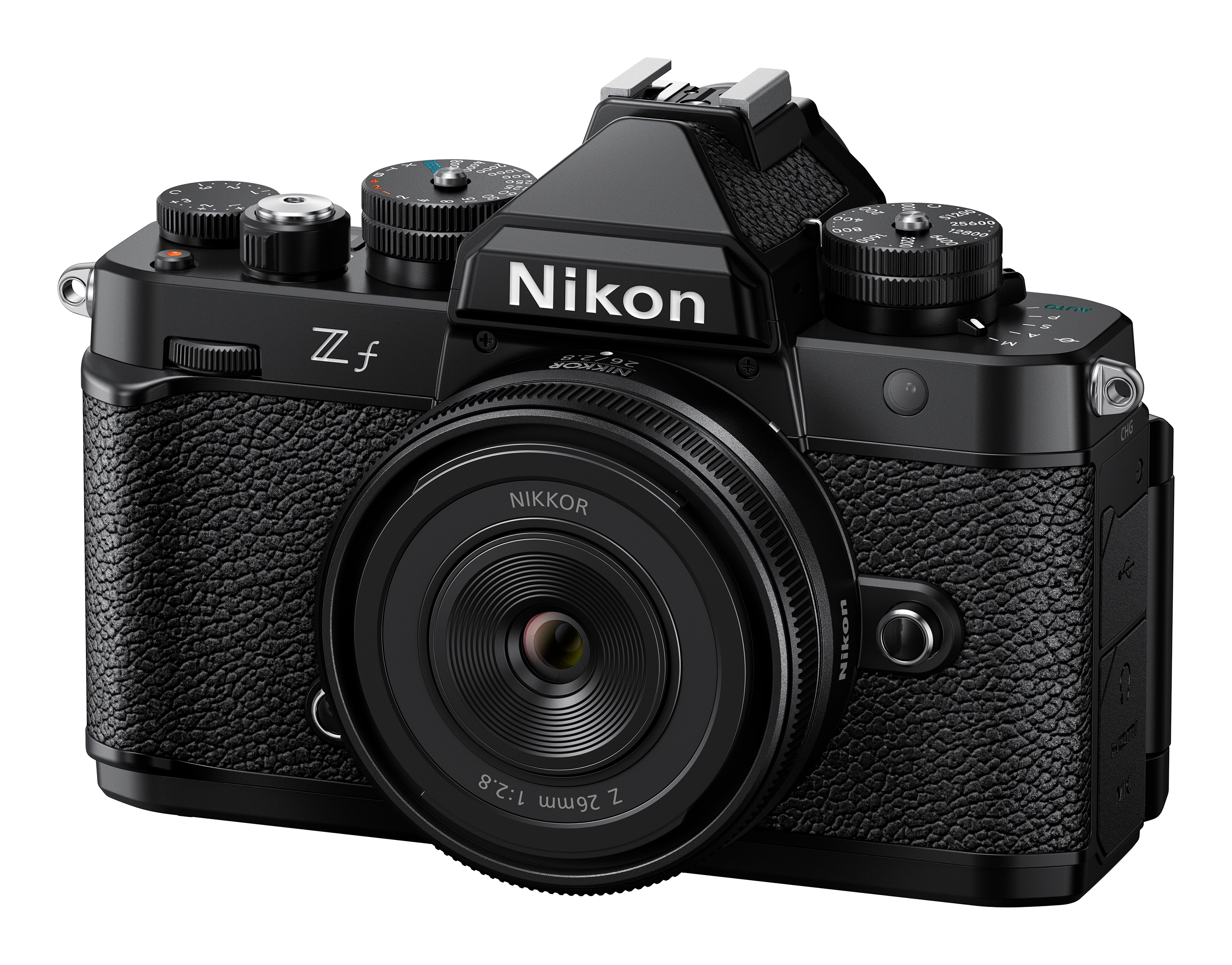
- Nikon Zf black body with optional NIKKOR Z 26mm f/2.8: Nikon official us-press library
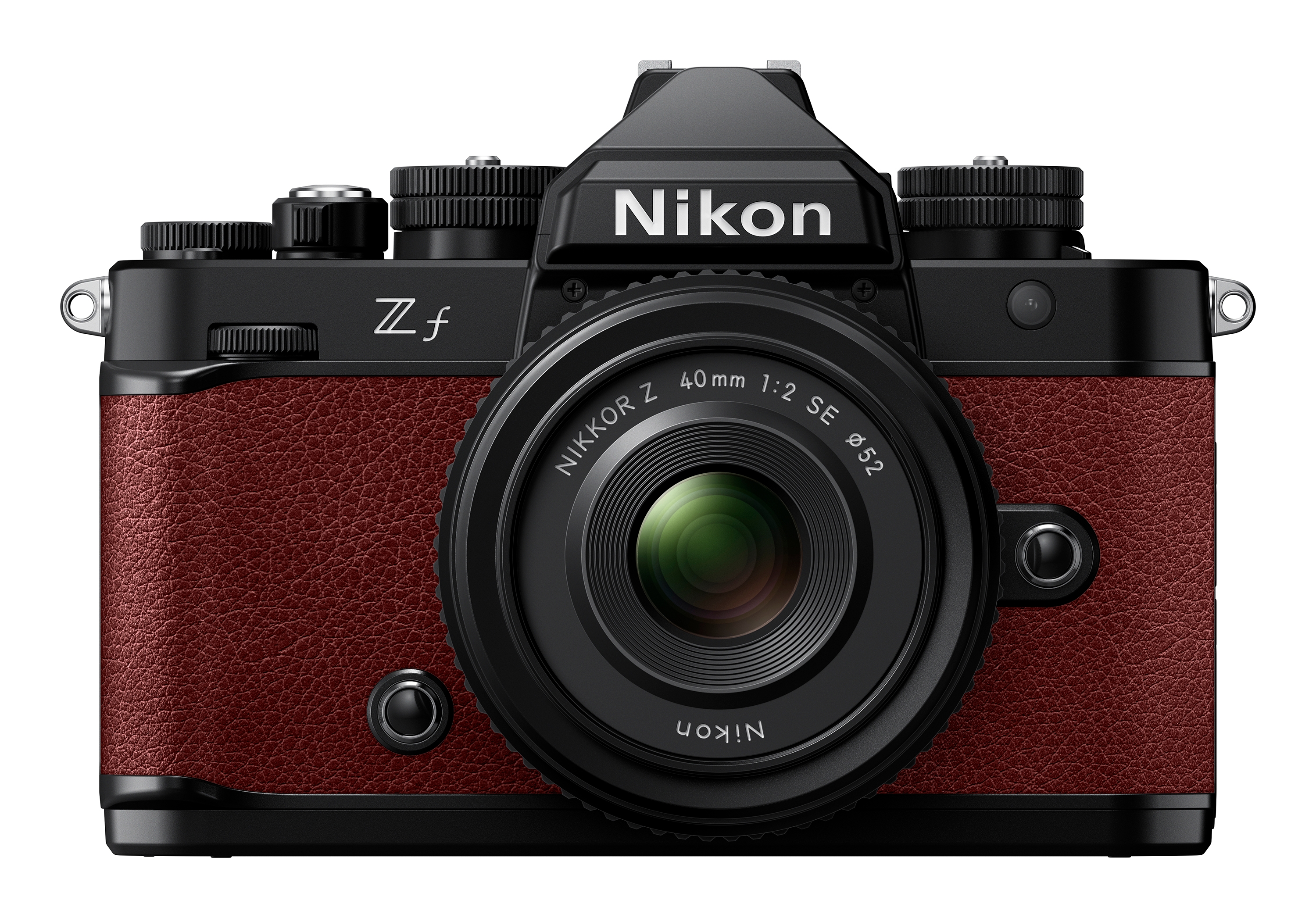
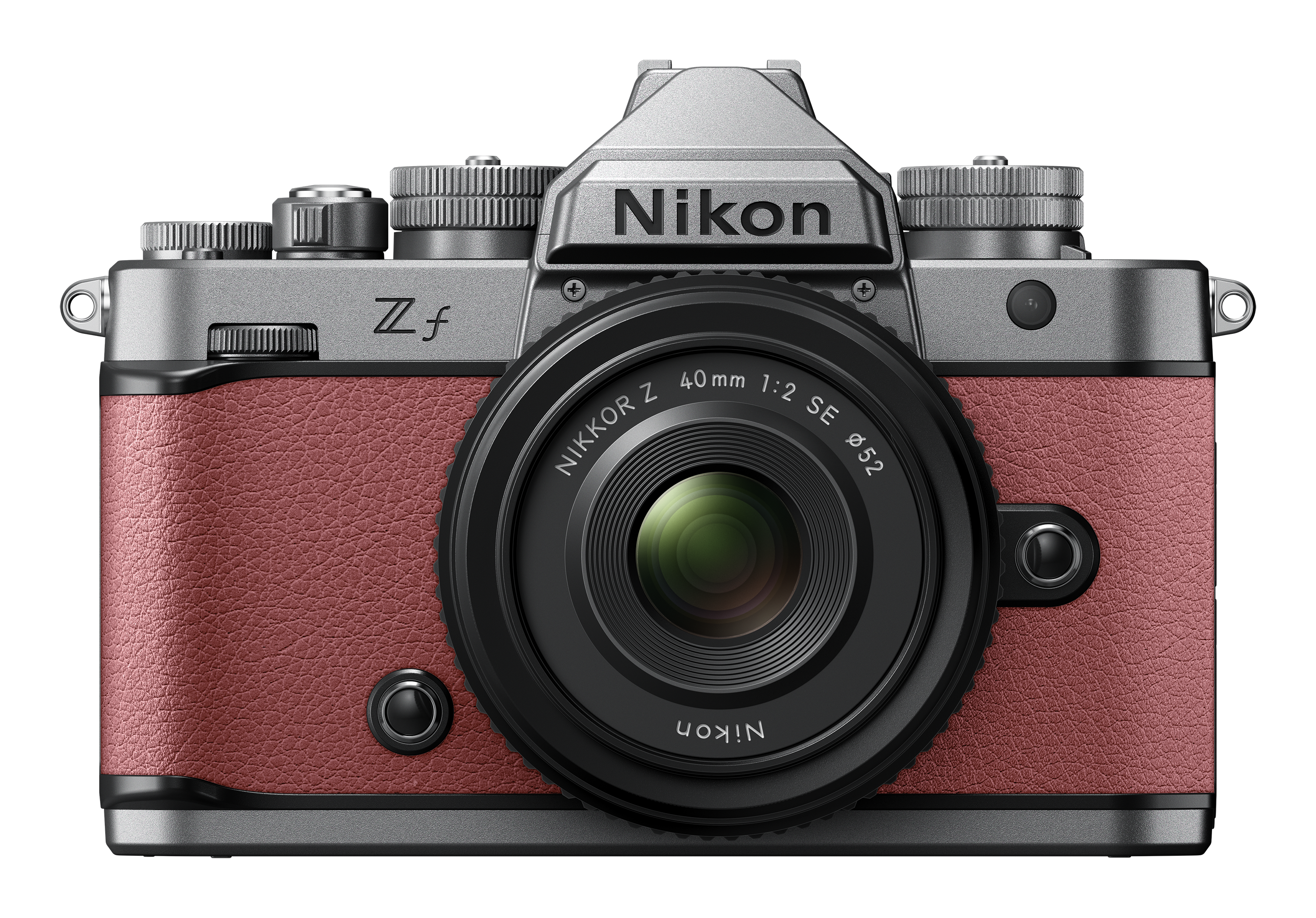
- Nikon Zf black body, Bordeaux Red covering, with optional 40mm f/2 (SE): Nikon official us-press library
- Nikon Zf black body, Indigo Blue covering, with optional 40mm f/2 (SE): Nikon official us-press library
- Nikon Zf black body, Moss Green covering, with optional 40mm f/2 (SE): Nikon official us-press library
- Nikon Zf black body, Sepia Brown covering, with optional 40mm f/2 (SE): Nikon official us-press library
- Nikon Zf black body, Stone Gray covering, with optional 40mm f/2 (SE): Nikon official us-press library
- Nikon Zf black body, Sunset Orange covering, with optional 40mm f/2 (SE): Nikon official us-press library
- Nikon Zf black body front with optional NIKKOR Z 40mm f/2 (SE): Nikon official us-press library
- Nikon Zf black body top with optional NIKKOR Z 26mm f/2.8: Nikon official us-press library
- Nikon Zf black body top with optional NIKKOR Z 40mm f/2 (SE): Nikon official us-press library
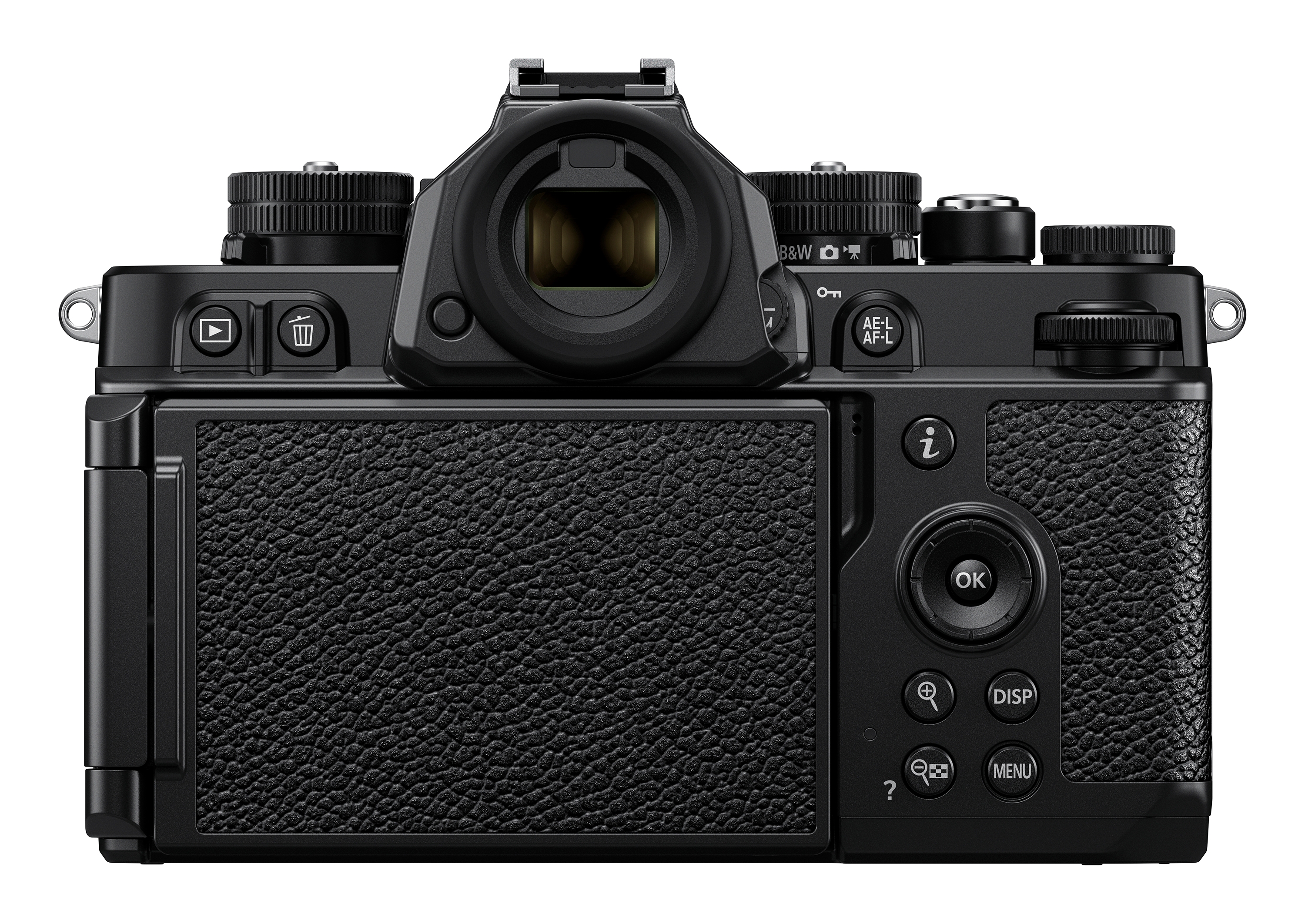
- Nikon Zf black body rear with screen closed: Nikon official us-press library
- Nikon Zf silver edition front with optional 40mm f/2 (SE): Nikon official silver-press library
- Nikon Zf silver edition body-only front showing sensor and mount: Nikon official silver-press library
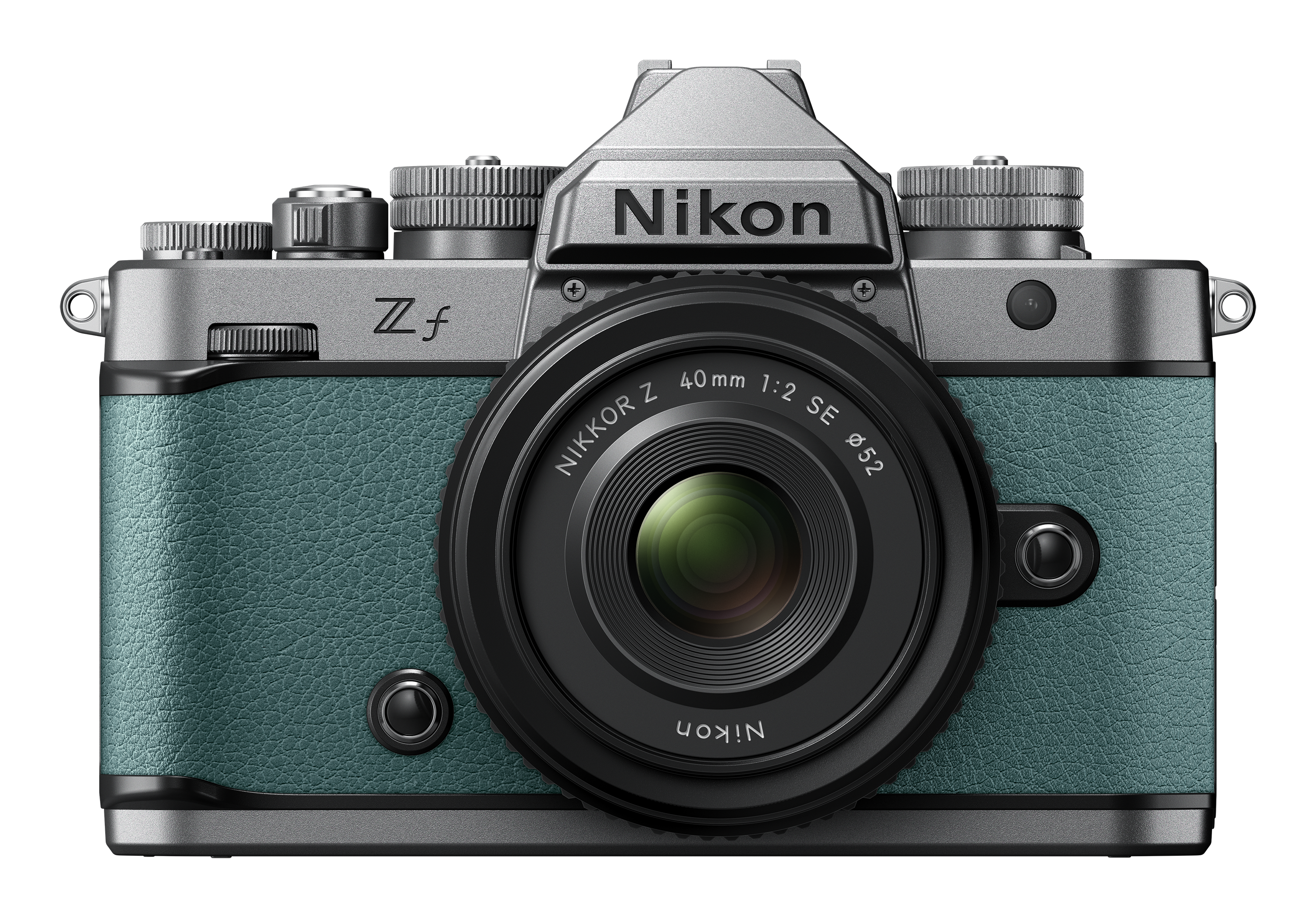
- Nikon Zf silver edition, Teal Blue covering, with optional 40mm f/2 (SE): Nikon official silver-press library
- Nikon Zf silver edition, Moss Green covering, with optional 40mm f/2 (SE): Nikon official silver-press library
- Nikon Zf silver edition, Sepia Brown covering, with optional 40mm f/2 (SE): Nikon official silver-press library
- Nikon Zf silver edition, Stone Gray covering, with optional 40mm f/2 (SE): Nikon official silver-press library
- Nikon Zf silver edition, Cognac Brown covering, with optional 40mm f/2 (SE): Nikon official silver-press library
- Nikon Zf silver edition, Mauve Pink covering, with optional 40mm f/2 (SE): Nikon official silver-press library
- Nikon Zf silver edition Stone Gray top with optional 40mm f/2 (SE): Nikon official silver-press library
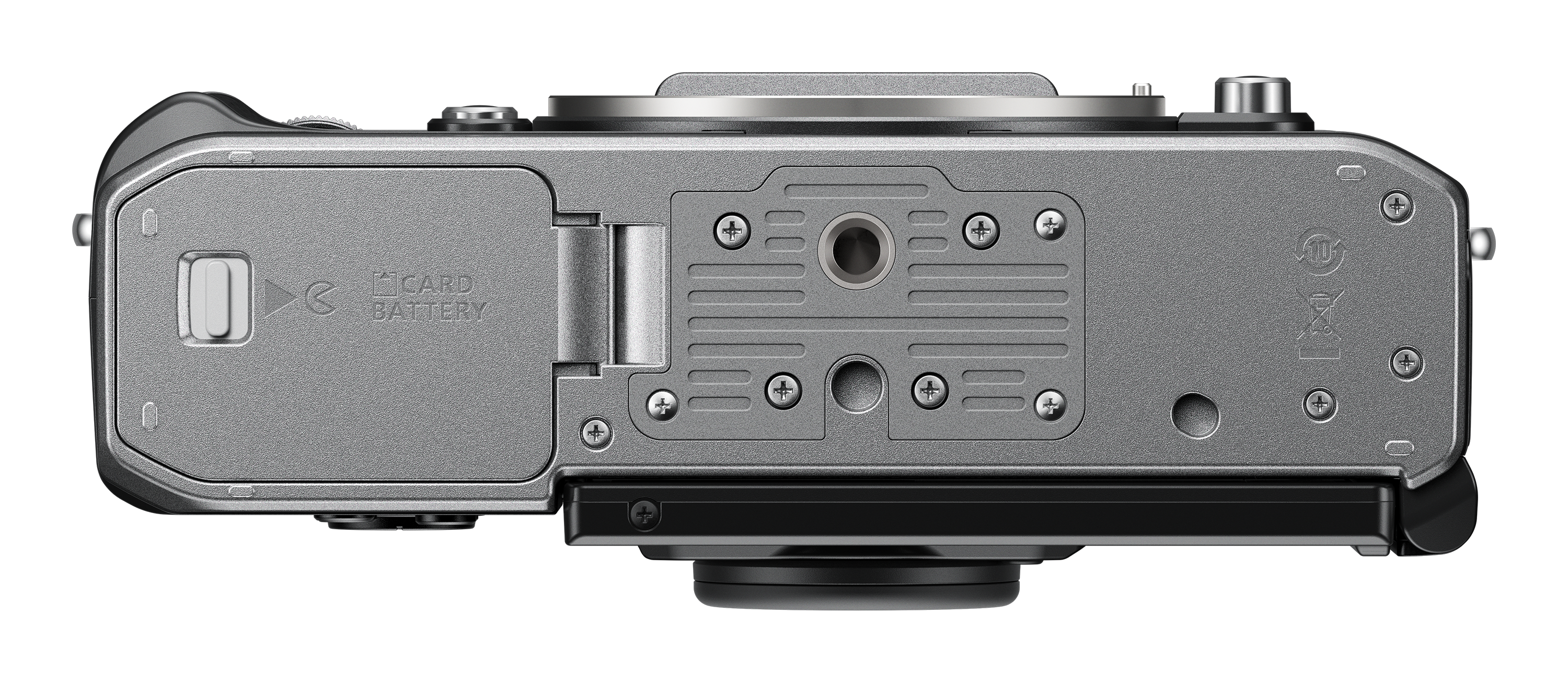
- Nikon Zf silver edition underside: Nikon official silver-press library
- Nikon Zf silver edition with optional 40mm f/2 (SE) and screen opened: Nikon official silver-press library
- Nikon Zf silver edition with optional 24–70mm f/4 S: Nikon official silver-press library
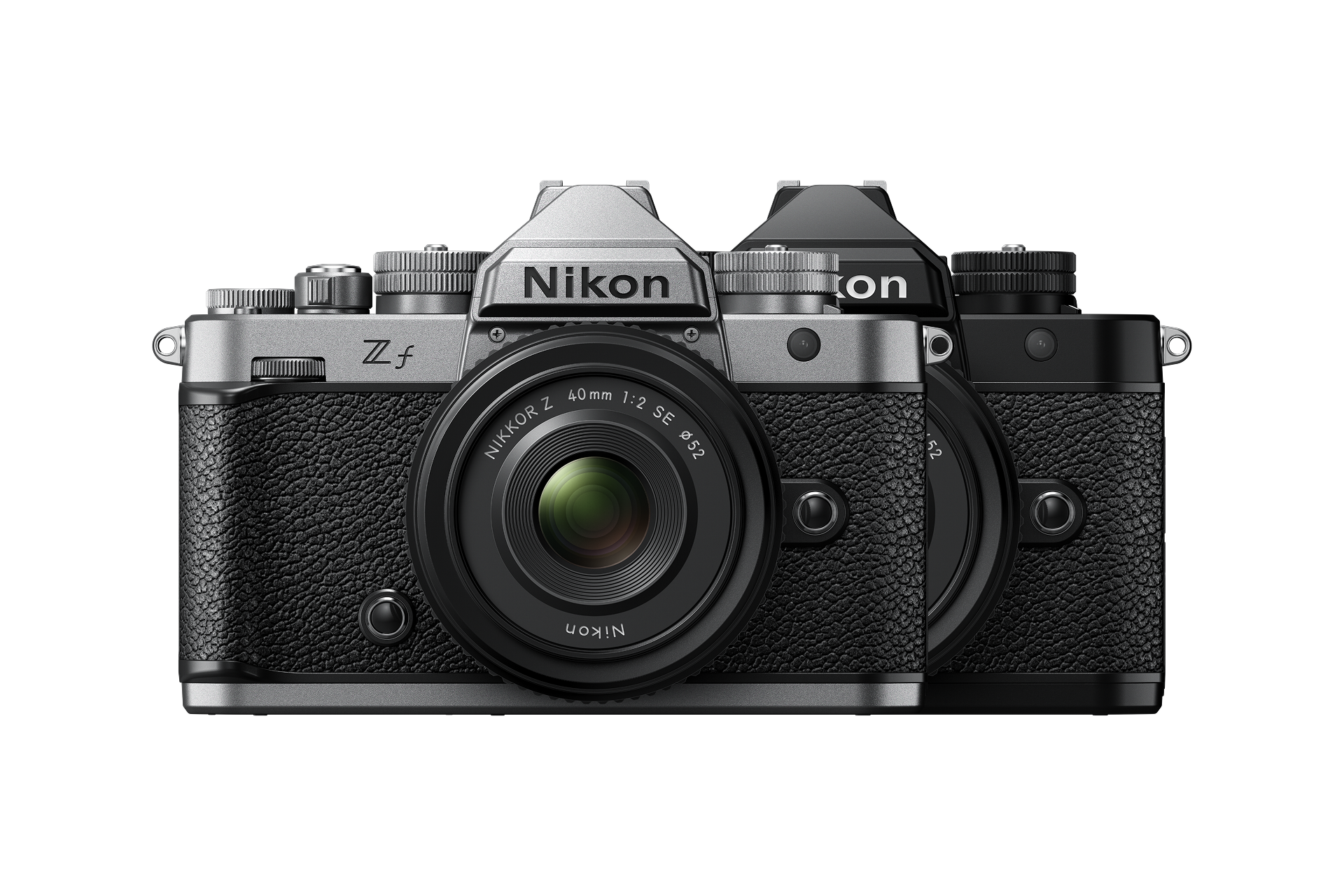
- Nikon Zf silver and black bodies front comparison, optional lenses shown: Nikon official uk-product library
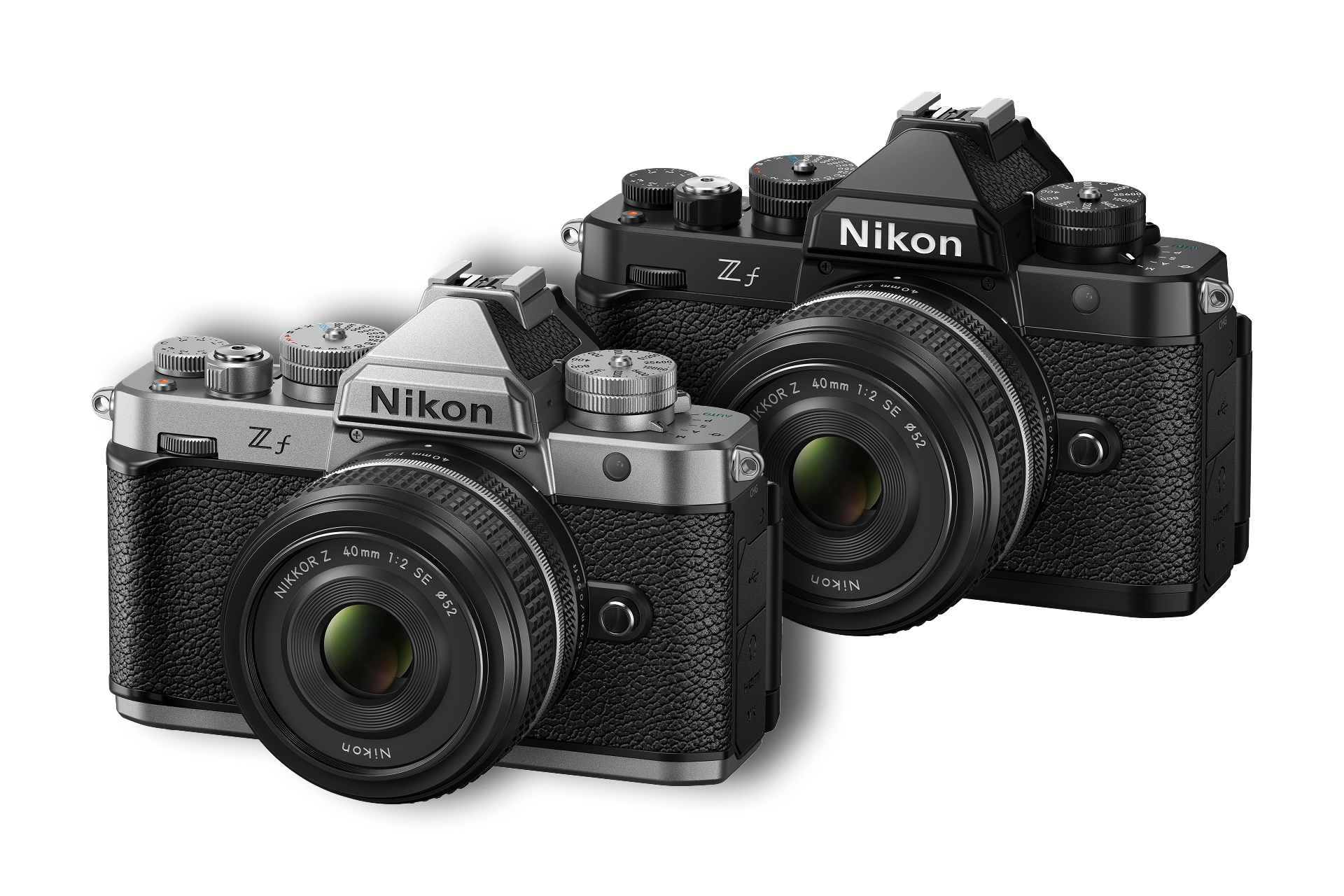
- Nikon Zf silver and black bodies three-quarter comparison, optional lenses shown: Nikon official uk-product library
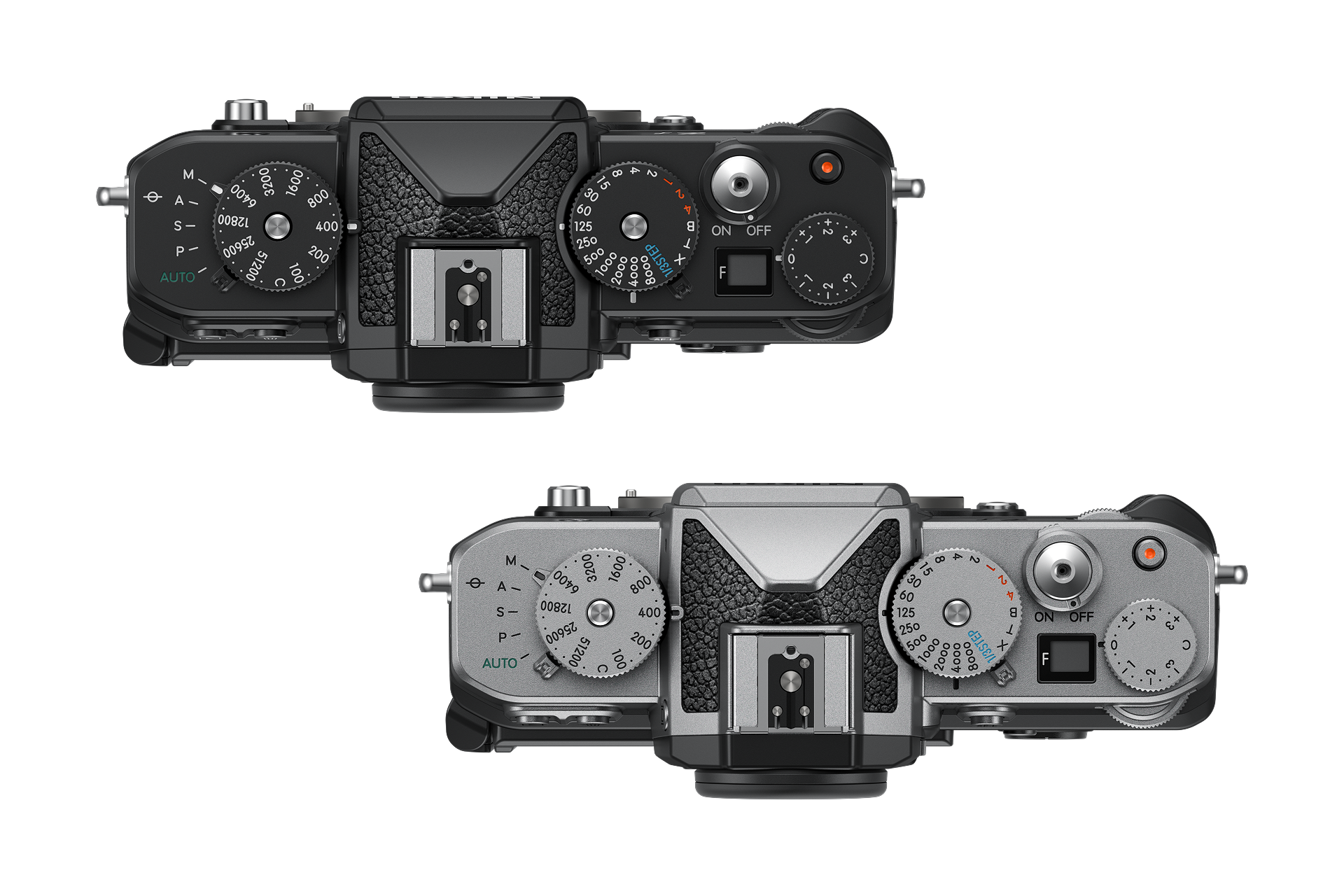
- Nikon Zf silver and black bodies top comparison: Nikon official uk-product library
- Nikon Zf silver edition raised front view with optional 40mm f/2 (SE): Nikon official jp library
- Nikon Zf silver edition three-quarter right view with optional 40mm f/2 (SE): Nikon official jp library
- Nikon Zf silver edition three-quarter left view with optional 40mm f/2 (SE): Nikon official jp library
- Nikon Zf silver edition three-quarter front with optional NIKKOR Z 28mm f/2.8 (SE): Nikon official jp library
- Nikon Zf silver edition black finish top with optional 40mm f/2 (SE): Nikon official jp library
- Nikon Zf silver edition with optional NIKKOR Z 24–120mm f/4 S: Nikon official jp library
- Nikon Zf silver edition connector-side view with optional 40mm f/2 (SE): Nikon official jp library
- Nikon Zf silver edition grip-side view with optional 40mm f/2 (SE): Nikon official jp library
- Nikon Zf silver edition rear with screen closed: Nikon official uksku library
- Nikon Zf silver edition top body-only: Nikon official uksku library
- Nikon Zf black body with optional 40mm f/2 (SE) and Deity microphone, maker accessory scene: Nikon official press library, exact supplied photograph Zf_40_2_se_Deity_mic.jpg
- Nikon Zf silver edition coloured-finish cameras arranged together, maker launch scene: Nikon official press library, exact supplied photograph Zf_SL_PE_all.jpg