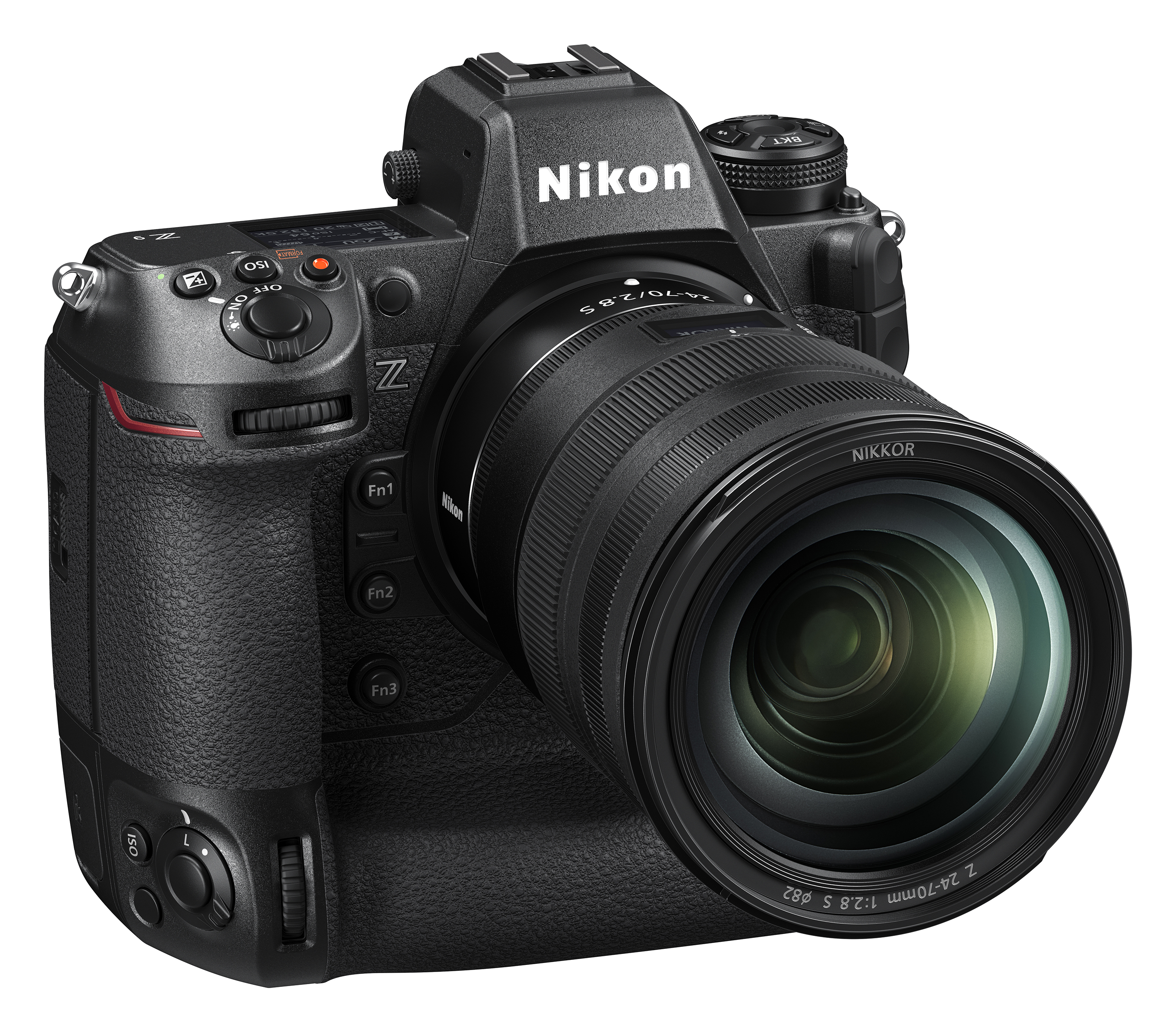
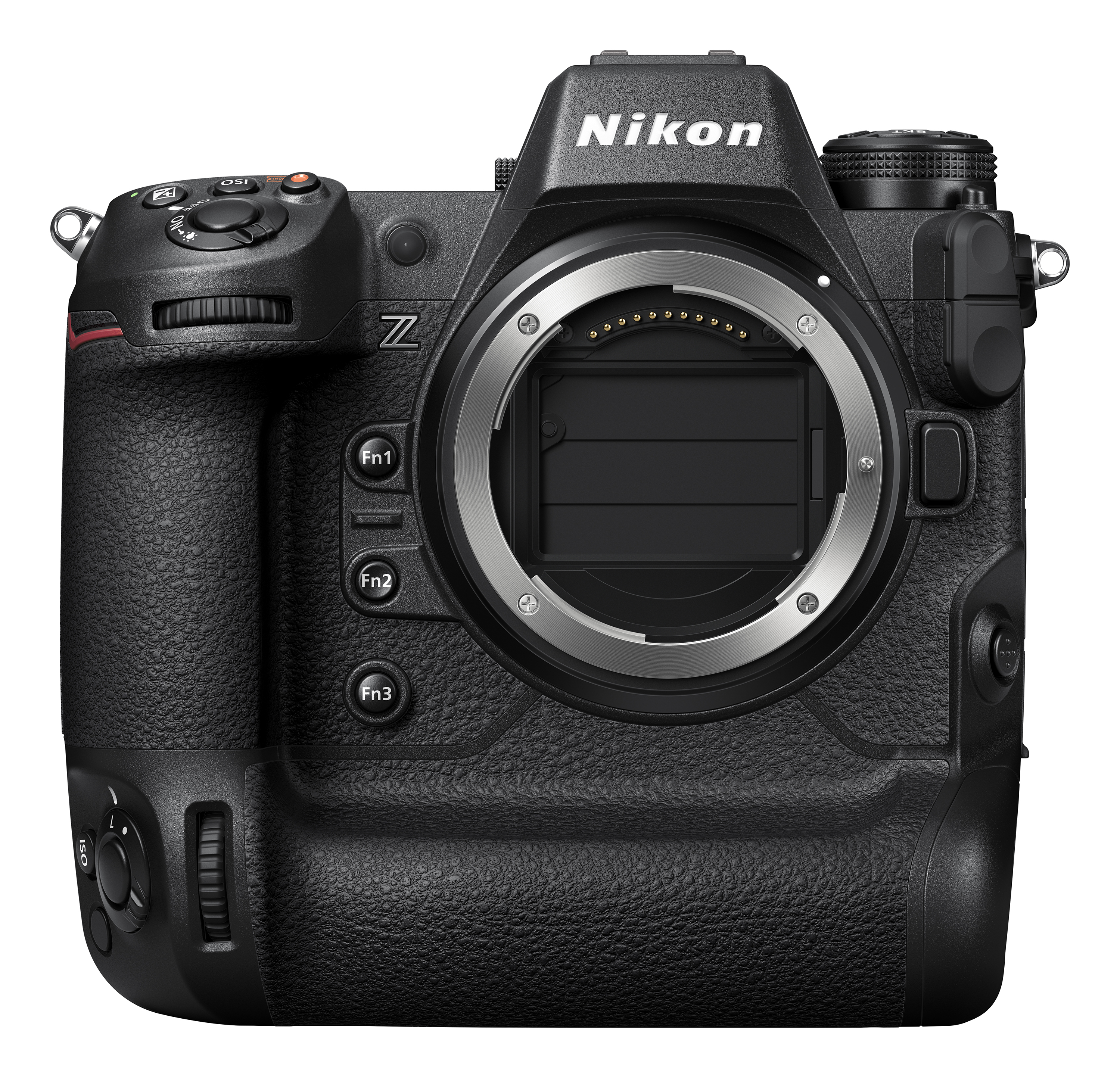
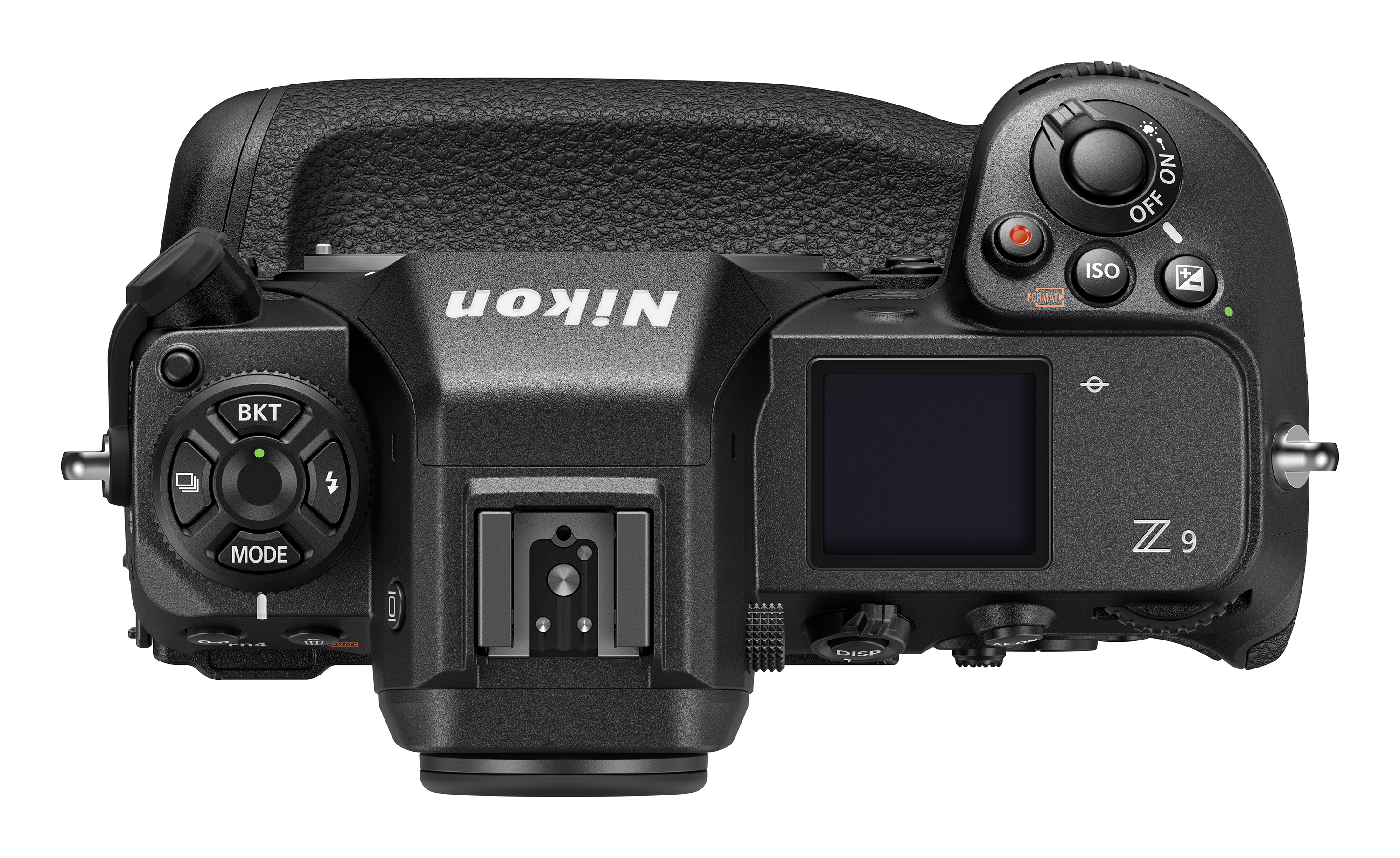
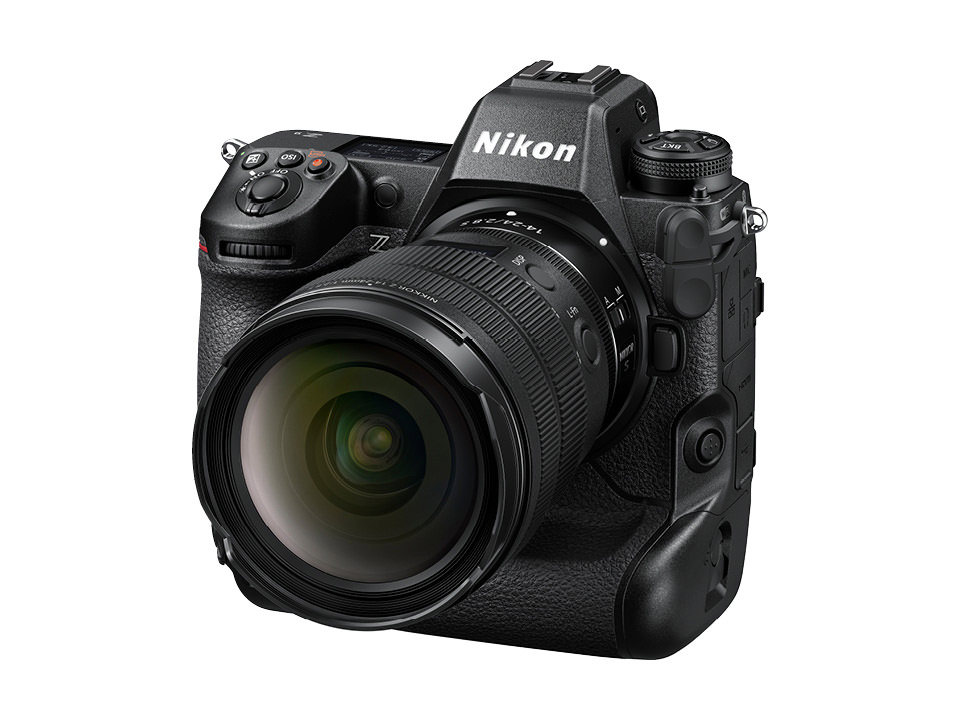
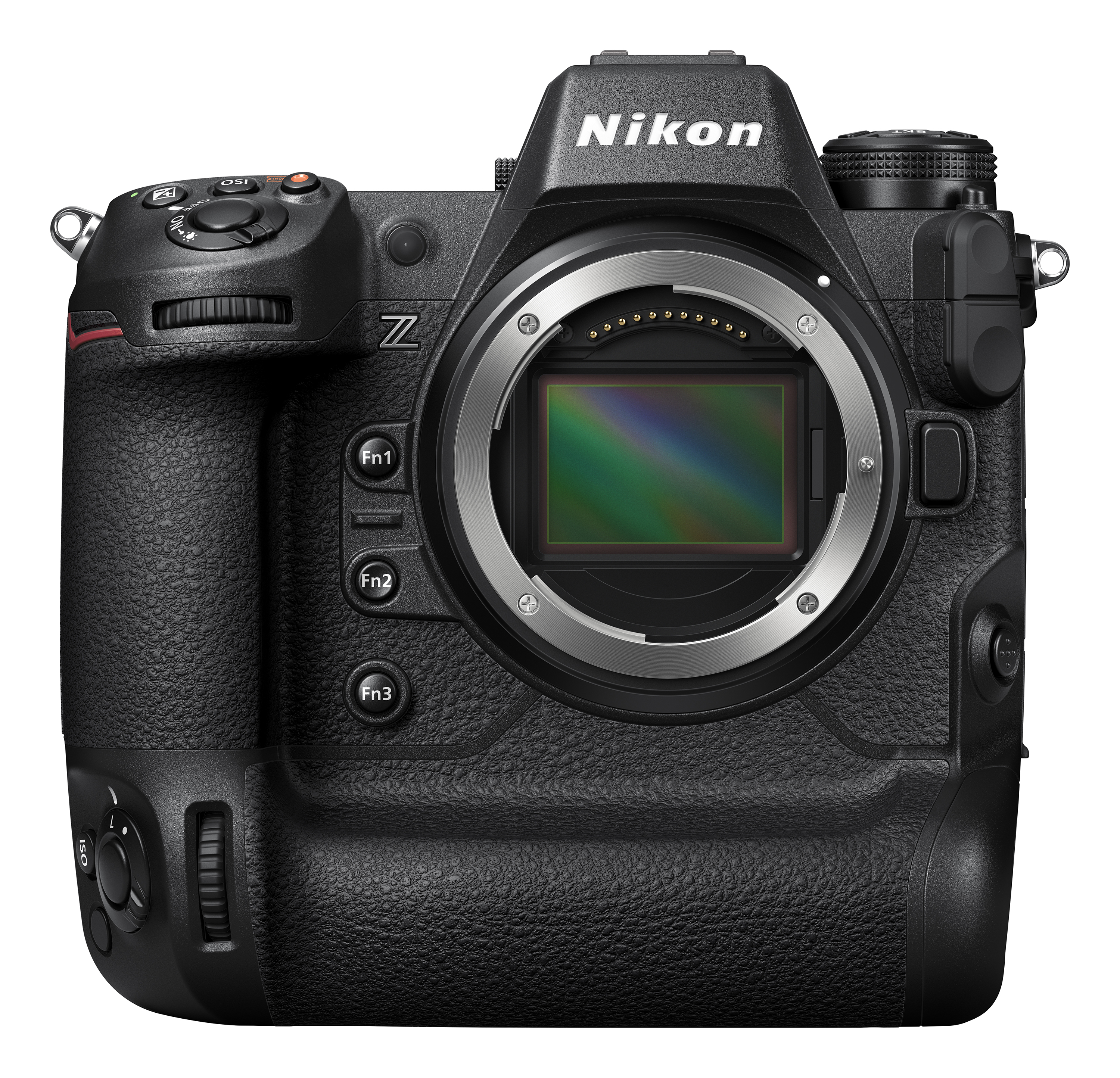
Nikon Z 9 · Nikon US body-only front press photograph
Nikon · Nikon Z
Z 9
A professional full-frame mirrorless camera with a stacked 45.7-megapixel sensor, integrated vertical grip and internal 8.3K RAW video.
- Type
- Mirrorless
- Sensor
- Full frame
- Megapixels
- 45.7
- Lens
- Nikon Z mount
- Video
- 8256 × 4644 at 59.94 fps
- Body weight
- 1160 g
What reviewers say
Both praise the detailed images, reliable subject-tracking autofocus, comfortable dual-grip handling and strong battery performance. They find it a versatile professional tool for stills and video, but note its substantial size and weight and the 20 fps RAW ceiling. Photography Blog finds the viewfinder convincing despite its modest specification and praises effective stabilisation. TechRadar found RAW buffer depth depended strongly on compression and card choice, and preferred RAW detail to the softer default JPEG processing.
From photographyblog.com and techradar.com
Specifications
Report a wrong or missing specImage and sensor
- Camera type
- Mirrorless
- Sensor format
- Full frame
- Sensor type
- Stacked backside-illuminated CMOS
- Sensor dimensions
- 35.9 × 23.9 mm
- Effective resolution
- 45.7 MP
- Largest image
- 8256 × 5504
- RAW recording
- Yes
- Standard ISO range
- 64–25600
- Sensor detail
- 52.37 million total pixels; sensor cleaning, dust-off reference data, protective sensor shield and electro-conductive/fluorine coatings
- Image formats
- 14-bit NEF RAW with lossless or high-efficiency compression; JPEG and RAW plus JPEG
- ISO detail
- Expandable to equivalent ISO 32–102400; auto ISO available
- Image processor
- EXPEED 7
Lens and shooting
- Lens mount
- Nikon Z mount
- Stabilisation
- Sensor shift
- Maximum continuous burst
- 20 fps
- Lens detail
- NIKKOR Z lenses; NIKKOR F lenses require a mount adapter and retain model-dependent restrictions
- Autofocus
- Hybrid phase/contrast detection with 493 single-point FX still positions; 3D tracking and subject detection for people, animals and vehicles. Maker sensitivity −6.5 EV or −8.5 EV with Starlight View, measured in AF-S at ISO 100, 20°C and f/1.2.
- Shutter
- Electronic shutter only, with selectable sound and protective sensor shield; 1/32000 to 30 seconds, Bulb/Time and manual-mode extension to 900 seconds. Flash sync 1/200 or 1/250 second with reduced guide number at higher speeds; compatible Auto FP up to 1/8000 may produce horizontal lines.
- Burst detail
- Continuous high-speed RAW/JPEG up to 20 fps. High-speed C30 provides large full-resolution FX or DX JPEGs and C120 small FX JPEGs (4128 × 2752), with approximately four-second bursts in the linked manual. Firmware 3.00 adds C60 large DX JPEGs, also approximately four seconds; current Japan specs additionally list C15. Pre-release capture supported. These restricted high-speed modes are qualified separately from the main continuous-shooting figure.
- Stabilisation detail
- Five-axis sensor shift; Synchro VR up to 6 stops with supported VR lenses under Nikon CIPA conditions, including NIKKOR Z 70–200mm f/2.8 VR S with required lens firmware; electronic movie VR available
- Flash
- No built-in flash; ISO 518 hot shoe, ISO 519 threaded sync terminal and compatible external i-TTL Speedlights
- Exposure controls
- P/S/A/M; ±5 EV still-image or ±3 EV movie compensation; matrix, centre-weighted, spot and highlight-weighted metering
Video
- Highest video resolution
- 8256 × 4644 at 59.94 fps
- Video detail
- With firmware 2.0 or later, internal N-RAW 12-bit 8256 × 4644 up to 59.94p, 5392 × 3032 up to 59.94p and 4128 × 2322 up to 119.88p. Conventional UHD 7680 × 4320 up to 29.97p; UHD 4K and Full HD up to 119.88p. ProRes RAW HQ, ProRes 422 HQ, H.265 8/10-bit and H.264 have format-dependent limits. N-Log/HLG, waveform, timecode and RAW proxies. Nikon's UHD 8K/30p recording-time claim is 125 minutes under specified conditions; launch firmware and the early reviews predate internal RAW video support.
- Audio
- Built-in stereo microphones; 24-bit PCM recording, external microphone with attenuator and headphone monitoring; AAC used for MP4
Screen and viewfinder
- Viewfinder
- Electronic
- Screen size
- 3.2″
- Screen dots
- 2,100,000
- Touchscreen
- Yes
- Tilting screen
- Yes
- Display detail
- Four-axis horizontal/vertical tilt, approximately 100% coverage and 170° viewing angle; dots count subpixels
- Viewfinder detail
- 0.5-inch Quad-VGA OLED, approximately 3.69 million dots, 100% coverage, 0.8× magnification and 23 mm eyepoint; blackout-free display with high-frame-rate option
Connections and design
- Wi-Fi
- Yes
- Bluetooth
- Yes
- Battery life (maker's claim)
- 770 photographs
- Body weight
- 1160 g
- Release detail
- Nikon Japan explicitly records first sale on 24 December 2021; US announcement on 28 October specified availability within 2021. TechRadar's later regional delivery-delay wording does not override the confirmed Japanese first sale.
- Recording media
- Two CFexpress Type B/XQD slots; overflow, backup, RAW/JPEG separation, duplicate JPEG recording and card copying
- Ports
- USB-C SuperSpeed USB, full-size HDMI Type A, 3.5 mm microphone/headphone sockets, ten-pin remote terminal and threaded flash-sync socket; RJ-45 Ethernet 1000BASE-T/100BASE-TX/10BASE-T
- Wireless connections
- Wi-Fi IEEE 802.11a/b/g/n/ac and Bluetooth 5.0; built-in GNSS supports GPS, GLONASS and QZSS with location/time recording and track logs
- Battery life detail
- EN-EL18d; CIPA monitor approximately 770 shots with power saving or 740 without; EVF 740 with power saving or 700 without. Nikon's separate continuous-shooting test gives approximately 5310 shots; movie battery claim approximately 170 minutes. Earlier EN-EL18-series batteries give fewer shots.
- Charging
- USB charging/power delivery and MH-33 external charger; optional EH-7P charging supports EN-EL18d/18c/18b, while earlier battery revisions retain restrictions; optional EH-6d with EP-6a power connector
- Dimensions
- Approximately 149 × 149.5 × 90.5 mm
- Weight detail
- Approximately 1160 g body only or 1340 g with battery/card, excluding body cap and shoe cover
- Materials
- Weather-sealed magnesium-alloy body with integrated vertical grip; maker operating range −10°C to 40°C
- In the box
- EN-EL18d, MH-33 charger, AN-DC24 strap, UC-E24 USB cable, HDMI/USB cable clip, BS-1 shoe cover and BF-N1 body cap; current UK included-accessory tiles also list EH-7P UK adapter
Pros and cons
Pros
- Full-resolution RAW bursts up to 20 fps with subject tracking
- Internal 8.3K RAW video up to 60p with updated firmware
- Dual CFexpress slots, Ethernet and built-in location recording
Cons
- Integrated vertical grip cannot be removed to reduce bulk
- 30–120 fps high-speed modes use JPEGs with burst-length restrictions
- Tilting screen cannot face forward
Closest rivals
Model | Type | Sensor | Megapixels | Lens | Video | Body weight | Released |
|---|---|---|---|---|---|---|---|
| Mirrorless | Full frame | 24.1 | Canon RF | 6000 × 3164 at 59.94 fps | 822 g | Nov 2021 | |
| Mirrorless | Full frame | 50.1 | Sony E-mount | 7680 × 4320 at 30 fps | 652 g | Mar 2021 | |
| Mirrorless | Full frame | 33 | Sony E-mount | 3840 × 2160 at 60 fps | 573 g | Nov 2021 |


Sources
- nikon.co.uk/en_GB/product/cameras/mirrorless/z-9
- nikon.co.uk/en_GB/product/cameras/mirrorless/z-9-VOA082AE-gb
- nij.nikon.com/products/lineup/mirrorless/z9/spec.html
- nij.nikon.com/products/lineup/mirrorless/z9
- nikonusa.com/press-room/z-9-wwa
- onlinemanual.nikonimglib.com/z9/en/05_shooting_settings_04.html
- onlinemanual.nikonimglib.com/z9/en/18_added_functions_300_04.html
Photo: Nikon US body-only front press photograph
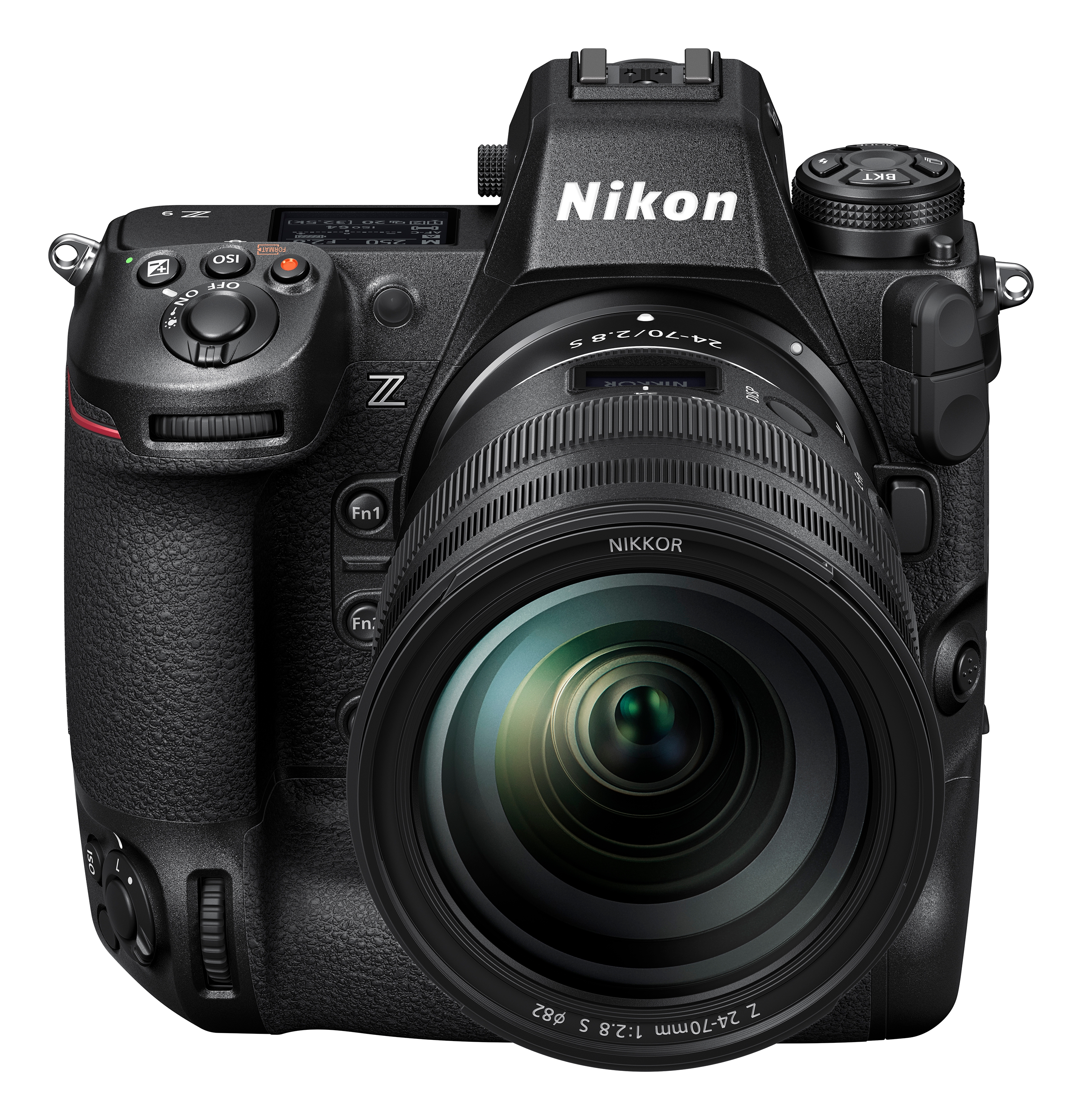
- Nikon Z9 front with optional NIKKOR Z 24–70mm f/2.8 S lens: Nikon UK
- Nikon Z9 three-quarter front view with optional NIKKOR Z 24–70mm f/2.8 S lens: Nikon UK
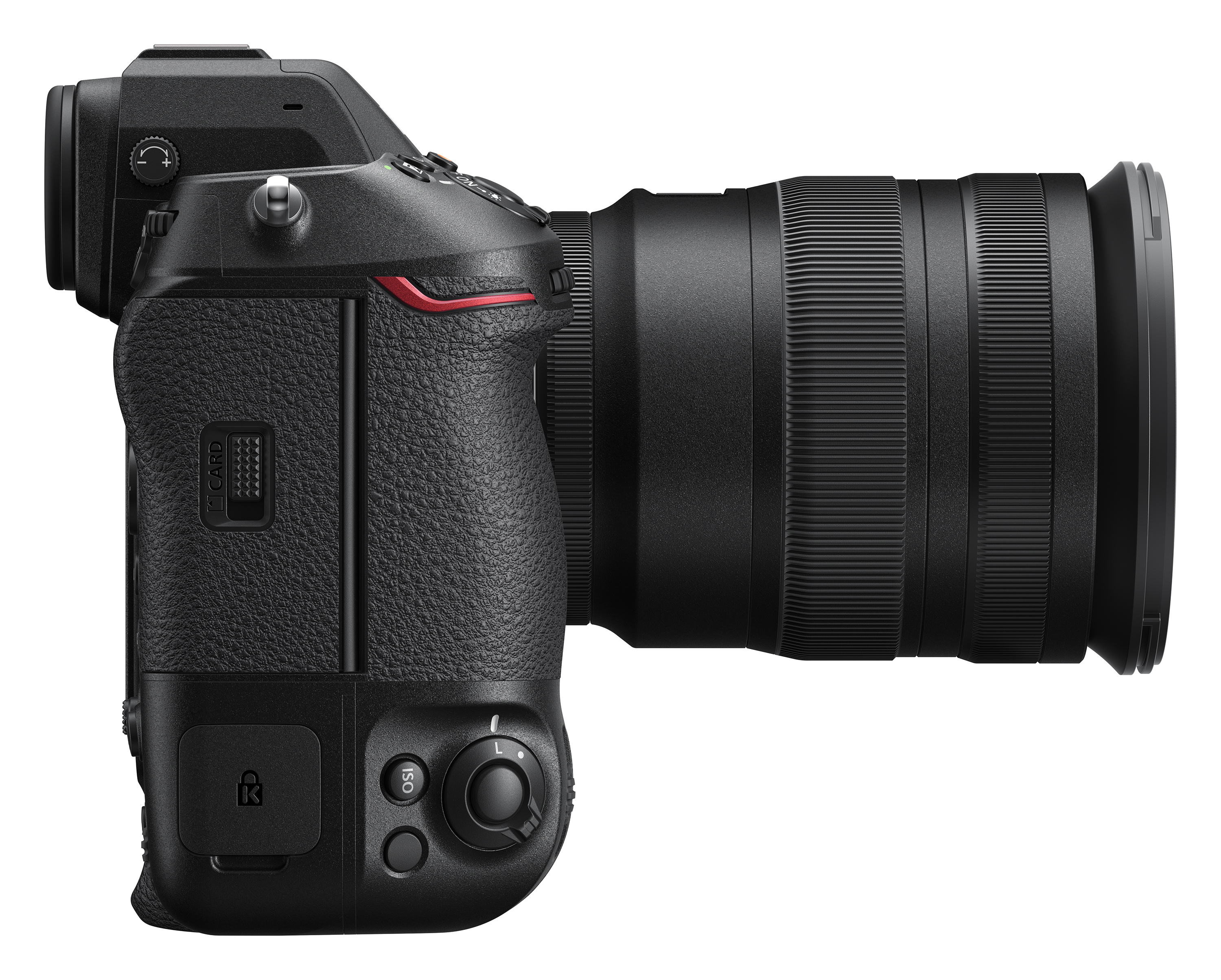
- Nikon Z9 left side with optional NIKKOR Z 24–70mm f/2.8 S lens: Nikon UK
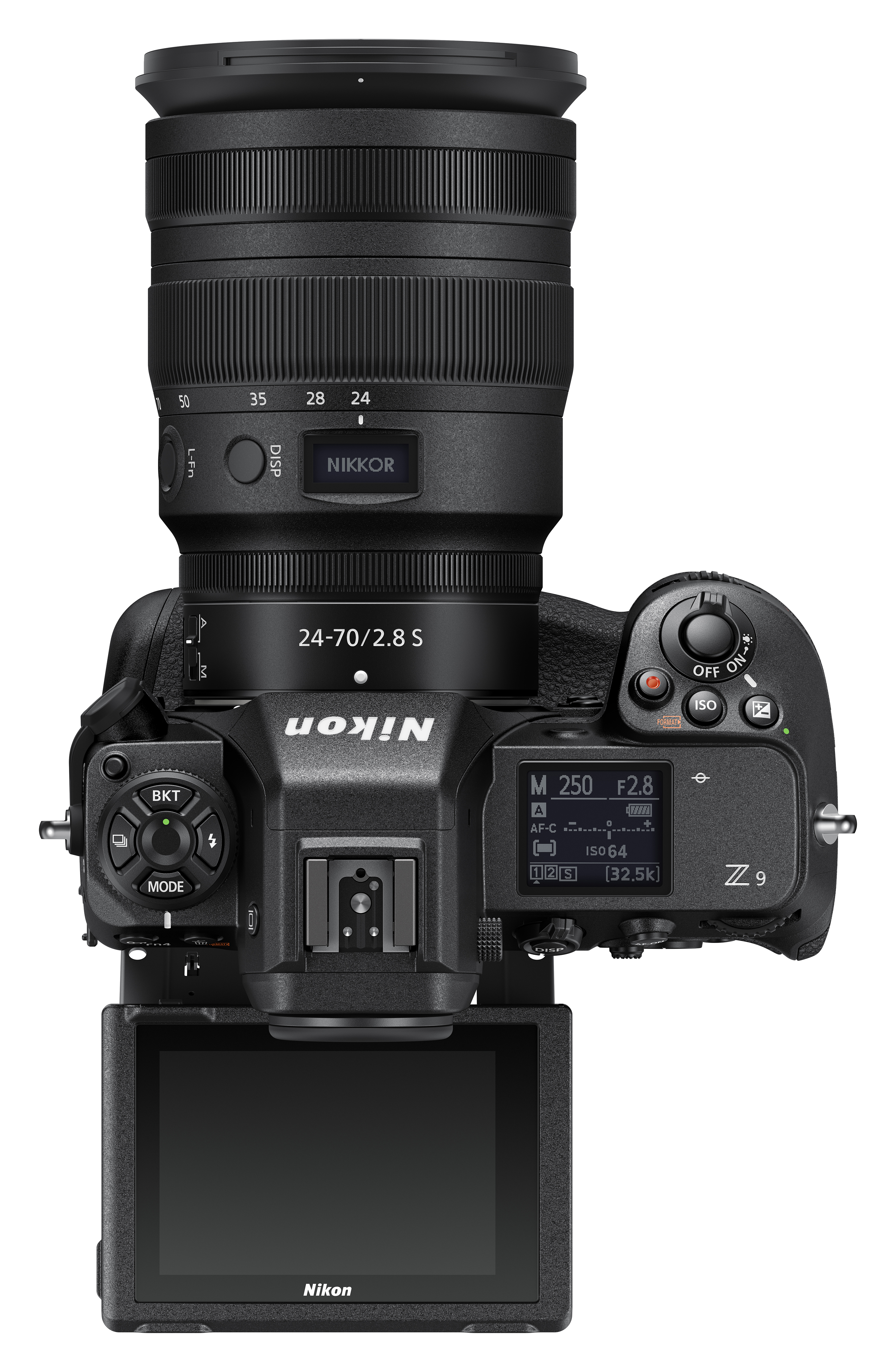
- Nikon Z9 side view with monitor tilted and optional NIKKOR Z 24–70mm f/2.8 S lens: Nikon UK
- Nikon Z9 rear three-quarter view with monitor tilted and optional NIKKOR Z 24–70mm f/2.8 S lens: Nikon UK
- Nikon Z9 top controls and information display with optional NIKKOR Z 24–70mm f/2.8 S lens: Nikon UK
- Nikon Z9 rear controls and monitor: Nikon UK
- Nikon Z9 front three-quarter view from the opposite side, with optional NIKKOR Z 24–70mm f/2.8 S lens: Nikon official press/product image
- Nikon Z9 high front view, with optional NIKKOR Z 24–70mm f/2.8 S lens: Nikon official press/product image
- Nikon Z9 right side, with optional NIKKOR Z 24–70mm f/2.8 S lens: Nikon official press/product image
- Nikon Z9 top with monitor tilted, with optional NIKKOR Z 24–70mm f/2.8 S lens: Nikon official press/product image
- Nikon Z9 front with sensor shield closed, body only: Nikon official press/product image
- Nikon Z9 top controls, body only: Nikon official press/product image
- Nikon Z9 three-quarter view with alternate lens reflection, with optional NIKKOR Z 24–70mm f/2.8 S lens: Nikon official press/product image
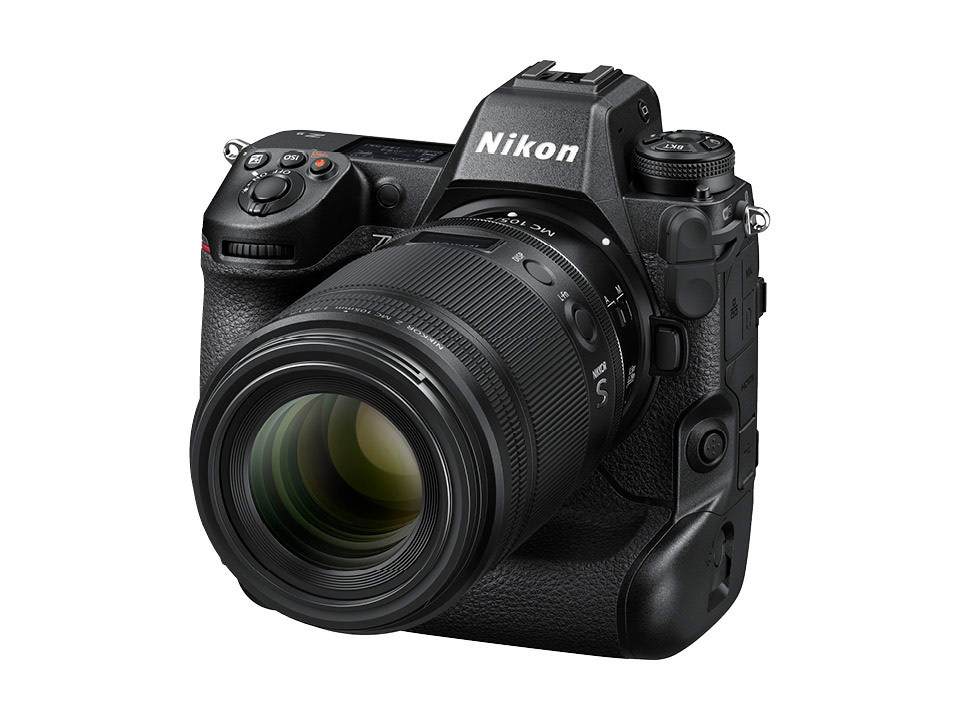
- Nikon Z9 with optional NIKKOR Z MC 105mm f/2.8 VR S macro lens: Nikon official press/product image
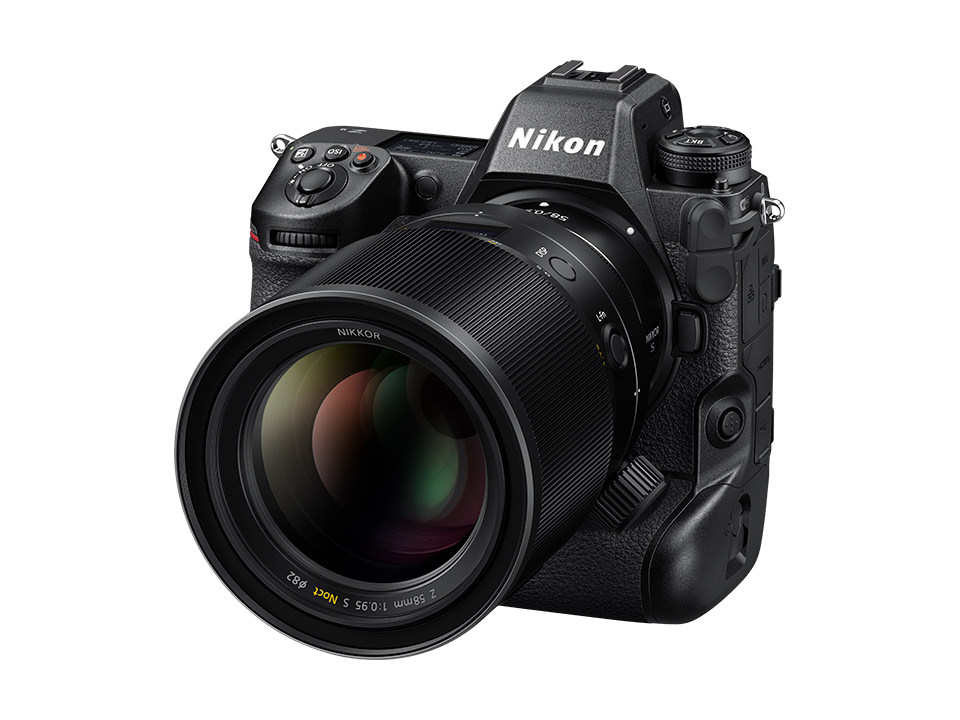
- Nikon Z9 with optional NIKKOR Z 58mm f/0.95 S Noct lens: Nikon official press/product image
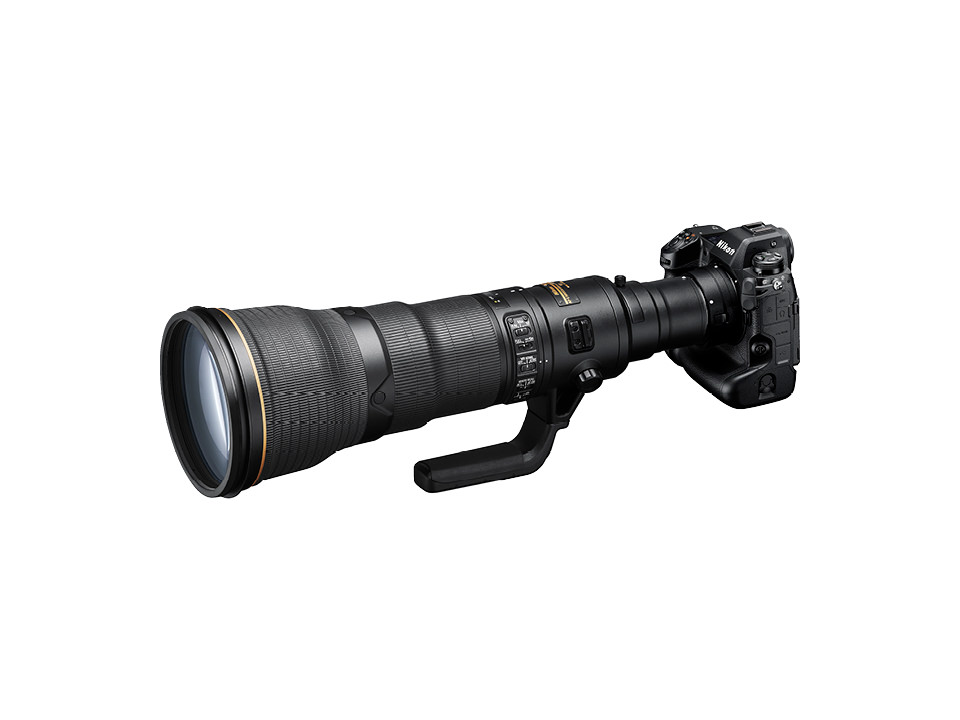
- Nikon Z9 with optional F-mount super-telephoto lens and mount adapter: Nikon official press/product image