Photo 1 of 8
Panasonic LUMIX S1II · Photo source
Panasonic · LUMIX S
LUMIX S1II
A full-frame L-Mount hybrid camera with a partially stacked sensor, high-speed stills shooting, open-gate video and an articulated screen.
- Type
- Mirrorless
- Sensor
- Full frame
- Megapixels
- 24.1
- Lens
- L-Mount
- Video
- 5952 × 3968 at 29.97 fps
- Body weight
- 718 g
What reviewers say
Reviews praise the refined handling, fast shooting, flexible video and effective stabilisation, while missing automatic subject selection. Photography Blog finds it capable for action and hybrid work. Amateur Photographer finds slower initial focus acquisition than recent Canon and Sony rivals, lengthy buffer clearance and little reason to pay more than the S1IIE unless its extra speed is needed.
Specifications
Report a wrong or missing specImage and sensor
- Camera type
- Mirrorless
- Sensor format
- Full frame
- Sensor type
- Partially stacked CMOS
- Sensor dimensions
- 35.6 × 23.8 mm
- Effective resolution
- 24.1 MP
- Largest image
- 6000 × 4000
- RAW recording
- Yes
- Standard ISO range
- 100–51200
- Sensor detail
- 24.1 million effective and 26.8 million total pixels; 35.6 × 23.8 mm partially stacked CMOS; normal 3:2 stills 6000×4000, distinct from eight-frame high-resolution 12000×8000 composites
- Image formats
- JPEG, RAW and HEIF; HEIF HDR uses HLG, with SDR also available; high-resolution composites exclude HEIF
- ISO detail
- Standard stills ISO 100–51200; expanded ISO 50, 102400 and 204800; native stills sensitivities ISO 100/800, distinct from V-Log and other video profiles
Lens and shooting
- Lens mount
- L-Mount
- Stabilisation
- Lens and sensor shift
- Maximum continuous burst
- 70 fps
- Lens detail
- L-Mount full-frame lenses; APS-C lenses use a reduced image area, with 3984×2656 3:2 stills
- Autofocus
- Phase Hybrid AF with up to 779 phase-detection and 315 contrast positions; humans/animals/cars/motorcycles and bicycles/trains/aircraft; −6 to 18 EV with f/1.4 lens, ISO 100, AFS. Subject selection is manual; current maker table includes Urban Sports recognition
- Shutter
- Mechanical 60–1/8000 second and Bulb to approximately 30 minutes; electronic first curtain 60–1/2000; electronic 60–1/16000 with Bulb to approximately 60 seconds
- Burst detail
- Full-resolution electronic 70 fps speed-priority or 60/30 fps image-priority with AFS/AFC/MF; SH buffer 180 JPEG/RAW or 170 HEIF frames under maker conditions. Mechanical speed-priority up to 10 fps, including H+ AFC; lower modes offer live view. No composite high-resolution output counted as sensor resolution
- Stabilisation detail
- Five-axis sensor-shift B.I.S., eight centre/seven corner stops with S-R2060 at 60 mm; compatible Dual I.S.2 gives seven centre/corner stops with S-R24105 at 105 mm under CIPA-2024. Electronic video IS separately available; current Japan table marks crop-less mode as firmware 3.0
- Flash
- External flash support, no built-in flash (Photography Blog); sync up to 1/250 second with maker flash-output restrictions
- Exposure controls
- Separate still/video/S&Q controls and custom settings; V-Log maker claim 14+ stops, or 15 with Dynamic Range Boost; no measured stills dynamic range inferred
Video
- Highest video resolution
- 5952 × 3968 at 29.97 fps
- Video detail
- Internal 5952×3968 3:2 open-gate HEVC 4:2:0 10-bit up to 29.97p; 5952×2512 up to 59.94p and 5088×3392 open gate up to 59.94p. Maker video table lists internal ProRes RAW HQ/RAW 5760×3040 up to 29.97p and C4K up to 59.94p; HDMI RAW 6000×4000 up to 29.97p needs an external recorder and is not the headline internal resolution. ARRI LogC3 requires separately purchased DMW-SFU3A key; recording formats, media and firmware impose restrictions
- Audio
- Stereo built-in microphone; MOV LPCM up to 96 kHz/24-bit; optional DMW-XLR2 required for 32-bit float; channel/sample-rate restrictions depend on adapter and format
Screen and viewfinder
- Viewfinder
- Electronic
- Screen size
- 3″
- Screen dots
- 1,840,000
- Touchscreen
- Yes
- Tilting screen
- Yes
- Display detail
- Three-inch 3:2 capacitive touchscreen, approximately 1.84 million dots and 100% coverage; tilt and free-angle articulation (Panasonic UK)
- Viewfinder detail
- 0.5-inch OLED, approximately 5.76 million dots, 100% coverage and 0.78× magnification with 50 mm lens at infinity, −1 dioptre and 3:2 aspect ratio
Connections and design
- Wi-Fi
- Yes
- Bluetooth
- Yes
- Battery life (maker's claim)
- 320 photographs
- Body weight
- 718 g
- Release detail
- Panasonic UK confirms available June 2025; no exact retail day inferred from announcement or Japan promised timing
- Recording media
- One CFexpress Type B slot and one SD/SDHC/SDXC UHS-II slot; dual-slot recording options; no XQD compatibility inferred from Photography Blog's conflicting table
- Ports
- USB-C 10 Gbps with USB Power Delivery, full-size HDMI Type A, 2.5 mm remote, 3.5 mm stereo microphone and headphone connections; no dedicated timecode or flash-sync terminal in Japan table
- Wireless connections
- Wi-Fi 2.4 GHz 802.11b/g/n and 5 GHz 802.11a/n/ac; Bluetooth Low Energy 5.0; Japan channel ranges not assumed identical in every region
- Battery life detail
- DMW-BLK22; SD-card CIPA approximately 320 EVF/360 LCD shots with S-R24105, or 1150 in specified power-save EVF mode; CFexpress gives approximately 310/350 or 1000 respectively
- Charging
- In-camera USB charging and power supply, including USB Power Delivery; optional DMW-AC11 AC adapter
- Dimensions
- Approximately 134.3 × 102.3 × 91.8 mm, excluding protrusions
- Weight detail
- Panasonic UK specifies 718 g body only and 800 g with shoe cover, battery and SD card; photographed body excludes lens. Photography Blog's 712 g body figure is not used
- Materials
- Dust, splash and freeze-resistant body; maker operating range −10 to 40°C with cold-temperature battery and lens restrictions; no waterproof rating inferred
- In the box
- Japan maker lists battery, battery charger, shoulder strap, body cap, hot-shoe cover and battery-grip contact cover; regional bundle contents may vary
Pros and cons
Pros
- Full-resolution electronic shooting up to 70 fps
- Internal ProRes RAW and open-gate video
- Sensor stabilisation and tilt/free-angle screen
Cons
- Only one CFexpress Type B slot
- No automatic subject-type selection
- Higher loaded weight than several rivals
Closest rivals
Model | Type | Sensor | Megapixels | Lens | Video | Body weight | Released |
|---|---|---|---|---|---|---|---|
| Mirrorless | Full frame | 32.5 | Canon RF | 6960 × 4640 at 29.97 fps | 609 g | Nov 2025 | |
| Mirrorless | Full frame | 24.5 | Nikon Z mount | 4032 × 2268 at 30 fps | 620 g | Apr 2025 | |
| Mirrorless | Full frame | 24.5 | Nikon Z mount | 6048 × 3402 at 59.94 fps | 540 g | Oct 2025 |
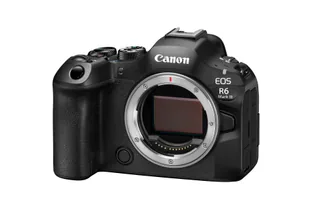


Sources
- panasonic.jp/dc/products/DC-S1M2/spec.html
- panasonic.com/uk/consumer/cameras-camcorders/lumix-mirrorless-cameras/lumix-s-f…
- panasonic.jp/content/dam/panasonic/jp/ja/pim-assets/support/specification/000/0…
- eww.pavc.panasonic.co.jp/dscoi/DC-S1M2jp/html/DC-S1M2_DVQP3226_jpn/0040.html
- panasonic.com/uk/corporate/news/articles/panasonic-announces-two-new-full-frame…
- photographyblog.com/reviews/panasonic_lumix_s1_ii_review
Photo: panasonicjp.scene7.com
- Panasonic LUMIX S1II, top view, body only; shared official view for LUMIX S1II and S1IIE: Panasonic Connect, exact LUMIX S1II gallery, linked original
- Panasonic LUMIX S1II, rear view, body only; shared official view for LUMIX S1II and S1IIE: Panasonic Connect, exact LUMIX S1II gallery, linked original
- Panasonic LUMIX S1II, bottom view, body only; shared official view for LUMIX S1II and S1IIE: Panasonic Connect, exact LUMIX S1II gallery, linked original
- Panasonic LUMIX S1II, side ports view, body only; shared official view for LUMIX S1II and S1IIE: Panasonic Connect, exact LUMIX S1II gallery, linked original
- Panasonic LUMIX S1II, opposite side ports view, body only; shared official view for LUMIX S1II and S1IIE: Panasonic Connect, exact LUMIX S1II gallery, linked original
- Panasonic LUMIX S1II, lens kit, rear LCD open: Panasonic Connect, exact LUMIX S1II gallery, linked original
- Panasonic LUMIX S1II, official supplied body and accessory kit arrangement: latam.connect.panasonic.com/sites/default/files/media/image/2026-09/1770722509i…


