Photo 1 of 3
Sony Alpha NEX-5T · Photo source
Sony · Alpha
Alpha NEX-5T
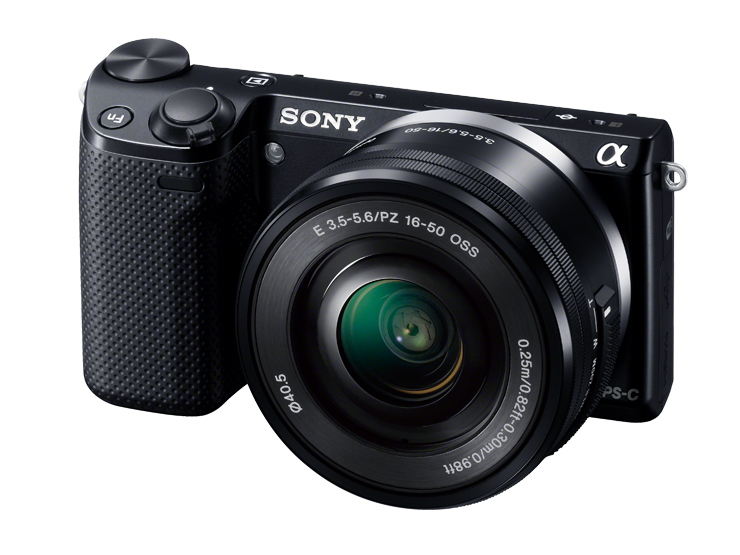
Sony's NEX-5T combines a 16.1 MP APS-C sensor, hybrid autofocus, NFC and Wi-Fi with a self-portrait touchscreen and Full HD progressive video.
- Type
- Mirrorless
- Sensor
- APS-C
- Megapixels
- 16.1
- Lens
- Sony E-mount
- Video
- 1920 × 1080 at 60 fps
- Body weight
- 218 g
What reviewers say
PhotographyBlog and ePHOTOzine praised image quality, quick autofocus and the compact package with the 16–50mm power zoom. Both welcomed wireless connectivity and the tilting touchscreen. PhotographyBlog considered the update modest compared with the NEX-5R; ePHOTOzine criticised kit-lens vignetting, strong noise reduction and the proprietary flash mount.
From photographyblog.com and ephotozine.com
Specifications
Report a wrong or missing specImage and sensor
- Camera type
- Mirrorless
- Sensor format
- APS-C
- Sensor type
- Exmor APS HD CMOS
- Sensor dimensions
- 23.5 × 15.6 mm
- Effective resolution
- 16.1 MP
- Largest image
- 4912 × 3264
- RAW recording
- Yes
- Standard ISO range
- 100–25600
- Sensor detail
- 16.7 million total pixels; charge-protection coating and ultrasonic dust reduction
- Image formats
- JPEG, RAW and RAW+JPEG; ARW 2.3
- ISO detail
- Standard ISO 100–25600; Auto ISO 100–3200; movies ISO 100–6400
- Image processor
- BIONZ
Lens and shooting
- Lens mount
- Sony E-mount
- Stabilisation
- Optical lens stabilisation
- Maximum continuous burst
- 10 fps
- Lens detail
- E-mount; Japanese NEX-5TL includes E PZ 16–50mm F3.5–5.6 OSS; NEX-5TY adds E 55–210mm F4.5–6.3 OSS.
- Autofocus
- Fast Hybrid AF combines 99 phase-detection and 25 contrast-detection points; single and continuous AF, direct manual focus, tracking and manual-focus peaking
- Shutter
- Focal-plane shutter with electronic first curtain; 30 seconds to 1/4000 second plus Bulb; flash sync 1/160 second
- Burst detail
- Approximately 10 fps Speed Priority Continuous and 3 fps normal continuous advance; Sony specifies buffers of 11 JPEG, 10 RAW or 9 RAW+JPEG frames, depending on shooting conditions and card. Fast Hybrid AF supports moving-subject tracking with compatible lenses.
- Stabilisation detail
- No sensor-shift stabilisation; optical correction requires a compatible OSS lens
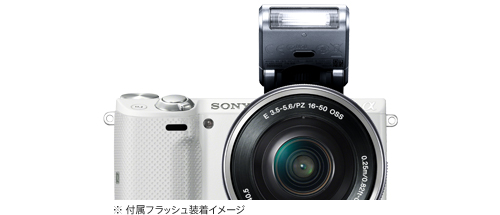
- Flash
- Supplied detachable flash; guide number 7 at ISO 100 in metres; approximately four-second recycle time. Optional HVL-F20S uses the accessory terminal.
Video
- Highest video resolution
- 1920 × 1080 at 60 fps
- Video detail
- Japanese model offers Full HD 60p up to 28 Mbps, 60i or 24p in AVCHD 2.0; ePHOTOzine lists PAL 50p and 25p for its UK review model. MP4 records 1440 × 1080 or VGA; interlaced field rates are separate from full-frame rates.
- Audio
- Built-in stereo microphones and mono speaker; Dolby Digital or AAC-LC audio
Screen and viewfinder
- Viewfinder
- None
- Screen size
- 3″
- Screen dots
- 921,600
- Touchscreen
- Yes
- Tilting screen
- Yes
- Display detail
- Resistive touchscreen; tilts approximately 180° up and 50° down
- Viewfinder detail
- No built-in finder; optional FDA-EV1S electronic finder
Connections and design
- Wi-Fi
- Yes
- Battery life (maker's claim)
- 330 photographs
- Body weight
- 218 g
- Release detail
- Sony España announced availability from September 2013; Sony Japan specified 13 September. Month precision preserves the broader European launch wording.
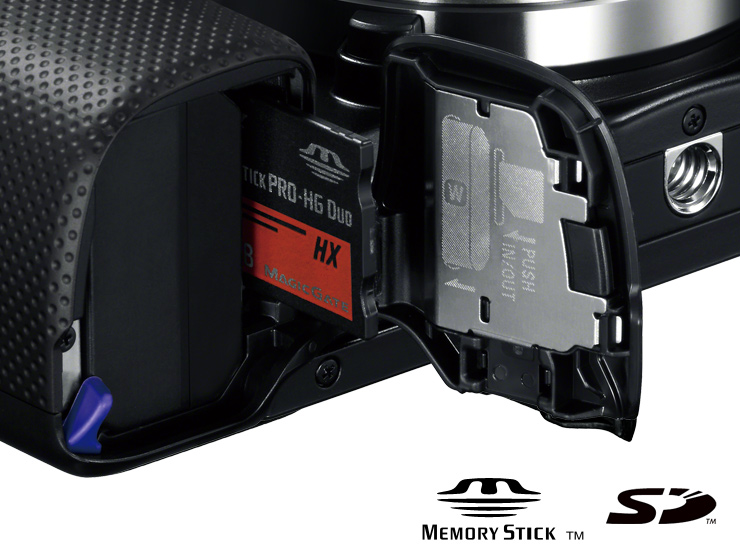
- Recording media
- Memory Stick PRO Duo, PRO-HG Duo and XC-HG Duo; SD, SDHC and SDXC
- Ports
- USB 2.0 Hi-Speed via Micro USB Type B; Mini HDMI Type C; Smart Accessory Terminal 2; no microphone or headphone sockets
- Wireless connections
- Built-in Wi-Fi and NFC one-touch remote and sharing with compatible devices; launch features included PlayMemories Camera Apps downloads
- Battery life detail
- NP-FW50; approximately 330 CIPA photographs
- Charging
- In-camera charging using supplied AC-UB10 and Micro USB cable; optional AC-PW20 power supply
- Dimensions
- Approximately 110.8 × 58.8 × 38.9 mm (width × height × depth)
- Weight detail
- Approximately 218 g body only; 276 g with battery and memory card; lens excluded
- Colours
- Black, silver and white
- In the box
- Detachable flash and case, NP-FW50 battery, AC-UB10 AC adapter, shoulder strap, Micro USB cable and software CD; lens depends on kit
Pros and cons
Pros
- Hybrid phase and contrast autofocus
- Touchscreen tilts up for self-portraits
- NFC simplifies compatible wireless connections
Cons
- No built-in viewfinder or sensor stabilisation
- Proprietary accessory terminal
Closest rivals
Model | Type | Sensor | Megapixels | Lens | Video | Body weight | Released |
|---|---|---|---|---|---|---|---|
| Mirrorless | APS-C | 16.1 | Sony E-mount | 1920 × 1080 at 30 fps | 210 g | Mar 2013 | |
| Mirrorless | APS-C | 24.3 | Sony E-mount | 1920 × 1080 at 60 fps | 285 g | Mar 2014 | |
| Mirrorless | APS-C | 16.1 | Sony E-mount | 1920 × 1080 at 60 fps | 218 g | Oct 2012 |


Sources
- sony.jp/ichigan/products/archive/NEX-5T/spec.html
- sony.jp/CorporateCruise/Press/201308/13-0827
- mynewsdesk.com/es/sony-espana/pressreleases/cuando-el-tamano-realmente-importa-…
- photographyblog.com/reviews/sony_nex_5t_review
- ephotozine.com/article/sony-nex-5t-review-23169
Photo: sony.jp
- Sony NEX-5T white body with supplied detachable flash attached, cropped front detail: sony.jp/products/picture/y_NEX-5T_flash_02.jpg
- Sony NEX-5T open memory-card compartment, cropped hardware detail: sony.jp/products/picture/NEX-5T_card_slot.jpg