Photo 1 of 5
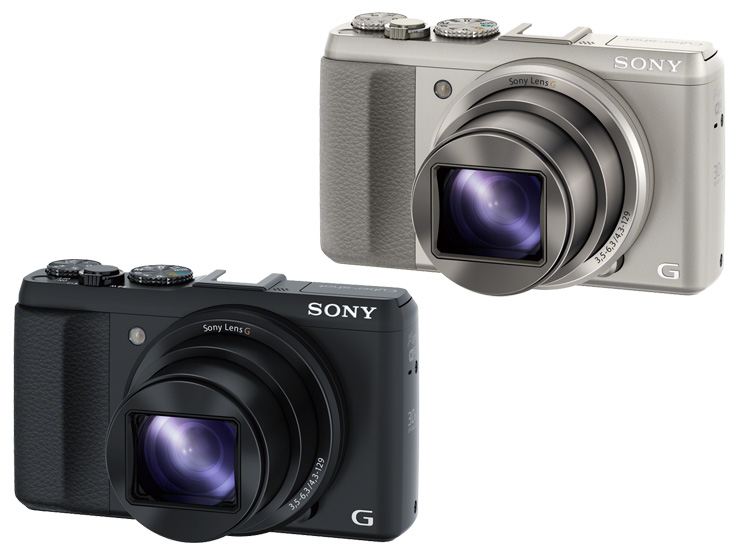
Sony Cyber-shot DSC-HX50V · Photo source
Sony · Cyber-shot
Cyber-shot DSC-HX50V
A travel camera with a stabilised 30× zoom, manual exposure controls, Wi-Fi and GPS, plus an accessory shoe for an external finder or flash.
- Type
- Compact
- Sensor
- 1/2.3-type
- Megapixels
- 20.4
- Lens
- 24–720 mm equivalent
- Video
- 1920 × 1080 at 60 fps
- Body weight
- 246 g
What reviewers say
Photography Blog and ePHOTOzine praised the zoom range, grip and manual controls, while finding the body bulky and high-ISO detail weak. Photography Blog considered image quality poorer than the preceding generation and Wi-Fi awkward; ePHOTOzine found pairing easy and liked the colour and battery life. Both missed RAW recording.
From photographyblog.com and ephotozine.com
Specifications
Report a wrong or missing specImage and sensor
- Camera type
- Compact
- Sensor format
- 1/2.3-type
- Sensor type
- Back-illuminated Exmor R CMOS
- Effective resolution
- 20.4 MP
- Largest image
- 5184 × 3888
- RAW recording
- No
- Standard ISO range
- 80–3200
- Sensor detail
- 1/2.3-type Exmor R CMOS; approximately 21.1 million total photosites. Optical format is distinct from physical sensor dimensions
- Image formats
- JPEG stills and MPF 3D images; no RAW. High-resolution Sweep Panorama produces stitched 10480 × 4096 images; 360-degree panorama 11520 × 1080
- ISO detail
- Ordinary single-frame ISO 80–3200; ISO 6400 and 12800 use Clear Image technology with multi-frame compositing
- Image processor
- BIONZ
Lens and shooting
- Built-in lens
- 24–720 mm equivalent
- Maximum aperture
- f/3.5–6.3
- Optical zoom
- 30×
- Stabilisation
- Optical lens stabilisation
- Maximum continuous burst
- 10 fps
- Lens detail
- Sony G lens; actual 4.3–129 mm; 11 elements in 10 groups including 5 aspherical elements; five-blade iris. Equivalent still-photo range 24–720 mm at 4:3 or 26–780 mm at 16:9. Clear Image Zoom up to 60× includes digital enlargement
- Autofocus
- Nine-area multi AF, centre AF, spot AF, flexible spot, manual focus, subject and face tracking. Focus distance from lens front approximately 5 cm wide or 200 cm telephoto
- Shutter
- Mechanical shutter; Auto 4–1/1600 second, Program 1–1/1600, Manual and shutter priority 30–1/1600, aperture priority 8–1/1600. Above ISO 3200 slowest shutter 1/4 second
- Burst detail
- Up to ten full-resolution images at 10 fps; High and Low modes. Focus, white balance and exposure compensation remain fixed from the first frame; flash disabled. Internal-memory bursts use VGA; compatible memory card required for full-resolution bursts
- Stabilisation detail
- Optical SteadyShot; Active movie mode combines optical and electronic correction including rotation
- Flash
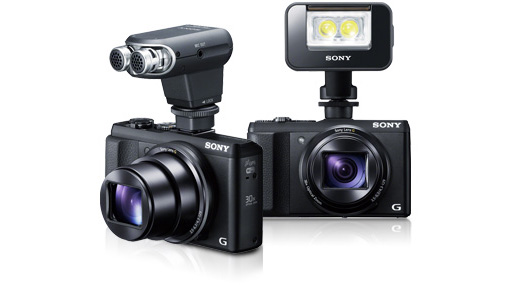
- Built-in pop-up flash; Auto, forced, off, slow-sync and Advanced Flash modes. ISO Auto range approximately 0.25–5.6 m wide or 2–3 m telephoto; external flash supported through Multi Interface Shoe
- Exposure controls
- P/A/S/M plus Intelligent Auto, Superior Auto, scene modes, panorama and picture effects. Dedicated exposure compensation dial; ±2 EV in 1/3 EV steps; multi-pattern, centre-weighted and spot metering. Iris reaches f/8 wide in Manual and aperture priority
Video
- Highest video resolution
- 1920 × 1080 at 60 fps
- Video detail
- AVCHD 2.0 records 1920 × 1080 at region-dependent 60p or 50p, 28 Mbps; main rate represents the 60p version. FX/FH use 60i or 50i at 24/17 Mbps; HQ 1440 × 1080 interlaced at 9 Mbps. Interlaced rates count fields. MP4 includes 1440 × 1080, 720p and VGA; Japan specifies 30 fps. Standard 16:9 movie angle 26.5–795 mm equivalent; Active 26.5–1080 mm. Optical zoom available while filming; approximately 29-minute clip limit; MP4 12M approximately 15 minutes due to 2 GB file limit
- Audio
- Stereo microphone and mono speaker; Dolby Digital stereo for AVCHD or AAC for MP4. Compatible external microphone attaches through Multi Interface Shoe
Screen and viewfinder
- Viewfinder
- None
- Screen size
- 3″
- Screen dots
- 921,000
- Display detail
- Xtra Fine TFT LCD; maker archive approximately 921000 dots, original instructions 921600 dots
- Viewfinder detail
- No built-in finder; optional FDA-EV1MK electronic viewfinder attaches through Multi Interface Shoe
Connections and design
- Wi-Fi
- Yes
- Battery life (maker's claim)
- 400 photographs
- Body weight
- 246 g
- Release detail
- Sony Japan’s 24 April 2013 announcement specifies sale on 17 May 2013. May precision retained without assuming the Japanese day was the international first sale. HX50V includes GPS; UK HX50 is a distinct version without GPS
- Recording media
- Approximately 48 MB internal memory; Memory Stick Duo, PRO Duo, PRO-HG Duo and XC-HG Duo plus SD, SDHC and SDXC. Memory Stick Micro and microSD/SDHC/SDXC need separate adapters
- Ports
- Multi/Micro USB terminal supporting remote accessories and Hi-Speed USB 2.0; micro HDMI; Multi Interface Shoe
- Wireless connections
- IEEE 802.11 b/g/n at 2.4 GHz; Wi-Fi image transfer and smartphone remote control. GPS geotagging and route logging on HX50V; the separate HX50 omits GPS. Eye-Fi uses a separate card
- Battery life detail
- NP-BX1 battery; maker CIPA claim approximately 400 photographs or 200 minutes with GPS off. Actual movie use approximately 55 minutes or continuous recording 90 minutes; individual clips have separate duration limits
- Charging
- In-camera micro USB charging with the camera off using supplied AC-UB10/UB10B/UB10C/UB10D or computer. USB playback power; shooting power requires optional AC-UD10
- Dimensions
- Approximately 108.1 × 63.6 × 38.3 mm (width × height × depth)
- Weight detail
- Approximately 246 g camera only or 272 g including NP-BX1 and Memory Stick Duo
- Colours
- Black and silver
- In the box
- NP-BX1 battery, AC-UB10-series adapter, micro USB cable, wrist strap, shoe cap and instructions; mains fittings vary by region
Pros and cons
Pros
- 24–720 mm equivalent optical zoom
- P/A/S/M exposure modes and exposure compensation dial
- Wi-Fi, GPS and Multi Interface Shoe
Cons
- No RAW recording
- Full-speed bursts stop after ten photographs
- Viewfinder sold separately
Closest rivals
Model | Type | Sensor | Megapixels | Lens | Video | Body weight | Released |
|---|---|---|---|---|---|---|---|
| Compact | 1/2.3-type | 18.2 | 25–250 mm equivalent | 1920 × 1080 at 30 fps | 105 g | 2013 | |
| Compact | 1/2.3-type | 18.2 | 25–500 mm equivalent | 1920 × 1080 at 30 fps | 139 g | 2013 | |
| Compact | 1/2.3-type | 16.1 | 24–384 mm equivalent | 1280 × 720 at 30 fps | 192 g | 2012 |


Sources
- sony.jp/cyber-shot/products/archive/DSC-HX50V/spec.html
- sony.jp/CorporateCruise/Press/201304/13-0424
- bhphotovideo.com/lit_files/84530.pdf
- helpguide.sony.net/gbmig/44454131/v1/eng/contents/05/02/05/05.html
- helpguide.sony.net/gbmig/44454131/v1/eng/contents/05/02/30/30.html
Photo: sony.jp
- Sony Cyber-shot DSC-HX50V configurations with optional external microphone and video light: Sony Japan exact-model physical product photograph; optional accessories labelled; complete supplied canvas and background retained.
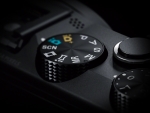
- Sony Cyber-shot DSC-HX50V mode dial close-up: Sony
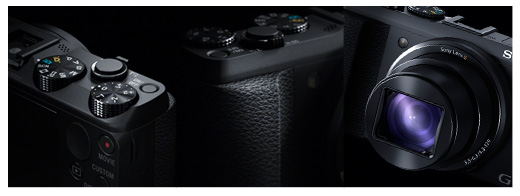
- Sony Cyber-shot DSC-HX50V top controls, grip and lens detail composition: Sony
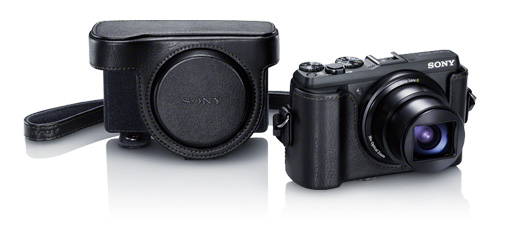
- Sony Cyber-shot DSC-HX50V beside optional LCJ-HN camera case: Sony